Main
[Home]
  Search
[Search]
  Comment
[Email]
  New
[New]
  Buber
[Buber]

Hasiera · Home
Ezaugarriak · Features
Oharrak · Notes
Sarrea · Introduction
Euskara
Folklore
Kirolak · Sports
Musika · Music
Janedanak · Gastronomy
Tokiak · Places
Historia · History
Politika · Politics
Diaspora
Internet
Albisteak · News
Nahas Mahas · Misc

BUBER'S BASQUE PAGE

Ongi Etorri! What started out as a personal homepage has grown to a site that contains nearly 1000 pages and receives over 16,000 hits per day. The popularity of this site is a testament to all of those who have contributed to this site. Eskerrik asko!

I am always looking to improve the site. If you would like to contribute, please contact me.

Enjoy your visit.

Archive for the ‘People’ Category

Facebook highlights story of Basque Diaspora
Tuesday, September 18th, 2012

Do you remember that AT&T commercial from 2000 featuring a Basque sheepherder, mingling with his flock in the American West, talking on his cell phone with his family back in the Basque Country? Pedro Oiarzabal does. He uses this commercial, featuring the late Dionisio Choperena, to lead off his article on the Basque Diaspora, an article requested by Facebook for a new initiative they have called Facebook Stories.

The tag line of Facebook Stories is “People using Facebook in extraordinary ways.” And Pedro, who many of you may know from his research on and close connections with the Basque Diaspora not only in the US but around the world, describes how social media such as Facebook have helped to bridge the gulf between the Basque Diaspora and Euskal Herria. This is especially pertinent to the Basques since, as Pedro points out, there are more Basques living outside the Basque Country than within it. And, today, with practicing culture being almost a lifestyle choice, anything that helps Basques of the diaspora connect with the mother culture and give them an outlet to explore, express, and enhance their culture is critical to ensuring it flourishes.

Pedro draws from his connections and experiences working with the Basque Diaspora to highlight how social media has brought new people together to forge new collaborations, how a family dispersed across the entire globe is discovering its roots, and how second generation Basque Americans use social media to connect to the culture of their parents and grandparents. I must also say eskerrik asko to Pedro for calling out this very page!

Pedro’s article is one of the first to be featured on Facebook Stories. It kicked off the series in grand fashion and is followed by a wide variety of stories, including one on how a scientist used Facebook to identify 5000 species of fish within 24 hours. Some fascinating stuff!

A Bevy of Basque Films
Sunday, September 16th, 2012

It seems like we are in a special time for Basque films. A number of projects are either in production or just wrapping up for release that promise to highlight numerous aspects of Basque culture. Here are a few that have caught my eye.

The first is Basque Hotel, by Josu Venero:

Basque Hotel is a U.S. road movie, a visual record, and testimony, in which stories are interwoven to create an overview of Basque emigration to this part of the world. It passes through the extensions of the old American West (Nevada, Idaho and California) and hits the streets of New York, the city where everything is a mix and comes to life. Five renowned novelists weave a web of real and fictional spaces through dialogue, history and experiences of the Basque community in the United States. In this literary tour, the voice-overs are heard giving fragments of the various novels of the writers (Robert Laxalt, Bernardo Atxaga, Asun Garikano, Joseba Zulaika and Kirmen Uribe). The testimonies of these players and their writings rebuild their visions and American experiences, sketching a spectacular journey from the Basque Country to the United States; and from the Basque Hotel to the Guggenheim Museum in Bilbao.

Izaskun Arandia-Richard’s film, To Say Goodbye, is an animated feature about the refugee children who fled the Basque Country during the Spanish Civil War to England, where they remained:

TO SAY GOODBYE is a powerful and inspirational film about the loss of childhood, the stripping away of identity and, ultimately, the hope of reconciliation, all set against the backdrop of the Spanish Civil War.Through innovative animation, the film tells the story of the 4000 Basque children evacuated to the United Kingdom in 1937.

Forced to bid a hurried farewell to their parents, these children were told they would only be in the UK for three months. 75 years later, some are still there, forever separated from their parents and their homeland, their families torn apart and their childhood destroyed by a brutal and bloody conflict.Through the voices of 14 of these children, now in their 80s & 90s, we reveal this tragic episode in history in a stunninganimated documentary that is profound, unexpected and uplifting.

Basques in the West, directed by Amaya Oxarango-Ingram and Brent Barras, is a filmed aimed at documenting the Basque contributions to the culture of the American West:

The Basques have been around for generations in these areas, herding sheep and adding their vibrant culture to the beauty of the land.

The documentary we intend to make features the Basque people, what they have done to add culture and vitality to the west, the sheep industry, and the central tension they face with keeping with their traditions and adapting to the modern world.

Released a few years back, Artzainak: Shepherds and Sheep, by Javi Zubizaretta and Jacob Griswold, examines the sheep industry, and follows the connection between the previous generation of Basque herders to the current Peruvian herders:

Artzainak: Shepherds and Sheepis a short documentary that exposes the struggles and hardships of immigrant shepherds in the hills of Idaho. The film traces a basic outline of the Basque and South American immigration to this breath-taking region of the American West. Spending as many as 9 months out of the year in the hills, these immigrants battle loneliness and despair while they remain thousands of miles from their families. With little to no command of the English language, the shepherds quietly make an honest living to send money back to their homelands. “Artzainak” tells these stories from the mouths of the shepherds themselves.The documentary was produced during the fall of 2009, and the filming itself took place in mid-October. Javi Zubizaretta and Jacob Griswold spent a week in Idaho, interviewing shepherds and watching them work as they brought the sheep down from the mountains. The film is currently being submitted to film festivals around the country to bring awareness to the problems faced by these individuals.

A final film, Emily Lobsenz’ Ipuina Kontatu, has finished principle photography and is entering the editing process:

They speak one of the world’s most ancient languages, established one of the world’s first democracies and lead Europe’s Age of Exploration. For hundreds of centuries Basques have maintained their traditions while flourishing among Europe’s most innovative societies. Yet, for centuries their way of life has confronted threats as powerful as the Roman Empire, as transforming as the Industrial Revolution, as tragic as a dictator’s genocidal aggression and as universal as immigration.

Who are these people and how have they navigated the ages as one of Europe’s most ancient cultures to be one of its most flourishing modern societies? And are the Basques capable of continuing their way of life even in today’s world? While unique and dynamic characters enact that drama on the screen, a complex cultural portrait emerges.

In the Basque language, ‘Ipuina Kontatu’ means telling stories. Basques have passed their language and customs down the generations through an oral tradition. The narrative design captures that tradition by exploring Basque culture through personal tales and perceptions of its protagonists. The characters’ personal tales will be woven together so that their stories not only complete one another, but also create a dialog between them that calls into question not only Basque traditions and their place in today’s world, but also cultural traditions in general and their relationship to social progress.

If anyone knows of other films that are being made, please let me know!

Sheepherding and Food: Basques in the American West
Friday, September 14th, 2012

I’m a little behind, as usual, but I wanted to bring to everyone’s attention two articles that recently appeared about the Basques in the American West.

The first, Herding Sheep in Basque Country (Idaho), appeared in the New York Times last month and describes the Basque sheepherding experience via a chat with Henry Etcheverry, a herder in the Minidoka desert near Rupert, Idaho. The author, John O’Connor, spends some time with Jauna Etcheverry in the desert, checking on the sheep herds. O’Connor describes a bit of the history of the Basque sheepherding experience as well as the Basque culture of Boise.

My dad and my mom’s grandparents all came to the American West — a little further west than Minidoka, to the Jordan Valley, Oregon area — precisely to herd sheep. My dad originally came on a 3-year contract and made enough money to buy an apartment in Gernika. He was asked to return to the US and, during this second stint, met the granddaughter of other Basque immigrants. The rest, as they say, is history.

The article makes a point of noting that the new generation of herders are from Peru. My dad has sort of taken under his wing, so to speak, some of the Peruvian herders where he lives. One Christmas, some of these guys came over for dinner. I was talking to them and one mentioned that he was trained as an engineer in Peru, with a Bachelor’s degree. He was in the US because he could make more money as a sheepherder in Idaho than as an engineer in Peru. This simply amazed me.

Jauna Etcheverry mourns the end of the Basque shepherd, but, as he points out, his kids and the kids of other Basques simply don’t want to do that work. And this, to me, embodies the American dream. His kids, my dad’s sons, and many of the other Basque kids I know were taught to value education and hard work. Those kids built upon the foundation their parents built, working long days and months in the hills herding sheep, driving truck or working the farm. They made a better life for themselves, a direct consequence of the drive their parents had to make a better life for themselves. To me, this is the essence of the American dream, to be able to make a better life. The opportunity to do that for me and others like me was provided by these Basque immigrants.

The second article, 5 Basque American spots in Western U.S., by Bob Cooper in a July issue of the San Francisco Chronicle, focuses on another legacy of Basque immigration, the Basque restaurants that dot the American West. That these often family-style restaurants are popular is evidenced by how many comments and queries I get about Charley Shaffer’s Basque Restaurant List.  Cooper picks 5 spots, scattered between Idaho, California, and Nevada, where you kind find a taste of the Basque-American sheepherder experience. The oldest on his list, the Noriega Hotel in Bakersfield, was, like many of these, a boarding house before it became a more traditional restaurant.

Not that these restaurants are traditional in an American sense. Often family-style, you sit at a large table, often next to strangers, and the food is brought out not as individual servings, but in big bowls and plates that are passed around. This is a great way to meet new people and sample foods you might be a little shy about, since you are committing your entire meal to a new dish. I’ve only had the luck to try a few such places, but every one has been a great experience.

Joanes or the Basque Whaler, Part 2, by Guillermo Zubiaga
Tuesday, August 14th, 2012

When we last saw Joanes and his crew, they had made their first successful whale hunt. Part 2 of Joanes or the Basque Whaler, Whale Island, picks up with the rewards of that hunt. And, along with the rewards, come the price of success as Joanes begins to overstep his abilities as he sees greater glory.

This is the second part of Guillermo Zubiaga’s epic about what he refers to as the Basque wild west, the adventures of the Basque whalers. The men who dared all to sail the seas and cross the oceans, looking for opportunity. It is the same spirit that sent their descendants to the American West, sometimes in conflict with the American cowboys, to find new opportunities.

As before, Guillermo tells his tale primarily through his fantastically detailed art. From the various ships sailing the seas to the cobblestone streets of a Basque village to the whale rendering station on the coast of America, Guillermo’s attention to detail brings the story to life.  His faces convey the emotion to pull the story along, especially as the Basque crew encounter the unknown in first America and then the fantastic.

The story moves fast, from the first kill of Joanes and his crew to their encounter with the natives of North America and to the climax of this issue when Joanes confronts the killer black whale. There is just enough mystery to keep the story engaging and Guillermo makes judicious use of historical facts to ground this fictional story in real Basque history.

This is a great sequel to Guillermo’s first issue The Flying Whaleboat. I greatly look forward to the conclusion in issue three.

I have two items on my wish list for Guillermo. First, it would be awesome for him to do a “Handbook of Basque Mythology,” similar in vein to the old superhero handbooks. Even one issue with the primary deities of the Basque pre-Christian religion would be wonderful.

Second, I would love to see a commentary track for Joanes, with Guillermo describing his inspiration for various scenes and people, where references images might be from, and what historical documents he is pulling from. I think it would make a great addition to an already wonderful story.

Jesus Lizaso, sculptor
Sunday, July 22nd, 2012

One of the great pleasures of running this site is the opportunity it affords me to meet new people. And such was the case with Jesus Lizaso, a sculptor from Basauri, who was coming to Santa Fe, New Mexico, to discuss showing his work in a local gallery. Jesus doesn’t speak much English and, travelling to a far-off land, was hoping to find someone to connect to locally, someone who might serve as a touchstone to something familiar. Having found on the Internet that there is a Basque Club in Santa Fe, he contacted me about visiting our Etxea. Well, we don’t have an actual building, but I arranged to meet Jesus for dinner. And it was a great evening.

Jesus’ livelihood is art and it is a livelihood fraught with uncertainty. Each piece takes him hours and hours to fabricate, and he is good at his craft, having won prestigious prizes. Even so, he only sells a handful of pieces a year, so each sale is crucial and precious. Jesus was visiting the US to broker an arrangement with a local gallery in Santa Fe to show his work and act as his agent in the US.

Probably the most fascinating aspect of the evening was just learning more about how the art world works, including the role that galleries play in the process of selling and distributing art, and how difficult it is even for an artist who has been by all accounts very successful to still make a living at making art. We had dinner at a local tapas restaurant and it was also entertaining to hear the reaction of a Basque to the food being served. One comment that stuck with me was how Americans always need to make their food so spicy. Which was a bit funny, since at least one of the dishes involved chorizo from Spain that was probably the spiciest item we had that evening.

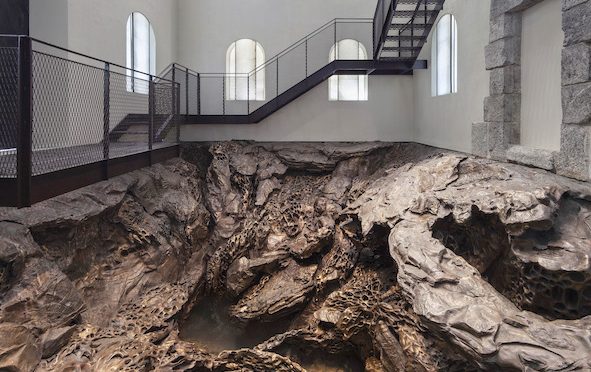
Jesus calls his work “solid poems”. And, judging by the photos on his website, they are indeed poetic. Typically of stone or wood, and often of very large size (he described to me the difficulty of moving his work internationally; the cost alone is significant), his works are often inspired by industry, involving gears, nails and screws. This type of sculpture really appeals to me, with the angular design and the abstract forms. Some day…

For those that speak Spanish, this video offers a bit of Jesus’ perspective on the creative process.

Pasai Donibane
Thursday, May 24th, 2012

I’ve decided on a new resolution, not for New Year’s, but regarding my visits to Euskal Herria. The thing is, I visit, I spend a lot of time with my dad’s family which I of course greatly enjoy, I see some friends (though not nearly all of them), and I come home. I don’t end up seeing anything I hadn’t seen before in terms of the cities, the countryside, museums, or anything else. So, I’ve decided to make an effort that, each time I visit, I see at least one new place.

I was in Euskal Herria during Semana Santa and, following up on my resolution, I went to see Pasai Donibane. With a good friend, Gontzal Aranguren, we left Donosti and drove to Pasai, which is actually a collection of neighborhoods on the outskirts of Donosti. This area is the big port of Donosti, with massive ships coming and going (though we didn’t see any enter or leave the port, there were ships docked in the port). To get to Pasai Donibane, you have to pay a man 1 euro to take a small boat across the water to the other side, where Pasai Donibane looks back towards Donosti.

Pasai Donibane is sometimes referred to as the “little Basque Venice.” This, of course, overstates things, as nothing really compares to Venice itself, but it has its own charm. We got there pretty early in the morning and followed a small path outside of the village up the hillside overlooking both the port and the ocean. Not an overly long hike, but it does go up a bit in elevation relatively quickly. The views were magnificent! We then hiked back to Pasai Donibane and walked around a bit. Being early in the morning, not much was open, but the streets, if you could call them that, were glistening with water, reflecting the colors of the apartments overhead. The cobblestone streets barely allowed one car through — there are more than one corner where side mirrors have worn groves into the buildings. If two cars tried to go in opposite directions down the main thoroughfare, one had to back up to an opening in the road to let the other pass.

An interesting historical note about Pasai Donibane: Victor Hugo, of Les Miserables fame, spent some time here in 1843 while traveling in Spain. Some say he was inspired to write Les Miserables while staying in Pasai Donibane, overlooking the nearby Pasai San Pedro and Pasai Antxo, which were more industrial. It isn’t clear if this is some apocraphical story or if there might be some truth in this claim. In any case, as anywhere else, Pasai Donibane has capitalized on this brief encounter with history by establishing the “Victor Hugo Etxea“, or Victor Hugo House, which is a small museum that describes his stay. It was closed when we were there, but for the history buff, it might be worth a quick visit. What is clear is that Hugo wrote his Voyage aux Pyrenees while living in Pasai Donibane.

Pasai Donibane is also known for some good seafood restaurants. Again, being there early in the morning, we didn’t take advantage, but it might be the perfect place to spend a romantic evening for two, overlooking the water with the bright lights of Donosti in the background.

Pasai Donibane is no Venice, but it has its own charm. The brightly painted apartments crammed between the hillside and the waterfront plus the breathtaking vistas from the nearby hills are a combination that is truly spectacular.

A history note of interest to Americans: it was from Pasai Donibane that Lafayette set sail for America to aid the Americans against the British during the American Revolution.

Two Young Cooks win Scholarship to Cook with Basque Chefs!
Monday, May 21st, 2012

TWO YOUNG COOKS WIN IV SAMMIC SCHOLARSHIP TO COOK WITH BASQUE CHEFS

Earlier, I posted about the previous BasqueStage contest for young cooks to work with world-renown chefs in the Basque Country.  Well, the 4th edition of the contest has just been decided and two new young men will be joining Chef Berasategui. The following press release gives more details.

May 9, 2012, (SAN SEBASTIÁN, SPAIN): Chef Martín Berasategui has announced the winners of the 2012 4th Sammic Scholarship with BasqueStage.  The winners are Brenden Darby and Luuk Hoffman, and they will join the kitchen of Restaurante Martín Berasategui, ranked in the San Pellegrino World’s Top 100, beginning in July 2012. They were chosen out of over 150 applicants in this, the fourth round of the continually growing BasqueStage program.

Brenden Darby is a graduate of Johnson & Wales University, where he graduated Dean’s List and Honors Society. He is also completing is WSET (Wine and Spirits Education Trust) Advanced Certificate. He recently spent six months traveling and volunteering in Southeast Asia, and also has varied restaurant experience under his belt.

Luuk Hoffman is a young Dutch cook, a graduate of the Hotel School in the Hague and a current student at Sterklas in Amsterdam for an advanced culinary degree. He has worked with an impressive roster of chefs.

BasqueStage is a program that gives cooks the opportunity to learn from some of the best chefs in the world, up close and personal. The Sammic Scholarship is sponsored by Sammic, with the collaboration of Martín Berasategui.

Basque chef Martín Berasategui has earned almost every international culinary award, including 3 Michelin stars for his restaurant in Lasarte. In fact, the high ratio of Michelin stars to population in the area is partially due to his nurturing of other young chefs.

Sammic is one of Europe’s leading designers and manufacturers of Foodservice Equipment, specializing in Food Preparation, Food Preservation, and Hot Temp Ware Washing. Longtime technological partner of chef Martín Berasategui and based only 30 kilometers away from his restaurant, this 50-year-old company has just started operations in the US.

FOR MORE INFORMATION CONTACT:

BasqueStage/DeliFunArt: Marti Kilpatrick  marti@basquestage.com +34 676 040 129

Sammic: Amaia Altuna aaltuna@sammic.com  +34 943 157 340

Golaflin, a unique way to experience Euskal Herria
Sunday, May 13th, 2012

I first met Gontzal Aranguren maybe 15 years ago as part of what became the Seattle Euskal Etxea — the Basque Club of Seattle. Gontzal was one of several transplants from the Basque Country living in Seattle and who became an important part of the fledging club. Gontzal is an interesting twist on the Basque-American identity, being an American-Basque, a Basque who’s mother was from the US. As such, he has strong connections to the US and, because of this, did his university work in the US as well.

Gontzal’s passions have taken him down many paths, including working for an NGO of the Basque Country in India and being an amateur poet. His most recent direction is to parlay his knowledge of the land and history of the Basque Country along with his connections to the US into a business providing tours of the Basque Country. These tours are centered in Donosti, the European Cultural Capital for 2016, and are for small groups of people (up to 5) who want an experience in Spanish or Basque. In particular, for those wanting their tour with a flavor of Euskara, but who only know a smidgen, you are in luck!

I was just in the Basque Country about a month ago and Gontzal was gracious enough to show me some sites I hadn’t had the chance to see before. In particular, he took me to a gastronomic society where, along with a few of his buddies, we had the biggest steak this side of Texas (Gontzal does have some Texan roots). He then showed me Pasai Donibane, a charming water-side village on the outskirts of Donosti. Supposedly, Victor Hugo, who did spend some time there, got some of his inspiration for Les Miserables in Pasai Donibane. Gontzal was a great guide, with a deep knowledge of the history of the area.

If you are looking for a unique way to experience the Basque Country, then I encourage you to check out Golaflin!

Aurrera! Moving Forward with Euskara
Monday, February 20th, 2012

Way back in 1991, in between my sophomore and junior years at the University of Idaho, I took a year off to study both Basque and Spanish in the Basque Country through the program offered by the University Studies Abroad Consortium — USAC. I was more interested in Basque, but both my dad and my grandfather stressed the pragmatic wisdom of also learning Spanish. Back then, there weren’t many resources for an English speaker to learn Basque, especially one who knew next to nothing. USAC offered a course that was targeting students exactly like me. However, even so, things didn’t go as smoothly as I would have liked. Despite a semester of intensive Basque language course, I didn’t learn enough to be fluent. I chalk this up to two factors: Spanish was always easier, even for someone not studying Spanish directly (though I did have Spanish in high school) and my dad’s family speaks Bizkaino while I learned Batua. A seeming minor difference, but to someone just learning the language, that difference was night and day.

In any case, since that time, many more resources have become available to the English speaker wanting to learn Basque. One of the more recent ones is Aurrera!, a two volume textbook for studying Basque by Linda White. Now, while I have a number of Basque language resources, I still haven’t made the time to go through them in any serious manner, so I can’t really comment on how one book compares to another. That said, Aurrera! seems to be a very nice resource for the Euskara novice. Arranged by themes, such as Locations, Wants and Needs, and, most important for anyone visiting the Parte Vieja, Living it Up, Aurrera! quickly gets into real world language needs rather than focusing on more arcane grammar. Further, each chapter is accompanied by dialogs and activities that bring the language to life and pull the student into the language. Later chapters focus on all of the different tenses of the Basque verbs, so there are a number of such chapters, including “In the E-Mail that I Received,” that covers these concepts.

One thing that is missing for me are the tables that summarize declensions, conjugation, and the form of the auxiliary verbs. I’m not sure why, maybe it is my more mathematical bent, but encountering those tables as a student just learning Euskara, while certainly daunting in the complexity and density they represent, also gave order to the language for me. They summarized the language in a way I could get my head around. If Dr. White follows up with a second edition, I might suggest an appendix that collects such tables. Further, a brief chapter on the history of the Basque language, the current state, and the dialects would also be appreciated.

That said, for someone trying to learn the language, this seems an invaluable aid. I certainly have all intentions of going systematically through both volumes. Now, I just have to find the time!

More information about these books, as well as accompanying audio, can be found here.

Sheepherder’s Bread, the way the Sheepherder intended (sort of)
Thursday, January 26th, 2012

As I mentioned earlier, seemingly once I left home for school, my dad began making his own jamon and chorizo. Another tradition my dad has revived recently is making sheepherder’s bread.  Actually, the whole gang in Homedale has gotten back to their roots, so to speak, and they hold competitions for the best bread. It gets pretty intense, with guys speculating about whether this loaf will turn out or not. My dad is no exception. He treated us to the full experience over break.

Out in the hills, he would dig a pit in which to bake the bread.  At his home, however, he has a permanent pit, lined with a big concrete pipe. Most of the time, it’s covered with a board and it’s only rarely that the lid comes off and he makes a loaf, mostly because it does take some effort. He’s collected a large pile of sagebrush from the hills that he slowly is chipping away at.

I’ve had a recipe for sheepherder’s bread on my site for some time now, and from what I’ve been told and experienced from my wife’s own hand, it makes a very good loaf.  But dad’s (txitxi to my daughter) recipe is slightly different:

Txitxi Bread for a #10 Dutch Oven

1.5 packets active dry yeast
    (he uses Red Star)
1 quart + "a bit" lukewarm water
1 heaping Tbsp + 1/4 tsp sugar

Combine and let yeast proof.

Add 3/4 tsp salt and all
purpose flour until you reach
desired consistency.
Knead until smooth.

Let rise until doubled in bulk,
twice. Put in greased dutch oven
(preferably with bacon grease)
and let rise until lid is pushed up.

If baking in oven, 350 degrees
Fahrenheit for approximately 60 minutes.
Keep covered with lid or tented with foil.

However, if you want to be authentic, you’ve got to cook it in the pit.

First, we burned quite a bit of the sagebrush, just to get some ashes to use later.  These we dug out and let cool. We then burned another batch. These were for the hot ashes, the ones to cook the bread. Once the sagebrush had burned down such that we had maybe 5 inches of hot coals, we lowered the Dutch oven into the pit. This is where the cool ashes come in.  We covered the Dutch oven with cool ashes to act as an insulating blanket and to keep the heat in.  We further covered it with a little dirt. This seems to be the trickiest part: you want enough insulation to keep the heat in but not so much that you smother the fire. Dad said that you should be able to just barely feel the heat coming off when putting your hand near the top.

A critical step is to make sure the handle of the Dutch oven is up when you start burying it, as otherwise you won’t have anything to grab when you pull it out.

We left our bread in the pit for something on the order of 1 and a half hours. It was getting late and we needed to eat dinner, so we pulled it out, maybe a little early. The center wasn’t quite cooked.  Dad threw it in the conventional oven for a while longer to eat the next day. He claimed we had smothered the fire, put too much ash on top. In any case, the bread looked great and, the next day, the bread tasted great too.

While we were burning all of that sagebrush and the wind picked up some embers and blew them around, I asked dad if he ever had a fire get away from him in the hills. He said once, a fire started to get away, but he was able to put it out, so nothing really happened.  But he had a tale of another sheepherder who did have one get completely out of control. It burned quite a few acres, getting big enough that a fire crew had to be called in to put it out.  I don’t know how much it ended up burning or exactly where this was, but dad said that this sheepherder somehow became part of the fire crew, helped put it out, and got paid to do it!

This is a very simple recipe, with only 5 ingredients. I imagine it was important for a young sheepherder, cooking in a strange environment with limited ingredients while also trying to herd sheep, to keep things as simple as possible. I’m not sure how much these guys would have cooked back in the old country, but I imagine it was very little. I also imagine that the bread isn’t too sensitive to how it’s cooked as things aren’t precisely controlled in this process.  But, it sure does produce some very tasty bread!

  RSS Feed

Lotura Ohargarriak
Notable Links
  • Morris Student Plus, a great online Basque-English dictionary. There is a print version too.
  • EITB24 is the best source for news from the Basque Country in English.
  • Astero is NABO's free Basque news & information service, brought to you by John Ysursa.
  • Enciclopedia Auñamendi, the Basque online encyclopedia with entries on every Basque topic imaginable.

Ezaugarri Bereziak
Special Features
buber.net Forum
A discussion forum for all things Basque. Ask questions or share your knowledge with the rest of us.
Guest Column
Guest articles on Basque topics. The most recent article, The new millennium in Basque music -- a decade of delights, by David Cox, examines the best of Basque music of the first decade of the new millennium.
Interviews
Interviews with Basque personalities. The most recent interview is with Delphine Pontvieux, author and self-publisher of ETA, Estimated Time of Arrest!
Photo Album
Basque photos, including the tattoo collection.
Basque Surname List
A select list of some Basque surnames, with discussions by visitors to Buber's Basque Page.
Basque Recipe Collection
Food! Share your favorite Basque recipe with the rest of us.
Collected Postings by Larry Trask
Basque linguistic articles by the late Larry Trask, world-reknowned expert on the Basque language.

Categories

Gaurko Esaera Zaharra
Proverb of the Day
(full list)
Haria meheenean eten ohi da
A thread usually breaks where it is thinnest.

This page is part of Buber's Basque Page and is maintained by Blas Uberuaga (blas@buber.net).
Please report any problems or suggestions to Blas.
Eskerrik asko!