Lost Musings

Warning: Spoilers follow.

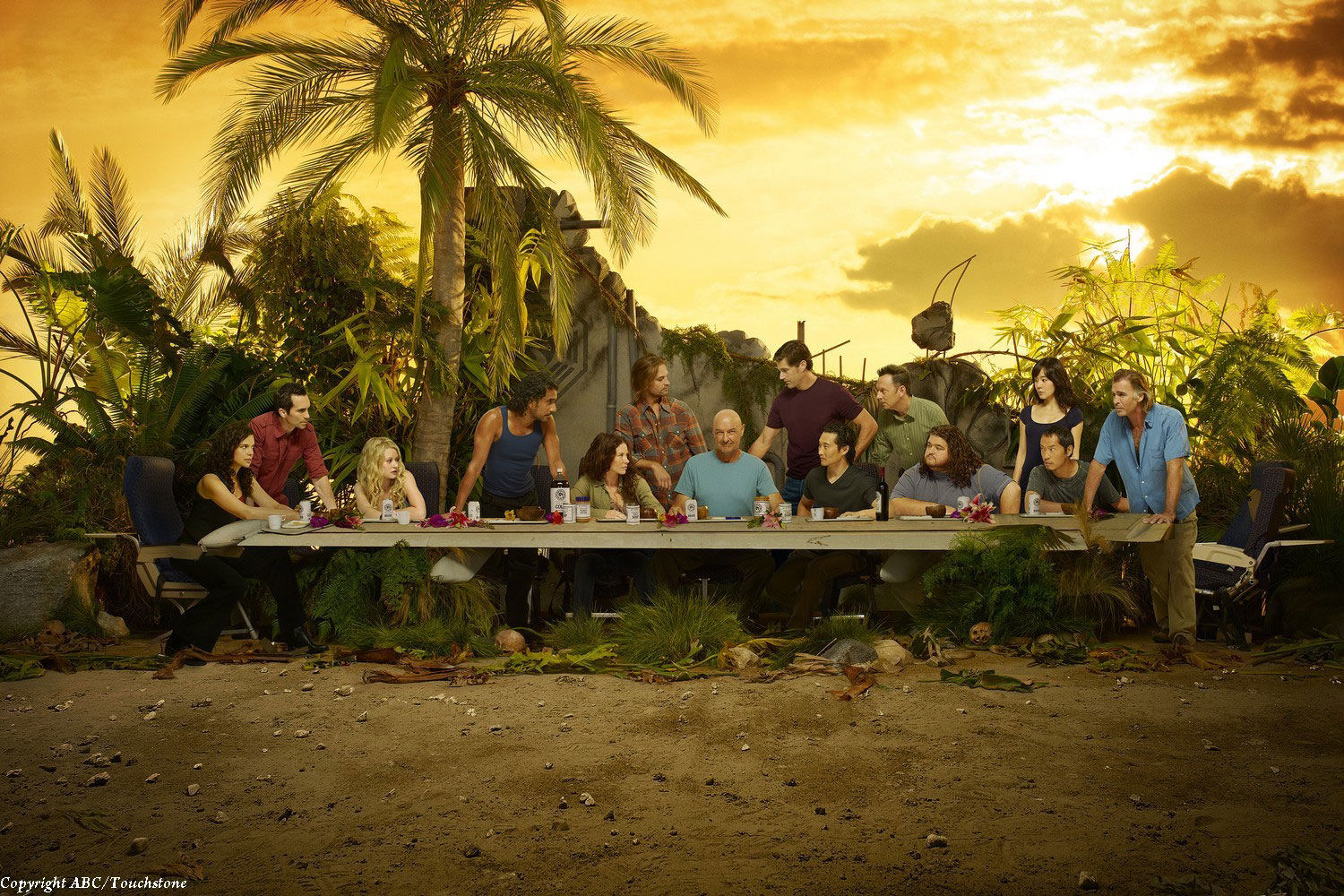
I’m not a Lostie.  I didn’t watch any of the first season.  But my wife got into it and eventually I started watching to, catching maybe half of the remaining episodes, enjoying them enough that I was into the characters and the storyline.  Maybe not as much as some who watched from the beginning, but enough to look forward to the episodes I could catch.

I understand that the writers, from what they’ve said, view Lost as a character-driven show.  And there were characters I enjoyed, most of all Daniel Faraday, Sayid, and John Locke.  The writers emphasize this because they know that those who are into the show because of the mythology were going to be disappointed.

And, I, being one of those that was more interested in the mythology, was disappointed by Lost’s end.  The final episode was all about the characters and not at all about the mythology.  Not a single new insight was revealed.  The writers state that the mythology doesn’t matter, that the show was always about the characters.  I don’t buy it.  The mythology — the mystery of the island — was the hook that gave Lost that unique spin at the beginning.  The characters were extremely important, but so too was the island itself.  And nothing was revealed about what the island was.  Based on what Jack’s dad said, we can infer that the island was a real place.  And the fact that characters came to the island and left again for the outside world also implies that the island was a real place in the real world.  However, how does a place with the strange properties of the island exist in the real world?  What does it represent?  Where did it come from?  How does it have the properties it does?  Whether pseudo-science or magic, the island was not something of the normal world.  What was it exactly?

The more I’ve dwelt on it, the more I wondering if there was no real rhyme or reason to the island.  Things were just random.  Strangeness comes and goes with no explanation.  The time travel was central for a while, but then it was dropped, especially the whole time-works-differently meme that Faraday explored.  I missed the polar bear, but that seems to have never come up again.  The temple seems to be another example of this.  It almost feels that the island was one big Duex Ex Machina who’s only purpose was to throw obstacles into the characters’ ways, to cause confrontation.  I’ve seen others wonder the same.  I don’t mind that random things happen to the characters.  That’s the way life is.  But, there has to be order to what can happen.  Lost didn’t have that.

In my opinion, the mythology of the show is just not self-consistent or fleshed out, probably not even to the writers.  If you create a world for your characters to play in, it should be the first rule that you make the rules of the world consistent, that they have some logic and reason behind them.  They don’t have to have anything to do with our world, and can involve magic or super-science, but they have to have order to them.  The mythology of the island doesn’t seem to.  Why was it so bad for the Man in Black to leave the island?  What would happen?  What would happen if the island had been destroyed?  These fundamental questions to the show’s premise were never even touched upon.

I’m also annoyed, as I was with Battlestar Galactica, that, in the end, the struggle between faith — embodied by John Locke — and science/reason — personified by Jack Shephard — ended with faith essentially winning out.  Jack embraces the mystical of the island, embraces the destiny that John had always told him was there, and becomes the protector of the island, on faith.  And the last scene is nothing except a homage to faith and an afterlife.  Reason loses out, just as it did in Battlestar Galactica.

Overall, what I did watch about Lost I enjoyed.  I especially liked the story-telling devices: the flashbacks, the flash-forwards, and the flash-sideways.  I liked that there was no black and white, that even the most despised characters — Linus and the Man in Black — were nuanced characters with motivation (though the Man in Black became pretty one-dimensional at the end).  There was a lot of positive to the show.  But, there was enough negative that left me overall disappointed with the end result.

Maybe the writers do have a coherent idea of what the mythology of their world is.  If they do, I didn’t see it.
Reflections on a boyhood idol

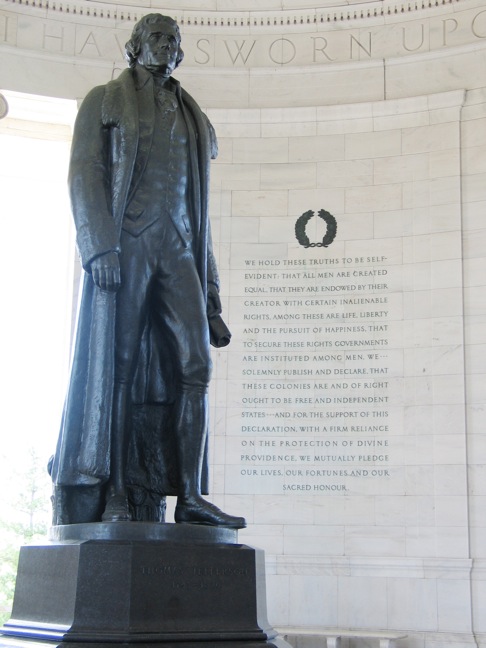
Jefferson_Memorial_with_Declaration_preambleGrowing up, my idol was Thomas Jefferson.  As one of the founding fathers, he was a giant in US history.  History books aimed at children described all of his great achievements, including authoring the Declaration of Independence; founding the University of Virginia; as President, sponsoring the Lewis and Clark expedition and purchasing Louisiana territory; and his role in the Revolution.  He was one of the pillars upon which this country was founded.  Further, he was an amateur scientist and inventor, a man who was always investigating the natural world around him and who probed the secrets of that world.  He was a renaissance man, a man who could achieve anything he set his mind to, a true American genius.

That was in the children’s books, and, of course, it is all true.  However, there are many aspects of Jefferson’s life that didn’t make it into those books, actions and words that reveal that Jefferson was all too human.  Even setting aside his relations with Sally Hemming, there were such flaws in his character that demonstrate he could be the pettiest of men.  He was a man nearly defined by contradiction.  Writing that “all men are created equal,” he nevertheless never freed the vast majority of his slaves, some 130 being sold upon his death to help settle his debts.  And, speaking of those debts, while he railed against the Federal government’s spending, he himself never took account of his own, racking up mountains of personal debt that he could only sustain by taking out loans. He advocated small government and attacked his rival — and friend — John Adams for excessive use of executive power, but then, in an even bigger expansion of that power, purchased the Louisiana territory.

However, the most disappointing thing that I’ve learned, for one who so idolized him as a boy, is his shear pettiness and vindictiveness.  Jefferson, while never publicly attacking any rival, supported many newspaper men in their slanderous attacks of enemies, even those who had been dear friends at one time, such as Adams.  The words he had these newspapers print on his behalf were vicious and vile, at a level that almost makes our current politics seem cordial.  But, when confronted, Jefferson always deflecting the blame onto others, never taking any responsibility for his own actions.  Jefferson even directly undermined the administration of Adams while serving as his Vice President.

While there is still so much to admire about Jefferson, especially the mind behind all of the powerful words that form the foundation of our country, the man’s actions certainly do not live up to those words.  As I read more and more about Jefferson and the Revolutionary era, the more I am dismayed by the man my idol really was.

I don’t know if there is any real lesson to take from this, except that there are no perfect people out there; even the best of us are flawed.  In an era where idols are now athletes and actors, who continuously show us that they are no more deserving of that respect than anyone else, it is both unsettling and liberating at the same time to realize that even those who we’ve put on the highest possible of pedestals were human, just like us.  Maybe it is even more amazing what men like Jefferson accomplished, in spite of their imperfections.

Expectations and Drive

On the way to work yesterday, I heard a story on NPR about India.  They were discussing how there is such a fine line between rich and poor in that country, and were interviewing an Indian man who is very poor.  He and his wife scrape every penny they can from their earnings for tuition for their three year old daughter.  “I pray every day that she can lift her family out of poverty,” he said.

My first reaction was to feel sorry for this little girl who has all of these expectations on her before she even knows anything about the world.  Her family is essentially placing all their hope on her, that she can find success enough for the whole family.  This is common enough throughout the world, and similar stories have played themselves here in the United States.  It’s certainly a large burden placed on her little shoulders.

However, as I thought about it more, I looked at it from the other side.  This man and his wife are doing everything they possibly can to ensure their daughter has a brighter future, a better life than they did.  They work hard to give her the opportunities that they didn’t have.  And, while there is a great burden on her, it is only because her family loves her so much to do all they can to make her life the best that they can possibly make it.  They have a drive and desire to better her life.

And I wondered about the US and how it just doesn’t feel like we have that drive any more.  We are content with what we have.  We have good lives, especially in comparison to this Indian family, but we don’t have the drive to be any better.  My generation is possibly the first in the US that is overall worse off than our parents.  We don’t have the ambition to make something better of ourselves.  We are content to be where we are.

My dad, and my mom’s grandparents, came to this country to better themselves and their lot in life.  They gave up everything they knew, all that was comfortable, to go to a foreign land where they didn’t speak the language, to engage in work that they knew little about, all for the promise of a better life.  And, while my mom and dad didn’t place any undue burdens on me, didn’t push me to be anything more than what I wanted to be, they worked hard to ensure I had the chances to do exactly that, be what I wanted to be.

I look around and I see families that have no desire for a better life, no desire to improve their lot.  Their life was good enough for their parents and their grandparents before them, and it will be good enough for their children.  I think that, to some extent, that’s why education is not as highly valued here as I would hope.  Parents don’t care all that much.

I’m very proud of how hard my parents worked to give me the best chances in life that they could.  And, while that little Indian girl has some very large expectations placed on her, it’s only because her family wants what’s best for her too.  I wish we all had a bit of that drive, a bit of that want to better ourselves, to better our lives.  It is that kind of drive that made the US the great nation that it is and I fear that maybe we’ve lost it.

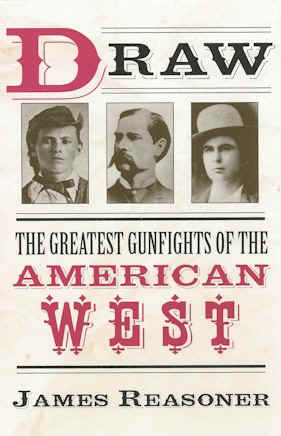
Draw by James Reasoner

draw-reasonerThe Wild West is one of those times and places that pulls strongly on our imagination, with images of danger, adventures, and freedom. Daring bank robberies, shoot outs, posses chasing outlaws through the wilderness, saloons and gambling. Men such as Billy the Kid, Wild Bill Hickock, Wyatt Earp, Bat Masterson, Doc Holliday. These are the icons of the Wild West. Typically, however, we have next to no real inkling of the real Wild West, with most of our knowledge informed more by Hollywood than history. In his book Draw, James Reasoner explores the truth behind the stories of these men and their exploits, truths that are often as exciting and interesting as anything Hollywood could ever invent.

Reasoner focuses on gun fights, the violence that characterized the lives of these men. Some of these men were out-right sociopaths, killing with no emotion nor remorse, over things as trivial as snoring too loudly (ok, that was an accident, but there was still no remorse). Often motivated by the desire for wealth, many of these men started off on gangs that robbed stage coaches, trains, and banks, but soon events got beyond their control, with posses in chase and life on the run. Some were able to escape justice for a while, settling in another territory or moving back east, but often, the bullet eventually found its target.

Draw looks at some of the lesser known gun battles of the Old West, sometimes skipping the more well known ones almost altogether. For example, the shootout at the O. K. Corral is only briefly touched on as part of the context of the death of the one Earp brother who wasn’t there. Not much is made of the two most notorious outlaws, Billy the Kid and Jessie James, except in how their deaths were part of the narrative of other men. Maybe that’s because these more famous events and men have so much more written about them that Reasoner figured there wasn’t a need for even more, focusing instead on the lesser known battles. In any case, the events and men he has chosen are compelling.

There are a couple of things I found very interesting. Reasoner tries to emphasize is that the Old West image of two men facing each other on Main Street in a showdown, an image that some historians have said is pure Hollywood fiction, did occur at least a few times. He gives a couple examples of exactly this kind of shootout. Also very interesting is how much New Mexico plays in the history of the Wild West. When we hear of the exploits of Billy the Kid and so on, we don’t have much context for the where of it, just a generic western setting. However, many of these men lived and worked and robbed in New Mexico, as well as Kansas, Colorado, Texas, and California. It makes me want to find some of these places in New Mexico and see what there might be to see. Finally, Reasoner describes some truly remarkable men — on both sides of the law — who, facing a barrage of bullets, kept their cool to gun down their enemies. They let the others wildly shoot away while they steadied their aim and let loose a deadly shot. Fast wasn’t always the most important factor in who won the day.

Probably the most interesting aspect of all of this is when these events occurred. These stories involve men who span the worlds of the Civil War to World War I. Many were either Confederate or Union soldiers who moved West to find their fortune. But the last few events described occurred around 1917, near the end of WWI. To me, this was a near epiphany as WWI, having occurred in the 1900s, feels like the modern era, while the Old West seems to be another time. But they overlap. And, indeed, there was less time between the Civil War and WWI than there is now between WWII and our own time. Thus, the backdrop of the Civil War was likely very important context for most of these men, regardless of what side they were on. That, while in Europe men were dug into trenches and airplanes were engaged in aerial combat, men in the US were still robbing banks by horseback is just a bit amazing to think about.

I only found one aspect of Reasoner’s writing a bit annoying. In setting up each story, he gives some context to the time and place and more than once uses a phrase such as “The bustling town grew up around the miners who dug their wealth from the ground and the saloon keepers and soiled doves who came to extract that wealth from the miners.” This type of phrase — though probably very accurate — got a bit repetitive, but maybe that shows how similar all of these western settlements were at the beginning.

Draw is a very entertaining read and has me looking for more about the Old West.

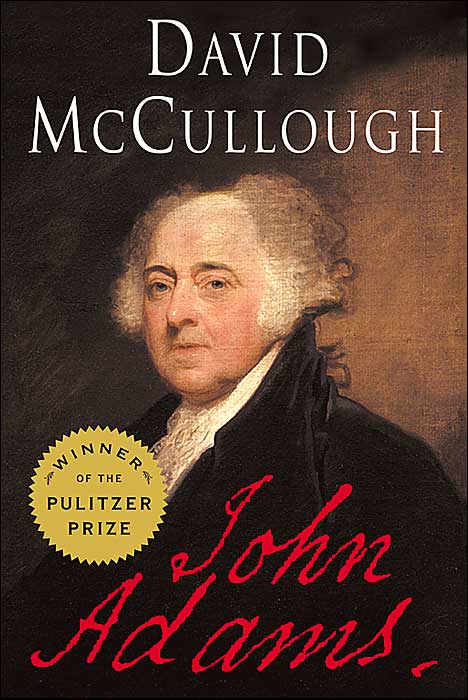
John Adams by David McCullough

7190999Of the founding fathers, the three that probably stand out are George Washington, Thomas Jefferson, and John Adams.  Of these, however, John Adams is probably the one we learn the least about, this in spite of the fact that, of all of the founding fathers, “we” probably know the most about him, a result of his prodigious letter writing and the diaries he kept.

It’s a shame, really, as Adams is both a very important and very interesting character.  While Washington certainly merits his place as the father of our country, he is also rather dull, comparatively, having not written his private thoughts.  Jefferson is a very interesting character in his own right, a man full of contradictions, embodying both the highs and lows of the human essence.

In contrast, it can be said that Adams is the picture of integrity, the one word that maybe defines his career over all others.  He was also loyal to an extreme.  Compare his behavior as Vice President to Washington with that of Jefferson’s as Vice President to Adams.  Even when Adams disagreed with Washington, his loyalty to the administration meant he wouldn’t undermine Washington’s efforts.  Jefferson so disagreed with what Adams tried to do, on the other hand, that he actively tried to derail Adams’ administration.

Adams’ long and distinguished service to his country — beginning as a delegate to the Continental Congress, through years as a diplomat in Paris and London trying to secure first the finances to support the Revolutionary War and then to secure the peace, and finally as first Vice President and then President — are admirably covered by David McCullough in his excellent biography of John Adams.  McCullough quotes extensively from letters to and from Adams, as well as letters written by his wife Abigail, Adams’ diaries, and newspapers of the time to really bring both the era and Adams to life.  In fact, there were times where he spent relatively lengthy sections on, for instance, Abigail’s opinions of French or London society, which felt at times tedious.  However, by the end of the book, when Adams’ family members start to pass away, these moments actually hit the reader as, by that time, you are so emotionally invested in these people.  The tediousness of those sections is more than made up for by the impact on the reader near the end.

One of the most fascinating aspects of the narrative is the relationship between Adams and Jefferson, which has been of much discussion.  Here it comes alive, from the respect they shared at the Continental Congress to their blossoming friendship in Europe to the disintegration of that friendship during their years in the Federal government, only to finally be renewed in their later years.  That such a strong bond of friendship could be nearly destroyed by politics is dismaying to watch, especially considering the role that Jefferson — a boyhood idol of mine — played.  That these two men could at least partially reconcile their differences should speak volumes to us today.

Another very interesting aspect of the era, related to the relationship between Adams and Jefferson and the politics of the time, is how nasty those politics were.  We are often dismayed at how politics is practiced in our day and age.  In terms of pure nastiness, however, it does not compare to the politics of the founding of our country.  That a great man like Jefferson could attack his one-time friend Adams so strongly and do so hiding behind others is borderline shocking.  And Jefferson’s behavior pales in comparison to men like Alexander Hamilton who actively subverted Adams’ own cabinet.  Maybe there is a lesson here, that, in spite of how bad things seem to be now, our country has survived worse times and will do so again.

Adams’ life is a fascinating subject and McCullough does a wonderful job of bringing it, well, to life.  After reading McCullough’s account of Adams’ life and career, I have a new-found and deep respect for Adams, both as a man and a politician.  I highly recommend this book.

Blah, blah, blah… I've got the blahs.