Toys

A couple of comments on toys…

My wife’s dad has a nice woodworking shop, which he uses to make great bowls and boxes.  He let me play with the lathe a little bit.  I thought tops would be a relatively easy thing to make so I took a stab.  I had a basic idea in mind when I started, but as I turned the wood, something else developed.  The one on the left was my first attempt.  It was sort of what I had in mind as a more traditional top, but then I put different grooves and such as I went along.  I wasn’t really thinking well, though, and separated it from the lathe before sanding it.  It turns out it is a lot easier to sand something like this if you keep it on the lathe and let it spin as you sand it.  Same with finishing.  My father-in-law had a finish that you apply as the lathe is spinning.  It heats up a wax that is part of the finish that makes the finish deeper and more even.  With those things in mind, I made the second top, which is somewhat simpler in overall design, except for the depression at the top.  It is also wider, with more mass distributed further from the top axis, which I think is why it likely spins a lot longer than the first one.

I made these for my daughter, who I think is a little bit too young to really care.  Her cousin, though, who is 3 and a half, really enjoyed watching them, even if she couldn’t get them to spin.  It makes me want to get a lathe.  It seems there are lots of cool things you can do with just that one tool.
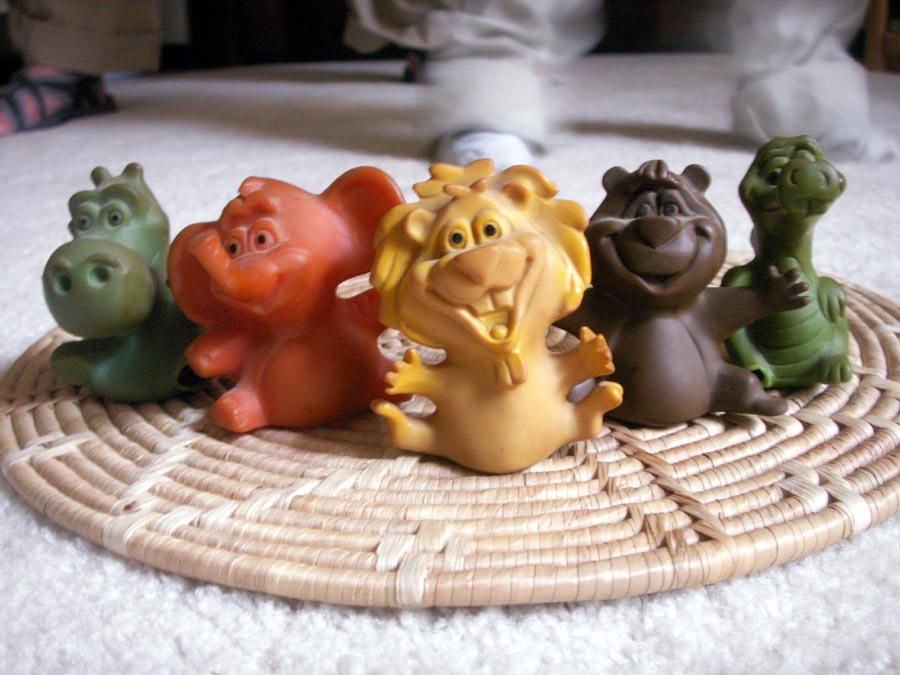
At left are are a couple of finger puppets I got from my godmother when I was a kid.  I don’t remember playing with them, but I remember them being around when I was older.  Some of them, especially the alligator, are a little worse for wear, but overall they’ve held up very well, considering they are maybe 35 years old or so and have not been treated in the most kind manner (after all, I was a kid!).  I just find them great.  The expressions are awesome (a buck-tooth lion?!?) and while the coloring is simple — all solid for each one — the shapes are very nicely designed.
I don’t know much about these.  All they say on the bottom are “Made in Japan,” something you don’t see on toys very often any more.  I don’t know if Japan used to be a bit like China is now, the maker of all things like this.  I’m really curious to know more about them.  Were they part of some bigger set?  Were they some sort of promotional item?  Anyone know?

They just seem so great in their simplicity, the kind of thing that we just don’t see much of any more.  Sure, they are plastic, but they don’t make any noises, they don’t take any batteries (my daughter was trying to squeeze them, either trying to get them to squirt like her bath toys or make noises like some of her stuff animals).  I just really like what they represent to me of a somewhat simpler time when toys left something to the imagination.  I hope that my daughter enjoys them when she is a little bit older (those are her feet in the background, next to my wife’s).

Star Trek, reimagined

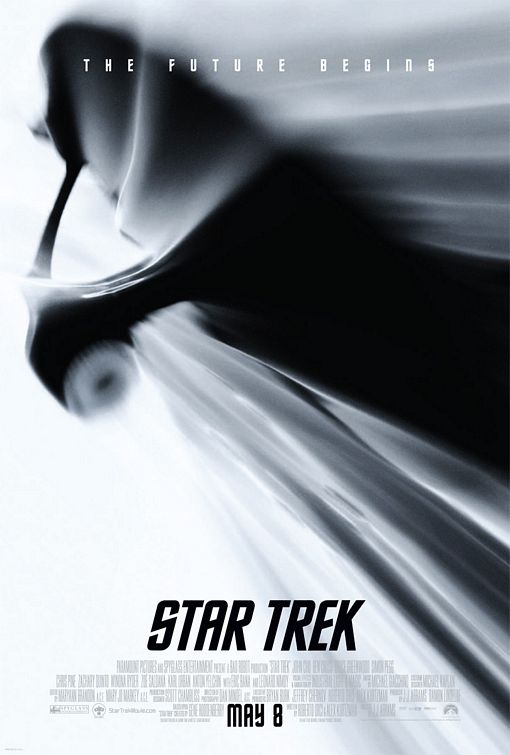
Hollywood has a hard time coming up with new things, it seems, and they are constantly revisiting old ideas that were successful in the past.  It seems that most of the time the retoolings of those past shows, whether for the big or small screen, are pretty spectacular failures or, at best, luke warm, middle-of-the-road outings.  However, Star Trek follows in the vein of the recent Battlestar Galactica and is a truely great and fitting tribute to the original.

Lisa and I saw the new Star Trek today, the first movie I’ve seen in the theater since our daughter was born.  I wasn’t sure exactly what to expect, but I’d heard good things and was excited.  That said, I’m not a huge trekkie and definitely not a big fan of most sci fi, as I’ve mentioned before.  I tend more towards fantasy.  The sci fi I do enjoy tends to be the gritty, dark stuff, like Battlestar Galactica or Neuromancer.  Star Trek definitely does not fit in this vein, as it is an essentially optimistic universe.  However, I did enjoy the original series, with Kirk, Spock, McCoy, and the others.  And the movies that featured that cast.  However, the later series felt flat to me.  I never much liked The Next Generation or Voyager, though I found Deep Space 9 enjoyable enough.

I’m not sure exactly what about the first series I enjoy, but maybe it was the younger point of view I watched it from.  Or, the fact that it didn’t take itself so seriously.  The first series had more than its share of camp.  But, the adventures the crew had were also outrageous, encountering Apollo and the other Greek gods and being transported to the past in the era of gangsters.  I think it was that swashbuckling attitude that I enjoyed.  The sci fi was just a vehicle for entertaining stories.  It wasn’t the story itself.  The later series, in my mind, got too serious, took the sci fi too far and made it the focal point of the story.

The new movie does the original series proud.  There are flashy sci fi elements there just for the sake of being there (such as the police on their hover jets), but overall, they serve to advance the story.  As in the original, it is the characters that drive the story and all of the major originals are there.  We learn how they all meet one another and the side characters, such as Uhura, Chekov, and Sulu, are all given more prominent roles and thus personalities than in the original show.

The plot is, for the most part, strong, though I found the focus on Spock a bit of a stretch, though maybe these kinds of vendettas are all to common in our own world.  Even though you know that everyone will survive, there is still the suspense of how will they survive, how will they get out of their current jam.

And there are lots of nods to the original series, most obviously the signature lines of each character, but others as well that I’m sure I missed (Lisa pointed out that the only time Pike was seen in the original series, he was in a wheel chair).

I also liked how time travel was dealt with in the story.  Instead of paradoxes and the such, it just led to an alternative time line.  That means the creators are free to go in a completely different direction than all that came before, essentially rebooting the franchise.  Some might feel this is a cop-out, but I think it is a great way of building on what came before without being burdened by it and having the freedom to tell those stories they wish.

Finally, the special effects are spectacular and, like all of the good Star Trek movies, the villain is a real menace.  How far he goes for his revenge is just amazing, and it is also a shock how far the creators went in showing how bad the bad guy really is.

One funny, personal moment.  Lisa commented, during the scene where young Spock is being talked to by his dad after being in a fight, that he looked like I did when I was a kid.  Later, when Spock does his signature eye brow raise, she made the further point that that I do the same thing and that maybe I have a lot in common with Spock.

In the end, I highly recommend Star Trek.

Peace

A short story I wrote in January, 1999, with some minor editing today.

He pulled his gun-belt tight, clasping the buckle, and reached over to grab his old brown cowboy hat. He walked towards the door. As he turned the handle, he looked over towards the bed and at her. He had known Linda only for a short while, but his feelings for her ran very deep. She was a very adventurous woman, and he felt like the only thing keeping her here, keeping her from fulfilling her potential, was him.

Linda was still asleep, resting peacefully in that large bed, not knowing he had woken up. He envied that peacefulness, a feeling he had never known in his life, but always craved. A tear ran down his cheek as he made his silent goodbye. He quietly opened the door and left.

He made his way towards the center of town. He was definitely nervous and stopped by the small saloon. He knew everyone there, but no one wanted to talk to him. Which was fine with him. He had no desire to talk to anyone right now. He ordered a shot of whiskey and slammed it down before looking at the clock behind the bar. Five ’til nine. It was time.

He pushed his way through the swinging door of the saloon and looked down the street. Roy was already waiting, wearing an outfit not all that different from his own. He also had an old, faded hat. His boots were dusty from the ride into town. And his gun also rested against his hip.

Roy wasn’t a bad man, not in any sense of the word. Hell, if circumstances had been different, he and Roy might have been partners, might have been able to run one of the biggest cattle outfits in the territory. But, a land dispute between their fathers had grown to the point of a feud, and the twisted code of honor of the West obliged these two sons of stubborn men to continue that feud. The feud had led to this.

He walked towards the center of the dusty street and faced Roy. Roy tipped his hat and he did the same. They both held a moment of silence, asking, in some way, for forgiveness from the other and, at the same time, forgiving the other for what might happen.

After a minute or two had passed, and some observers had started to peer through doors and windows, both he and Roy gave a silent signal that they should get things under way.

He dusted himself and checked his gun. He then steeled himself, planting both feet at shoulder width. He steadied his right hand above his gun. He looked over at Roy, who had done the same.

A tense second or two passed. Or was it an hour or two? It felt the same.

He noticed Roy’s hand twitch and time froze. His hand, feeling like a lead weight, found the cold metal of his revolver. His fingers wrapped themselves around the butt of the gun. He felt himself pull the gun out of the holster, aim, and fire. His bullet, right on mark, grazed Roy’s shoulder. He heard a scream of pain just as he heard the explosion of gunpowder from Roy’s gun. He could see the bullet slowly coming towards him. He spread his arms almost as if to embrace it. He heard more than felt the bullet enter his chest and lodge itself somewhere near his heart. For an eternity, he fell, his body making a dull thud when it hit the gound. A cloud of dust settled on him as his vision went black. His only thought as life left him was that maybe, now, he finally will have the peace he had craved.

Wicked by Gregory Maguire

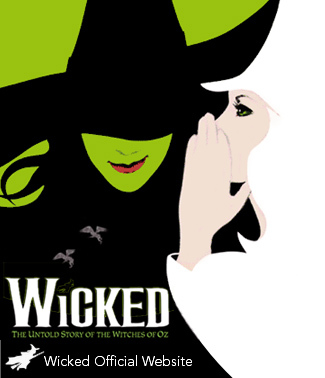
The idea of taking a familiar story — a fairy tale, a common legend, or a children’s story that all of us know — and turning it on its head appeals to me.  I like the idea of taking the familiar and presenting it from a different point of view.  One of the best examples of this that I’ve encountered is Neil Gaiman’s retelling of Snow White in his Smoke and Mirrors.  Gregory Maguire does it in his own way with Wicked: The Life and Times of the Wicked Witch of the West.

Wicked tells the story of the Wicked Witch of the West, known and feared from the Wizard of Oz stories, form her point of view, giving her a name — Elphaba — and a history.  Is Elphaba really wicked, as described in the original Wizard of Oz, or is she on the losing end of history, her story being told by those who hated her most?

Maguire does a great job of creating a background for Elphaba and her sister, Nessarose, the eventual Wicked Witch of the East.  Especially as a young girl and a young woman, Maguire gives Elphaba a depth and richness that is really captivating.  He creates a setting in which the land of Oz becomes a complex place, full of history and politics.  Elphaba grows up in this land and becomes the woman known as the Wicked Witch of the West as a result of the injustices around her.  That is, her becoming “wicked” is a result of the events happening around her.

Overall, I greatly enjoyed the novel and had a hard time putting it down.  I really felt that Maguire did a good job of creating a character in Elphaba that was both interesting and one that I cared for.  The novel centers on her — other characters come and go as time passes.  There are often big jumps in her life as we move from one major period to another.  All eventually lead to the preordained outcome — Elphaba is killed when Dorothy douses her with water.  But, the events that lead to that eventuallity are still compeling, maybe even more so, because the outcome is known.

There were a couple of things that didn’t quite ring true to me.  For a character that is supposed to be so menacing in the original story, there just didn’t seem to be any real reason for Elphaba to be viewed as overly menacing.  She doesn’t do anything that really threatens the Wizard, for example.  She maybe has an outpost in a backwards part of Oz, but how that matters to the Wizard is never really demonstrated, not in a concrete way.  And the last few acts in which Elphaba engages — creating the flying monkeys and obsessing with the shoes Dorothy got from her dead sister — seem forced, as they had to happen to mesh with the original story but they seem either trivial or of no real importance here.  For example, regarding the monkeys, they play a role in helping get Dorothy to the Witch’s castle, but that is the only time they leap into action.  I felt that these types of details, necessary to make Maguire’s Witch become the Witch of the Wizard of Oz, could have been done in a more meaningful way.

Similarly, the appearance of Glinda, the Good Witch, a character that Elphaba knows well from school days, is brief and anticlimactic.  I expected much more from the encounter, more sparks to fly, as it were.  However, again, Glinda’s appearance late in the novel serves to link this story to the original, and not much more.  I felt the relationship between the two could have been developed more, their mutual antagonisum developed more.

But, maybe this is the point of the novel: why was Elphaba viewed as wicked?  What did she do to deserve this reputation?  In the end, maybe not much.  She certainly wasn’t evil by any definition of the word.  Her sister, who ruled with religious conviction, did more harm in the world and was hated by more than Elphaba ever was.  And Glinda, the “Good” Witch, is a socialite who throws around her money and her status and has no real conviction of doing anything worth while.  Only Elphaba, who fails miserably at most of her undertakings, does what she does out of a sense of justice and right and wrong.  And, as a result, is the one who is perceived as the most evil.

Overall, while the ending maybe wasn’t what I expected, it was still a very engaging novel.  I’m not sure I will immediately delve into the other books Maguire has written set in Oz, but they will be on the bookshelf, waiting for a future day.

Maguire has a website dedicated to Wicked.

The Ballad of Halferd

A while ago, a friend of mine and I toyed with the idea of writing a novel based upon our role playing experiences. So far, we haven’t made much progress. However, I wrote a few short stories that are attempts to develop background material for that eventual novel. This is one of those stories, which I also had put up on my personal site, but I thought I’d share it here as well. This was originally written on March 27, 1996.

***

Tarn peaked from the top bunk down at his cell-mate, Halferd the dwarf. The dwarf’s face was still wet from his evening shave. He was lying on his back, his eyes closed, some ancient dwarven hymn rumbling in his chest.

“Halferd?”

The dwarf opened his right eye and glanced up at Tarn. “Yes, kid?”

“Why are you here?”

“What do you mean, why am I here? The gods made it so. How am I supposed to know why they do what they do?”

“No, I mean here, in the dungeon. How did you end up here?”

“Oh, I see. Well, it all started a while back. A long time ago as humans count time, but it seems like yesterday to me…”

***

There was a knock at the large wooden door that served as the enterance to the king’s chambers. The king was sitting behind a large stone desk. His face was thin and creased. His red beard was dull and streaked with grey. He coughed as he talked with his closest advisor, an old dwarf with a long white beard, who sat in the corner.

“Come.” called the king.

The door opened. In stepped Halferd, captain of the king’s personal body guards. He was a powerfully shaped creature with arms as thick as any man’s legs. His bright yellow beard flowed down across his chest, past the belt that carried his warhammer. On his back was strapped his weapon of choice: a Durinian heavy crossbow.

“You asked for me, sire?” asked the body guard.

“Yes, old friend. Please, come in.” The king waved over to his advisor. “Nurid and I want to discuss something with you.”

Halferd entered and sat down opposite the king.

“You don’t look too good, sire. Are you ok?”

“Please, Halferd, call me Relin. We’ve been friends too long to go by this royal protocal bullshit. And no, I’m not doing too well. That’s part of the reason we’ve called you here today.”

“I see, Rel.”

“Nurin, would you explain the situation to Hal?”

“Of course, Relin.” The old dwarf stood up and walked around the room. “Halferd, as you no doubt have noticed, there has been a lot of tension in the air lately. Some of the clans have complained about their economic state and equal representation in the Hall of Warriors.”

“Yeah, I’ve noticed. It seems like civil war could break out at any time out there.”

“Precisely. We have reliable sources that tell us that Noruk, the leader of the Diamond clan, and Slan, leader of the Lead clan, are just about to forge an alliance and try to over throw the king.” Nurin nodded to Relin.

“I see.” said Halferd. “If that happens, the kingdom will be, for all intents and purposes, destroyed.”

“Correct, Hal,” replied Relin, his voice a heavy rasp. “However, Nurin and I think we’ve come up with a plan and we need your help.”

“Whatever I can do, Rel. You know I’m behind you.”

“As I had hoped.”

“Being king has taken a heavy toll on Relin,” continued Nurin. “He’s become frail and sick, and will probably die soon.”

“Is this true?” Halferd asked, looking to his friend.

“I’m afraid so, Hal. What’s more, I fear that my wasting away will give Noruk and Slan the perfect opportunity to stage their revolt. Therefore, Nurin and I have decided that I must die in a… let’s say more dramatic way.”

“Yes, Hal. The king and I believe that if he is assassinated, it might be the kind of thing that can unite all of us against a common enemy. And it just might stop any civil war.”

“What? Who is going to assassinate you? You are the only thing that is keeping everyone from revolting. It’s their loyalty and respect of you that is keeping them at bay! Who would do such a thing?”

Relin looked into the eyes of his old friend. “You, Halferd.”

“Me?”

“Yes,” replied Nurin. “We have been relying on your loyalty to the king to help us carry out our plan.”

“You mean to murder the king.” Halferd eyed Nurin suspiciously. “And what do you get out of this, Nurin?”

“Nothing,” replied Relin. “He will die too.”

“I see. Are you sure that this is the best way?”

“It is the only way that we can see,” said the king, sighing as he reclined in his chair.

“I still don’t know.” said Halferd. “I don’t know if one solitary assassin would be target enough for all of the people to turn their hatred towards.”

Nurin sat down on the corner of the desk. “We don’t think so either,” he said. “That’s why the rest of the Royal Body Guard is going to help you.”

“They’ll never do it!”

The king coughed. “We’ve already talked to them, Hal. They don’t know the details, but they are willing to help. They know the consequences. More than likely, they will all be executed when they are caught. It is you, the leader of the traitors, who will receive the harshest sentence.”

Halferd whispered under his breath. “Exile.”

“Exactly. I know I am asking a lot from you, Hal, but I see no other way. We’ve been running over scenarios for almost half a year, and this seems the most plausible. What do you say?”

Halferd looked at the king, a mixture of fear, resignation, and pain in his eyes. “You already know my answer. That’s why you asked me here in the first place.”

“Thanks Hal. Know that, even though the kingdom will never know what you are about to do for your people, I do, and I thank you.”

Nurin walked over to a cabinet and grabbed some scrolls. He handed them to Halferd. “These are the details of the plans for the assassination. Your men don’t know about these, so you will have to fill them in. You need to make sure these are destroyed before anything actually happens. The last thing we need is the revelation that this was all planned by us.”

“Of course,” said Halferd. He took the scrolls and stood up, turning toward the door.

“Hal?”

“Yes, Rel?”

The king stood up and walked over to his friend. The weight of his office was obvious as the dwarf’s body hunched over as he walked. He stood infront of Hal.

“I’m really sorry I have to ask you to do this. I hope you understand.”

“I do, Rel.”

The two men hugged each other. Then, quickly, Halferd opened the door and left, a tear running down his cheek.

***

“Well, Tarn, after that, things went pretty fast. My men and I were supposed to storm the throne room when the general of the army was away. It was his role, unbeknownst to him, to capture us after the assassination. The king has already named his son successor several years before. However, his son wasn’t all that popular, so he was also one of our targets. The king figured that, if his successor was killed, Hagorn, the general, would probably be named king, and everyone felt that the people could rally behind Hagorn, especially if he was a hero for capturing the traitors.

So, during one of Hagorn’s excursions, while the king and some of his advisors were discussing the chances of war with the orks, my men and I went into action. We were, of course, present in the room, being the body guards of the king. There were five of us. I gave the signal and two of them immediately ran to the royal family’s quarters to kill the king’s wife and two daughters. I don’t know if the king had told them about the plan, but he felt that we had to do this in order to make the assassination that much more tragic and rally the people that much more. His son and brother-in-law were in the throne room along with several of their other advisors, including Nurin. As the three ran off, one closed the doors to the throne room and bolted it shut. The two other men, one of which was a good friend of mine named Jugad, and I swiftly went at the advisors. It didn’t take long to kill them all, since none of them were armed, relying on us to protect them. Soon, only Nurin, the king, and his son were left. Jugad smashed the king’s son upside the head with his morning star, splattering his brains all over the king’s bright white robe. The king didn’t even blink. It was my duty to kill Nurin and the king. The two men sent to take care of the royal family returned, their weapons covered with blood. Both the king and Nurin nodded. I took my crossbow and notched two bolts. I aimed and fired one into the middle of Nurin’s head. The poison I had put on the bolt killed him instantly and painlessly. Then I aimed the other at the king. I stared down the bow, right into the eye my friend. I pulled back for a moment, letting the bow hang in my hand on my side. I looked at the king for a moment. I saluted him. My men followed my example and saluted him as well. The king, a tear running down his cheek, looked at us. I raised the bow again as the king returned our salute. The bolt flew across the room, piercing the chest of my friend, puncturing his heart and causing it to explode. The pain was intense but brief.

It wasn’t long before Hagord returned and broke into the throne room. We were vastly outnumbered and two of my men died in the storming. Soon, we were all captured and taken away. As we were pushed along the road running through the main cavern, through the crowd of people who had come to see what was going on, I saw my wife. She looked at me, and turned away, not saying a word. That was the last I ever saw of her.

We were taken to the central market, where we were quickly tried and convicted. They shaved the beards off of everyone of us, a sign of shame for the crime we had committed. As the king had predicted, all of my men were sentenced to death, all except me. I was exiled. They made me watch as my men were bound to gigantic boulder which had an axel running through the middle. Fifty men got on each side and pushed on the axel, making the boulder roll and crush my men. The crunch of their bones, the imploding of the skulls filled the air, but they never cried out.

I received the harshest sentence: exile from the dwarven kingdom. It is hard for you humans to understand this, but our caverns and caves are everything to us. Being forced above ground is the ultimate punishment for us, even worse than death.

After that, I wandered around. At first, I was a body guard to some merchants, then a bouncer at a dive of a bar in the city. Eventually, about fifty years after I had been exiled, I made it here. There was word that miners were wanted, men to excavate tunnels. I relished the chance to dig in the dirt again, to be underground, to be surrounded by solid earth on all sides. I came and was hired. It wasn’t long after that my employer revealed his true colors and imprisoned me down here, to work as his slave. You know the rest.”

There was a silence as Tarn digested what his friend had just told him. After a short while, he finally spoke up.

“Hal, can I ask you another question?”

“What’s that?”

“If having a cleanly shaved face is a sign of shame for your people, why do you still keep it that way?”

“For me, it’s not a sign of shame. For me, it’s a badge, a symbol of the loyalty my men had for me and that we all had for the king and the kingdom. It’s the least I can do for my men, in remembrance of them. Now get to sleep, Tarn. We have a lot of work to do.”

The dwarf rolled over to his side and soon was snoring loudly, loud enough to get yells from some of the other cells. Tarn just stared at the dark ceiling, wondering about the life of his friend, thinking that really, his life hadn’t been so tough.

Blah, blah, blah… I've got the blahs.