
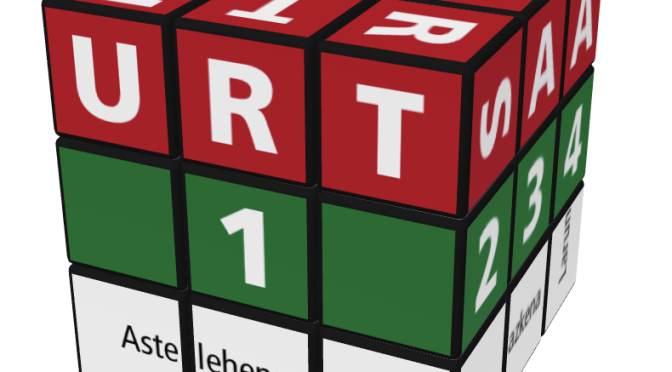
When the ancient Basques looked at the sky, they saw the same thing that other peoples did – stars, planets, comets, constellations – but they gave them different names. I have a brief list of some of those names collected by Professor Jon Patrick. In trying to find a more complete and modern list, I bumped into an article, Astronomy and Basque Language by Henrike Knörr, that delves into the Basque names for a number of astronomically related concepts. In particular, he gives a list of alternative Basque words for the months of the year. I find this fascinating. While Euskara is an ancient language, because it was only recently standardized, a myriad of words exist for things that we might think of as only having one name in English. This gives an interesting view on the different ways that Basques looked at the world around them.
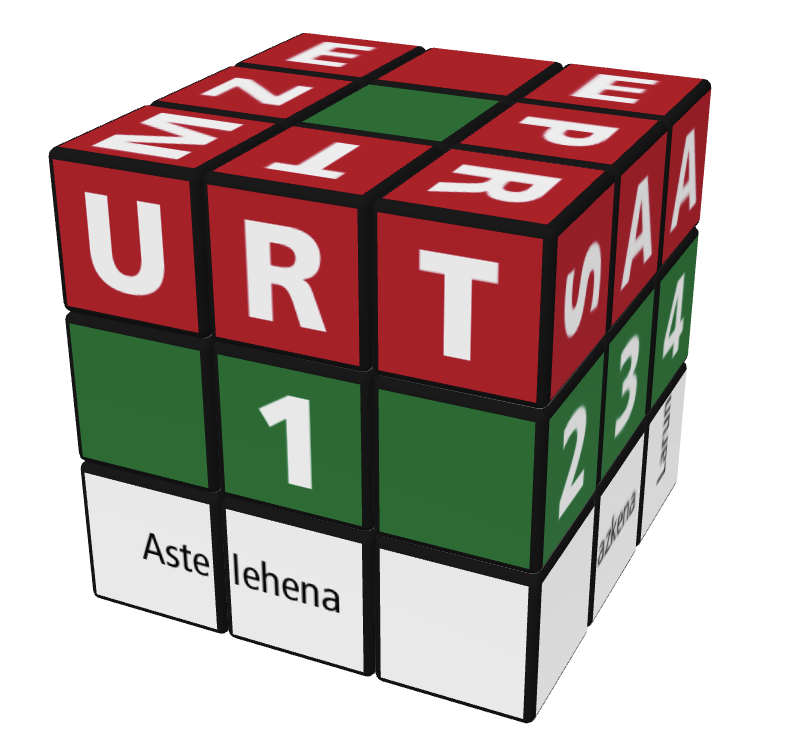
- Many of the names for months end in -il, from the Basque word for month itself hil, though hilabete, which means a complete or full month, is another word for month. This is the same word that used to be used for moon, so just like in English, the words for moon and month have a common origin.
- In fact, the Basque word for the moon, ilargi, most likely means “month light.” Many people incorrectly relate the word ilargi to “light of the dead,” from the Basque word hil, to die or kill. That’s actually what I was taught when I took Euskara classes in Donostia.
- However, the consensus by linguists is that the il- in ilargi means month. Thus, we also have words like ilgora “first quarter” or literally “moon above,” ilbera “last quarter/mon below,” ilberri “new moon,” and ilbete “full moon.” A synonym for full moon is ilzar, meaning “old moon.”
- This following list is summarized from Henrike Knörr’s Astronomy and Basque Language. Labayru has a series of blog postings that also go into these names for the months and elaborates on some of their origins. For example, they say that the reason February might be connected to wolves or bulls is because that is their mating season. The meanings in italic font are best guesses, but the meanings of those names is less certain.
- One thing that pops out in this list is that the same name is sometimes associated with different months. Thus, depending on where you might have been in the Basque Country, garagarril – the month of barley – might refer to either June or July.
A full list of all of Buber’s Basque Facts of the Week can be found in the Archive.
Primary sources: Astronomy and Basque Language by Henrike Knörr; The months of the year in Basque by Joseba Santxo Uriarte and translated by Jaione Bilbao, Labayru Fundazioa
Share this / Partekatu hau:

Discover more from Buber's Basque Page
Subscribe to get the latest posts sent to your email.
Greetings,
October is Library month. Anyone heard of Library Vertical Files? Vertical Files in a library is a collection of miscellaneous un catalogued items like news paper clippings, articles, etc.
It is a quick access of information on people people, places, events, culture–it is a starting point for researchers.
You may want to consider printing or cutting out interesting articles about the Basque culture–take the material to your public library and and ask the librarian in charge if they would consider starting a vertical file of Basque history.
Make sure that you cite the date and provenance of the information. Mentioning a blog? may or may not work. Librarians are overworked and underpaid. Libraries are understaffed and under funded. Looking up a blog takes time. If you show up with papers on hand, it shows that YOU, as a tax payer cares. Something to think about;
Monique Durham