
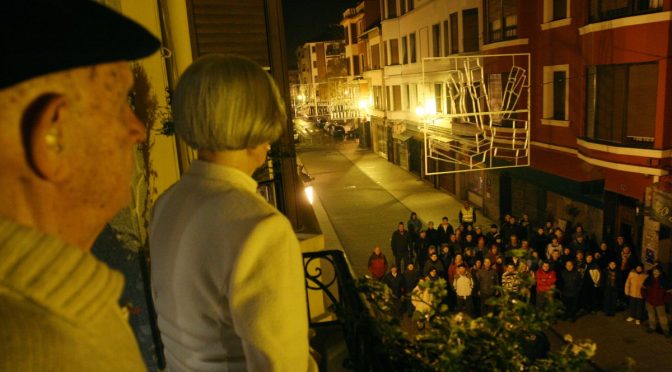
Singing is such a part of Basque culture. More than once, I’ve been in a restaurant where everyone broke into song. Christmas is a time when singing abounds. Leave it to the Basques to then create unique traditions around songs and Christmas. The Marijesiak is a group of singers that roam the streets of primarily but not exclusively Gernika in the early mornings of the days leading up to Christmas.
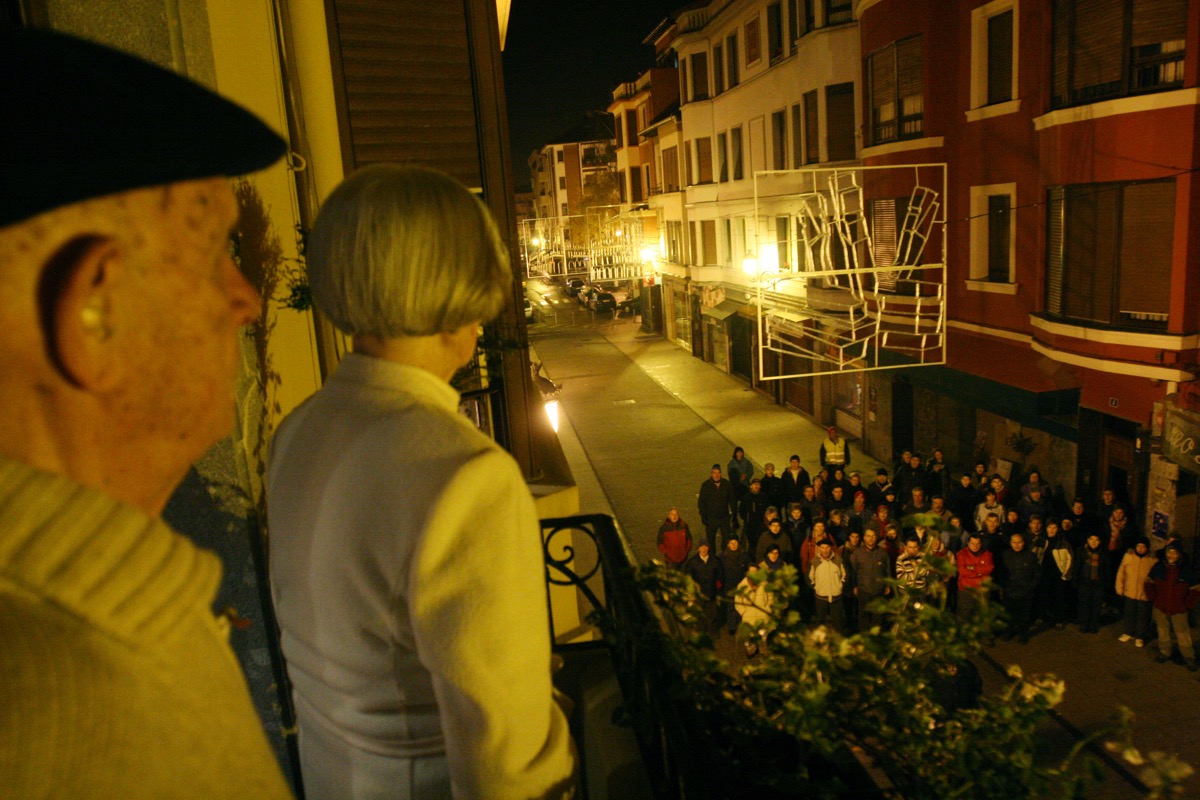
- The Marijesiak is a Christmas tradition that takes place over the nine days before Christmas. Early each morning, starting at 4am, a group of men and women kneel in front of the main church of Gernika, the Church of Andra Mari. They begin singing their verses, with a lead soloist leading the procession through town while the rest of the singers accompanying the lead. There are some 28 verses that the soloist must recite from memory, of course in Basque. The group walks through the streets of Gernika, hitting as many parts as they can. They stop in front of every church, the houses of former members, and even shelters where people hid from the 1936 bombing. In all, the route takes about one-and-a-half hours to complete.
- Each of the nine days, a different part of the Christmas story is told, from the Creation to the birth of Jesus. However, in recent times, some secular verses have also been added, including some that recognize the 1936 bombing of the town and the political reality of the Basque Country:
Hor goiko landetan
eperrak dabiltz kantetan
Errigoitiko alkatiari
Kaka eintziela praketan.
Hor goian Juaniko
hemen behean Periko
eta bien bitartean dago
Martzelino Polanko.
Hor goian Frantzia
Hor behean España
eta bien bitartean dago
Gora Euskadi Askatuta.
In the high lands
the partridges are singing
to the mayor of Errigoiti
that he has poop in his pants.
Up there is Juaniko
here below is Periko
and between the two is
Marzelino Polanko.
Up there is France
Down there is Spain
and in between is
Long Live a free Basque Country.
- The Marijesiak is part of a larger tradition of Christmas carolers. In many parts of the Basque Country, it is common to see carolers on Christmas Eve. In some places they are known as the Joenikuek, “those of Saint Joseph,” or Abenduko umiek, “the Children of the Advent.” However, the Marijesiak, which are most prevalent in Gernika, have maintained the strongest tradition, one that was revived in the 1970s.
- The name Marijesiak comes from the repeated verse of “Mary, Joseph, Jesus, Mary” which over time was combined and shortened into Marijesiak.
- The origin of the Marijesiak tradition is not completely clear. Some theories postulate it arose from medieval religious theater while others state that it came from the local convents, perhaps the Franciscan monastery of Bermeo. The earliest mention we have of this tradition comes from the 17th century.
- In 2018, Ane Miren Arejita became the first woman to be the lead soloist for the Marijesiak.
A full list of all of Buber’s Basque Facts of the Week can be found in the Archive.
Primary sources: Rementeria Arruza, Daniel. Marijeses de Gernika. Auñamendi Encyclopedia, 2025. Available at: https://aunamendi.eusko-ikaskuntza.eus/en/marijeses-de-gernika/ar-154039/; Marijesiak, Wikipedia; Marijesiak, Disfruta Bizkaia; The Marijesiak tradition in Gernika-Lumo (Bizkaia), Labayru; Gernikako Marjiesiak, Urdaibai; marijesiak.eus
Share this / Partekatu hau:

Discover more from Buber's Basque Page
Subscribe to get the latest posts sent to your email.