
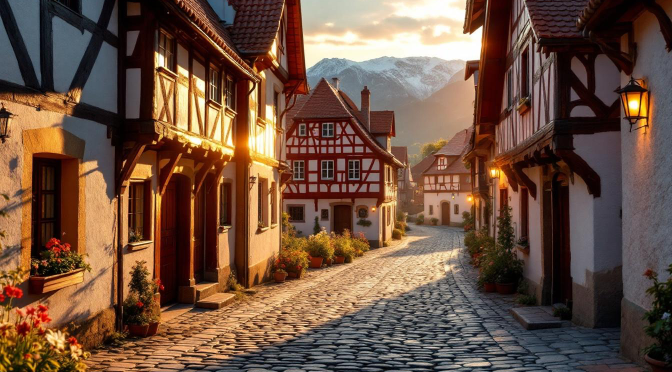
The Basque Country holds so many hidden gems. We are all familiar with the big places – Donostia, Bilbo, Vitoria-Gasteiz, Pamplona/Iruña – but there is so much more to see. Spectacular waterfalls. Strange geological forms. Nature reserves. Small villages untouched by modernization. Ainhoa falls in this last category. A small town in Lapurdi on the border between France and Spain, it has seen a lot of history. Despite all of the conflict, it has managed to retain a medieval charm.
What are your hidden Basque gems?
- Ainhoa is what is called a commune in France. It was founded sometime in the 13th century. As it sat on the border between the Duchy of Aquitaine and the Kingdom of Nafarroa, it was founded as a stop for pilgrims on the Camino de Santiago. In 1238, Theobald I of Navarre bought the toll rights of the town, meaning he was able charge those pilgrims a fee to pass through.
- As Lapurdi was then under the English crown, Ainhoa was at the center of the tensions between the two kingdoms and, in fact, the residents of Ainhoa paid taxes to both England and Nafarroa. This lasted until the 15th century when Ainhoa and neighboring regions came under French rule.
- The town, along with several others, was destroyed 1636 during the Thirty Years’ War (1618-1648) when Spain invaded. Only the church – a recognized historical monument – and one house, named Machitorénéa, which had been built only a few years earlier in 1629.
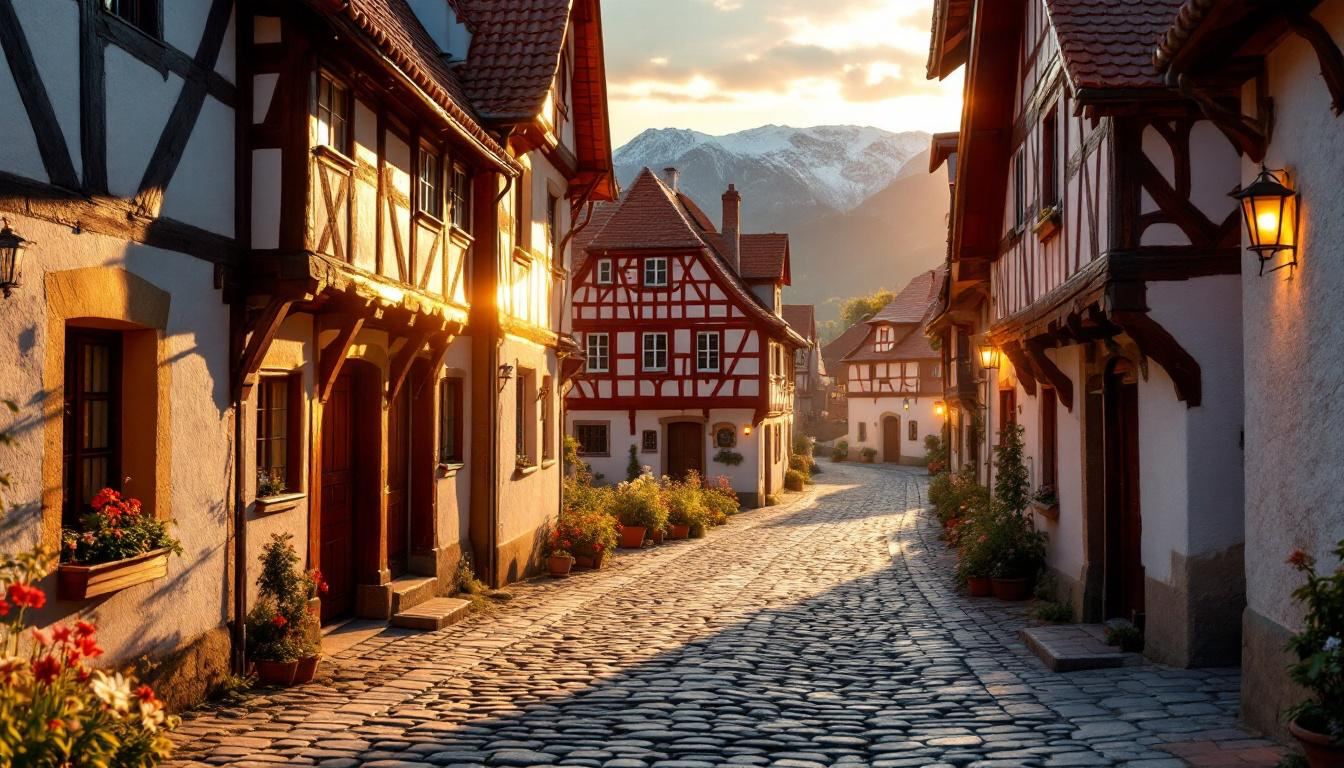
- Ainhoa is a so-called Bastide style town, with one street around which the town was built, and later rebuilt. Today, the town is home to just over 600 people.
- In the early 1700s, Ainhoa, primarily the women of the town, was central to the revolts against the salt tax and other taxes. The revolts started in Ainhoa in 1724, spreading to the rest of Lapurdi and then other parts of Iparralde, in the following years.
- In 1794, during the French terror and after Iparralde had been incorporated into larger French departments, towns like Ainhoa on the border with Spain were declared to be “infamous communes” – people were arrested and deported to other parts of France. These were “any citizen suspected of having an anti-revolutionary spirit or of having an understanding with the Spanish.” They returned later that year but only with great difficulty.
- Today, Ainhoa retains much of that original medieval flavor – it has been named one of France’s most beautiful villages. The cemetery, right next to the church, has some excellent examples of funeral steles that are common to the Basque Country. And, Ainhoa boasts Ithurria, a one-star Michelin restaurant. Amazing for such a small town!
A full list of all of Buber’s Basque Facts of the Week can be found in the Archive.
Primary sources: Estornés Zubizarreta, Idoia; Berger, Marie Claude. AINHOA. Auñamendi Encyclopedia, 2025. Available at: https://aunamendi.eusko-ikaskuntza.eus/en/ainhoa/ar-7408/; Ainhoa, Pyrénées-Atlantiques, Wikipedia; Ainhoa, Le Guide de Pays Basque; This medieval Basque village survived destruction in 1629 – its red-and-white houses hide France’s most authentic pilgrimage town, World Day; Aïnhoa a charming medieval village, Biper Gorri Camping
Share this / Partekatu hau:

Discover more from Buber's Basque Page
Subscribe to get the latest posts sent to your email.