
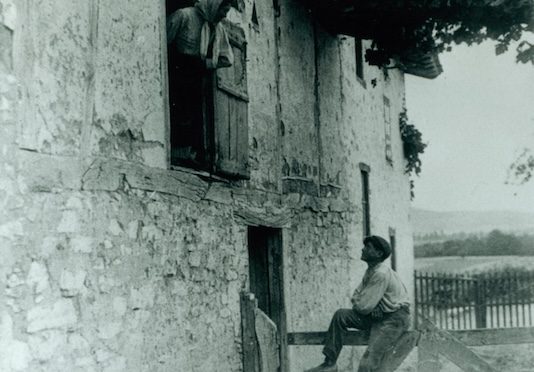
Love is the universal language, so they say. Though sometimes it is more difficult to “speak” than even Euskara! In every culture, there are norms of how men and women socialize and get to know one another, and this is true in the Basque Country. Particularly in rural areas before the advent of phones and the like, there were strict expectations on how young men and women interacted. While that has changed dramatically in the last decades, it is still interesting to see how Basque society expected young folks to navigate this part of their lives.
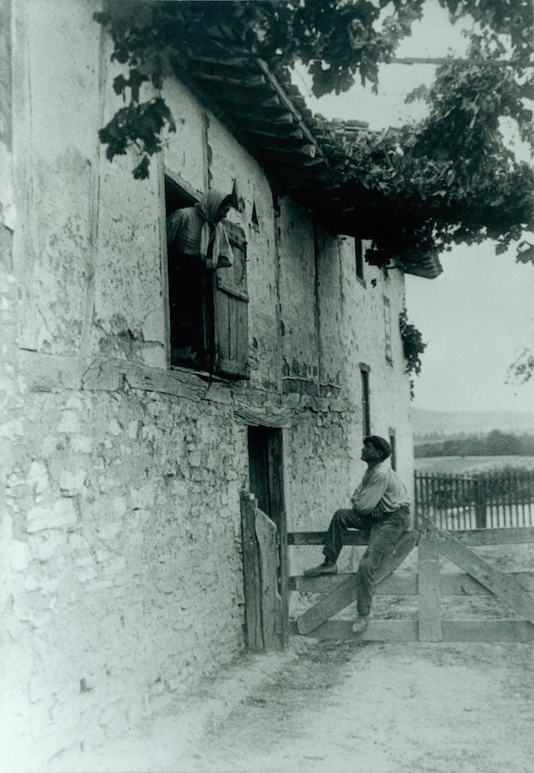
- In old times, before TV and the internet, young men and women had few opportunities to mingle – both worked a full day and had little free time. Dances on Sundays and holidays and meeting after religious services were some of the few occasions men and women could meet. Sometimes, after a big task such as a harvest, a home would host a dance that also brought young men and women together. Or those tasks themselves provided that opportunity. Later, young people had more free time and would often “go to the mountains” to socialize. When a couple was ready to “announce” they were courting, the boy would often walk the girl home.
- Young people who wanted to find a boyfriend or girlfriend often prayed to saints, particularly Saint Anthony, to help them in their quest. In some places, young women would go to the chapel and place a pin in a panel: a black-headed pin for a dark-haired boy and a white-headed pin for a blonde. The first girl to bath on Saint John’s day would find a boyfriend within a year.
- In some places, boys would head to a girl’s house to serenade her as a group. Or, they would go individually and just talk to the girl who was up in her room while the boy stood outside. If another boy had already gotten there, the second might throw stones at him to get him to leave. Sometimes, the girl would let the boy into her room by climbing a ladder.
- Girls also showed their affection, primarily through treats. Piperopilak are sweets, a type of cake, that the girl could buy or make and give to the boy of her affection. Sometimes, she would put it in her pocket and let the boy she liked search her to find it. If a boy was serenading a young woman and she fancied him, she (or her father!) might drop a bollo – a sweet bread – from her window.
- However, it was expected that the boy take the lead and that the girl not show too much interest, that she play hard to get. It was also frowned upon for girls to go out at night – they might be called farolas, or streetlights. If a woman made the first move, she was often criticized with sayings such as “la morcilla nunca vaya tras el gato” – the sausage should never chase the cat.
- Depending on the location, summer or winter was considered the best time to start a courtship. Summers were great because of all of the festivals, particularly the big ones which drew people from multiple towns. However, the summer was also full of hard work, so winters were thought better in some places.
A full list of all of Buber’s Basque Facts of the Week can be found in the Archive.
Primary sources: Inicios de la Relación Amorosa, Atlas Etnográfico de Vasconia
Share this / Partekatu hau:

.jpg)
Discover more from Buber's Basque Page
Subscribe to get the latest posts sent to your email.