
“There are at least two things that can clearly be attributed to Basque ingenuity: the Society of Jesus and the Republic of Chile.” – Miguel de Unamuno
When we think about Basque emigration and the Basque diaspora, places like Argentina and Idaho are the first to come to mind. But, as I recently learned, Chile drew a large number of Basques. Whether for the rugged landscape and nearby coast or simply because that was were earlier relatives had gone or the economic opportunities were so tempting, many Basques made their way to Chile such that, today, maybe 25-30 percent of Chileans have a Basque surname.
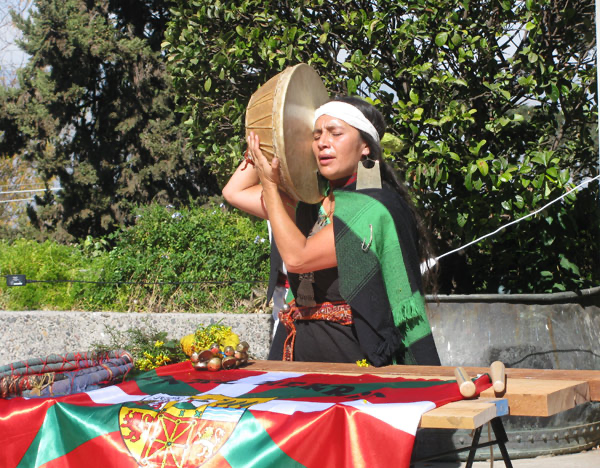
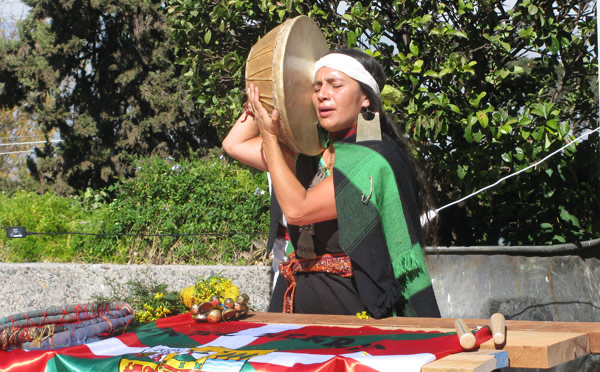
- Before the arrival of Europeans, the predominant group of people living in what is now Chile were the Mapuche. The Mapuche, primarily located in south-central Chile, first settled in the region sometime around 500-600 BCE. They resisted incursions from the nearby Inca and maybe numbered 700,000 to 900,000 when Europeans arrived. Today, they make up about 9% of Chile’s population.
- The first European to set foot on what is now Chile was Ferdinand Magellan, in 1520 during his attempt to circumnavigate the globe. It wasn’t long before the Spanish crown began exploring the region, with colonists and conquistadors arriving in 1535. Several Basques were amongst that first wave, including the Bilbainos Martín de Cote, Francisco Galdemes, Francisco de Isásaga, Domingo de la Orta, and Juan de Larrañaga; fellow Bizkaian Ortún Jiménez de Bertendona; and the Gipuzkoans Pedro de Zárate and Gaspar de Bergara.
- Of the families that settled Chile from the Iberian peninsula in the 1500s – 157 in total – 39 had Basque names.
- The capital of Chile, Santiago, founded in 1541, was designed by Pedro de Gamboa, whose parents were from Bizkaia. Supposedly his friend played the txistu while he was working on the city plans.
- This was only the first wave of Basque immigration to Chile. In fact, even greater influxes occurred in the 18th, 19th, and 20th centuries. In the 18th century, there was such a huge number of Basques coming to the country that, by the end of the century, some 30% of Chileans had Basque ancestry. While much of that immigration was from Hegoalde, starting in the 19th century Basques from Iparralde also started arriving. The Carlist Wars and the Spanish Civil War both led to large bumps in Basque immigration to Chile.
- Basques established themselves as part of the elite of the country, in part due to success in business and their ties back to Iberia, but also because of favorable laws that enabled property to be passed down to single heirs rather than being broken up. Thus, Basques and their descendants have been part of the Chilean elite – the Castilian-Basque aristocracy – and ruling class for centuries. However, the shear number of Basques in the country also means that many people in other parts of Chilean society can trace ancestry to the Basque Country.
- As a consequence of the Basque presence in Chile, many important Chileans have had Basque connections. A few examples include:
- Bernardo O’Higgins, who led Chile’s war of independence from Spain and was Chile’s second Supreme Director, was of Basque heritage through his mother Isabel Riquelme, daughter of Simón Riquelme de la Barrera y Goycochea.
- The Allendes – Allende is a Basque name meaning “on the other side” – have played an extremely large role in Chilean society and politics, including author Isabel Allende and her first cousin once removed Salvador Allende, who was president of Chile from 1970 to 1973. Other presidents of Chile have also had Basque heritage, including José Manuel Balmaceda, Federico Errázuriz Zañartu, and Sebastián Piñera Echenique.
- Actor Pedro Pascal‘s parents are Verónica Pascal Ureta and José Balmaceda Riera, who is a member of that aristocracy.
- Augusto Pinochet, who led the military coup that overthrew Salvador Allende, was dictator of Chile from 1974 to 1990. His mother, Avelina Ugarte Martínez, was of Basque descent.
- Alberto Hurtado Cruchaga, Chile’s second saint, was canonized in 2005.
- Gabriela Mistral (born Lucila Godoy Alcayaga) won the Nobel Prize in Literature in 1945.
- Pablo Neruda (born Ricardo Eliécer Neftalí Reyes Basoalto), who won the same prize in 1971, is speculated to have had Basque heritage, though definitive links are missing. Basoalto is possibly a Basque name meaning “next to the forest” or “the elevated forest” (though some sources say it is a Spanish name meaning “high foundation or base”). He denied his Basque heritage, though, perhaps because of its association with the aristocracy of his country.
- It is estimated that 10-30 percent of Chileans today have Basque heritage, translating to between 1.6 to 5 million people. Given that the population of the Basque Country is just over 3 million, Chile perhaps has more people of Basque heritage than the Basque Country.
A full list of all of Buber’s Basque Facts of the Week can be found in the Archive.
Primary sources: Chile, Wikipedia; Basque Chileans, Wikipedia; Inmigración vasca en Chile, Wikipedia; Estornés Lasa, Mariano. Chile. Auñamendi Encyclopedia, 2025. Available at: https://aunamendi.eusko-ikaskuntza.eus/en/chile/ar-46423/
Share this / Partekatu hau:

Discover more from Buber's Basque Page
Subscribe to get the latest posts sent to your email.
Greetings to all. Look up the article published in 1943. UNM Digital Repository. The Basque in Chile, Marie Joy. Vol. 13 , Issue 2, Article 10, 1943. It can be downloaded for free.
In the article, you will find the quote of Unamuno, (1864-1936) stated in this post. At the beginning of Franco’s regime, he supported Franco but quickly realized and regrated the error of his judgement.
The Society of Jesus is another name for the Jesuits. Unlike the Franciscan order, the Jesuits are severe and prone to military force to impose their will. Unamuno was lucid and fair. Another quote from him ” your neighbor’s vision is as true for him as your own vision is true for you”.
It does not matter who came first and how many– be Basques, Catalans , etc. From the point of view of the Indigenous people from Mexico down to South America, who were enslaved and brutalized by the Spaniards/Spain. Their land taken away and looted for gold and silver, it does no matter if they were Basques, Catalans, etc. There is still today bitterness for Spain/Spaniards. And more Basques than any other group were in Chile!
Monique Durham