
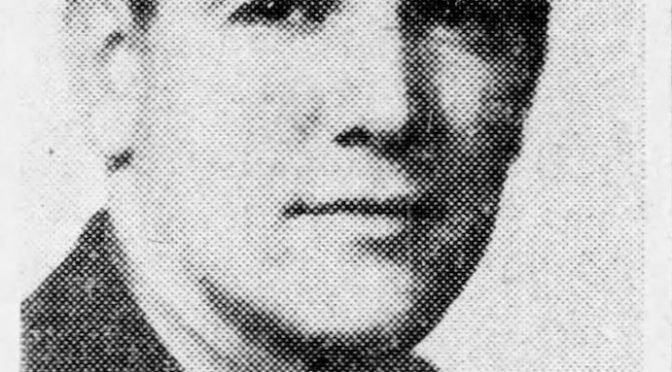
by Sancho de Beurko Association
At barely 19 years old, Marie Irigaray Inchauspe arrived in the United States to start a new life. The year was 1904. She was accompanied by her older brother Jean who was 20 at the time. Years later, at least three more siblings—Marie, Jeanne, and Grace—joined them in pursuit of the “American Dream.” A fourth sibling, Martin, forged his own path in Buenos Aires, Argentina. Marie and Jean’s final destination was the state of Nevada, more than 5,600 miles from their hometown of Ezterenzubi in Nafarroa Beherea, or Lower Navarre.
A few months after arriving, Marie met and married the prominent Basque immigrant sheep rancher Bernard “Ben” Etchegoin, also from Ezterenzubi, on July 25, 1904, in Reno, Nevada, where they established their home. In 1906, their first and only child, Beatrice Marian, was born. Tragedy struck the family in early 1908 when Bernard was assaulted by a group of men, resulting in his untimely death, just six days shy of his 39th birthday.
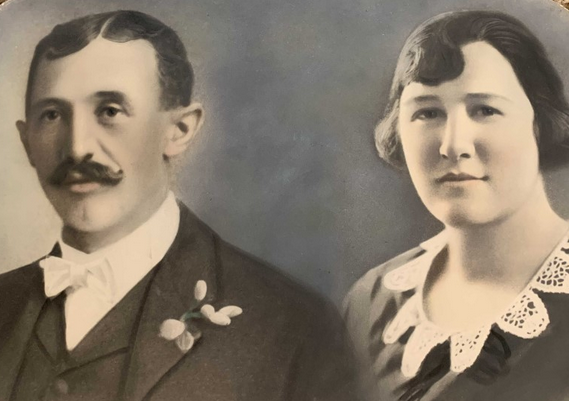
Left with a daughter under the age of two and only 22 herself, life for Marie was far from easy. In 1910, she married French immigrant Auguste “August” Salet, born in Bordeaux in 1875, who had arrived in the United States around 1893. They had one child together: Eugene Albert Salet, born on May 25, 1911, in Standish, Lassen County, California.
“Echoes of two wars, 1936-1945” aims to disseminate the stories of those Basques and Navarrese who participated in two of the warfare events that defined the future of much of the 20th century. With this blog, the intention of the Sancho de Beurko Association is to rescue from anonymity the thousands of people who constitute the backbone of the historical memory of the Basque and Navarre communities, on both sides of the Pyrenees, and their diasporas of emigrants and descendants, with a primary emphasis on the United States, during the period from 1936 to 1945.
THE AUTHORS
Guillermo Tabernilla is a researcher and founder of the Sancho de Beurko Association, a non-profit organization that studies the history of the Basques and Navarrese from both sides of the Pyrenees in the Spanish Civil War and in World War II. He is currently their secretary and community manager. He is also editor of the digital magazine Saibigain. Between 2008 and 2016 he directed the catalog of the “Iron Belt” for the Heritage Directorate of the Basque Government and is, together with Pedro J. Oiarzabal, principal investigator of the Fighting Basques Project, a memory project on the Basques and Navarrese in the Second World War in collaboration with the federation of Basque Organizations of North America.
Pedro J. Oiarzabal is a Doctor in Political Science-Basque Studies, granted by the University of Nevada, Reno (USA). For two decades, his work has focused on research and consulting on public policies (citizenship abroad and return), diasporas and new technologies, and social and historical memory (oral history, migration and exile), with special emphasis on the Basque case. He is the author of more than twenty publications. He has authored the blog “Basque Identity 2.0” by EITB and “Diaspora Bizia” by EuskalKultura.eus. On Twitter @Oiarzabal.
Josu M. Aguirregabiria is a researcher and founder of the Sancho de Beurko Association and is currently its president. A specialist in the Civil War in Álava, he is the author of several publications related to this topic, among which “La batalla de Villarreal de Álava” (2015) y “Seis días de guerra en el frente de Álava. Comienza la ofensiva de Mola” (2018) stand out.
By 1920, Eugene and his family were living in Sparks, Nevada, where August worked as a general rancher. Although the details of Marie and August’s marriage are unclear, it most likely ended in divorce. Three years later, in 1923, Marie married Alexander Hamilton Aldrich II in Canal, Nevada. Alexander, born in Cameron, Missouri, in 1875, was a U.S. Army veteran of the Great War. Marie and Alexander had three children: Maria Eugenia (born 1924, Fernley, Nevada), Catherine May (born 1927, Lovelock, Nevada), and Alexander Hamilton III (born 1928, Reno, Nevada).
The Wall Street crash of 1929 triggered a decade-long period of poverty and unemployment known as the Great Depression, which took a heavy toll on much of American society. For Marie and her children (three of them under five years of age), it meant facing daily struggles and navigating the hardships of a rural life under one of the harshest economic crises in U.S. history. Yet, growing up amid these challenges in Nevada’s rural communities Eugene developed the resilience, courage, and determination that would shape him into a military leader of remarkable distinction.
By 1930, Eugene’s father Auguste was living in Gerlach, Nevada, working as a sheepherder. Unfortunately, he died in 1934 in Fernley at the age of 58. In 1935, after divorcing Alexander Hamilton Aldrich II, Marie married William Edward Warren (born 1875 in Virginia City, Nevada; died 1949 in Fallon, Nevada).
The matriarch of the family, Marie, lived a long and full life, passing away at the age of 90 in 1975 in her adopted home of Reno. Her first daughter, Beatrice, had died two years earlier at the age of 67 in Fallon. Her other children also lived long lives: Alexander died in 2004 at 76, Catherine in 2015 at 88, and Maria Eugenia in 2020 at 96. The family remained proud of their Basque heritage. Catherine, for example, had always hoped to visit her mother’s homeland—though, unfortunately, that dream was never realized.
Formative Years: Education, ROTC, and Early Leadership
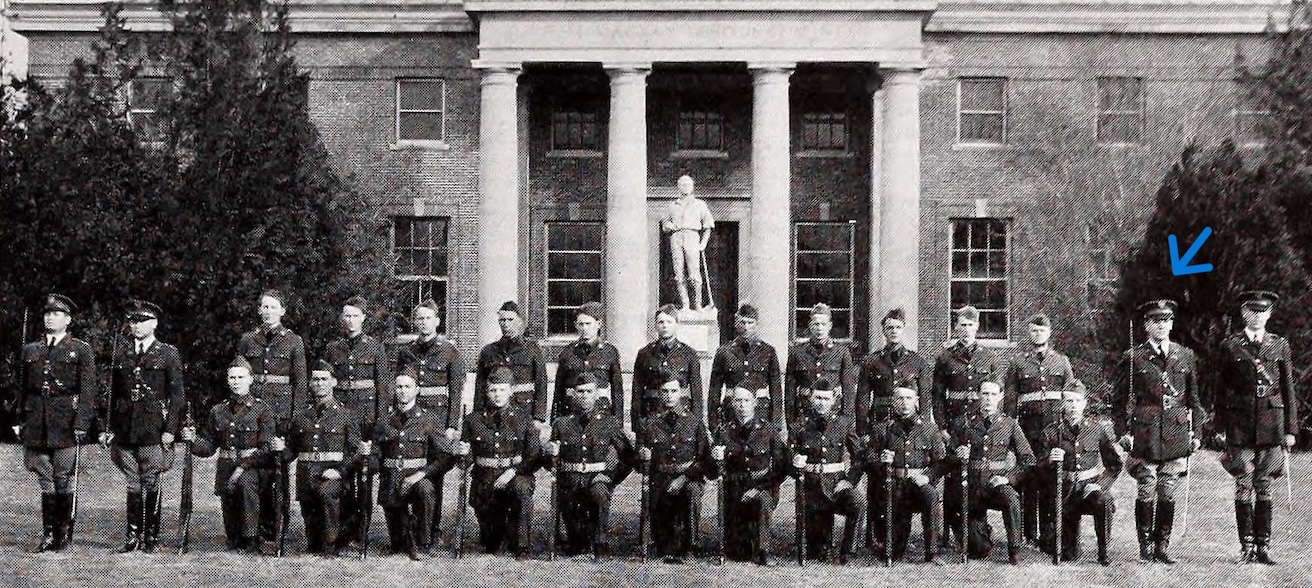
Eugene grew up in the rural town of Lovelock, Nevada, and graduated from Pershing County High School. In 1930, he moved to Reno and enrolled at the University of Nevada, where he earned a bachelor’s degree in history, education, and physical education in 1934. During his student years, he played varsity football and basketball and was an active member of several societies, including the Sigma Alpha Epsilon fraternity, Blue Key, Coffin and Keys, Sagers, Sundowners, and Scabbard and Blade. Eugene also completed the Reserve Officers’ Training Corps (ROTC) program and was commissioned as a second lieutenant in the infantry in May 1934, serving in the U.S. Army Reserve until 1941.
After graduation, Eugene taught and coached at Dayton High School and later became its principal. On June 13, 1936, he married the love of his life, Irene Adele Taylor, in her hometown of Buffalo, New York. He was 25 years old, and they established their home in Dayton, Nevada, where they had two children. In 1940, Eugene also managed a Shell service station in Carson City, Nevada, living there with his family and his mother-in-law.
World War II: From Operation Torch to the Heart of Europe
Eugene was called to active duty on June 16, 1941, shortly before the Japanese attack on Pearl Harbor, which brought the United States into World War II (WWII). He was assigned to the 30th Infantry Regiment, Third Infantry Division, at the Presidio of San Francisco, California. In 1942, he was promoted from first lieutenant to captain while commanding a heavy weapons infantry company at Fort Ord, California [1].
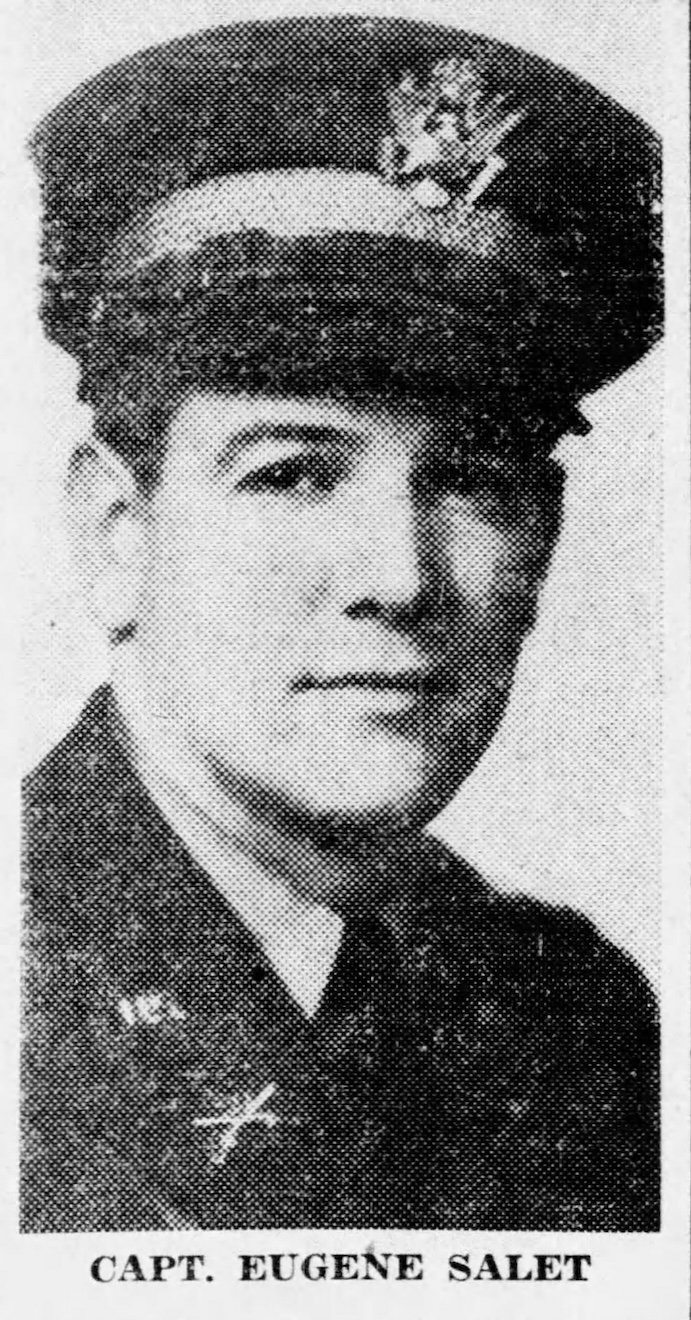
Eugene served as an infantry platoon leader and heavy weapons company commander in North Africa and Sicily. He landed at the small port of Fedala, near Casablanca, as part of the Allies’ invasion of North Africa (Operation Torch, November 8–16, 1942). In a letter written to his mother on November 24, 1942, from Rabat, he reflected on the invasion, providing a vivid firsthand account:
“It was my first taste of fire, and I’ll probably never forget it […] Well, mother dear, here we are. Have been wanting to write ever since we arrived […] Have a great deal to tell you […] We were on the water for 15 days. On Sunday morning about 1:00 a.m., November 8, we stopped about six miles off the coast of Africa, and made ready to attack and capture it. We lowered our assault boats, climbed over the side of the transport, got into assault boats and headed for the coast six miles away […] It was still dark as the devil. As we neared the shore the French were alerted and started throwing big search lights out over the water. Then all hell broke loose. They opened up on us with big machine guns, etc. We could see the red tracer bullets coming at us through the dark; some too close for comfort. We kept on coming and finally hit the beach. It is still dark but dawn is ready to break. Then the big French guns on the coast opened up on our navy warships. What a bombardment […] I was lucky and didn’t get a scratch. Hope I can continue to be as lucky. One thing, Mom, you can tell the folks that your wandering boy led the assault waves in the great American attack of [North Africa]. Our division was the spearhead of the entire assault. We’ll give Herr Hitler and gang something to think about. Feel kind of proud, Mom, to have been a member of the assault” [2].
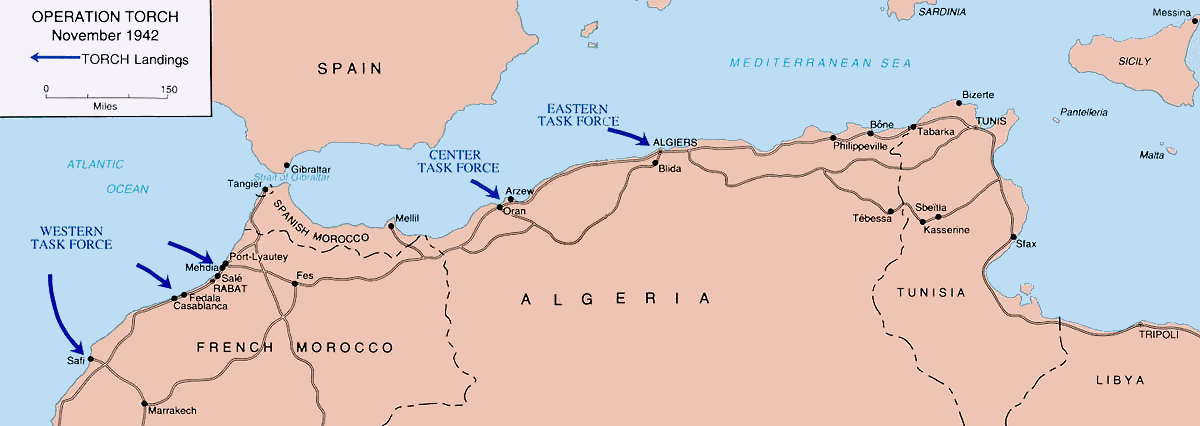
Serving as operations officer of the 2nd Battalion, 15th Infantry Regiment, Third Infantry Division, Eugene participated in nine campaigns: French Morocco, Algeria, Sicily, Naples-Foggia, Anzio, Southern France, Rhineland, Ardennes-Alsace, and Central Europe. He took part in four major amphibious assaults: the invasions of North Africa, Sicily, Italy, and Southern France—often referred to as the “Forgotten D-Day.” The Third Infantry Division holds the distinction of being the only American division to engage Axis forces on all European fronts.
By mid-1944, Eugene had been promoted to major, and by January 1945, he received a battlefield promotion to lieutenant colonel, having served 27 months overseas. Remarkably, Eugene saw combat for approximately 530 consecutive days, writing to his mother after his first day on the frontline: “I was lucky and didn’t get a scratch. Hope I can continue to be as lucky.” Despite the heavy casualties suffered by the Third Infantry Division—the highest of any American division in WWII—Eugene emerged unscathed.
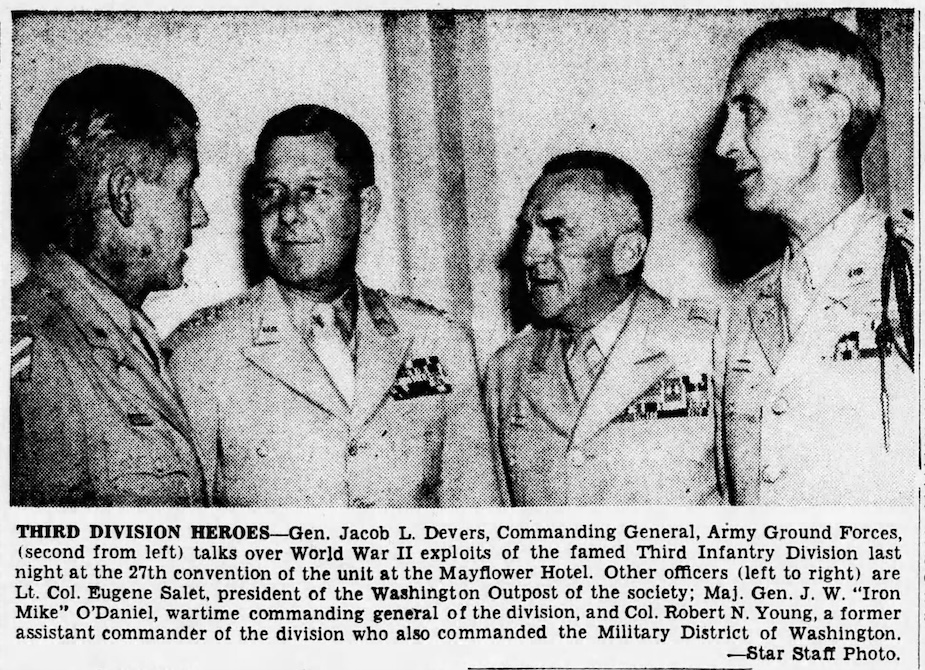
In 1945, he returned to the United States and was assigned to Headquarters, Army Ground Forces, in Washington, D.C., where he served until August 1946. For his extraordinary service during WWII, Eugene received numerous honors, including the Silver Star for gallantry in action at the Colmar Pocket, Alsace, France, on January 5, 1945; the Legion of Merit with five Oak Leaf Clusters for exceptionally meritorious conduct in the performance of outstanding services to the Government of the United States; and the Bronze Star Medal with two Oak Leaf Clusters. Internationally, he was awarded the Italian Military Valor Cross, the Croix de Guerre with Gold Star, and the French Fourragère in the colors of the Croix de Guerre. Additionally, he received the Distinguished Unit Citation with one Oak Leaf Cluster and the Army’s highest civilian honor, the Decoration for Distinguished Civilian Service [3].
A Lifetime of Military Excellence and Education
Eugene had a remarkable military career that combined instruction, strategic planning, and leadership in both national and international organizations. After World War II, he served as an instructor at the U.S. Army Command and General Staff College, shaping the education of officers at Fort Leavenworth, Kansas, and solidifying his expertise in military instruction.
During the 1950s, he took on roles in strategic planning and operations, including serving as senior planning officer at the North Atlantic Treaty Organization’s (NATO) Supreme Headquarters, in Paris, France, during the Korean War, contributing to multinational coordination under General Dwight D. Eisenhower’s command. Eugene alternated between command and international administrative responsibilities, notably as a regimental commander in Germany and subsequently as deputy director and secretary of the NATO Standing Group and Military Committee, playing a key role in organizing the Alliance’s collective defense. He also served as assistant civil administrator of the Ryukyu Islands, Japan, demonstrating leadership beyond strictly military duties.
In the 1960s, Eugene focused on military education and institutional leadership, first as commanding officer of the Army Training Center at Fort Gordon, Georgia, and then as president of the U.S. Army War College and Carlisle Army Barracks, Carlisle, Pennsylvania, and the U.S. Army Institute for Advanced Studies, overseeing advanced officer education and strategic programs. Recognized with the Army Distinguished Service Medal for exceptionally meritorious and distinguished services to the Government of the United States, he continued his career contributing to weapons systems analysis at the Department of Defense and serving as military adviser to the U.S. mission at NATO’s headquarters in Belgium.
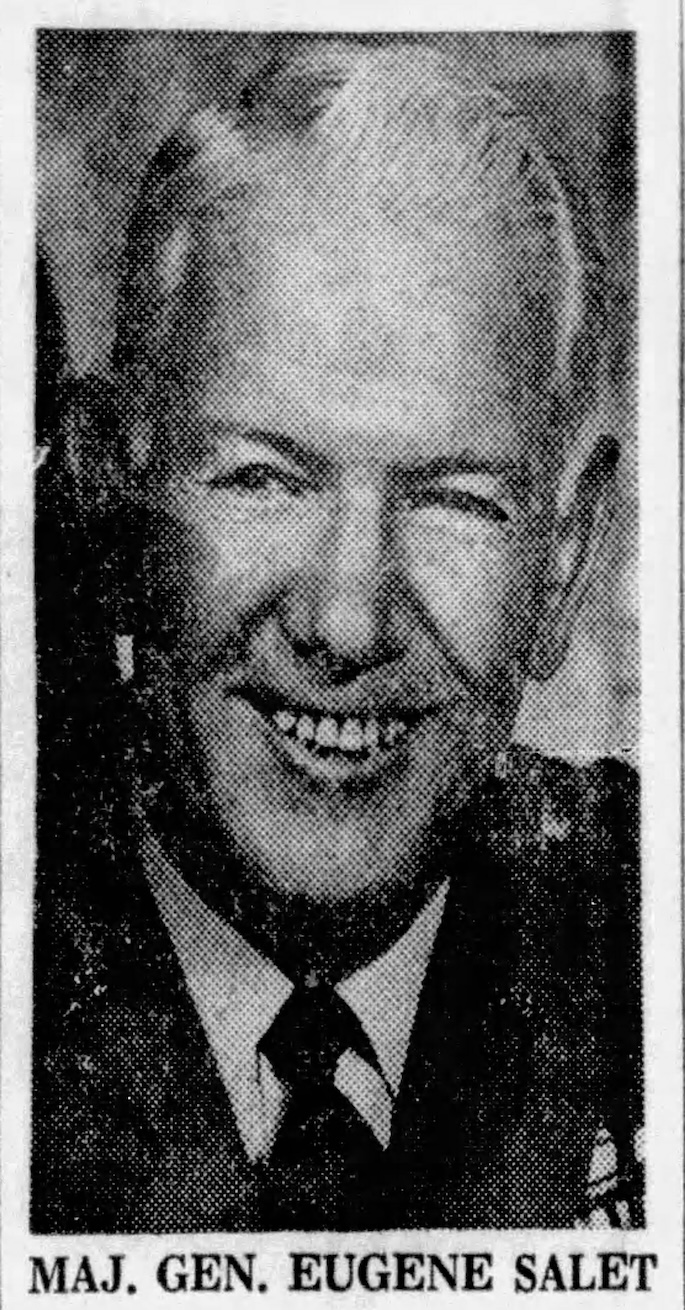
Eugene retired from active duty as a major general on September 30, 1970. Following his active service, he cemented his legacy in civil-military education, serving as dean and president of the Georgia Military Academy in Milledgeville, Georgia and leading the Association of Military Colleges and Schools of the U.S., nurturing future generations of military and civic leaders until 1985. [4]
Sharing a Vision: Values and Legacy
In 1967, Eugene was named Outstanding Nevadan by fellow Basque-American and WWII veteran Governor Paul Laxalt. He received an honorary doctorate in law from the University of Nevada, Reno, in 1968 and served as the commencement speaker that same year. During his address, he shared his vision for America:
“The keys which fit the door to this nation’s survival are held by each of you. These keys are faith, not fear; courage, not complacency; patriotism, not patronage; sacrifice, not selfishness.” [5]
Major General Eugene Salet Irigaray passed away on February 6, 1992, at the age of 80, at the Eisenhower Army Medical Center in Augusta, Georgia. He was buried with full military honors at Westover Memorial Park. He is the highest-ranking senior officer of Basque origin identified in the U.S. Armed Forces, according to our research.
Would You Like to Honor Veterans Like Eugene Salet?
The North American Basque Organizations, Inc. has launched a fundraising campaign to build the National Basque WWII Veterans Memorial by the end of 2026. This memorial will honor all WWII veterans of Basque origin—a place where their names, stories, and sacrifices will be permanently remembered. Your contribution is essential.
Please consider making a tax-deductible donation and become part of this historic tribute. Together, we can ensure that no veteran is ever forgotten.
References
- Reno Gazette-Journal, October 22, 1943. P. 5.
- Nevada State Journal, January 2, 1943. P. 10.
- Nevada State Journal, May 26, 1946. P. 16
- Reno Gazette-Journal, February 7, 1992. P. 36.
- Reno Gazette-Journal, October 26, 1987. P. 29.
Share this / Partekatu hau:

Discover more from Buber's Basque Page
Subscribe to get the latest posts sent to your email.
Hello, to whom it may concerned, I am the granddaughter of Marie Irigaray and niece Of Eugene Salet. I appreciate the story about my uncle, but there there are several mistakes that were made during the writing. Some facts listed are not correct. Please contact me for the corrections.
Rhondacspivey@gmail.com
Rhonda, Pedro Oiarzabal tried to write you about this but wasn’t sure his email got through to you. Can you confirm if you got it or not?