
“The people of Biscay are excellent in the art of navigation, pilots and warriors, … in handling maritime affairs, where all of them, without exception, prove to be excellent pilots and skilled in the art of soldiery, attacking armed enemies with the same ferocity as the violent fury of the terrifying onslaughts of the Atlantic Ocean (…)”
Giovanni Botero (1544-1617)
“The people of these provinces are quick-tempered and swift, passionate and warlike; they are the best people in the world for the sea.”
Martín Fdz de Enciso, Suma de Cosmografía, 1519.
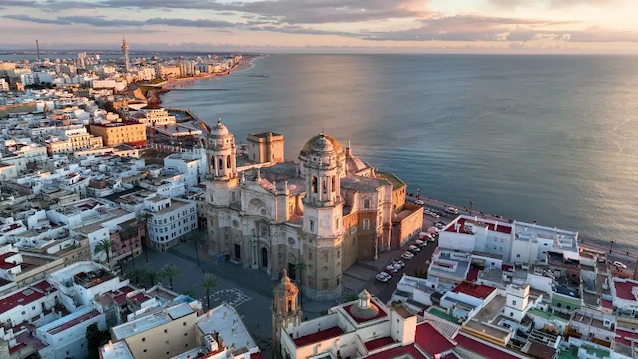
This is how the Basques and their association with the sea have been described by historians. Perhaps no better testament to the maritime proficiency of the Basques is the College of Biscayan Navigators in the city of Cádiz.
- Basque maritime history goes back at least as far as 1131, when Alfonso the Battler, King of Navarre and Aragon, is documented as building ships in Baiona. In 1191, Richard the Lionheart embarked during the Fourth Crusade with a fleet of Basque-Gascon ships. Not only were Basques important mariners, but they had made significant developments to ship technology, including the Bayonne rudder, or baionnoiz.
- By the end of the 1200s, the Basques had important roles in the commerce of Europe. They had established trade with Bruges and were instrumental in transporting goods, primarily iron, in Andalucía. Basque maritime expertise was also used in the reconquest of Andalucía from the Moors, especially the siege of Sevilla. As a result, villages such as Getaria were granted exceptions in how much tax they had to pay in Sevilla for goods sold.
- After the reconquest of Andalucía and Gibraltar, Basque ships were frequent in the Mediterranean. A century earlier, after Cádiz had been retaken, the city was a shambles with few inhabitants after the Muslims had been expelled. Basques and others from the Cantabrian coast were a major part of the resettlement. These new inhabitants were granted special legal and commercial privileges to encourage settlement and economic growth. Cádiz’s strategic location meant that it became a key stop for merchant fleets going from the Mediterranean to the Atlantic and beyond.
- Basques were valued as pilots, as leaders of the ships, a position that had many demands: They had to possess courage, audacity, and fortitude in the storms and dangers of the sea, and also the courage to attack and defend themselves against enemies. They had to pass an exam and had to master the use of the astrolabe, the compass, and nautical charts.
- At one point, Basques had a monopoly on piloting ships past the Strait of Gibraltar from the Mediterranean to the Atlantic. Ships would have to stop in Cádiz and take on a pilot to lead them west.
- All of this is a backdrop to the College of Biscayan Navigators that was founded in Cádiz. Not much is known about the College. The College is attested to in 1500, however it must have been founded long before that – there is some hint that it could have ben established in the 1200 or 1300s. And a brotherhood of Basque sailors in Cádiz is mentioned in around 1403. They seem to have met in a chapel that they built in the old cathedral of the city, Santa Cruz in Cádiz. The college disappeared around 1583.
- Very little is known about its function either. It is thought that it was a technical-scientific-commercial institution, where knowledge of navigation was imparted. More than a formal school, it was a guild that still enjoyed sanction by the crown. Navigators such as Elkano and those that made their way to Iceland and beyond may have learned there. The lack of records of voyages was despite the decree by law that pilots keep logbooks of their journeys. The Basques kept their secrets.
A full list of all of Buber’s Basque Facts of the Week can be found in the Archive.
Primary source: El Colegio de Pilotos Vizcaínos de Cádiz. La otra historia marítima de los vascos: del Mare Nostrum al Pacífico by Fernando Txueka Isasti, in Itsas memoria: Revista de Estudios Marítimos del País Vasco.
Share this / Partekatu hau:

Discover more from Buber's Basque Page
Subscribe to get the latest posts sent to your email.