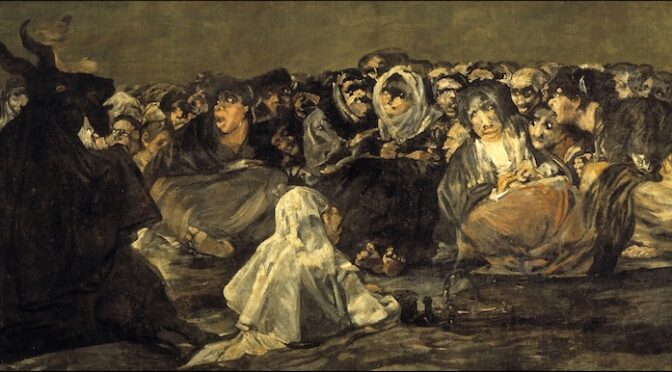
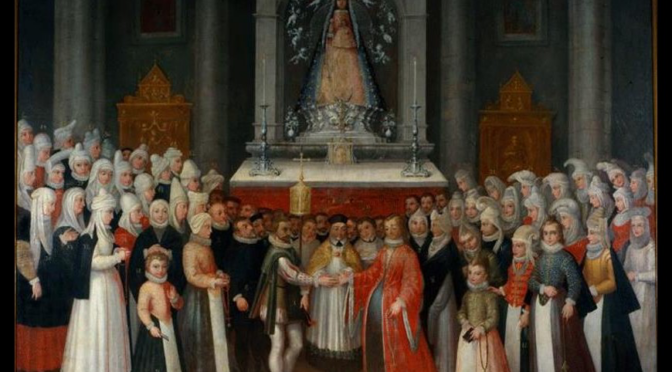
There are so many curious facts surrounding the history of witchcraft in the Basque Country. One is the Akelarre, or what would later be regarded as the Basque Black Sabbath. In reality, the Akelarre was probably just an innocent gathering of people, primarily women, who were healers and herbalists and the Akelarre was a time […]
Located in the Pyrenees, the names Orreaga, Errozabal, Ibañetako Mendatea have an important role in Basque history. Ibañetako Mendatea is the actual pass, Errozabal is the broader plains, and Orreaga is the village near the pass. All of these have been used to name multiple battles that happened at this chokepoint between the Iberian Peninsula […]
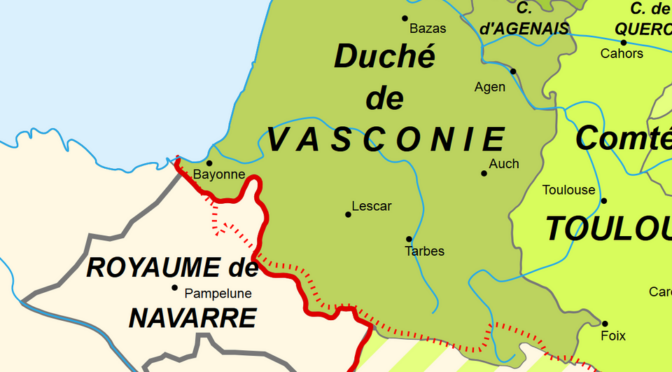
Last week I wrote about the Valley of Aran, which has historical and linguistic connections to the Basque Country. In the Valley of Aran, the local language is Occitan, which is related to Gascon, which has its own connections to Euskara. In fact, the words Gascon and Basque come from the same Latin root. A […]
The Val d’Aran, or Valley of Aran, lies in the northwest corner of Catalunya. As such, it is a bit of an outlier. It is the only part of Catalunya that sits on the northern side of the Pyrenees. It has its own language, Aranese, that is co-official with Spanish and Catalan. The region also […]
The New Fueros of Bizkaia were approved in 1526 – 500 years ago this year. These fueros codified the customs and practices of the people of Bizkaia – it didn’t establish any new laws per se, but formalized those that already existed. Elixabete Piñol Olaeta looked back at how specifically women were mentioned in those […]
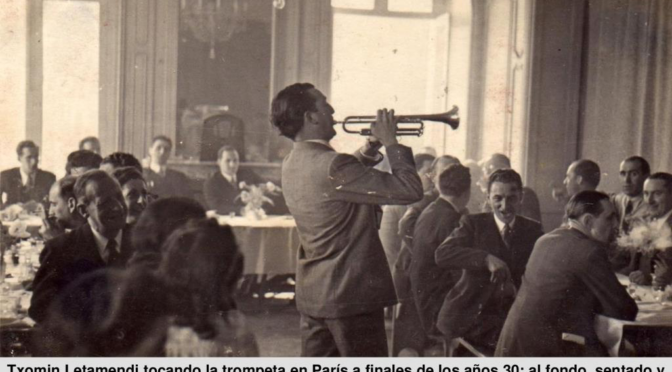
Hard times brings out the best and worst in people, pushing them in directions they may never have ever imagined. Such is the case of Txomin Letamendi. An extremely talented musician, the Spanish Civil War and its aftermath pushed him to become first a soldier and then a spy for the Basque government in exile, […]
On April 26, 1937, the Basque city of Gernika was bombed. This, and other disastrous events during the Spanish Civil War, led to thousands of Basque children being evacuated from the Basque Country. In their play, Picasso Presents Gernika, playwright Dr. Begoña Echeverria and creative director Dr. Annika Speer, both professors at the University of California, Riverside, explore the […]
During tough times, people find a way. The aftermath of the Spanish Civil War was brutal for many. In the Basque Country, and beyond, the resulting food shortages led enterprising folks to devise new ways to make and deliver food. One curious – to me – example is the wandering noodle men or fideogile ibiltariak. […]
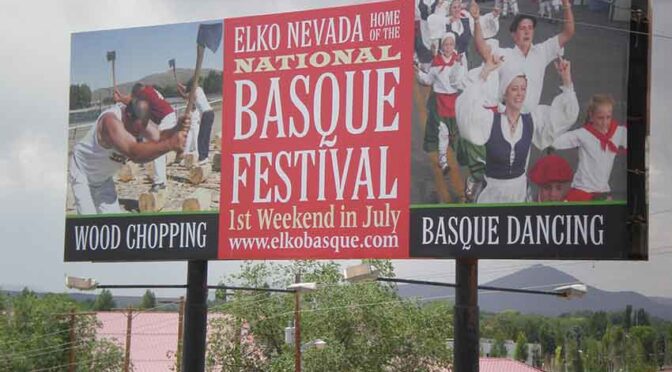
The season of Basque festivals in the western United States is upon us. All across the west, Basque clubs and communities hold celebrations of Basque culture and history, recognizing their ancestors who braved unknown lands to build a better life for themselves. Elko, Nevada, hosts one of the largest Basque festivals in the country, second […]
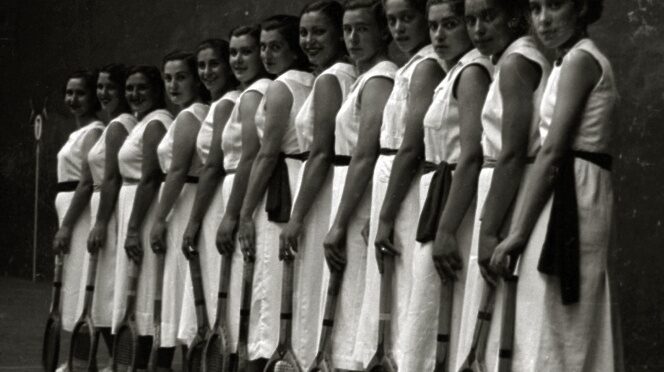
While women have played sport for as long as humans have existed, it is only recently that that they have had the opportunity to play professionally, to make sport a career. In the early 1900s, women, primarily from the Basque Country, pioneered a professional league of racket ball that at one time dominated the professional […]