

Growing up in Idaho, I of course learned about the Basque presence in the western United States and their role as sheepherders. But I didn’t realize the impact that Basques had had across other parts of the Americas. This is particularly true in Mexico, where as I’ve written Basques founded important cities. Basques continued to play an important part of the history of Mexico, and a prime example is the first Emperor of Mexico.
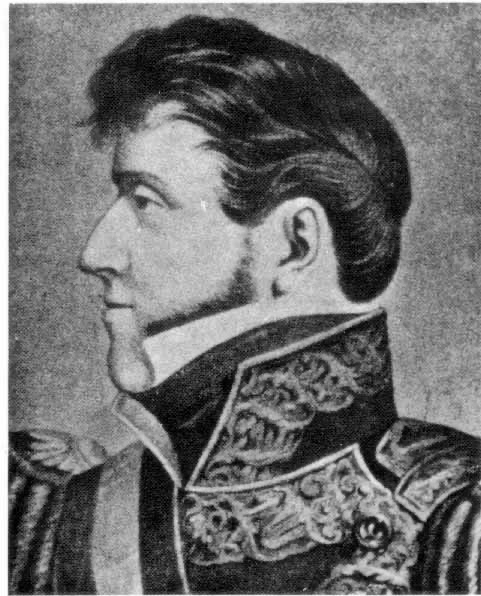
- Agustín de Itúrbide y Aramburu was born on September 27, 1783 in Valladolid (current day Morelia), Mexico. His father, Joaquín, was from Nafarroa and came from a family of confirmed nobility. In Mexico, Joaquín married a Spanish woman who had been born in Mexico (at the time, there was a big distinction between pure blooded Spanish born in Mexico and those that weren’t pure Spanish). The family were large land owners, including more than one hacienda.
- Agustín attended a local Catholic seminary and managed one of the family’s haciendas before enrolling in the army in 1805. That same year, he married Doña Ana María Josefa Ramona de Huarte y Muñiz, who also came from a prosperous family. Before joining the army, he had found he had an aptitude for horsemanship, a skill which would serve him well in the army.
- In the first decade of the 1800s, there were multiple insurgency campaigns for Mexico’s independence and Agustín was tasked with helping to quell these insurrections. He gained a reputation for his combat prowess, often defeating much larger forces, though he also was known for his cruelty, including against women and children. His success in battle quickly led to advancement in the army. However, accusations of cruelty and corruption led to him being removed from command in 1816.
- His supporters, needing a leader against the rebels, got the charges dismissed a year later. However, politics were changing in Spain and the Mexican nobility felt that independence might be good for them, helping them consolidate power and to protect Mexico from rising republicanism. Agustín was one of the leaders, developing a plan for independence that included a monarchy. He joined forces with one of the rebel leaders to fight for Mexican independence.
- In the negotiation for independence with Spain (though continuing with a Spanish monarch), the Spanish viceroy, Juan O’Donojú, suggested that if no one in the Bourbon family wanted the monarchy, the Mexican people should elect someone. Agustín was selected as the head of the new ruling Junta. When Ferdinand VII rejected the position of Mexican monarch, and forbade any of his family from accepting it, Agustín became emperor of Mexico in 1822. There is debate whether he was given this title or took it. Regardless, he became the first emperor of the newly independent nation. This new nation included, at the time, the current US states of California, Texas, Arizona, Utah, Nevada, Colorado, and New Mexico.
- At first, the Mexican Congress was the sovereign body over the nation. However, as rumblings against Agustín grew, primarily from republicans that didn’t want a monarchy or empire, Agustín took complete control of the government, replacing that Congress with his own body. Agustín also persecuted his enemies, including many in the former Congress, leading even more to turn against him. Further, Spain had regained stability and power with the intent of reconquering Mexico, such that no European nation would recognize their newly won independence. Finally, Agustín himself lived quite extravagantly, leading to further resentment.
- When he was unable to pay the army, he lost the support of his base. Things quickly deteriorated from there. New rebel leaders, including the infamous Antonio López de Santa Anna, arose, wanting to bring back the old Congressional government. Agustín’s military leaders changed sides when they encountered Santa Anna’s forces. To avoid a civil war, Agustín offered to abdicate, but Congress refused, as that would recognize the legitimacy of the throne, something they didn’t want to do.
- In 1823, only about a year after being named emperor, Agustín and his family found themselves exiled in Italy. At Spain’s insistence, Italy kicked him out so they moved to England where he published an autobiography. He returned to Mexico a year later, in 1824, unaware of a law enacted by Congress that called for his death if he ever returned. He was executed by firing squad a few days later. His remains now reside in Mexico City where an inscription says “Author of the independence of Mexico.” The modern Mexican flag and that the country is known as Mexico are attributed to Agustín.
A full list of all of Buber’s Basque Facts of the Week can be found in the Archive.
Primary sources: Agustín de Iturbide, Wikipedia; Asarta Epenza, Urbano. Iturbide Aramburu, Agustín. Auñamendi Encyclopedia. Available at: https://aunamendi.eusko-ikaskuntza.eus/en/iturbide-aramburu-agustin/ar-71008/