
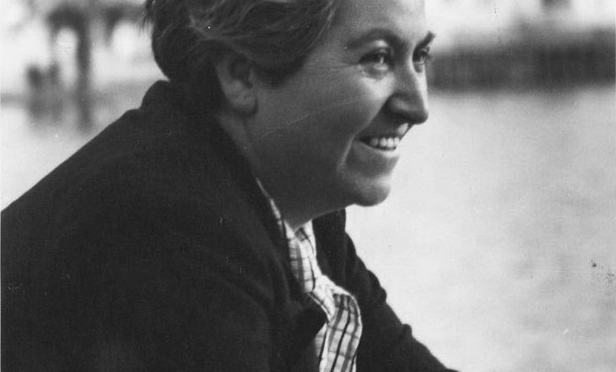
Born in the United States, I’m of course very familiar wth the Basque diaspora of the American West. What I didn’t know so much about is the large Basque presence and heritage in other parts of the Americas. Many people of Basque heritage made important contributions not only to their own countries but to the world. One of those is Nobel laureate Gabriela Mistral, who won the prize in Literature in 1945.
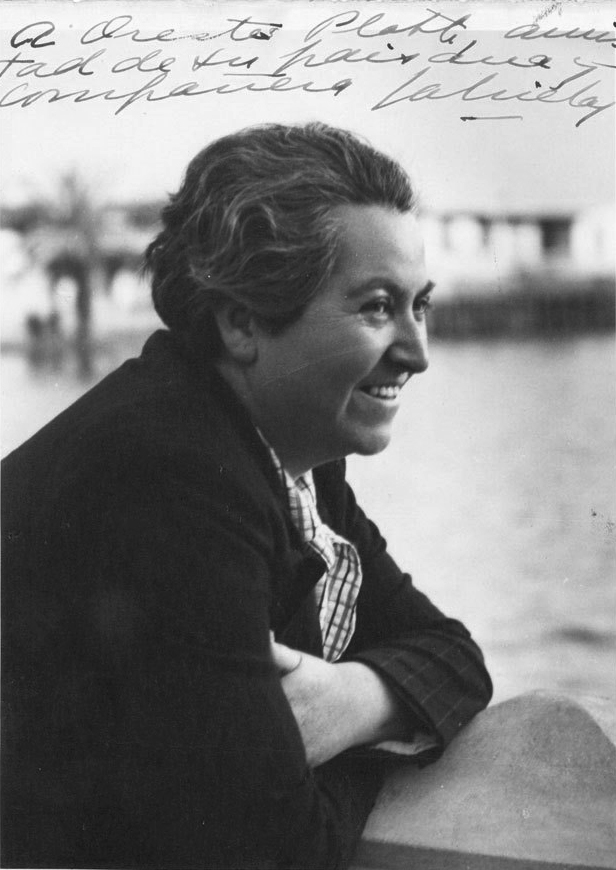
- Lucila Godoy Alcayaga, who would later take the pen name Gabriela Mistral, was born on April 7, 1889, in Vicuña, Chile. Her father abandoned the family when she was only three years old. Her mother, Petronila Alcayaga, was a seamstress. Petronila’s great-great-grandfather, Ignacio de Alcayaga y Oronoz was born in Gipuzkoa and had emigrated to Chile in the early 1700s. Though the connection to the Basque Country was distant, Mistral considered herself a “Basque Amerindian” and a “Basque mestiza,” recognizing both her Basque and Native ancestry.
- Mistral started writing poetry early in her life, publishing some poems as a teen and her first literary work in 1914, Sonetos de la muerte, which reflected on the heartbreaks of some of her early loves. At the time, she was a teacher and used a pen name to remain anonymous and not threaten her primary livelihood. She won first prize in a national literary contest with these poems.
- She continued as an educator but because she had little formal training, she had to bounce from school to school and even country to country, moving to Mexico for a time to work. She formally retired from teaching in 1925 but continued to travel, living for some time in both France, Italy, and the United States.
- In 1938, she published her second major collection of poetry, Tala. Her concern for the plight of Basque children during the Spanish Civil War led her to give up the royalty rights of Tala so that the proceeds would go to children orphaned by the Spanish Civil War.
- Her poetry explored aspects of death and life that had been rarely touched on by previous authors. Inspired, so to say, by the death of her first love, her poems often had a sentiment of despair. She was also an advocate for education, particularly for women. Though Catholic, her poems reflected a neutral stance toward religion. And, as might be expected for an educator, children and their wellbeing was often an important theme in her poetry.
- Mistral won the Nobel Prize in Literature in 1945, the first person from Latin America to be so honored.
A full list of all of Buber’s Basque Facts of the Week can be found in the Archive.
Primary sources: Gabriela Mistral, Wikipedia; Mujeres que la historia vasca no debería olvidar by Nekane Lauzirika, Noticias de Navarra
Thanks for this story about Gabriela Mistral!
Another interesting character, Athahuampa Yupanqui, from Basque father and Quechua mother…song writers, interpreter, poet, guitar player… Might be something to write about him too. 😉
Thanks for sharing! I’ll definitely take a look!