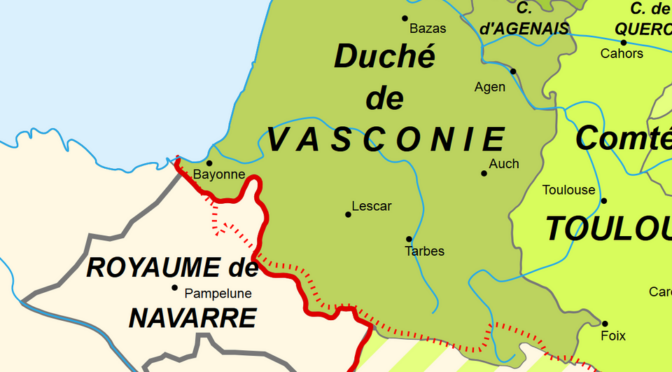
Last week I wrote about the Valley of Aran, which has historical and linguistic connections to the Basque Country. In the Valley of Aran, the local language is Occitan, which is related to Gascon, which has its own connections to Euskara. In fact, the words Gascon and Basque come from the same Latin root. A […]
The Val d’Aran, or Valley of Aran, lies in the northwest corner of Catalunya. As such, it is a bit of an outlier. It is the only part of Catalunya that sits on the northern side of the Pyrenees. It has its own language, Aranese, that is co-official with Spanish and Catalan. The region also […]
People in the Basque Country are inherently multilingual. Surrounded by Spanish and French, and with their own language Euskara, many also learn English. A recent study has revealed that being multilingual, especially if you speak four languages, has a tremendous benefit for your brain, making it up to thirteen years younger than people who only […]
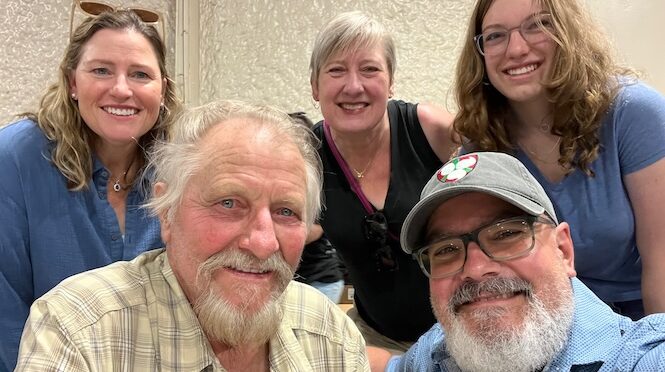
Joxe Mallea-Olaetxe, a long-time friend, is a historian who has worked tirelessly to document the history of Basques in the American West. One very visible example is his work on the arboglyphs Basque sheepherders left behind as they roamed the hills, valleys, and mountains of states such as Nevada, Idaho, and Oregon, but he has […]
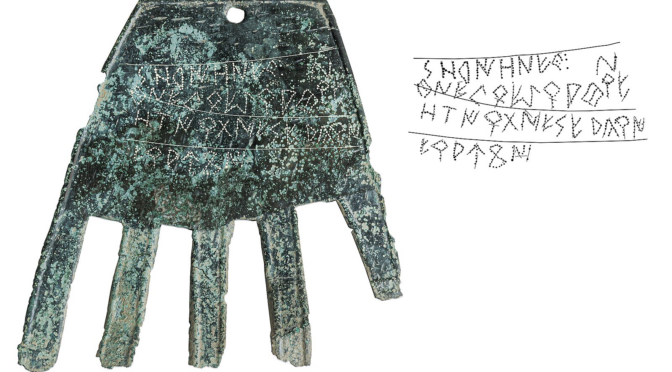
The origins of the Basque language are lost to time, or so we are told. However, new discoveries such as the Hand of Irulegi challenge some of those assumptions and reveal new and exciting insight. At the same time, researchers continue to chip away, examining the body of evidence to further our understanding of the […]
Nearly none of the young men and women who immigrated to the United States from the Basque County to herd sheep in the American West had any knowledge of English. This wasn’t much of a problem as they typically worked with other Basques. However, encounters with the dominant language of their new home were unavoidable […]
I have a dream of slowly migrating the original parts of this site – the parts you can find with the menu on the left of each page – to the more modern blog format of the newer version of Buber’s Basque Page. One of my first forays was to copy my translation of MG Ramos’s De Astronomástica […]
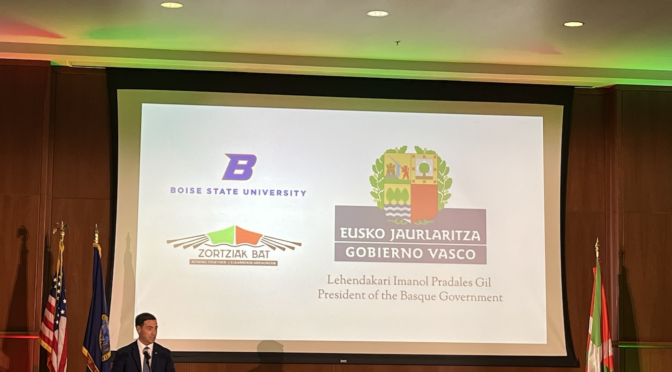
During the Zortziak Bat symposium, the current Lehendakari – or President – of the Basque Country (specifically the Basque Autonomous Community), Imanol Pradales Gil, gave a speech which emphasized not only the shared connections between the Basque Country and the Basque diaspora in the United States, but went further to call on our shared values to strengthen […]
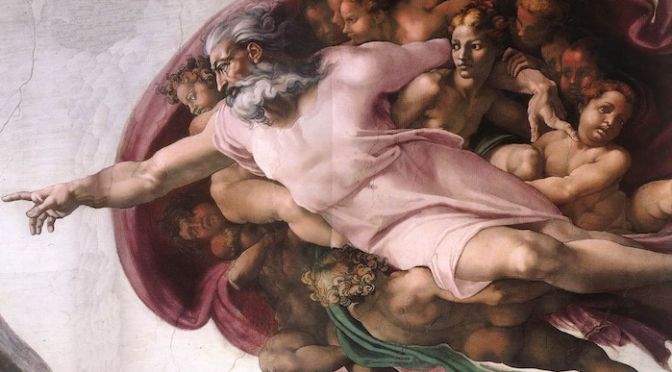
It seems like a simple question: what is the Basque word for God? But, like almost everything Basque, there is a lot of nuance in this simple question. The modern words for god and God in Basque are not typical Basque words. Does that mean they were borrowed? Or created by a priest only semi-literate […]
Learning Euskara can be a daunting challenge as it is simply so different from English, Spanish, or French. During Franco’s time, the use of Basque was discouraged or even outright forbidden and this led to the decline of the language. However, this also motivated people to create new institutions, new avenues, new places for people […]