The more I learn, the more I realize how much I don’t know about Basque culture. When she accepted her award for her dedication to Basque culture at the Zortziak Bat symposium, Meggan Laxalt Mackey emphasized the role of auzolan – community work or more broadly collaboration – in her work. I hadn’t heard of that concept before, but it is central to Basque culture. It embodies the collective spirit, of working together to make your community better.
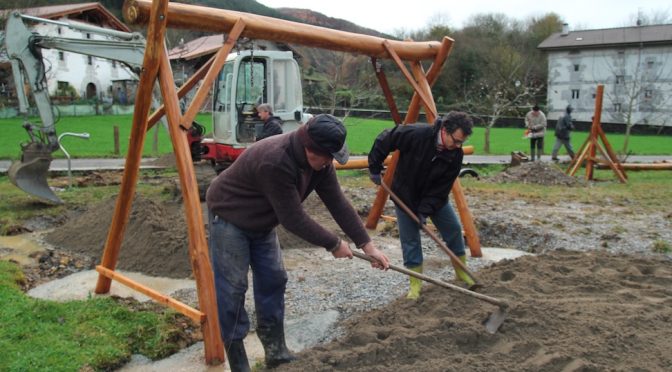
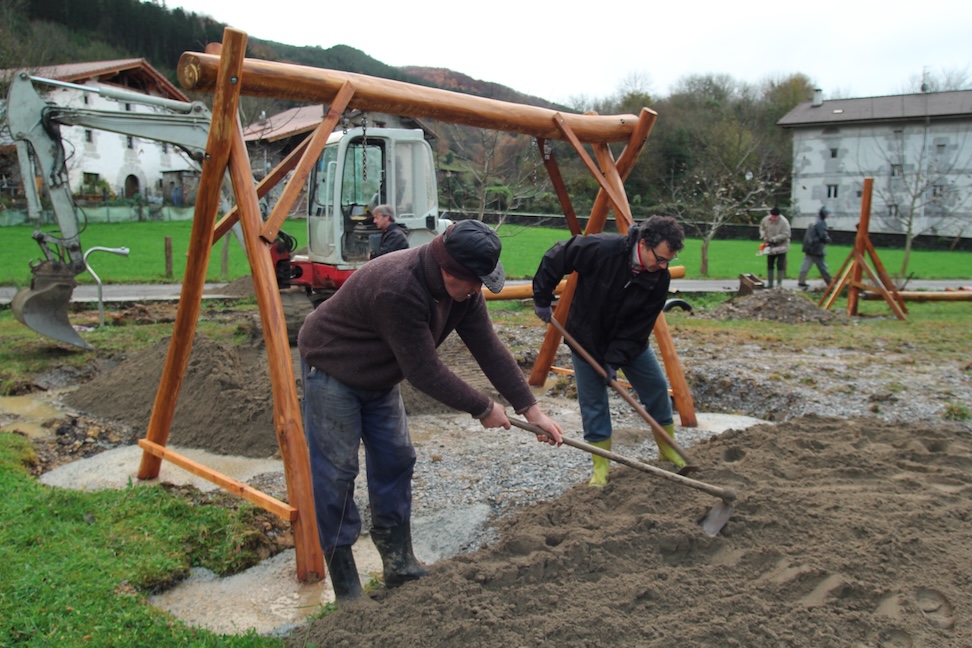
Auzolan to create a park in the town of Gaztelu in 2015. Photo from ataria.
Auzolan, or the related Bizkaian concept of lorra, is the concept of communal work, or performing work that benefits the community. In the Basque Country, this has manifested itself in many ways, from the building of churches to the maintenance of forest trails. While the concept of auzolan was defined by custom in the Basque Country, in more recent times it has been codified into law in some places.
Auzolan promotes community solidarity and cohesion. As described by Prof. Xabier Barandiaran, the concept of auzolan reflects “the individual’s responsibility to the community and their service to others, fostering solidarity and forms of social organisation that prioritize community interests over individual ones.”
To decide what work the neighborhood would focus on, either the town council or a simple local meeting would convene. Two types of auzolan could be planned: big or small, reflecting what tools would be needed to do the work: just hoes and shovels for a small job or carts and the like for a bigger job.
Often, auzolan would happen in September though a special auzolan might also happen in the spring. The committee would alert everyone in the neighborhood as to the time and place of the work and, if they couldn’t participate, they had to send an alternate. If the work was on public land, the city would provide food and supplies while if it was on private land, the owner would. People weren’t paid for their time – participating in the auzolan was viewed as an obligation of living in the community; it was mandatory.
The actual work associated with auzolan was often a community improvement effort, to construct or maintain roads, parks, fountains, or other things that would benefit the community as a whole. However, in some cases it could be directed to specific people that needed extra help, such as a widow or sick farmer.
Today, the concept has expanded to include collaboration more broadly, especially collaboration carried out freely and voluntarily, and to actions that benefit a neighborhood, town, or region voluntarily without receiving money.
The idea of communal work for the benefit of the community is not unique to the Basque Country and was common in medieval European societies. Indeed, the Asturians have a similar concept called andecha. Modern ideas associated with crowdsourcing certainly have a similar spirit. The Mondragon cooperative is one example originating from the concept of auzolan.
A full list of all of Buber’s Basque Facts of the Week can be found in the Archive.
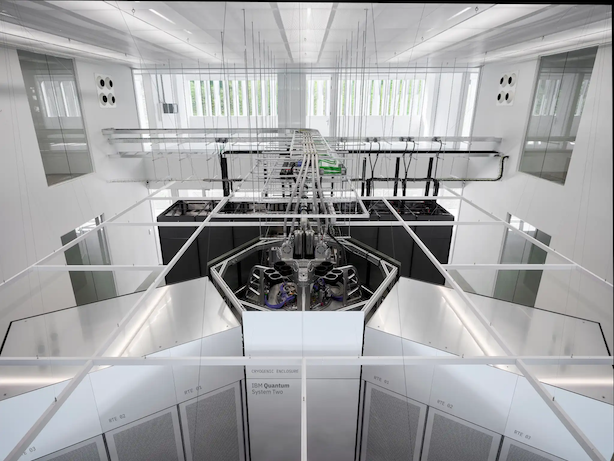
It is amazing how fast technology has changed over my lifetime. When my dad first came to the United States, he rarely called back home in the Basque Country. He’d call maybe at Christmas. It was just too expensive. However, at the end of his life, he was constantly on his cell phone talking to his brothers back in the Basque Country. What was once a prohibitively expensive and extremely inconvenient became almost trivial. The Basque Country is on the forefront of pushing forward one of the next frontiers of technology – quantum computing. They just got one of the newest quantum computers in the world, and are only the second place outside of IBM to have one.
The IBM Quantum System Two in its home in Donostia. Photo from NetworkWorld.
Quantum computing is an alternative approach to computing from the more traditional analog and digital computing.
A traditional analog computer uses a continuous signal, typically current, to compute. A mechanical watch is an example of an analog device. The FERMIAC, created by physicist Enrico Fermi, is one example of an analog computer used to study neutron transport.
A digital computer uses discrete signals or states to compute. This is the foundation of most of our modern computers, using binary numbers (on vs off) to perform all of the calculations. In 1937, Claude Shannon set out the foundation of digital computing and a few years later Konrad Zuse developed the first digital computer.
In October of 2025, IBM delivered to the Basque Country the IBM Quantum System Two, the first of its kind in Europe. This machine is modular and scalable, and can be upgraded in the future as newer quantum processors are developed. It uses IBM’s Heron chips, which contain 156 qubits. The computer is housed in Ikerbasque’s new building in Donostia. To perform, the computer has to be cooled to 0.15 Kelvin, or -459 Fahrenheit.
A key player the push to make the Basque Country a leader in this area is the Basque Quantum Initiative, or BasQ. This initiative is led by “the Department of Science, Universities and Innovation of the Basque Government and the three Provincial Councils of Araba, Bizkaia, and Gipuzkoa.” The Director of the initiative is Professor Javier Aizpuru, a research scientist at the Donostia International Physics Center (DIPC).
These researchers have already been pushing the frontiers of quantum computing even before the delivery of this new system. For example, they used a quantum computer to simulate the motion of quarks, subatomic particles that make up protons and neutrons. They have also used such machines to look at “time crystals,” for the first time in two dimensions. Regular crystals, such as the NaCl crystals in table salt, have repeating patterns in space. Time crystals also repeat their structures in time, oscillating periodically.
A full list of all of Buber’s Basque Facts of the Week can be found in the Archive.
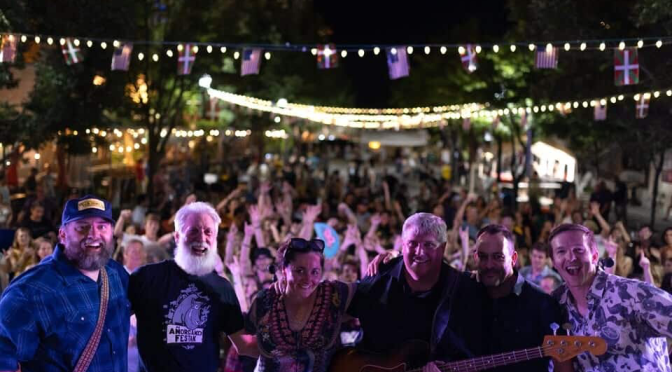
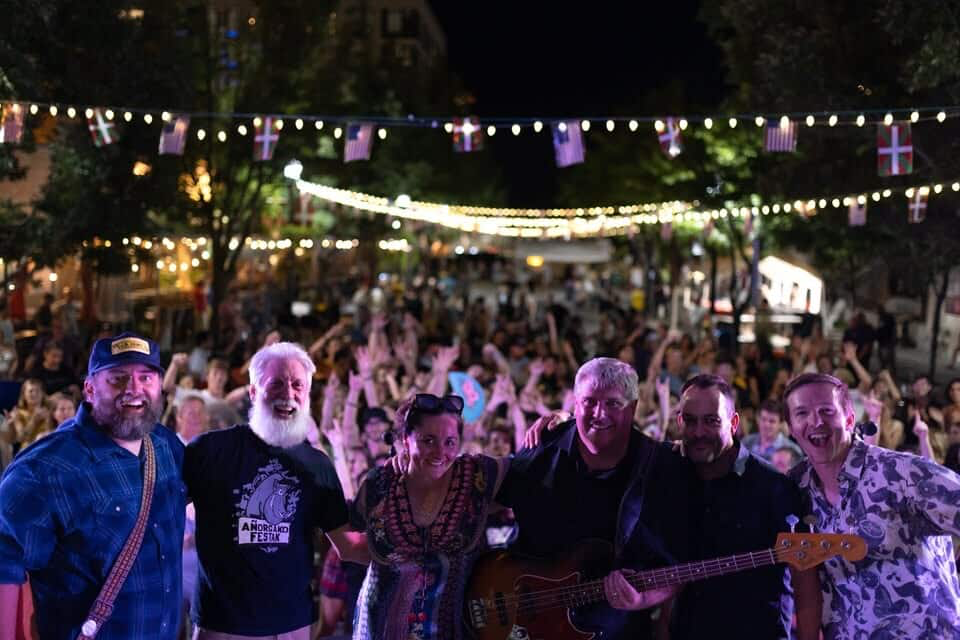
Amuma Says No has been a staple of the Boise Basque music scene for almost 2 decades. Not only are they at every Basque event in Boise, but they travel the country spreading Basque sounds wherever they go. At Jaialdi 2025, you could find them on the stage in the middle of the Basque Block or in the Idaho Central Arena, one of the three acts including Neomak and Gatibu that rocked Saturday night.
Amuma Says No playing on the Basque Block in Boise. Photo from the Jaialdi website.
Amuma Says No grew out of the traditions of Basque dancing in Boise – more than one member was part of the Oinkari Basque Dancers and grew up with the sounds of people like Jimmy Jausoro and Domingo Ansotegui. They play a mix of traditional music centered around the trikitixa with more modern sounds including rock.
The band has come to embody the Basque American spirit and has represented Basque culture throughout the country, traveling to various picnics and fiestas all across the American west. They even performed at the Kennedy Center and in 2010 at the Library of Congress.
The current – and original – line up includes
Dan Ansotegui on accordion. Dan was an Oinkari and has been a part of the Boise Basque community for a while, owning in the past both Bar Gernika and The Basque Market and playing in Jimmy Jausoro’s band. He current also owns Ansots, a restaurant and caterer in Boise.
Jill Aldape, vocals. She has served as both President and head instructor of the Oinkari Basque Dancers.
Sean Aucutt, pandero, was also a dancer for the Oinkaris.
The band was formed in 2006. Dan and Sean had met when they both had been teaching for Txantxan Gorriak, a musical group teaching Basque music to children. They knew Jill who was an instructor for the Oinkaris. Spencer, who has Basque roots, had just moved to Boise and wanted to play drums. He was directed to Dan, Sean, and Jill. They put together some songs for a December dance and the reception was so great that the rest is history.
In 2011, the group accompanied the Oinkari dancers for a few performances in the Basque Country.
Over the last few years, they have been in semi-retirement, but they came back out to perform at Jaialdi 2025.
A full list of all of Buber’s Basque Facts of the Week can be found in the Archive.
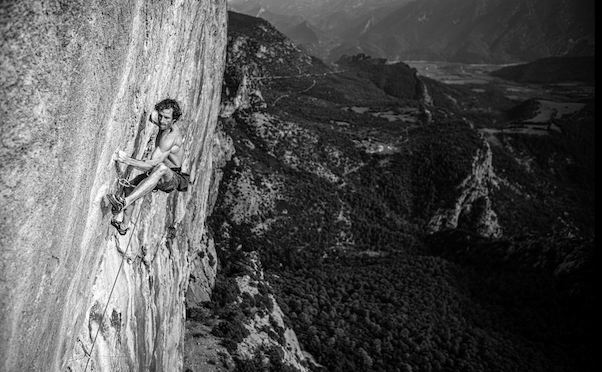
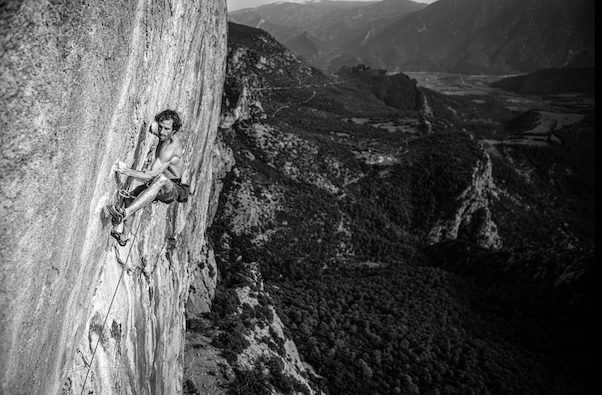
I’ve said it before – for such a small place, Basques seem to outdo themselves, making an impact above and beyond what their small population might suggest. Case in point: Patxi Usobiaga. Patxi is a rock climber who reached the pinnacle of his sport, doing things no one had ever done before. Maybe growing up in the mountains of the Basque Country gave him an advantage. But you only make it to the top with hard work, dedication, and sacrifice.
Patxi Usobiaga Lakunza was born on September 7, 1980, in Eibar, Gipuzkoa. He started climbing when he was 10 years old.
Usobiaga is the first climber in the world to complete an 8c+ climbing route “on sight.” What does this mean? 8c+ refers to the difficulty of the climb, or its rating, in the Fontainebleau bouldering system. An 8c+, equivalent to an 5.14c in the Yosemite Decimal System, is one of the hardest climbs there is, though there are routes that are rated in the 9s. Onsighting means that he had no prior knowledge of the route – he didn’t know where the handholds were or what order might be best to attack them, he discovered them as he climbed. He couldn’t even watch another climber attempt the route. Further, to qualify as an onsight climb, he had to complete it in his first attempt.
The route itself is called Bizi Euskaraz (live by Basque) and is in Etxauri, Nafarroa. Usobiaga climbed it in 2007.
This isn’t the hardest route he climbed. He also redpointed 9a+ routes. Redpointing means that he didn’t complete it on his first attempt, so that when he did complete it, he had some familiarity with the route.
During one two-week period in December, 2007, he redpointed two 9a+’s and a 8c+/9a and onsighted a 8b, 8c, 8b+, and 8c+.
In both 2006 and 2007, he won the Climbing World Cup in the individual discipline of lead climbing. He was also the World Climbing Champion in 2009.
In 2010, he was in a car accident that caused a slip disk in his back. He retired from the sport the following year. Since then, he has become a personal trainer, training other climbers in the sport.
A full list of all of Buber’s Basque Facts of the Week can be found in the Archive.
When the ancient Basques looked at the sky, they saw the same thing that other peoples did – stars, planets, comets, constellations – but they gave them different names. I have a brief list of some of those names collected by Professor Jon Patrick. In trying to find a more complete and modern list, I bumped into an article, Astronomy and Basque Language by Henrike Knörr, that delves into the Basque names for a number of astronomically related concepts. In particular, he gives a list of alternative Basque words for the months of the year. I find this fascinating. While Euskara is an ancient language, because it was only recently standardized, a myriad of words exist for things that we might think of as only having one name in English. This gives an interesting view on the different ways that Basques looked at the world around them.
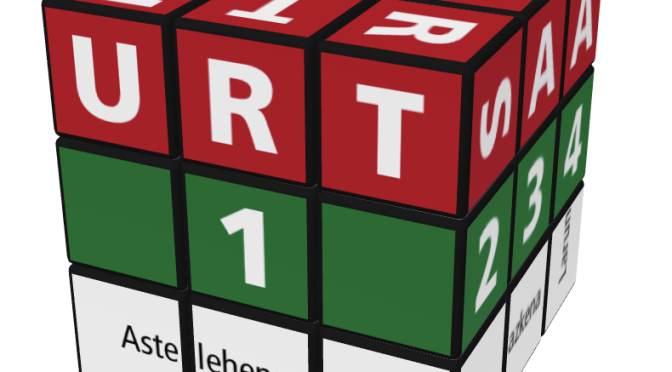
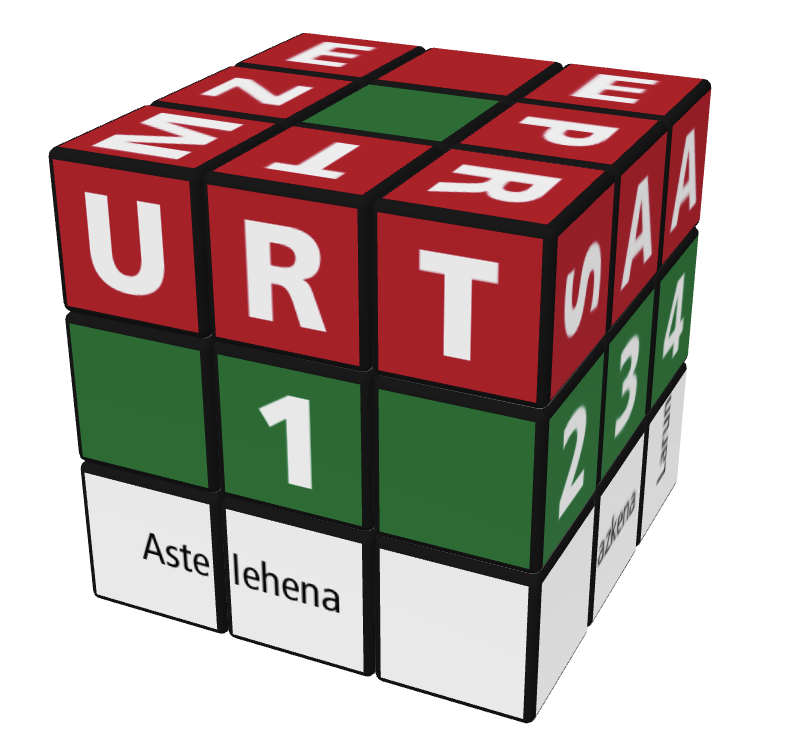
A Basque calendar cube that puts the calendar on a Rubik’s cube. You can play with a virtual version here.
Many of the names for months end in -il, from the Basque word for month itself hil, though hilabete, which means a complete or full month, is another word for month. This is the same word that used to be used for moon, so just like in English, the words for moon and month have a common origin.
In fact, the Basque word for the moon, ilargi, most likely means “month light.” Many people incorrectly relate the word ilargi to “light of the dead,” from the Basque word hil, to die or kill. That’s actually what I was taught when I took Euskara classes in Donostia.
However, the consensus by linguists is that the il- in ilargi means month. Thus, we also have words like ilgora “first quarter” or literally “moon above,” ilbera “last quarter/mon below,” ilberri “new moon,” and ilbete “full moon.” A synonym for full moon is ilzar, meaning “old moon.”
This following list is summarized from Henrike Knörr’s Astronomy and Basque Language. Labayru has a series of blog postings that also go into these names for the months and elaborates on some of their origins. For example, they say that the reason February might be connected to wolves or bulls is because that is their mating season. The meanings in italic font are best guesses, but the meanings of those names is less certain.
One thing that pops out in this list is that the same name is sometimes associated with different months. Thus, depending on where you might have been in the Basque Country, garagarril – the month of barley – might refer to either June or July.