
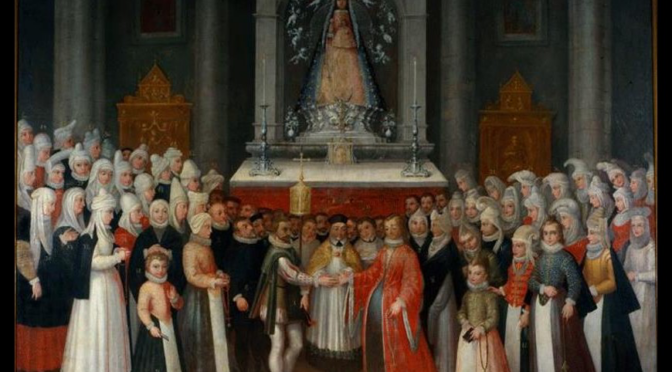
The New Fueros of Bizkaia were approved in 1526 – 500 years ago this year. These fueros codified the customs and practices of the people of Bizkaia – it didn’t establish any new laws per se, but formalized those that already existed. Elixabete Piñol Olaeta looked back at how specifically women were mentioned in those fueros, finding that they had quite a strong legal standing for the time.
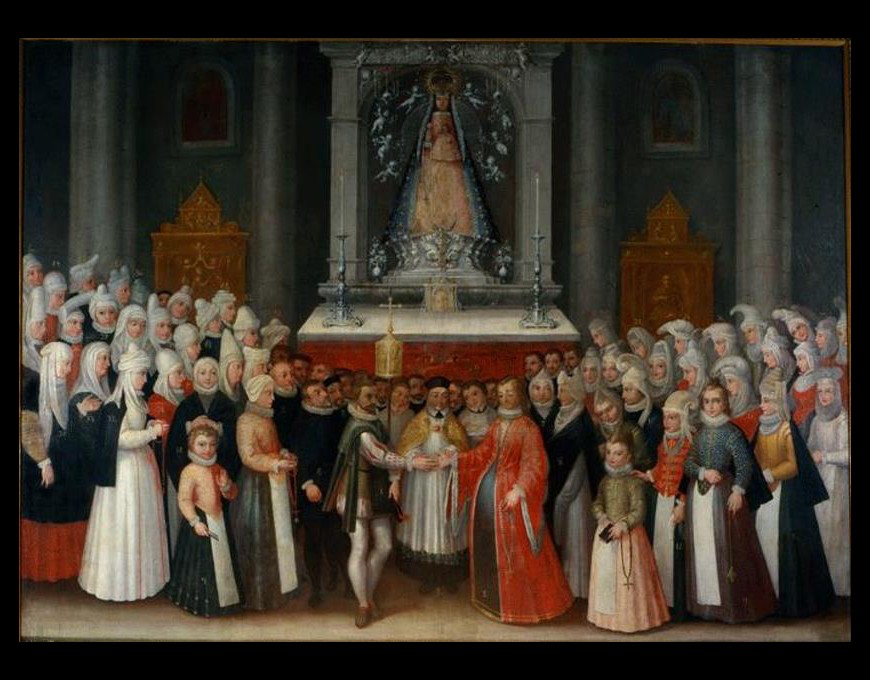
- The family structure as codified in those fueros was quite egalitarian. Women had almost identical rights as men. They shared equally in the family assets. That is, the husband wasn’t in control of the family assets but rather the husband and wife each held a 50% share. This is regardless of what they brought into the family at the time of marriage.
- The husband couldn’t sell joint assets without explicit permission of the wife. If the husband got into debt somehow (such as gambling), it was explicitly prohibited from seizing the woman’s part of the assets to pay that debt. It was recognized that the wife needed those assets to keep the rest of the family functioning.
- The dowry wasn’t just a responsibility of the woman. In fact, who paid the dowry depended on who joined whose family – the etorkina. If the man joined the woman’s family at her baserria, for example, the man paid the dowry. What each person brought into the family was documented and notarized.
- The heads of households could choose any child as an heir. It didn’t have to be the first born and it didn’t have to be a male. Rather, they were to pick the “most suitable, capable, competent, or advantageous to the House to inherit.” Importantly, they could pick a sole heir so that the family property and wealth was not broken up into smaller and smaller parts.
- The exception to this is if the husband or wife died without a will, in which case their assets were split amongst all children equally. To avoid the fragmentation of their assets, the couple would often grant each other authority to make choices about heirs in their marriage contract. In the case that the man had died, the women had full authority to choose the family heir.
- While the age of majority was 25 at the time, once either a man or woman reached the age of 18, they could petition for emancipation from guardianship.
- Either the husband or wife could dispose of their share of their assets without permission of the other. Or they could “jointly give, donate, or bequeath their property to one of their many children.” The point is, they could do either and one spouse didn’t have to have permission of the other.
- As there weren’t enough scribes to wander the mountains and help couples prepare wills, it was allowed for the couples to prepare their own but they had to have three witnesses. One had to be a woman. The rationale was that a woman provided “a guarantee and safeguard for the truthful, loyal, and faithful transmission of the testator’s final wishes.”
A full list of all of Buber’s Basque Facts of the Week can be found in the Archive.
Primary sources: La mujer en el Fuero Nuevo de Bizkaia de 1526 by Elixabete Piñol Olaeta, Deia