
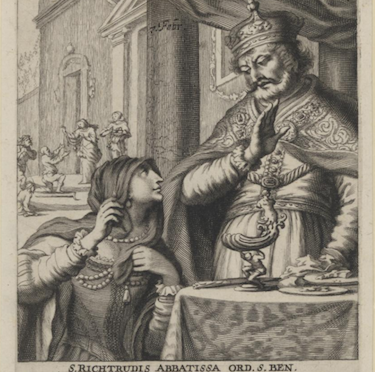
We are all familiar with the two big Basque saints – Saint Ignatius and Saint Francis Xavier. They feature prominently in Basque culture, serving as the patron saints of Basque provinces, several towns, and even festivals. However, they aren’t the only saints with a Basque connection. Saint Rictrudis is one example of a lesser known Basque saint. While it isn’t clear if she herself may have spoken Euskara or something related, she was born in a region that did.
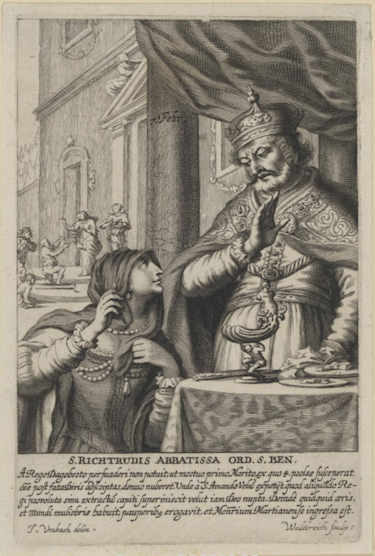

- Rictrudis, also known as Rictrude and Rictrudes, was born around the year 612 in Gascony which, at the time, had a very strong Basque character. Indeed, in those days, the region she was born in was known as the Duchy of Vasconia. It isn’t clear what her ancestry was and therefore what her ethnicity was, but she was born in what was likely a Basque-speaking region.
- What little we know about her and her life is from the hagiography (a biography of a saint) Vita Sanctae Rictrudis, which was written a few centuries after her life and after many documents about her life had been destroyed during Viking raids.
- She was born in to the local nobility. Her parents were Ernold and Lichia. As opposed to much of the region, which was called pagan by Christian authors to the north and Muslim authors to the south, her parents were “devout,” implying they were Christian.
- She married a visiting nobleman, Adalbard – when isn’t clear. They had four children. Adalbard was assassinated shortly after the birth of their forth child, and some sources speculate it was Rictrudis’s family that had him assassinated during a trip to Vasconia (after their marriage, the family had relocated to what is now Belgium where Adalbard was from). Presumably, Rictrudis’s family hated that she had married an enemy.
- After Adalbard’s death, Rictrudis founded an abbey and monastery at Marchiennes. This was against the king’s wishes who wanted her to remarry. There are various political reasons she may have chosen to resist remarrying, including keeping wealth and lands out of the hands of the king.
- Rictrudis died somewhere between the years of 676 and 691. Her family is perhaps unique in history in that all 6 of its members, Rictrudis, Adalbard, and their four children, were all named saints.
- In 1898, Txomin Agirre fictionalized her story and the 7th century conversion of the Basques to Christianity, giving her the epitaph Auñamendiko Lorea – Flower of the Pyrenees.
A full list of all of Buber’s Basque Facts of the Week can be found in the Archive.
Primary sources: Estornés Lasa, Bernardo. RICTRUDIS. Auñamendi Encyclopedia, 2026. Available at: https://aunamendi.eusko-ikaskuntza.eus/en/rictrudis/ar-121027/; Rictrude, Wikipedia