There is a sapling of the Tree of Gernika planted on Capitol Hill in Washington, DC. The planting was sponsored by Rep. John Garamendi in 2016. It took me a long time to find it, so here is a map for anyone else who wants to find it.
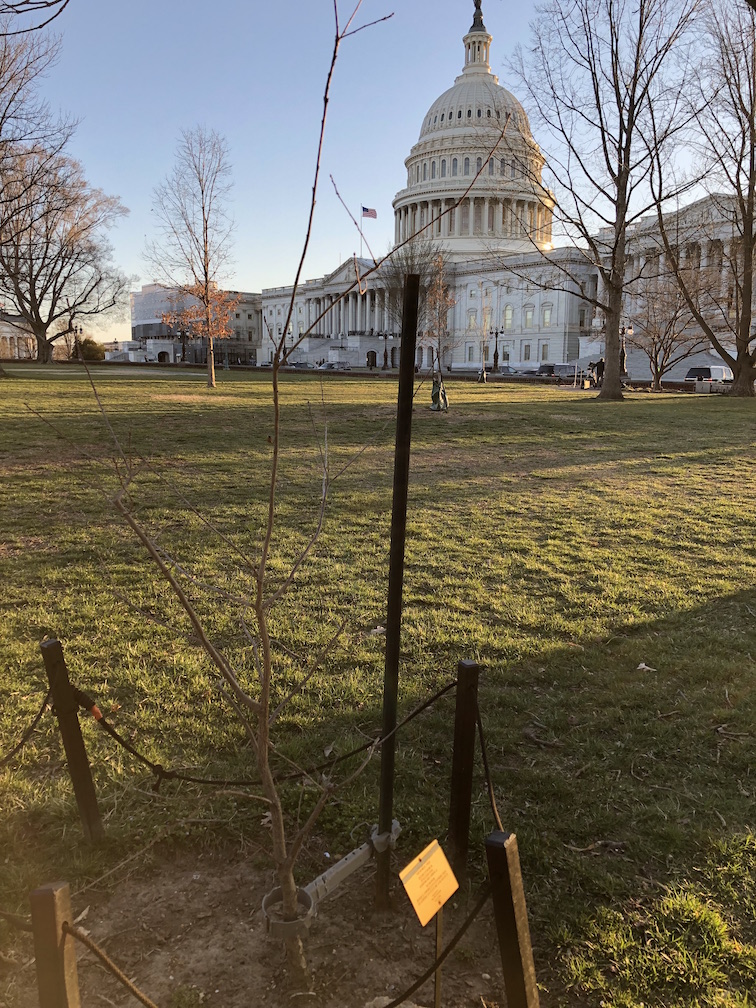
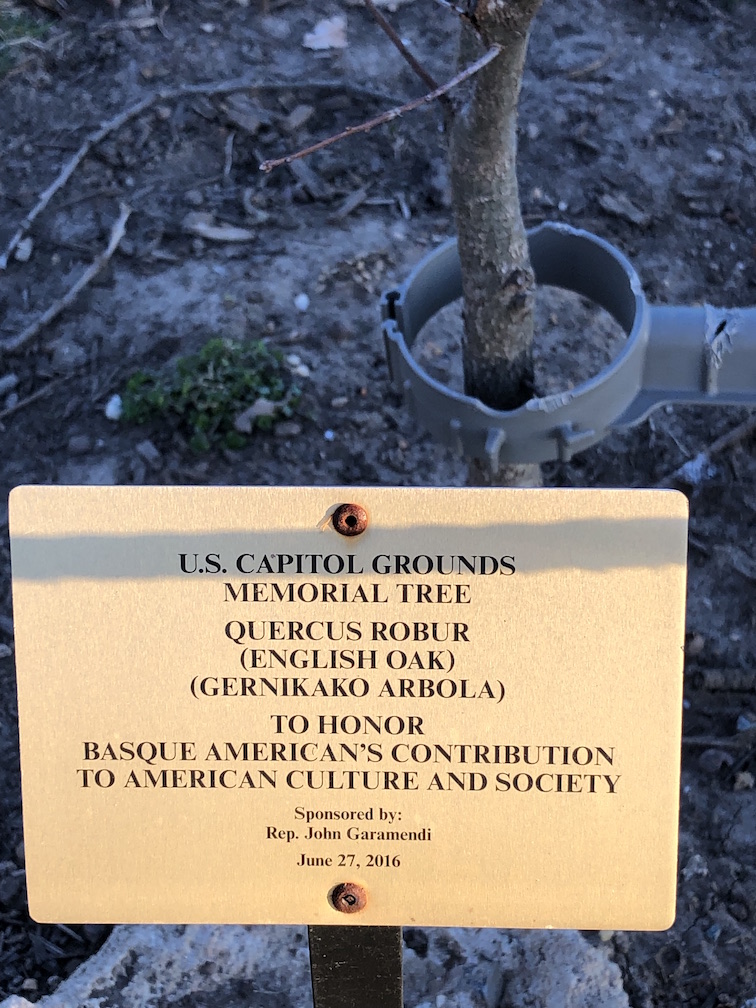
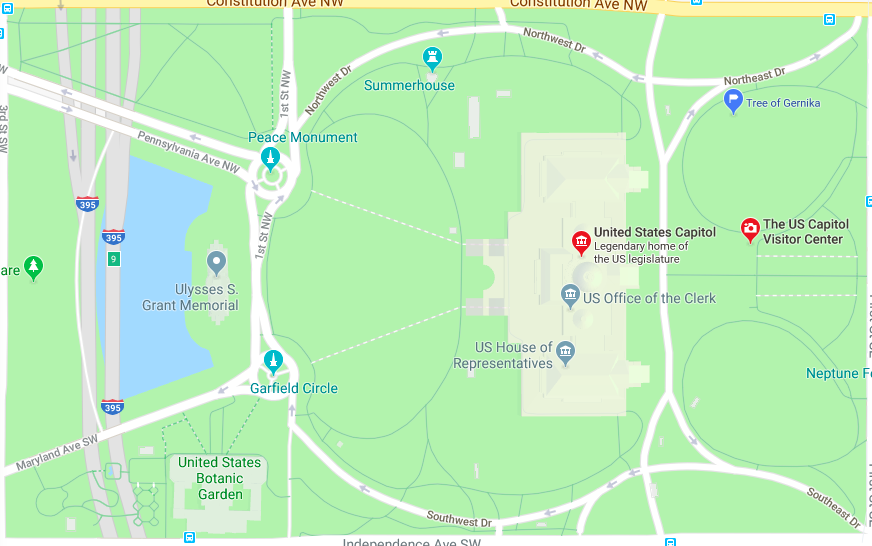

There is a sapling of the Tree of Gernika planted on Capitol Hill in Washington, DC. The planting was sponsored by Rep. John Garamendi in 2016. It took me a long time to find it, so here is a map for anyone else who wants to find it.

We are all familiar with the large waves of Basque migration to the Americas and Australia. But there was also a small group of Basques who immigrated to Wales, in the United Kingdom. They were recruited to the city of Dowlais, some 60 miles from Cardiff. They came to the region because of the steel industry, recruited because of their experience and expertise working in the Basque Country. A small neighborhood was established for them on Alphonso Street and their descendants are still a part of the community.
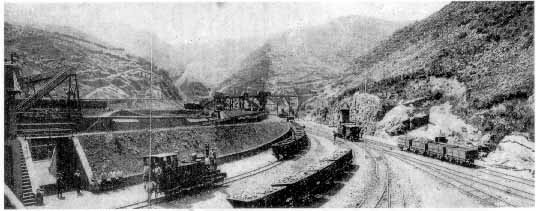
Primary source: Los ‘vascos de Dowlais’, emigrantes del carbón y el hierro en Gales, Deia, un reportaje de Óscar Álvarez Gila – Sábado, 2 de Marzo de 2019 – Actualizado a las 20:22h.

Did you know Zatarain was a Basque name? From Gipuzkoa, meaning either “over the vantage point” or “place where the elder grew.”


I first discovered this beer a few years ago during a trip to Florida, and found it again during our recent vacation….


An old Hagar the Horrible comic I found in the paper. Maybe not all that funny, except for where those arrows in his butt come from…


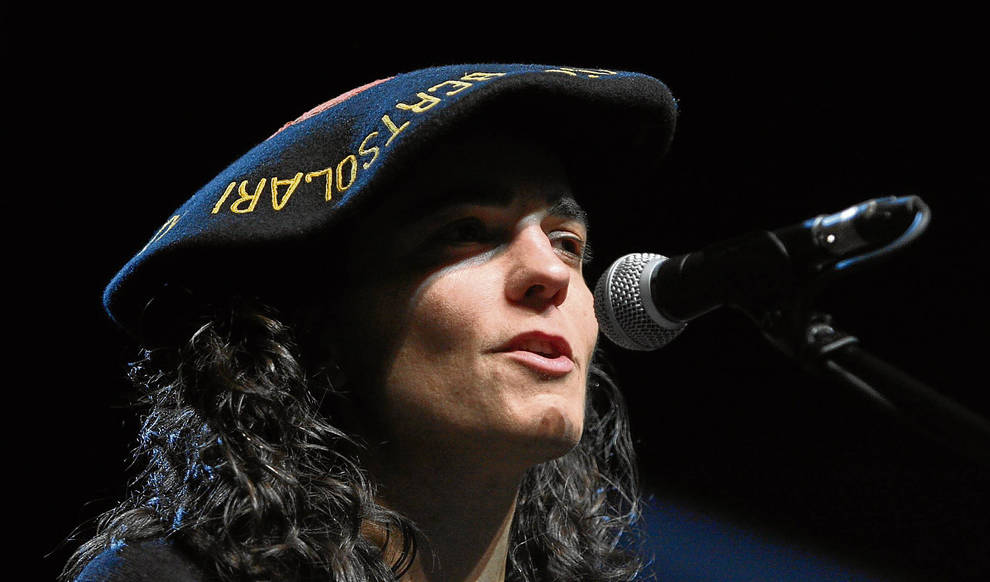
Bertsolaritza, or Basque Improvisational Poetry, is the art of composing, on the spot and impromptu, sung couplets about a given topic. A specific meter and rhyme must be followed. Competitions are held for the best bertsolaris, or singers of of these poems, but bertsolaris are also famous for singing impromptu at any gathering.

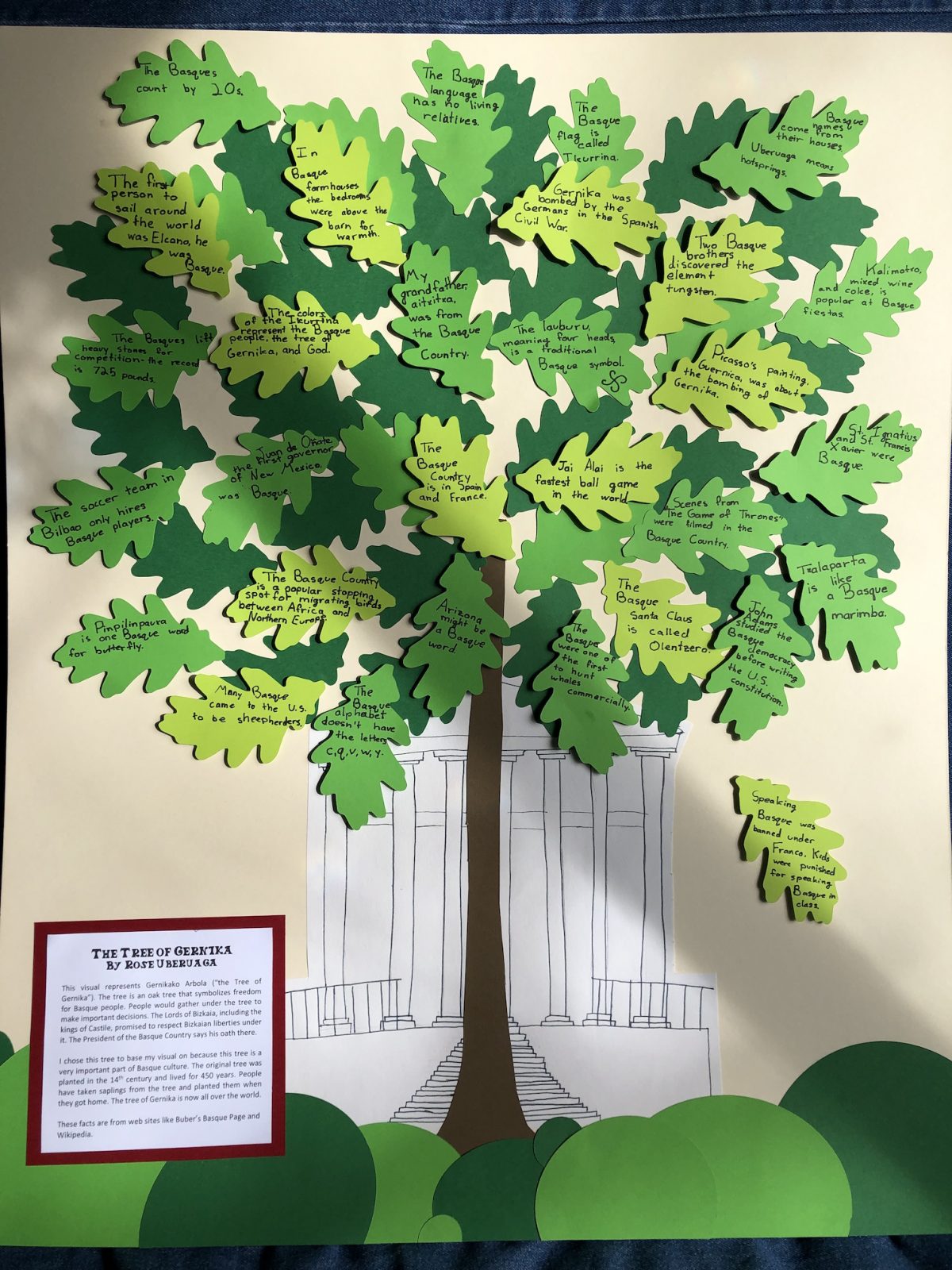
For school, my daughter’s class is studying world cultures and they were told to pick one for each of them to study in depth. My daughter chose Basque as her culture. One of their projects was to write a creative essay. She wrote her interpretation of a Basque family immigrating to America. Maybe she’ll let me share that down the road.

The other project was to create a visual about the culture. Her project was to make a representation of the Tree of Gernika and write on the leaves various facts about the Basque Country and the Basque people. Things like the first person to sail around the world was Elcano, the heaviest stone a Basque has lifted was 725 pounds, many Basques came to the US to be sheepherders. I thought the visual project turned out really nice, so thought I’d share it with everyone.
Great job, txikitxu!


I was in San Antonio this week for work. The Minerals, Metals and Materials Society, better known as TMS to materials scientists, has an annual meeting that floats around the country, and this year it was in San Antonio. This conference brings together researchers from around the world that are advancing our understanding of materials, from more applied aspects such as how materials corrode to fundamental insights into the nature of grain boundaries — the interface regions between grains that occur in all but the most defect free of materials.

In any case, on Wednesday, my last night in San Antonio, I was returning to my hotel after a dinner on the river walk. (An aside: being from Idaho, I always class California, Texas, and Florida in these bins of “places that are horrible and I never want to visit.” However, I’ve been pleasantly surprised by Texas and have particularly enjoyed San Antonio the few times I’ve been there.)

Anyways, I was waiting at a crosswalk for the light to turn. A family approached the corner — the parents, a baby in a stroller and a little boy of maybe 5 or so. Suddenly, the crosswalk is going nuts: “wait,” “wait,” “wait,” blared from the speaker over and over. At some point, the parents start yelling at the boy. I suddenly notice that they are yelling at him in Euskara. My Euskara being piss-poor, I understood only a few words (“zikin” being the one that jumped out at me).

As they pulled the boy away from the button, the light changed and we crossed. As we crossed, I asked, in my broken Spanish (which is infinitely better than my piss-poor Euskara), if they were from the Basque Country. They looked at me warily and said “yes,” at which point I told them that my dad had been from there and that I lived for a year in Donosti (learning the little bit of Euskara I do know). They, coincidentally, are from Donosti.
We talked for a minute about their vacation in the Americas (starting from Mexico, going up into Texas, after which they were heading east). It was a brief conversation, lasting only a few minutes, and I never caught their names. But, it struck me how even recognizing Euskara is like being part of a secret club, where people you might not otherwise recognize as being from the Basque Country are instantly recognizable. A few words of Euskara and suddenly there is a connection.

This has happened to me before. I met a couple of guys who were speaking in Basque in a line leaving an airplane in Germany. It’s always cool to make these connections, facilitated by the strange and wonderful language of the Basque Country.

Ana María Bidegaray, born in Hazparne, Laburdi in 1890, provided critical humanitarian aid and worked as a spy in both World War I and II. Raised in Uruguay, she married Raymond Janssen, Consul General of Belgium in Uruguay. Collaborating with the British and French secret services, she used her husband’s diplomatic ties to gain intel on German prison camps and helped create a rescue network for prisoners of war, the so-called Bidegaray Network, which allowed Belgian prisoners to cross into the allied zone and also helped to feed the civilian population. At the end of and just after World War II, she collaborated with the Basque Government in exile to identify and capture Spanish, Italian and German agents who sought residence in Uruguay. As Ana María said, “Por este mundo solo se pasa una vez y quiero que ese paso que sea bueno.” — “We only pass by this world once, and I want mine to be good.”
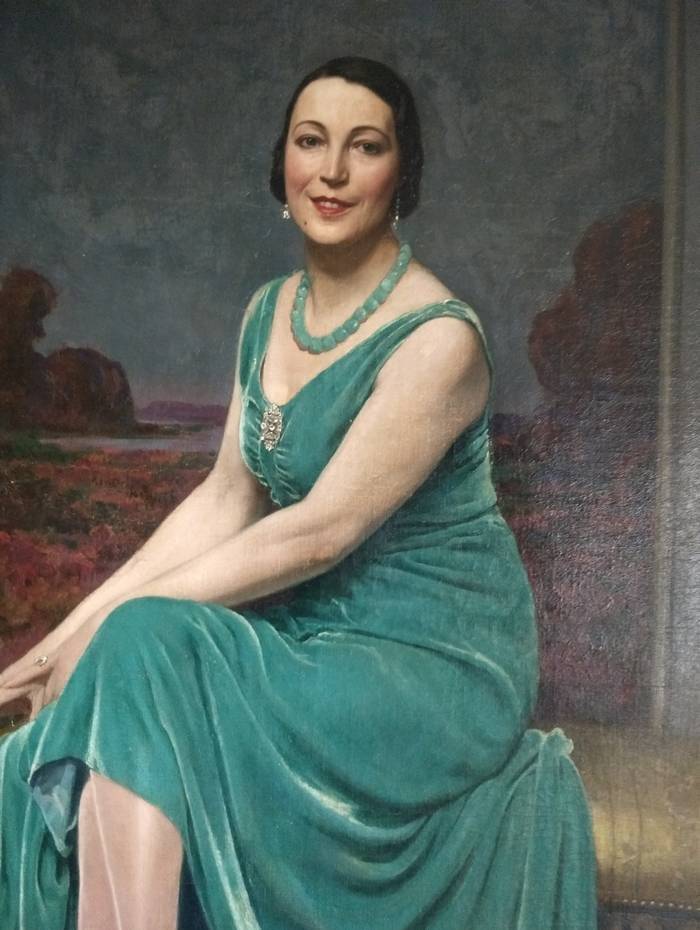
Sources: Deia and Noticias de Alava.

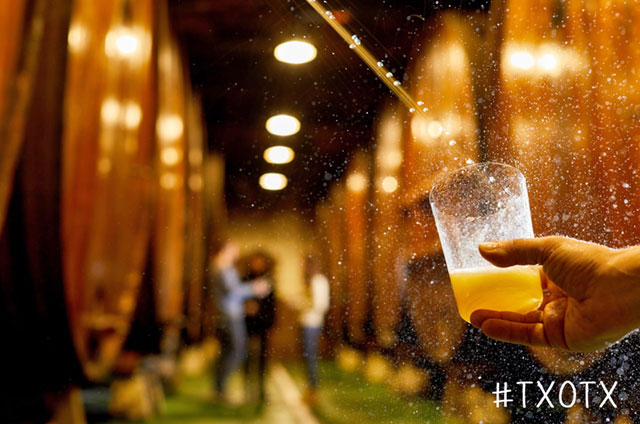
Before wine and beer and soft drinks became popular, before land was devoted to corn, sagardoa, or apple cider, was the drink of the land. This was true up to maybe 100 years ago. Family farms, or baserriak, made cider for family consumption and sagardotegiak, places to drink cider that were the de facto main public meeting place, existed in all towns. These sagardotegis were the ancestors of the gastronomic societies that later sprung up in places like Donostia.
Aguirre Sorondo, Antxon; Aguirre Sorondo, Antxon. Sidra. Enciclopedia Auñamendi [en línea], 2019. [Fecha de consulta: 09 de Febrero de 2019]. http://aunamendi.eusko-ikaskuntza.eus/es/sidra/ar-109880/