Larragoite Park in Santa Fe, NM. There are lots of Basque names around here.


Larragoite Park in Santa Fe, NM. There are lots of Basque names around here.

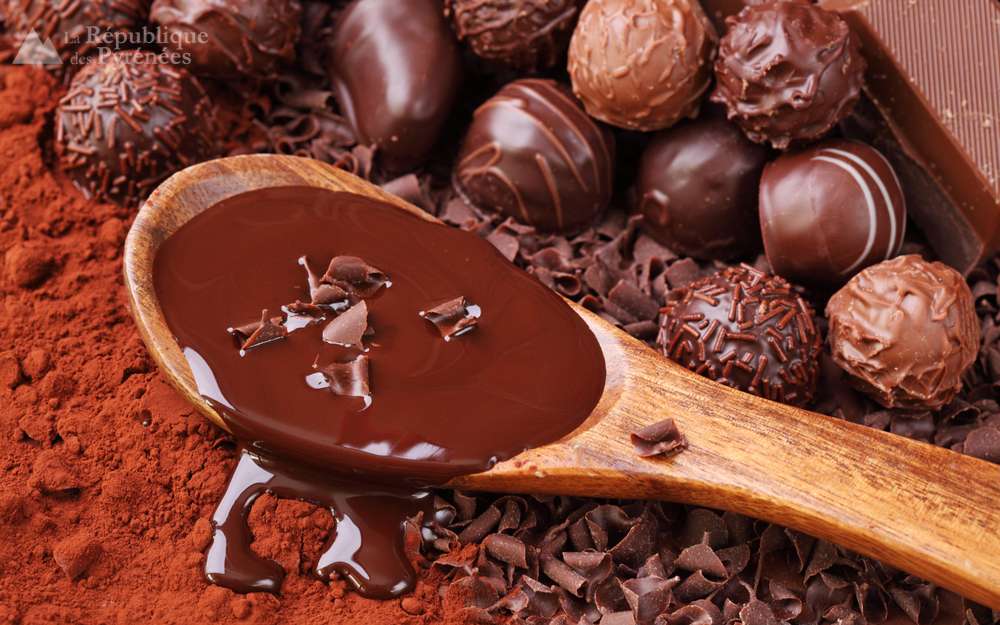
As in many places, chocolate is a big part of Basque life. On birthdays, instead of the birthday cake familiar in the United States, Basques often drink a cup of liquid chocolate. It wasn’t so long ago, in the early 1800s, that chocolate was a common part of breakfast in the Basque Country. It was often viewed, not as a treat, but as a health drink, inspired, in part, by the way the Mayans and Aztecs used it as, effectively, an energy drink. Indeed, Hernán Cortés noted how drinking cocoa could help one resist fatigue. But, the Basques were also a big part of the development and commercialization of chocolate.
Primary Source: Aguirre Sorondo, Antxon. Chocolate. Enciclopedia Auñamendi, 2019. Available at: http://aunamendi.eusko-ikaskuntza.eus/es/chocolate/ar-36174/

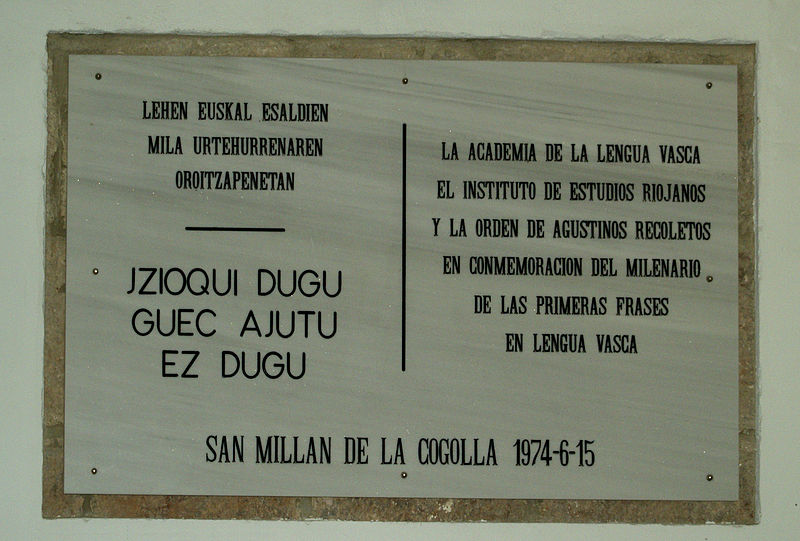
Euskara, the language spoken by the Basque people, is now spoken by about 750,000 people. The language is perhaps the most singularly important feature identifying the Basque people. Indeed, the word for a Basque person in Euskara — euskaldun — means ‘one who has Euskara.’ Thus, the history of the language itself is of great interest and importance in understanding the history of the Basque people. Given that Basque has not had a strong written history, reconstructing the history of the language is challenging. The earliest known evidence for Euskara comes from a set of lead tablets from the Roman period. These tablets have the word “NESCAS” or “NISCAS” written on them, apparently referring to the modern Basque word neska, which means girl, used, in this context, to invoke the local nymphs.
Sources: Etymological Dictionary of Basque by R. L. Trask, edited for web publication by Max W. Wheeler; The History of Basque by R. L. Trask.

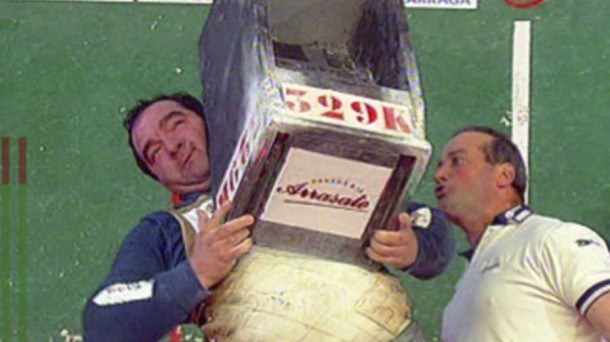
Anyone who has been to a Basque festival will recognize the rural theme of many Basque sports. Based on activities that would have occurred at the baserri, or farm house, Basque rural sports include wood chopping and sawing, bale lifting, and weight carrying. In fact, the Basque Government has identified 18 of these events in its Strategic Plan. Perhaps one of the most spectacular and popular of these events is harri jasotzea, or stone lifting. There are various variants of stone lifting, from lifting the biggest weight to lifting a smaller weight as many times as possible. In all cases, a successful lift consists of getting the stone to one’s shoulder.

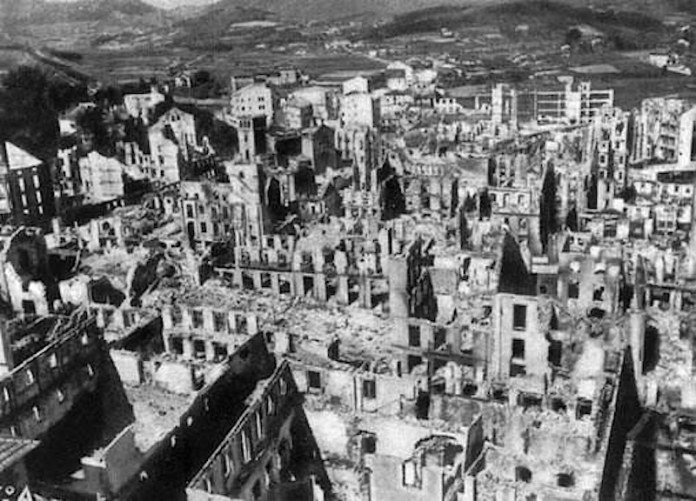
One of the most infamous episodes in the Spanish Civil War is the bombing of Gernika, in which the German Luftwaffe’s Condor Legion attacked the Basque town on Monday, April 26, 1937, starting around 4:30pm in the afternoon. Monday was a market day, normally bringing thousands of people to the small town in the heart of Bizkaia. From the German point of view, this attack was a test of so-called terror bombing, in which civilians are attacked to break the will of the enemy.

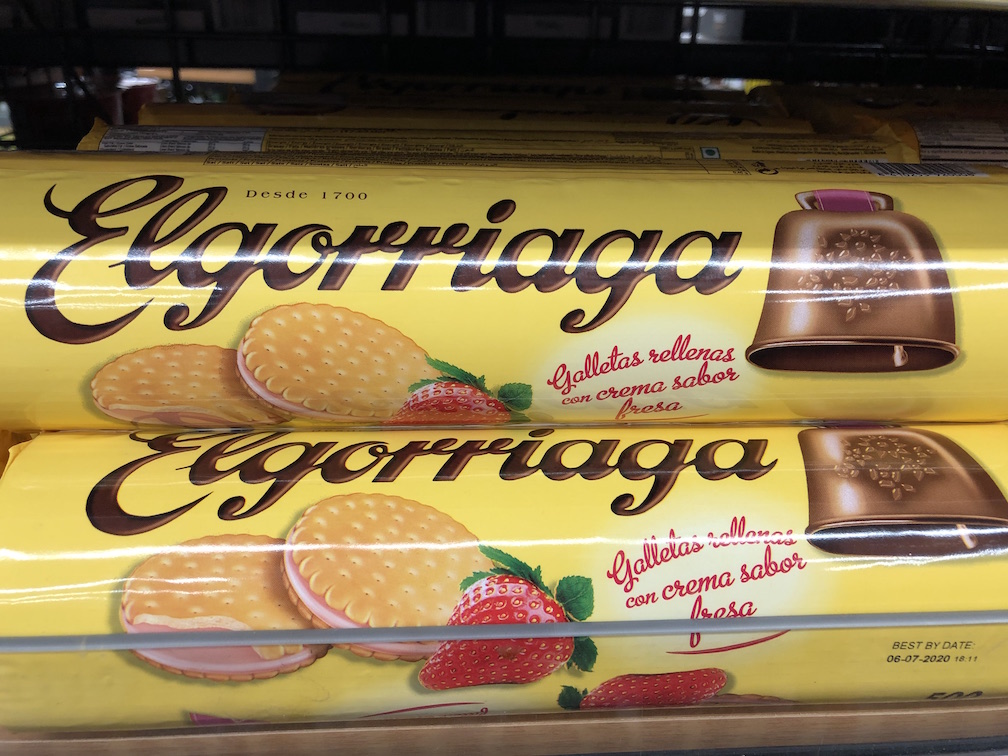
Found these at our local World Market. Elgorriaga, the first chocolate company in Spain, has been making chocolates since 1770. The company started in Irún, Gipuzkoa.

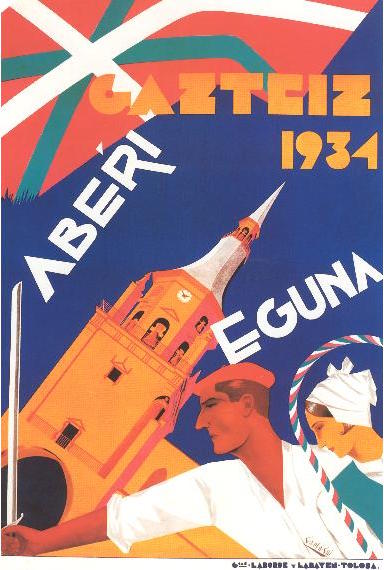
Aberri Eguna On! Happy Aberri Eguna!
Aberri Eguna, coinciding with Easter every year, is a celebration of the Basque Country. It has always had a political aspect, with events organized by the various Basque nationalist parties. However, it has also always had a cultural aspect, which has been more emphasized in Basque communities outside of the Basque Country. While it is not an official holiday, it has become the de facto Basque national holiday and, today, celebrations are often filled with sporting events, dancing, music, food, and drink.
Primary Source: Caballero Basáñez, Carlos. Aberri-Eguna. Enciclopedia Auñamendi, 2019. Found at: http://aunamendi.eusko-ikaskuntza.eus/es/aberri-eguna/ar-6047/

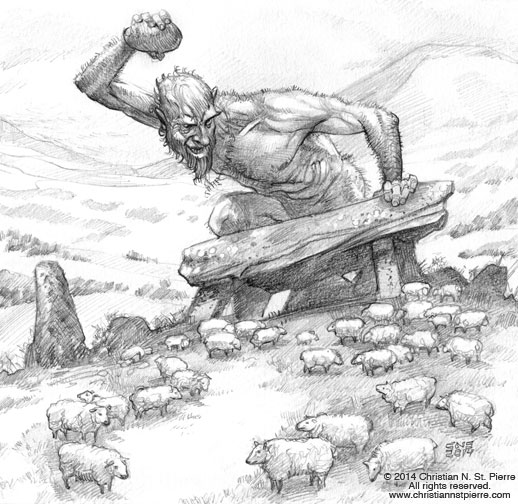
Basques are known for the strong Catholic devotion. However, the Basques are also known to have converted to Christianity relatively late. Before, they had a mythology that was based on various supernatural beings. One of those was the Jentilak, or race of giants. These beings, immense in size, existed before humans, though maybe co-existed with humans, at least in some tales. They had enormous strength and were responsible for the construction of many massive stone features, including churches, castles, bridges, and dolmens. They were said to be more Christian than the Christians. They suddenly died when a black cloud appeared in the sky and they fled to bury themselves.
Source: Hartsuaga Uranga, Juan Inazio; Hartsuaga Uranga, Juan Inazio. Gentiles. Enciclopedia Auñamendi [en línea], 2019. Available at: http://aunamendi.eusko-ikaskuntza.eus/es/gentiles/ar-62712/
Thanks to Lisa Van De Graaff for suggesting this topic as a Basque Fact of the Week. If you have a topic you’d like to suggest, just let me know!

Known as the Liberator, Simón Bolívar is a national hero to many South American countries. Under his leadership, Venezuela, Bolivia, Colombia, Ecuador, Peru, and Panama gained their independence from Spain. He also became president of what was then called Grand Columbia, encompassing the modern countries of Venezuela, Colombia, Panama and Ecuador. Inspired by the American and French revolutions, he envisioned a united Spanish America, though felt that it needed a stronger central government than the United States because of the more varied peoples. Though Bolívar dreamed of a united Spanish America, his dream failed, in part due to the political ambitious of others as well as the fear that he was establishing a dictatorship with him at the helm. He died in 1830 of tuberculosis, at the age of 47.

Primary source: Wikipedia.

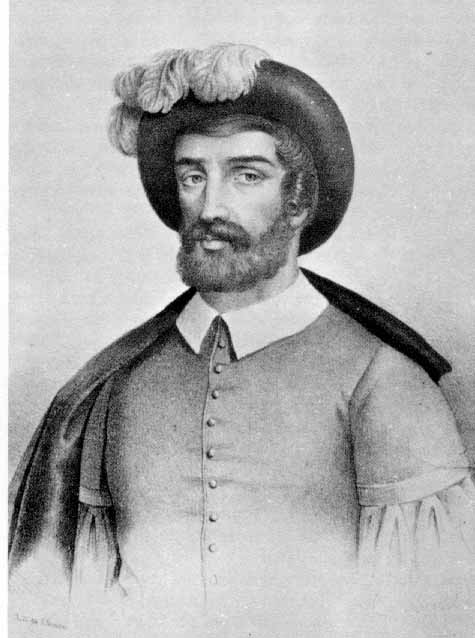
In the United States, at least when I was a kid, we learned that the first person to circumnavigate the globe — to sail around the world — was Ferdinand Magellan. In reality, however, Magellan died in the Philippines, and he never made it all the way. He left Spain with 5 ships but only one ship, the Victoria, returned successfully to Spain. After many changes of leadership, it was Juan Sebastián Elcano who was leading the ship and the expedition when it finally arrived. For his efforts, in addition to a monetary reward, he was awarded a coat-of-arms with the slogan “primus circumdedisti me.”