
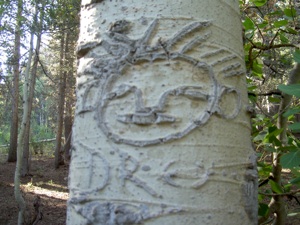
 Long-time Basque historian, and frequent contributor to Buber’s Basque Pages, Joxe Mallea, has done a lot of work documenting Basque history recorded on the trees of the American West. Joxe has decided to start a website (since, as his daughter says, no one reads books anymore) that will showcase many of the arboglyphs he has documented. The website, basquehistory.net, is still a work in progress, and based on what Joxe has collected, will be greatly expanded from its current version, but this is an interesting and unique perspective on Basque history from the point of view of those men and women who endured the hardships of emigration and life in the hills of the American West.

Mondragon
Many might already know, but in case not, the Basque town of Mondragon has gained some fame for the co-operative there. It has been used as a model because of its great success. If you haven’t heard about it, you can find some information at this Wikipedia article. A reader pointed me to this blog, which gives a diary of a visit to Mondragon to learn about the co-op. Some interesting reading for anyone interested in alternative business models.
Share this / Partekatu hau:

ETA ends violence
 Yesterday, ETA officially announced the end of its campaign of violence. While viewed with skepticism by the main political parties of Spain, this is a historic day for the Basque Country. And one that was inevitable. While the PP and PSOE make typical remarks about how we’ve seen this before and how can we trust this one is real, the fact is that ETA had very little support amongst the Basque populace. Even ETA prisoners in Spanish jails had called on them to end the violence.
This, of course, doesn’t mean that everyone is suddenly happy with the status of the Basque Country within Spain. There are still groups that want independence. Now, however, all of those groups are working through the political process rather than using violence as a means towards this end. The end of ETA’s violence, combined with the recently declared legality of parties such as Bildu, offers independence-minded Basques other legitimate avenues to express themselves and make their voices heard.
There is still a lot of uncertainty about the political future of the Basque Country, but this announcement certainly makes that future seem brighter.
Photo shamelessly stolen from Luistxo Fernandez, who found it here.
Share this / Partekatu hau:

Ondo Ibili! Travels in the Basque Country: Lael Uberuaga-Rodgers
Ondo Ibili! is a semi-regular feature of Buber’s Basque Page to highlight travels and experiences in the Basque Country. The goal is to help those who haven’t had the chance to go to the Basque Country to connect to it and to highlight some off-the-beaten-path experiences that others might want to try during their next visit.
Lael Uberuaga-Rodgers, a distant cousin of mine, is a long-time member of the Oinkari dance group in Boise, Idaho.
In July of 2011, the Oinkari Basque Dancers (including little ol’ me) and the Basque band Amuma Says No traveled to the Basque Country, the birthplace of our dances and culture. Trips to the Basque country are really important to us; visiting every few years allows us to maintain authenticity in our repetoire and form and strengthen connections with native Basque dance groups. This trip, a “European Tour” with Amuma Says No, would also be a chance to showcase what we have to offer in our unique place as American-Basques in the Diaspora.
Since the Oinkari founders visited as a group for the first time in 1960 and came home to start the Oinkari dance group, we had visited an additional 3 times. Previous trips had been on the invitation of a local Bizkaian or Gipuzkoan dance group, but this time we wanted to bring ourselves over. Most members couldn’t pay for our tour out-of-pocket, so in January of 2011 we embarked on a 6 month intensive fundraising campaign. We acquired sponsors, canvassed local and regional businesses for tax-deductible auction items and prizes, and held severalvery successful fundraising events. I’m always a little surprised, but very grateful, at how generous our Diasporan Basque community is in Boise, in Idaho, and in the West in general. Without the support of family, friends and other Basque organizations, we wouldn’t have been able to make this trip for several more years. But with their help, we booked our tickets, hostels and bus transport, scheduled extra rehearsals, and cleared our schedules for July 2011.
I don’t get to travel to Euskal Herria very often, so I wanted to stretch my trip out. 10 days before the official Oinkari group arrived, I left Boise with my mother and her cousin to see a little bit of Spain before our dance tour.
We landed in Bilbao, and hightailed it to Onati, Gipuzkoa for their Korpus Festival. Onati is one of my favorite Basque towns, and the first I ever visited. Their festival is very unique, and a tradition that has lasted for hundreds of years.
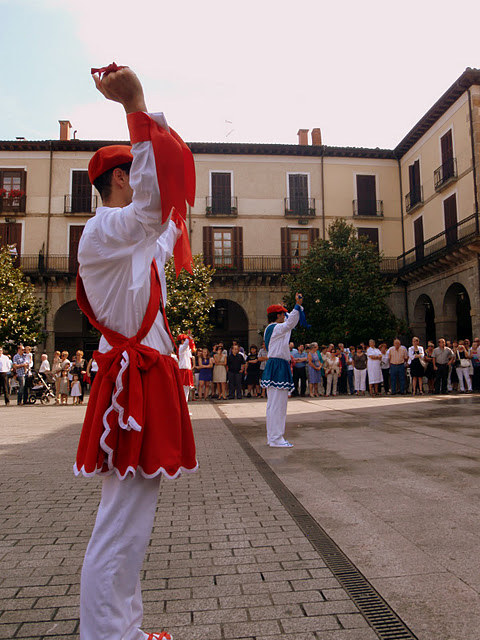
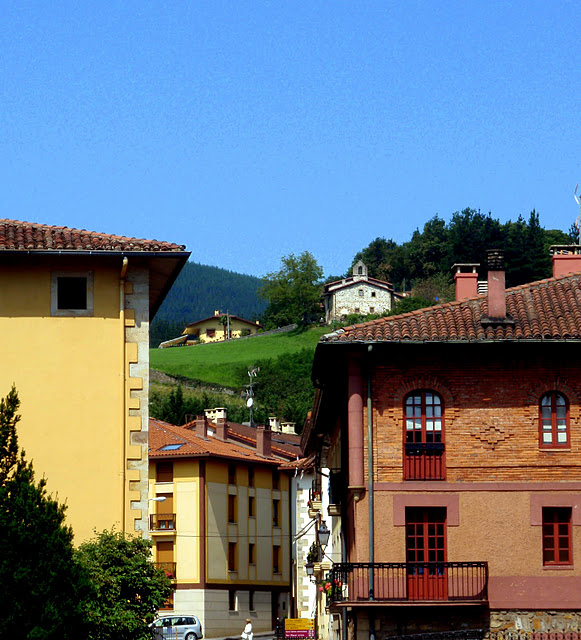
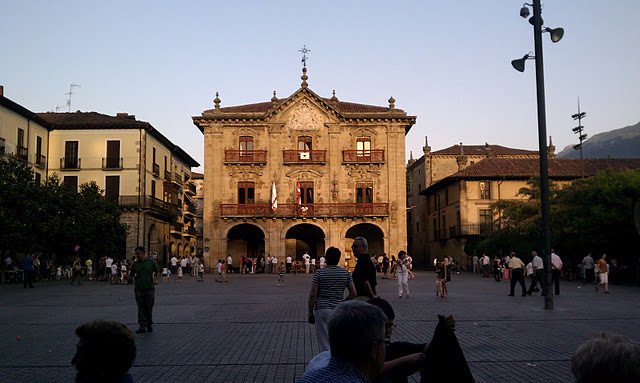
After Onati, we set our GPS southbound. We passed through Madrid to visit a friend of mine (scary to navigate a car in an unfamilar European city!) and took the highway south to Tarifa.

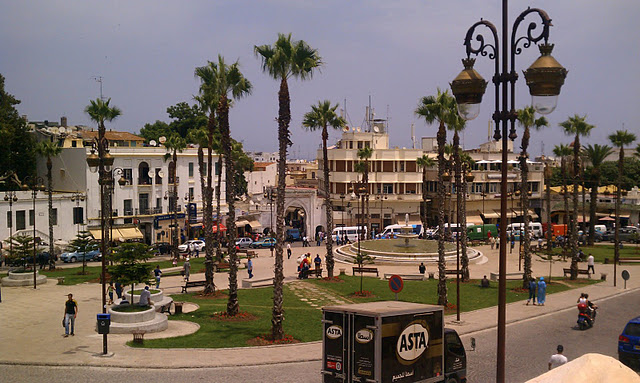
My mom would be damned if she was this close to Africa without visiting, so we hopped on a catamarand ferry to visit the Morrocan city of Tangiers for an afternoon. We hired a native Moroccan guide to take us around the city, but were still hassled constantly by men, women and mostly children to buy every single thing they had for sale. Tourist culture I guess?
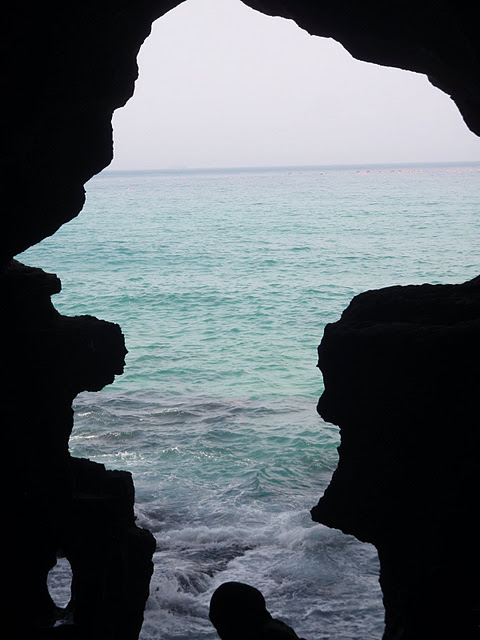

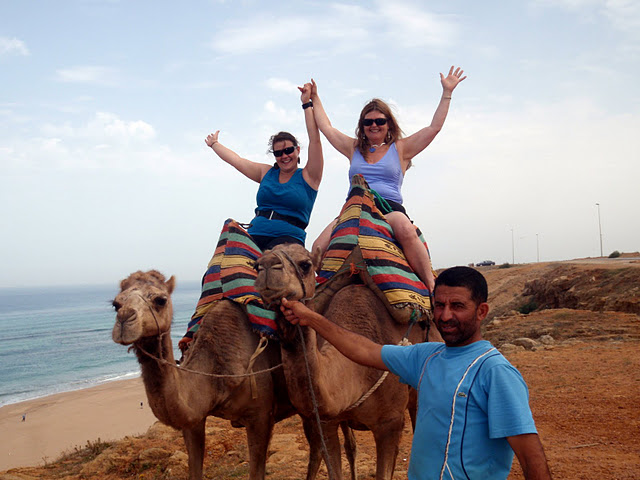
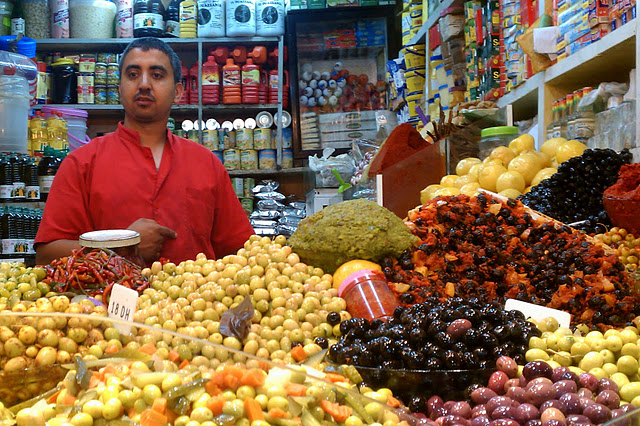
After leaving Tangiers and Tarifa, we headed north back to the Basque Country. I thought I was really biased before, but after driving through 16 hours of desert and grassland, I don’t feel as biased as I once was in saying that the Basque Country is the most beautiful part of Spain. Driving back into the lush, green mountains and beautiful beaches was like coming home– even though that’s not really what Boise looks like 🙂
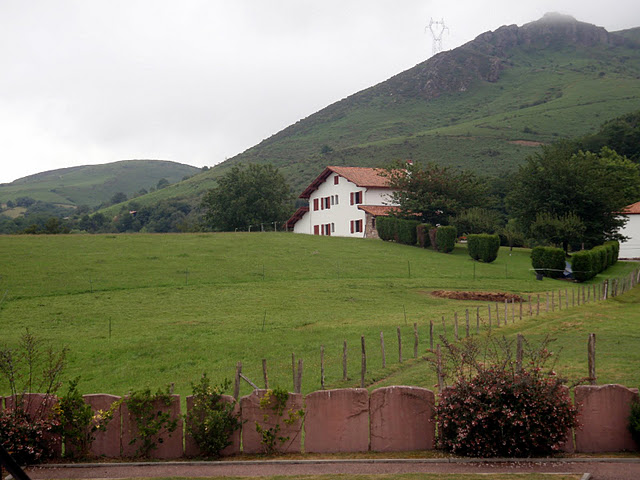
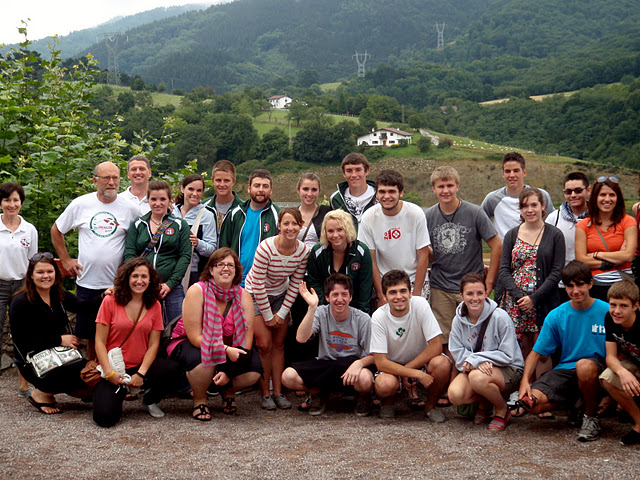
Joining back up with Oinkari’s was an adrenaline rush. Where before I was traveling with my mom and her cousin at an adult’s pace, we were now hustling and bustling, barhopping, and being about as noisy and conspicuous as an group of American young people in an European city could be.
We visited 8 towns during our trip, dancing in most of them and cheering Amuma Says No on during our concerts. We even made Oinkari t-shirts so we could keep track of our whirlwind journey.
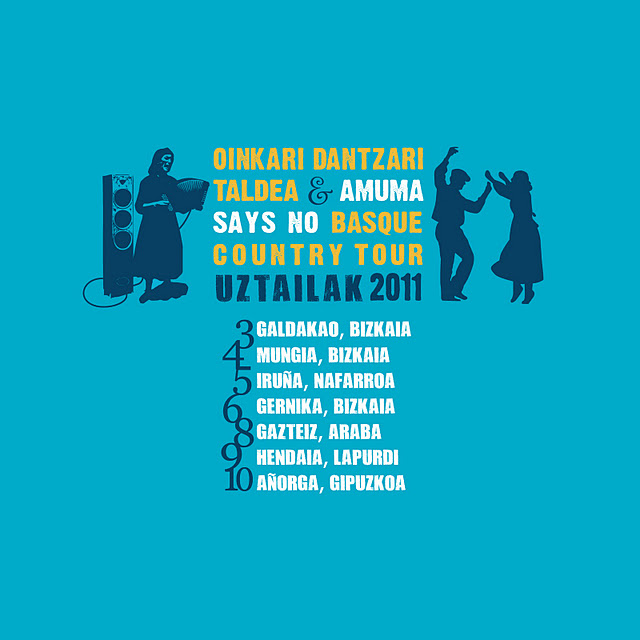
We visited our friends from the Andra Mari and Arkaitz dance groups, met new friends in the Ortzadar group in Pamplona, and even traveled across the border to France to visit and perform for Mutxiko, our Ipparaldean friends in Hendaia who performed at Jaialdi 2010.
I think we accomplished what we set out to do: we showed the Basque Country what we do and improved our authenticity. But most importantly, we connected with old and new friends, and ignited the spark of Basque culture in our teenagers. Us older members may know the Basque Country and love it, but we need to share that love with our younger members, so the excitement and interest in our heritage will continue for future generations.
Share this / Partekatu hau:

Itsasargiak: Lighthouses by Maite Lacruz and Patxi Itulain
Maite Lacruz sent me this link to a time-lapse video she and Patxi Itulain made of the lighthouses in the Basque Country (Itsasargiak, or sea-lights, in Euskara). This is a wonderful tour of the Basque Country from a different perspective. I’d never even noticed the lighthouses there; another thing to check out on some future visit!
Share this / Partekatu hau:

Zoe Bray, painter
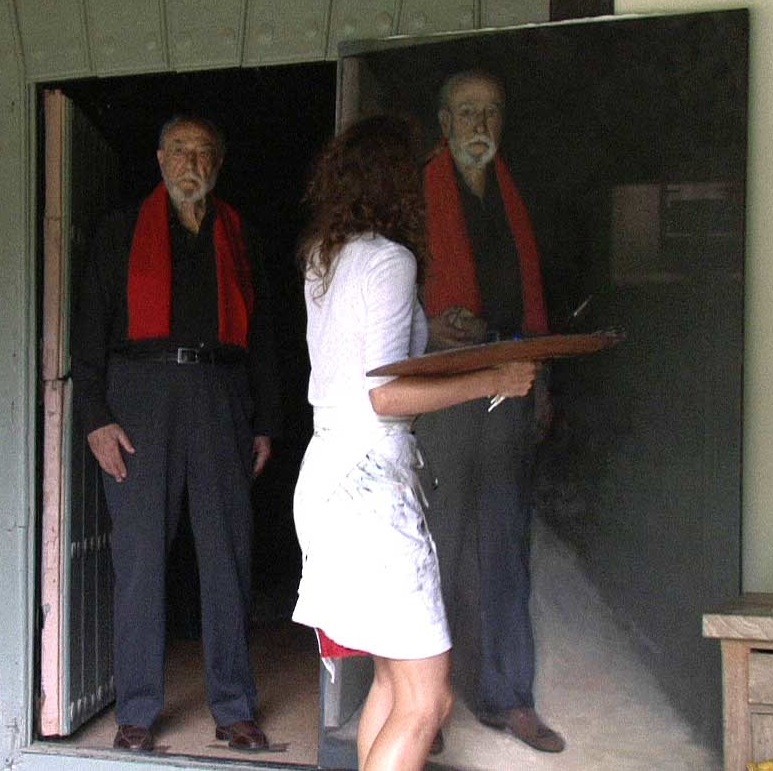
Zoe Bray wrote me to announce both her painting project in the US during her time at UNR and an upcoming lecture in San Francisco!
Zoe Bray is a realist painter in the traditional oil technique. She focuses on portraits, and recently completed a commission to draw from life bertsolaris from Iparralde/French Basque Country. Her latest exhibition, entitled ‘People and Places’ took place in the Museum of Biarritz, in July and August 2011. In this exhibition, Zoe Bray showed some of her recent landscapes and portraits of individuals in the Basque Country. Amongst some of these were portraits of famous figures of contemporary Basque culture, including the sculptor Nestor Basterretxea, the painter José Antonio Sistiaga and the choreographer and writer Filipe Oyhamburu.
She is currently based at the University of Nevada Reno, and looks forward to painting the portraits of local people and Basque Americans. She will be giving a talk on painting at the San Francisco Basque Cultural Center in November (http://www.basqueed.org/BEO-Basque-Culture-Day-2011.htm)
See her work and how to contact her on: www.zoebray.net
Share this / Partekatu hau:

Guernica by Dave Boling
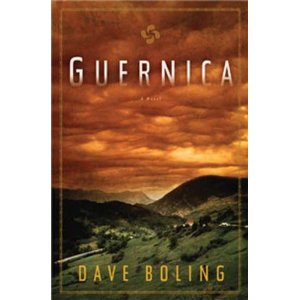 The bombing of Gernika has become an integral part of the greater Basque experience, quite possibly of Basque identity itself. Every Basque, whether born in Bilbao or Boise, knows what happened in Gernika. Reproductions of Picasso’s Guernica can be found in even the simplest of basseriak in the rural Basque Country, in places where modern art hangs on walls centuries old.
Even so, while some of us may have grandparents that lived during the bombing, or ancestors who fought in the war, most of us have a more abstract, more cerebral connection to the bombing of Gernika. This is one reason I so highly recommend Guernica by Dave Boling. Boling’s first novel, Guernica recounts the events of the bombing of Gernika through the story of two families and three generations. Boling knows we are all aware of the basic historical facts, and so he begins by showing us that these two families have been devastated and the rest of the novel is spent introducing these characters to us, leading us up to the bombing. This is one of the few books where I was actually anxious for what happened next. I knew the bombing was coming, but I didn’t know how it would affect these particular characters, who would survive, who would die, and who would be damaged. Boling does a great job of developing characters that I cared about, especially as vehicles for me to better understand the tragedy that was Gernika.
An interesting and very effective device Boling uses is to interweave the drama of his fictional characters with the historical events unfolding around them, events that they have no inkling of, but which will dramatically affect their lives. We visit Jose Antonio Aguirre, the first lehendakari of Euskadi; Picasso as he reacts to the Spanish Civil War; and even Wolfram Freiherr von Richthofen, the man who orchestrated the bombing itself. We thus get some context for the storm that soon assails the protagonists, almost without warning.
There were a few little quibbles I had, as a few things sounded odd to my ear. For example, some of the women are given the surname of their husbands, something that doesn’t happen in Spain. And the characters, from the heart of Bizkaia, refer to the Basque Country as “Pays Basque” which also seemed very out of place. But, Boling had respected Basque scholars go through the manuscript and I wonder if this is more my own lacking.
I’m not going to reveal any more of the plot, as I don’t want to give away the ultimate fate of these characters that we grow to care about as they themselves grow, before, during, and after the bombing. Let me just say that as a characterization of events that were both horrific and defining for the Basques, Boling does an admirable job of bringing a human face to events that are otherwise incomprehensible.
If you’ve read Guernica, please share your thoughts!
Share this / Partekatu hau:

Nor Naiz, Gu Gara: Henar Chico
Nor Naiz, Gu Gara (Who I Am, We Are) is a series aiming to explore the meaning of Basque Identity around the world, both within Euskal Herria as well as in the diaspora. For an introduction to the series, look here, and for a list of the previous entries, look here.
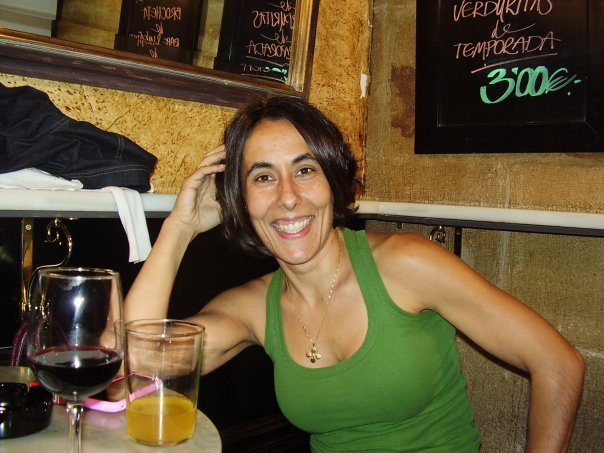 About three years ago I wrote an entry on Basque identity for my blog on the eitb.com website, “A Basque in Boise”, where I shared my feelings about being Basque, right after being accepted into Euzkaldunak, Inc. (Boise’s Basque Center). Some of my thoughts remain the same, although luckily, a lot has changed since then.
I was born and raised in the Basque Country, but my parents weren’t, and I’ve always struggled with that. I’ve always felt a bit ashamed. I did attend ikastola (Basque school) and studied Basque there, but that was the extent of my involvement with the language and the culture. I grew up during a time when ETA was very active and we’d have terrorist attacks virtually every week. I was – still am – disgusted by them and I removed myself from things like AEK (Basque acronym for “Coordination for Alphabetization and Teaching of the Basque language”) and Basque dancing because many people I knew that supported those ideas belonged to those groups. I realize know how stupid I was. I can’t believe I once associated ETA supporters with Basque culture just like the rest of the people in Spain.
I felt even more embarrassed after moving to Boise, home to a huge Basque community. At that time I was barely able to carry on a conversation in Basque and many times over the years I had to explain to people why I didn’t speak Basque despite being from the Basque Country. Part of it, like I said before, was my fault for not making more of an effort to learn the language while I had the chance, but living in an area of the Basque Country where people predominantly speak Spanish didn’t help either. But it wasn’t just lack of language that made me feel that way. It was the lack of a Basque bloodline. I used to feel that people who were born here in the US, people who have never even been to the Basque Country, have the right to feel “more” Basque than me because their great-grandfather happened to be from Gernika, Azkoitia, or Lekeitio.
I was 21 when I left Bilbao and I thought that being from the Basque Country would automatically open the doors to everything Basque. My first contact with the groups in Boise was Oinkari Basque dancers. I thought it’d be great to finally learn how to dance and make friends at the same time. I didn’t realize how tight those people were, though. Then, feeling like I wasn’t Basque enough didn’t help either. I couldn’t find my place, so about a month after I started the classes, I gave up.
Living abroad for the last 15 years has changed my views on the Basque Country and has helped me find my roots, especially since my kids started going to “Boiseko Ikastola,” the Basque language immersion pre-school. I realized how important it was to make sure that they were integrated from an early age into the Basque community, that they develop a pride in being Basque, and that they forge long-lasting connections with other Boise Basques. Throughout the years I’ve come in contact with most of the Oinkari dancers, and I get them. Many are even my friends now. I want my kids to have the same in their lives, a group of people with the same interests and backgrounds, so we go to Basque dancing practice every Tuesday, Euzkaldunak’s monthly dinners, and Basque festivals. I play in the women’s pala league and I’m part of the new advanced Basque language class offered by the Basque museum.
Being accepted into Euzkaldunak, Inc. was a turning point on the road to finding my identity. It wasn’t just the fact that I was now officially part of Boise’s largest Basque organization, but how it happened. I had received an email from the secretary saying that she needed to verify my ethnicity before she could go forward with the application. When I asked what exactly she needed from me she told me not to worry, that the verification only applied to Basque-American members to-be. Knowing that I was born in the Basque Country was all she needed. It was that simple. All of a sudden I realized I was the only one stopping myself from enjoying what I am. Reading my friend Jabier’s response to “Basque Identity” only reinforced that newfound clarity: I was not alone in my identity struggle. So I got over feeling embarrassed and took an active role in learning Basque and getting involved with the Basque community.
Some days I find myself still fighting with identity issues, but I don’t let that bother me as much as before. There are many ways of feeling Basque, and mine is just one more.
My name is Henar Chico, I was born in Bilbao, Bizkaia a while ago. I moved to Boise at 21, and I love it! Good city, good people, good weather, and one of the largest Basque communities out there. I have two kids, Andoni (7) and Maitane (6). I work for Hewlett-Packard full-time as a Technical Software Consultant and do translations as a side business.
Share this / Partekatu hau:

And not to be outdone… Vitoria-Gasteiz is European Green Capital
 First, Bilbao wins the “Nobel prize” of cities. Then Donostia is chosen as European Cultural Capital. Not to be outdone or left behind, Vitoria-Gasteiz, capital of the province of Araba and of the Basque Autonomous Community, has been chosen as the European Green Capital 2012. Vitoria-Gasteiz was chosen because of its environmental policies, including its public transportation infrastructure and parks. As a Green Capital (previous winners were Stockholm and Hamburg), Vitoria-Gasteiz also has some new challenges to live up to as it continues down the green path. These include a further increase in the use of public transportation as well as a decrease in water usage.
The prize is meant to highlight efforts of cities to develop a more sustainable and “green” approach to their functioning. It is meant to thus inspire other cities to follow similar practices, to learn “best practices” from one another, and to therefore increase the overall quality of life of all cities in Europe.
The Basque Country is certainly on a role with all three provincial capitals being recognized for significant efforts. Zorionak!
Share this / Partekatu hau:

Harnessing tides for power
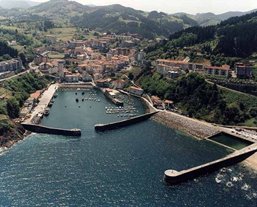 A very interesting development from the Basque Country. With all of the concerns related to climate change and dependence on foreign oil, people are looking for new ways to extract energy from where ever possible. The Basque Country is known for its waves — just ask any surfing aficionado. And while not as famous as nearby Mundaka for surfing, Mutriku is still valued for its waves.
Thus, it makes perfect sense to try to harness those waves for power. Hence, the world’s first multi-turbine breakwater wave power station has been built in the port of Mutriku. This power station can generate 300 kilowatts of power, about enough to power 250 homes. It just went online yesterday.
Some information about this initiative to harness power from the tides is here along with a news release about the station. And here is a video about the station.
While the US argues and bickers about the future of green technologies, it is nice to see other places pushing forward. I realize Spain has huge economic problems, but this seems to me a step in the right direction.
