

People in the Basque Country are inherently multilingual. Surrounded by Spanish and French, and with their own language Euskara, many also learn English. A recent study has revealed that being multilingual, especially if you speak four languages, has a tremendous benefit for your brain, making it up to thirteen years younger than people who only speak one language.
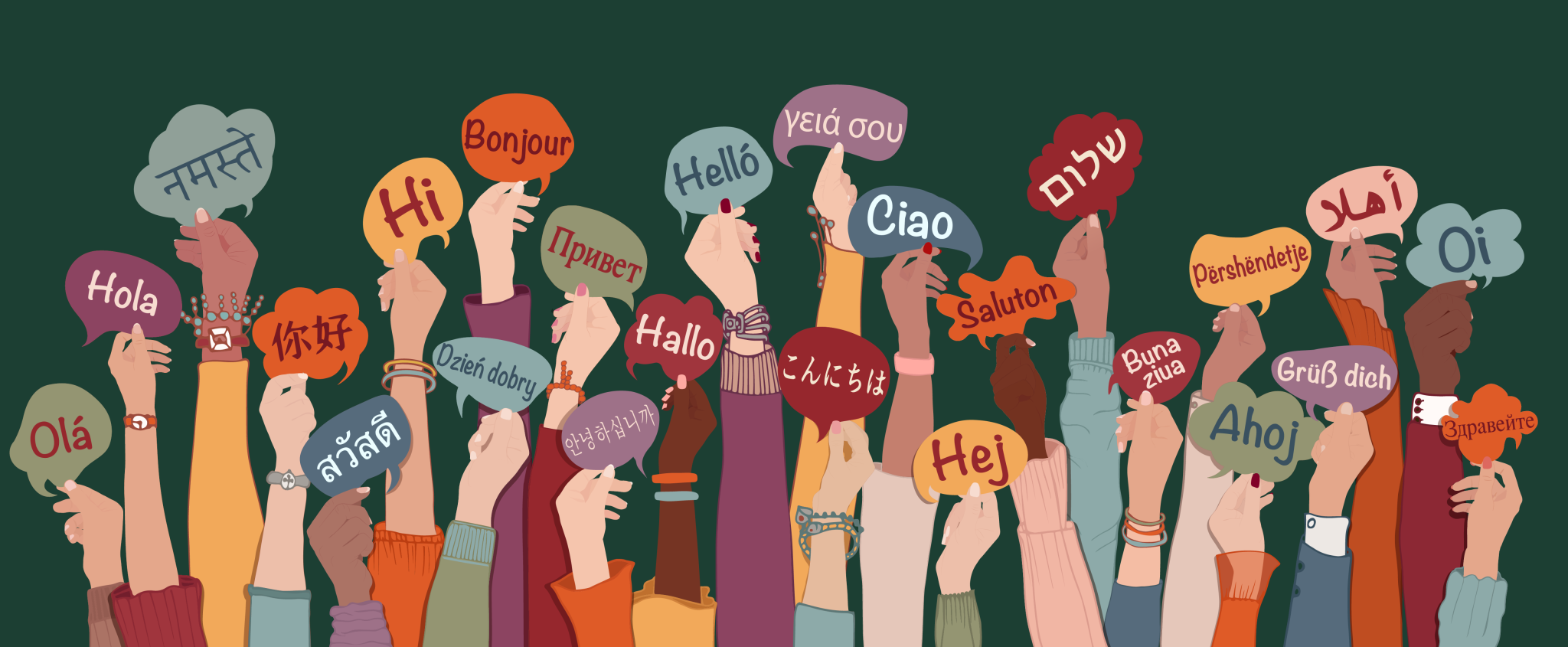
- This work has three aspects. First, the research team compared the age of people’s brains across 27 European countries in a study that spanned some 86,000 people. In that first study, they found that countries with a higher level of multilingualism – with a greater number of people speaking more than one language – had populations that experienced less accelerated aging of their brains: their brains didn’t age as fast. And, the more languages spoken, the greater the effect. They conclude that, even when someone is speaking only one language, they still have to control those other languages in the background and that makes the brain work harder (my words, not theirs).
- This study was followed up by another in which they looked at individuals, not country-wide populations. This work was recently presented by Dr Lucia Amoruso from the Basque Center on Cognition, Brain and Language in Donostia, The team started with measuring the age of brains in a random selection of people to calibrate brain age. They used a set of 728 people to develop a “brain age clock” with the combined use of neuroimaging – specifically magnetoencephalography – and artificial intelligence. This brain clock essentially says what the typical age of someone’s brain is for their real age and other factors. This established a baseline to measure deviations from the normal, if you will.
- And this is where the Basque connection comes in. They then compared this model against the measured age of brains of a group of 144 people from the Basque Country. The Basque Country was chosen because of the relatively high level of multilingualism and the high variance in multilingualism. Of those 144 people, they had equal numbers that spoke one, two, three, or four languages: Basque, Spanish, French, and/or English.
- What they found is that people who speak two languages have brains that are about 6 years younger than what would be expected for their age. If you speak three, you gain 7 years. Four languages gives you 13 years. Thus, they found a huge benefit for in brain age as you speak more and more languages.
- They also found that you have to have high proficiency in the languages and speak them from an early age to get the most benefit. So kids that routinely speak multiple languages will see the most impact.
- Why does this matter? Not only does it show how speaking multiple languages helps with brain health, but it also suggests how societies can improve the overall brain health of their people by promoting multilingualism in education. It also has relevance for potentially mitigating the effects of diseases like Alzheimer’s that are characterized by brain deterioration. There is a lot of work to do before it gets that far, but it offers one route to help limit the effects of such diseases.
A full list of all of Buber’s Basque Facts of the Week can be found in the Archive.
Primary sources: Amoruso, Lucia, Hernan Hernandez, Hernando Santamaria-Garcia, Sebastian Moguilner, Agustina Legaz, Pavel Prado, Jhosmary Cuadros et al. “Multilingualism protects against accelerated aging in cross-sectional and longitudinal analyses of 27 European countries.” Nature aging (2025): 1-15; Speaking More Languages May Help Slow Brain Aging by Jake Currie, Nautilus; Learning another language appears to slow brain ageing, scientists say by Anna Bawden, The Guardian