
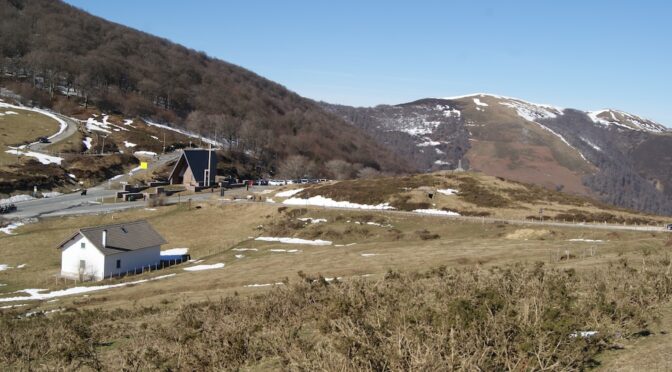
Located in the Pyrenees, the names Orreaga, Errozabal, Ibañetako Mendatea have an important role in Basque history. Ibañetako Mendatea is the actual pass, Errozabal is the broader plains, and Orreaga is the village near the pass. All of these have been used to name multiple battles that happened at this chokepoint between the Iberian Peninsula and the rest of Continental Europe. In English, these battles are called Battle of Roncevaux Pass or, more commonly, Battle of Roncesvalles. They have shaped the history of not only the Basques but all of Europe and have become immortalized in French literature.
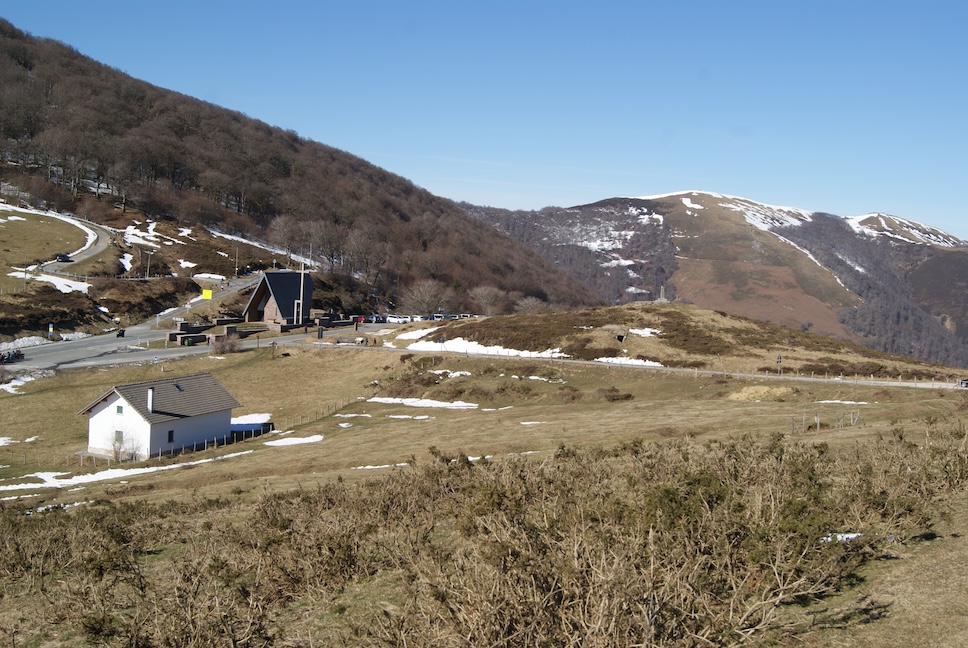
- The first recorded Battle of Orreaga, in 778, is the most famous. Charlemagne had been urged by multiple factions of al-Andalus to intervene, in one case to restore Yusuf ibn Abd al-Rahman al-Fihri as governor of Córdoba and in another to split from Córdoba all together and become part of Charlemagne’s empire. Charlemagne agreed. After destroying the walls at Iruña/Pamplona and returning across the Pyrenees back into Francia, his rear guard was ambushed by Basques hiding in the woods near the pass. Most famously, Roland, one of Charlemagne’s military commanders, was killed in the battle. He became the subject of the oldest major literary piece in French literature, The Song of Roland, though in the Song, it was a Muslim force that attacked the rear guard. Regardless, this was Charlemagne’s only notable defeat in his career and kept him leading an army into Iberia again.
- In 812, a second Battle occurred at the pass at Orreaga. The son of Charlemagne, Louis the Pious, then King of Aquitaine, crossed the Pyrenees “to settle matters” with Iruña. As he was returning north through the pass, he was, like his father before him, ambushed by Basque warriors. However, he was able to escape as he had taken Basque women and children hostage. Having successfully escaped the region, he then appointed Franks to lead the local populace.
- The third Battle of Orreaga occurred in 824. This again involved the Basques fighting the Franks, though this time the Basques were allied with the Banu Qasi. The Basques had been agitating against Frankish rule and so an expedition comprised of Basque soldiers from Vasconia and Frankish soldiers was sent to squash the rebellion. They sacked Iruña without resistance and then headed north, again through the pass. As in 778, the invading force was ambushed by a combined Basque/Banu Qasi force that had hidden in the forest. One of the most important results of this battle is that it led to the establishment of the Kingdom of Pamplona, ruled by Eneko Arista.
- The last Battle of Orreaga was in 1813, nearly 1000 years after the previous one. In this case, the participants didn’t include Basques, but rather saw French forces fighting a combined British-Portuguese army. During the Peninsular War, the Anglo-Portuguese forces had moved to capture both Donostia and Iruña. While Arthur Wellesley‘s forces were split to take both Basque cities, the French had regrouped after their recent defeat and marched on the pass. They met a small brigade Wellesley had stationed there that they completely overwhelmed, forcing Wellesley’s forces to retreat.
A full list of all of Buber’s Basque Facts of the Week can be found in the Archive.
Primary sources: Roncevaux Pass, Wikipedia; Battle of Roncevaux Pass, Wikipedia; Battle of Roncevaux Pass (824), Wikipedia; Battle of Roncesvalles (1813), Wikipedia; Battle of Roncevaux Pass (778), Fandom; Orreagako istilua (812), Wikipedia