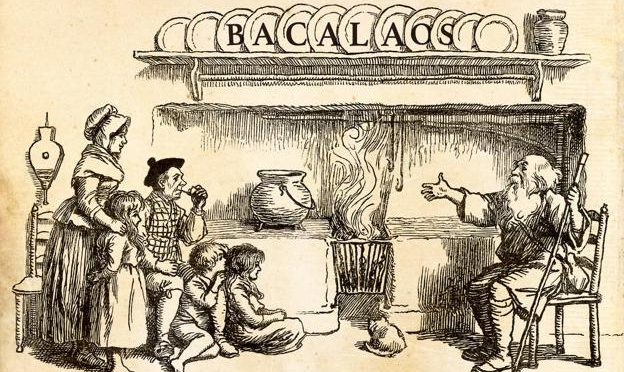
Basque Fact of the Week: Did a Typo Make Simon Gurtubay Rich?

Is it better to be good or lucky? Success in business often requires a bit of both. Or, maybe better said, luck comes to those who are prepared for it: “I’m a great believer in luck, and I find the harder I work the more I have of it” (Coleman Cox). “Luck is what happens when preparation meets opportunity” (Seneca). Sometimes, things happen that we could never have anticipated, but if we are in the right place and time, we can leverage that into success. Such is the story of Simon Gurtubay, who parlayed a typo in a telegram into one of Bilbao’s first fortunes.
From the Wellcome Collection, image found on El Correo.
  • Simon Gurtubay Zubero was born in Igorre, a small town just to the southeast of Bilbao that is today the home of about 4000 people, in May, 1800. His parents, Baltasar Gurtubay and María Zubero, were laborers. Gurtubay was uneducated; supposedly, his son had to sign documents for him as he couldn’t even sign his own name. As a young man, he moved to Bilbao, where he dedicated himself to the fur trade. The story goes that, in 1836 during the middle of First Carlist War, Gurtubay sent a telegram where he ordered “100 o 120 bacalao” — 100 or 120 pieces of cod. However, his telegram was misinterpreted and, instead of “100 o 120,” the “o,” maybe missing the accent (o versus ó), was read as a “0” and he ended up receiving “1,000,120” pieces instead.
  • At first, Simon was almost suicidal as there was no way he could pay for all of that fish. He tried to sell it in various parts of Spain, but had no luck. However, Bilbao was under siege during the war and food became scarce. Soon, Gurtubay had a market for his fish. Cod soon became a staple of the Bilbainos and the Bizkaians and Gurtubay became a rich man. And Basques, being the enterprising people they are, took advantage of all that cod and the now-famous bacalao a la vizcaína was born. Or maybe bacalao al pil-pil. At least that’s the story.
  • Ana Vega Pérez de Arlucea argues that there are several inconsistencies with this story. First, olive oil – the foundation of bacalao a la vizcaína – would have been too expensive for the majority of people at the time. Second, there is no record that Gurtubay received such a large shipment. Third, bacalao was already popular in Bizkaia at the time. And, last, the sieges of Bilbao didn’t last long enough to cause such shortages (though the second one, in 1836, did last nearly two months). These are all circumstantial arguments, but suggest that Gurtubay’s story may have some elements of fiction mixed in with fact.
  • What is certain is that Gurtubay did become rich, and that he then became a pillar of Bilbao. He founded the company “Gurtubay e Hijos” and participated in the founding of the Banco de Bilbao. He was also involved in the birth of the Bilbao-Tudela railway and the Bilbao Chamber of Commerce. He died on April 14, 1872.

Primary sources: Gurtubay, Mertxe. GURTUBAY ZUBERO, Simón. Enciclopedia Auñamendi. Available at: https://aunamendi.eusko-ikaskuntza.eus/es/gurtubay-zubero-simon/ar-76776/; Vega Pérez de Arlucea, Ana, La falsa leyenda del origen del bacalao (II): así surgió el mito asociado a los Guturbay, El Correo; Alma de Herrero

The Adventures of Maite and Kepa: Part 80

The Adventures of Maite and Kepa is a weekly serial. While it is a work of fiction, it has elements from both my own experiences and stories I’ve heard from various people. The characters, while in some cases inspired by real people, aren’t directly modeled on anyone in particular. I expect there will be inconsistencies and factual errors. I don’t know where it is going, and I’ll probably forget where it’s been. Why am I doing this? To give me an excuse and a deadline for some creative writing and because I thought people might enjoy it. Gozatu!

Kepa and Maite sat down at the dining room table. In front of them sat a selection of pastries and fruit. Javi brought some cups of coffee as he joined them.

“Wow,” said Kepa, “this looks great!”

“No problem,” replied Javi. “It isn’t quite bollos de mantequilla, but it’s as close as we can get here.”

“Thanks,” added Maite in a subdued voice as she reached out with her fork for some pineapple.

“Everything ok?” asked Javi. “Was the bed uncomfortable?”

“Everything is great,” said Maite, forcing a smile. “I guess I didn’t appreciate how taxing this trip was going to be. We aren’t used to such great distances at home.”

“I can see that,” said Javi, seemingly accepting her excuse. “We drive everywhere here. I’m so used to long drives, I don’t even think about it.”

“So, what’s the plan for today?” asked Kepa. “Before dancing, that is.”

Javi smiled. “We’re flexible, so if you guys aren’t up for dancing, I completely understand. But, I thought we might start with a stroll along the beach, get some fresh air and all. Then, hit downtown for some lunch. Julie will join us then. There are a lot of nice little shops downtown. I don’t buy anything, but it’s cool to see the work of so many talented artists. There are a whole bunch of wineries around here and they have tasting rooms downtown as well. Then some dinner and, if you are up for it, dancing.”

“That sounds wonderful,” replied Maite, her mood lightening a little. 

Kepa nodded, his mouth full of a danish. “These are so good,” he said before continuing. “That sounds like an awesome plan.”

Javi laughed. “Yeah, those are some of my favorites. There is a bakery not far from here that makes the best things. If I didn’t work out so much, I think I’d look like Tio Josu!”

Kepa returned his laugh. “You know what he calls himself? The family dog, because he eats all of the scraps no one else eats!”

“I can see that! Living by myself has advantages.”

“It really isn’t a problem until you have kids,” said Maite with a smile.

“True,” replied Javi with a laugh, “and that isn’t in the cards for a while.”

“I thought you and Julie were serious?” asked Kepa.

“We are, but there is so much to do before we can even think about a family.” He looked over at Kepa and Maite. “What about you two?”

Maite looked at Kepa, who looked back at her. “Um,” she began.

“We haven’t…” stumbled Kepa.

Javi laughed. “Don’t worry, I’m not amuma, I’m not going to interrogate you.” He stood up. “I’m going to finish getting ready. No hurry, but we’ll head out when you’re ready.”

If you get this post via email, the return-to address goes no where, so please write blas@buber.net if you want to get in touch with me.

A Basque Doctor Without Borders

A Basque doctor without borders

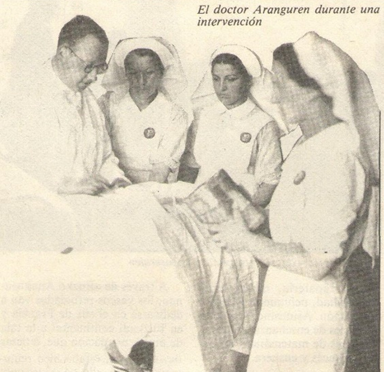
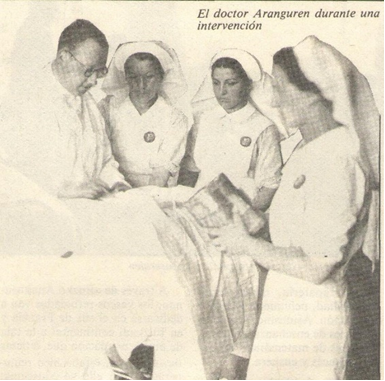
The life of Gonzalo Aranguren Sabas as recounted by his grandson Gontzal Aranguren Laflin

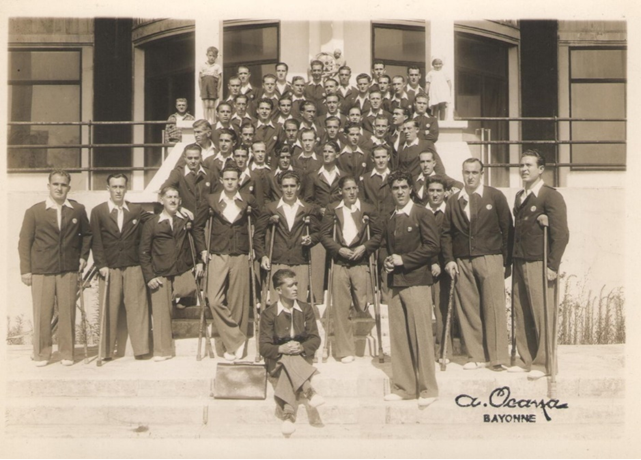
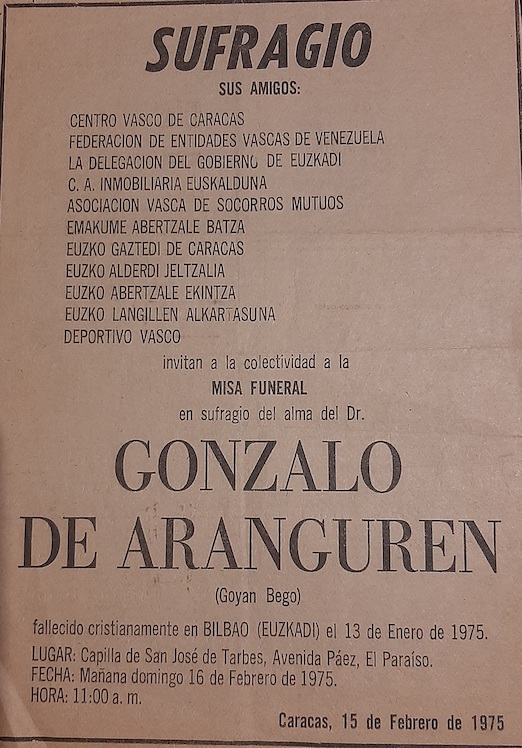
Gonzalo Aranguren Sabas (Bilbao 1903-Hondarribia 1974) was a man of many qualities worthy of mention and whose memory is his best legacy, not only for all his descendants but also for all those who associated with him in the Hospitals of Bizkaia during the civil war and the bombings of Gernika, at the Hospital de la Roseraie in Biarritz during his exile in France, or in Venezuela where he became a well-known Doctor within the Basque community in Caracas.

He studied medicine in Madrid and worked at the Basurto Hospital in Bilbao. When the Spanish civil war reached Bizkaia in 1937, the Basque Government entrusted him with the Directorate of the Blood Hospital of the Basque Army in Amorebieta, Bizkaia.

Amorebieta Hospital

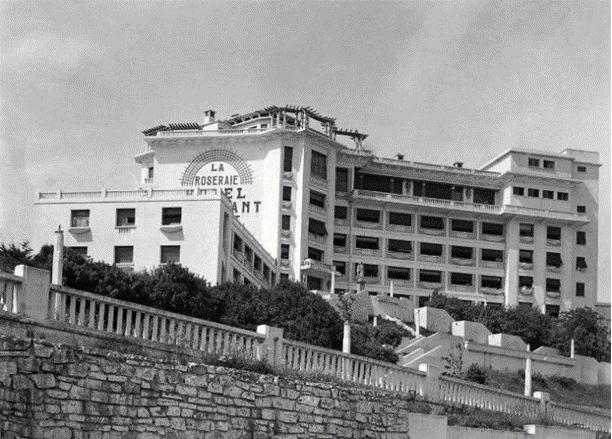
At the Amorebieta Hospital, they treated all of the wounded from the Otxandiano fronts and later from the bombing of Gernika. But in the face of imminent defeat, he received the order to continue his work in Biarritz, Lapurdi, in France, as the head of La Roseraie Hospital, with the aim of treating all the gudaris wounded on the battle fronts.

When Franco’s troops invaded Bizkaia in May, the priest of the convent where the Amorebieta Hospital had been installed, Father Urtiaga, was shot for collaborating with the separatist Reds. Dr. Gonzalo Aranguren, before leaving the convent to transfer the war wounded to France, warned the priest of the danger of staying in the convent and offered that he accompany the doctor and his team to France. The parish priest did not think that the cruelty of the other side was of such caliber,and declined to leave, but the reality is that he was shot on May 19.

Hospital La Roseraie

According to one of the first reports from the hospital, dated January 3, 1938, “commissioned by the Government of Euzkadi from the Directorate of La Roseraie in order to attend as much as possible to the unfortunate mutilated and wounded from the war who could be evacuated from Euzkadi and Santander, as well as from Asturias, which in the number of TWO HUNDRED FORTY we have attended and are attending, we set up a Hospital with an operating room and sterilization sanitary material and two treatment rooms. “

They not only tried to alleviate the dire situation of the wounded soldiers but also created workshops so that the mutilated gudaris, once cared for, could somehow reintegrate into productive life. For this reason, they created the following workshops, according to the Health Inspector Dr. Luis Bilbao in his report of February 27, 1938:

“Orthopedics. Where artificial legs are being made for the mutilated under the supervision of the Orthopedic Dr. Musatadi

“Carpentry. Where all the work of the center is done and those suitable for it learn the trade.

“Espadrilles. Where benches and a work table have been installed, where they have begun to manufacture espadrilles and several mutilated suitable for it are learning the trade.

“Shoe shop. Where four work teams have been installed and in principle they are repairing all the Center’s footwear and several mutilated suitable for this trade are learning the trade. When they learn what repair to make, they will begin to build. The direction of this workshop is run by a war-wounded man who was a shoemaker by trade and has been fit for it.

“Since February 15, they are given the following classes: primary instruction – there are four illiterates – French language classes, elementary mathematics, and Basque classes. “

All of this required a monthly budget of 100,000 francs, though sometimes the budget was exceeded by unexpected situations “due to the surprising expense of pharmacy 11,000 francs, and coal and light at 10,500 francs (months of December and January), and for the new chapter on Radiography and Electrotherapy ”.

The Minister of Health of the Basque Government, Heliodoro de la Torre, put all of the necessary means in place so that the mutilated gudaris had the best possible care under the circumstances. The repercussion of the work carried out was thanks to the great effort resulting from the collaboration of the medical staff, nurses, and the patients themselves in the workshops and in the choir. Aranguren was honored on different occasions for his great work in the direction of the Hospital.
In addition, the war-maimed formed a famous choir that sang in different places in the area.

Before the start of World War II, Lehendakari JA Agirre, the head of the Basque government in exile, unequivocally positioned himself: “Given the causes invoked and the methods used by Germany to unleash war, it is for us the war between everything that is worthy of being appreciated and all that deserves our condemnation.”

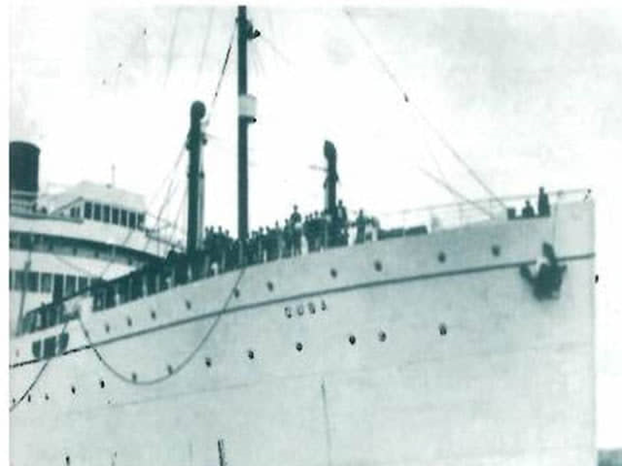
On June 27, 1940, German troops took possession of La Roseraie and replaced the ikurriña with the swastika. During the course of several different trips, many of those Basques from the hospital and beyond went into exile in Venezuela, which meant a trip of weeks to an uncertain and unfamiliar destination but which often ended with welcome for many Basque families.

Caracas Basque Club

Exile – Venezuela

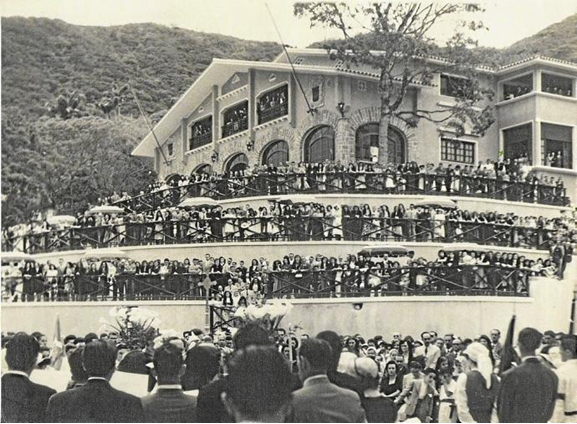
Upon arriving in Venezuela, Dr. Aranguren became involved in the creation of the Basque Center in Caracas where he held various positions. He also continued devoting himself to his passion for medicine, being the recipient of the Gold Medal of the city of Barcelona in the state of Ansótegui. 

After decades in exile, he finally returned to Bilbao where he founded a private clinic where I was born. He spent his retirement in Hondarribia where he rested overlooking the same river that he had to cross during the Civil War to manage The Roseraie Hospital in Biarritz.

Basque Fact of the Week: Saint Francis Xavier

Saint Ignatius isn’t the only Catholic Saint born in the Basque Country. His fellow Jesuit, Saint Francis Xavier, was also born in the Basque Country. However, unlike Saint Ignatius, Saint Francis Xavier spent much of his adult life traveling and proselytizing to the peoples of India and Japan, amongst others. He was known for trying to preach in the local languages.

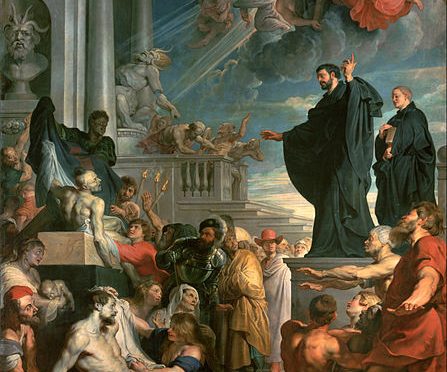
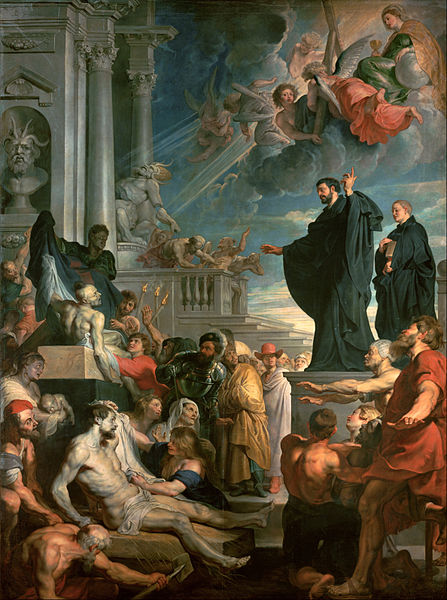
The miracles of St. Francis Xavier, by Rubens. Picture from Wikimedia.
  • Francisco de Jaso y Azpilicueta, the man who would become Saint Francis, was born on April 7, 1506, in the town of Javier, then in the Kingdom of Nafarroa. His father, Juan de Jaso, was president of the Royal Council of Nafarroa while his mother, María de Azpilcueta, was from a notable royal family.
  • Francisco grew up in a turbulent time. In 1512, when Francisco was 6 years old, the Kingdom of Aragon invaded Nafarroa. Francisco’s brothers fought in the war while his father attended to Juan de Albret (or John III of Nafarroa). Only three years later, Nafarroa was annexed by Castilla, ending the independence of the kingdom (though part of it survived for some time longer on the other side of the Pyrenees).
  • It was during this time that Francisco decided to go to Paris to study. He left for Paris in 1525 to attend the Collège Sainte-Barbe, University of Paris. It was here that he met Iñigo López de Oñaz y Loyola, the future Saint Ignatius. While it took Iñigo some time, in 1533 Francisco dedicated himself to his colleague and his mission, becoming one of the first Jesuits. He was ordained as a priest in 1537.
  • In 1540, he was sent to the East Indies at the behest of King John of Portugal, who wanted missionaries to spread the Catholic faith in Portugal’s new possessions. In April of 1541, he finally began his journey, but had to stop at Mozambique along the way, where he spent several months. There, he saw how the Portuguese exploited the local populace. In May, 1542, he finally reached Goa, India, the capital of Portuguese India. He then moved on to Cape Comorin to evangelize amongst the Paravas. Wherever he went, he made it a point to learn the local language to better perform his missionary duties.
  • Francisco worked for several years in the region, jumping back and forth between India and what would become Sri Lanka. In 1547, he met a Japanese man who had sought him out. Anjirō, who became the first Japanese Christian, accompanied Francisco to Japan in 1549, where he stayed for over two years. His efforts in Japan were not nearly as successful as those in India. Even so, a small Christian community was established in Japan.
  • His last mission would take him to China. He reached Chinese territory in August, 1552, but transport to mainland China was significantly delayed. Francisco died of fever in September, 1552, not reaching the Chinese mainland. His body was taken back to Goa. However, several of his bones were sent to other places as holy relics.
  • Francisco was canonized in 1662, the same year as his colleague Saint Ignatius, and was declared patron of all lands east of the Cape of Good Hope in 1748. He is the patron saint of Nafarroa. He is also the patron of Catholic missions. It is estimated that he converted some 30,000 people to Christianity. He also encouraged the King of Portugal to send the Inquisition to Goa.

Primary sources: Larrañaga, Luis F. Javier, Francisco de. Enciclopedia Auñamendi. Available at: https://aunamendi.eusko-ikaskuntza.eus/es/javier-francisco-de/ar-63924/; Francis Xavier, Wikipedia.

The Adventures of Maite and Kepa: Part 79

The Adventures of Maite and Kepa is a weekly serial. While it is a work of fiction, it has elements from both my own experiences and stories I’ve heard from various people. The characters, while in some cases inspired by real people, aren’t directly modeled on anyone in particular. I expect there will be inconsistencies and factual errors. I don’t know where it is going, and I’ll probably forget where it’s been. Why am I doing this? To give me an excuse and a deadline for some creative writing and because I thought people might enjoy it. Gozatu!

Though Javi and Kepa didn’t drink all that much, it was still late when they finally made it back to Javi’s place. Kepa quietly slipped into his and Maite’s room, into the bed, and was soon fast asleep. 

Maite, lying awake next to him, simply smiled to herself. She mused over the time since they had first met Marina. It had only been a few months in real time, but it already felt like a lifetime ago. So much had already changed, with her relationship with Kepa, her potential move to Berkeley, and their discovery of two of the zatia. She shuddered when she recalled how De Lancre had roasted Blas Telleria alive, and how Donny McCown had shot Kepa in the heart. Tears began flowing as she choked back a sob. Yes, so much had changed, but it had also been accompanied by so much death and suffering. How much longer could she deal with it all? She eventually fell into a fitful sleep, her mind tormented by images of Blas and Kepa dying.

Morning came too soon for both of them as light poured in from a part in the curtain, hitting them both in the face. Kepa rolled over and smiled at Maite. “Egun on,” he said.

Maite returned his smile, though her’s wasn’t as big. “Egun on,” she replied. “You guys had a good time?”

Kepa nodded. “Bai, we did. It was good to catch up, it’s been too long. I’m not sure I’m up for a big night of dancing, but I guess that’s what’s on the schedule for today.”

“Dancing, eh? I didn’t realize Javi was much of a dancer.”

“I think it’s partially his girlfriend. She likes to dance a lot, so he does too now.”

Maite shook her head. “I can’t believe little Javi has a girlfriend.” She looked at Kepa and gave him a mischievous smile. “But, I can’t believe you do either.”

Kepa blushed and smiled at the same time. “You can’t believe it? I can’t believe it! I pinch myself every day. I just hope this isn’t one of those quantum bubbles that will pop some day and erase it all.”

“Oh!” exclaimed Maite. “I hadn’t even thought about that. How do we know, really know, we aren’t in a bubble? How do we know this won’t all disappear?”

“I was only joking…” began Kepa.

“No, really,” continued Maite as she sat up in the bed, pulling the covers up over her chest. “In the two bubbles we’ve been to, we knew they were bubbles because there was a specific event that transported us. But, how do we know we didn’t start in a bubble? How do we know that we returned to where we started or if we got shoved into another bubble and not our original time?” She looked over at Kepa. “How do we know anything?”

“Well,” said Kepa, feeling a rise of panic himself, “we only ever saw the zatia twice, and both times that triggered our trips to the bubbles. We never touched one before that.”

“True,” mused Maite. “But, we don’t know that’s the only way into a bubble. We don’t even know if we weren’t born into a bubble.” She looked over at Kepa. “What if every time is a bubble waiting to pop?”

“What are you saying?” asked Kepa, confusion etched on his face.

“Well,” said Maite, “think about the last bubble. What if we had never found that zatia. What if Donny had never shot you. Maybe we would have gotten married, even had kids. Would our kids know they were in a bubble? And if we found the zatia after they were born, would the bubble pop, erasing our kids from existence?” She turned to look at Kepa. “What if we are in a bubble now, and Donny’s time was a bubble on top of a bubble?”

Kepa shook his head. “This is too much. I can’t handle it. Are you saying that none of this is real?”

“No…” began Maite before pausing. After a moment she continued, in almost a sheepish voice. “What I’m saying is how do we know it is?”

“If we are in a bubble, I hope we never find the zatia,” said Kepa, a bit more viciously than he intended. “I don’t want this to ever end.” He grabbed Maite’s hand.

“But,” said Maite as a chill went through her body, “what if De Lancre finds it?”

If you get this post via email, the return-to address goes no where, so please write blas@buber.net if you want to get in touch with me.

Basque Fact of the Week: Hilarriak, the Dead-Stones of the Basque Country

During my first visit to the Basque Country, my cousin took me to Elorrio, not far from his hometown of Durango in Bizkaia. He took me and a friend to Argiñeta, which was simply amazing. They’ve collected a number of hilarriak, or funeral steles, there. These are large stone grave markers that are carved with a variety of symbols and designs that either speak to the dead person and their profession or more abstractly to the stars and the cosmos. Either way, they are a fascinating element of the Basque cultural heritage.

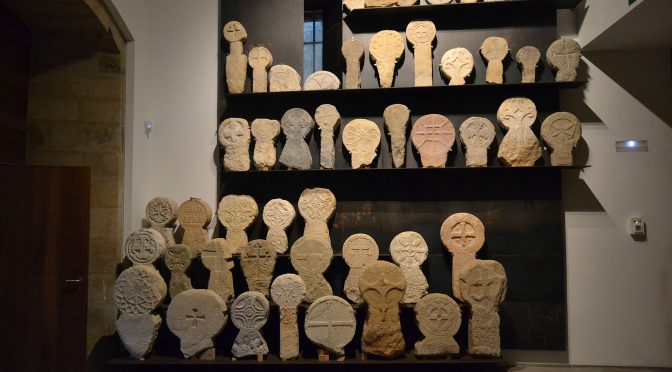
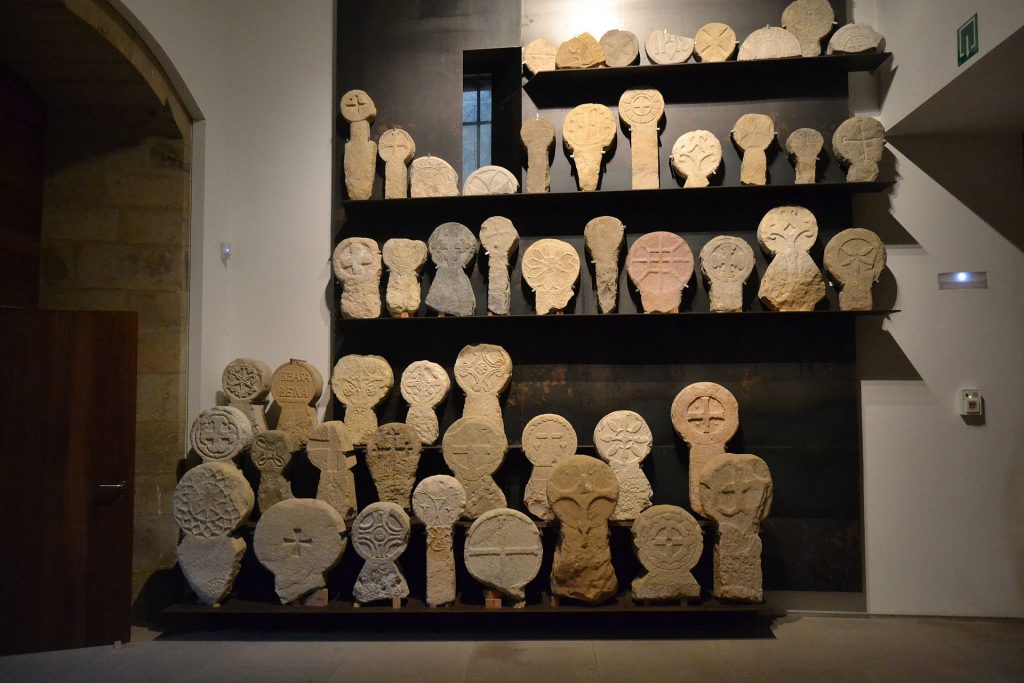
A collection of discoidal steles at the San Telmo Museum in Donostia. Photo from Wikipedia.
  • While the discoidal steles, with their round tops sitting on trapezoidal bases, are not unique to the Basque Country, they are particularly common there. They’ve also been found in other parts of Western Europe and Northern Africa. A few have even been found in Britain. The circular part is decorated with geometric shapes or, more recently, Christian symbols, including crosses. Rosettes are very common, as are lauburus. The edge is often decorated to resemble the rays of the shining sun. And, at least in modern hilarriak, the base is engraved with the name of the deceased. The oldest discoidal hilarriak date to the Iron Age, but most of those found in Nafarroa, which has a particularly large number, date between the 11th and 18th centuries.
  • One of the oldest discoidal steles was found in Berreaga, Bizkaia, in the lands surrounding the towns of Mungia, Zamudio and Gamiz-Fika. Decorated with solar imagery, it dates to the 1st or 2nd century BC. The stele was found in a necropolis, which has been designated a Cultural Asset by the Basque Government. While the site was discovered in the 16th century, excavations weren’t done until the late 20th and early 21st centuries.
  • The Necropolis of Argiñeta, in Elorrio, Bizkaia, is a fascinating site. It contains multiple steles and sarcophagi that date back to between the 8th and 10th centuries. Built of sandstone from Mount Oiz, these hilarriak also feature astral designs, things like concentric circles, extended radial lines, and cross shapes. Some of the tombs have inscriptions that are the oldest evidence of Christianity in Bizkaia.
  • There is also a museum dedicated to these hilariak. Located in the town of Larzabale in Nafarroa Beherea, Harriak Iguzkitan opened in 2007 and features nearly 100 pieces of art in an open air setting. It is the first interpretation center in the Basque Country dedicated to discoidal steles and Basque funerary art.
  • Of course, not all hilarriak are discoidal. One early example, dating from the 1st century AD, is the Andrearriagako estela. This headstone is noteworthy because it is one of the few from that time in Gipuzkoa with an inscription. The inscription says “VAL BELTESONIS.” The second word seems to be connected to Aquitanian, or pre-Basque.
  • Making an hilarria was a complicated process, requiring not only finding the right stones, but a wide selection of tools; something like twenty different tools were needed to carve the stone. Today, the art of making hilarriak is slowly fading. However, there are master crafters that continue on the tradition, such as Pello Iraizoz.
  • Update! Marc Cormier pointed out that Basques left similar grave stones in Newfoundland!

Primary sources: Hilarri, Wikipedia; Estelas discoideas de Puente la Reina/Gares, Koldo Colomo Castro;

The Adventures of Maite and Kepa: Part 78

The Adventures of Maite and Kepa is a weekly serial. While it is a work of fiction, it has elements from both my own experiences and stories I’ve heard from various people. The characters, while in some cases inspired by real people, aren’t directly modeled on anyone in particular. I expect there will be inconsistencies and factual errors. I don’t know where it is going, and I’ll probably forget where it’s been. Why am I doing this? To give me an excuse and a deadline for some creative writing and because I thought people might enjoy it. Gozatu!

The pub that Javi found was both familiar but completely different from the places Kepa hung out at home. It was full of students from the university as well as a mix of other people. Javi ordered two pints at the bar and led them to a table in the corner, where the crowd noise wasn’t quite so loud.

“I’m not sure how you do it, sitting in one place for hours and hours,” said Kepa as he took a sip of his pint.

Javi laughed. “As opposed to wandering the streets all night? I like that a lot too, but sometimes it’s nice to just find a quiet table and talk over beers. No pressure to finish up and find the next spot.”

“I can see that,” said Kepa. He took another sip. “You know, I really like these IPAs. We don’t get them very often back home.”

Javi shrugged. “They certainly are an acquired taste, but once you get it, it’s hard to drink anything else.”

“So,” continued Kepa with a smile, “tell me about this girlfriend.”

It was Javi’s turn to smile. “Oh, Julie’s great. We met in class and were study partners for a while before I got the courage to ask her out. That was about six months ago or so. Anyways, we’ve been dating ever since. She’s beautiful and smart. And she likes the same kinds of geeky things I do.” Javi took a sip of his own beer. “What about you and Maite? When did that start?”

“Well, it got more intense recently, but we’ve been flirting for a while now.”

“Oh, I remember. In the cuadrilla, you two could barely keep your eyes off of each other. I always figured you’d get together. Man, I always thought she was gorgeous. I always thought, if I knew a bit more Euskara, I could impress her. But, it wasn’t meant to be.” He raised his glass. “I’m happy for you cuz!”

Kepa raised his glass and chinged with Javi’s. “Thanks. You too. I’m glad to see you doing so well.”

Javi shrugged as he put his glass down. “Well, I graduate after this year and I have to figure out what to do next. And Julie is in a completely different field, so I’m not sure how easy it will be for us to stay together.”

“Different field? I thought you met in class?”

“We did, but it was Greek mythology. We were both taking it as a break for our core classes. I’m studying math and her major is history. Not many jobs out there for us with only bachelor’s degrees. So, probably we’ll both end up in grad school, but we have to get into the same school.”

“That’s tough. Maite is thinking of coming out this way for graduate school too. Berkeley. That’s why we’re out here, for her to interview with the professors.”

“Berkeley? Wow, that’s impressive. How did it go?”

Kepa shrugged. “Well, I think. I don’t really know. I don’t understand what she does, some kind of quantum stuff. Being around all of you makes me feel a little… inadequate.”

“Dude!” exclaimed Javi. “You’re with the most beautiful and smartest girl in all of the Basque Country! You are traveling the world! You have an amazing cousin. Your life is good!”

Kepa smiled as he raised his glass for another clink. He paused before taking a sip. “Bai,” he said. “Life is good.”

If you get this post via email, the return-to address goes no where, so please write blas@buber.net if you want to get in touch with me.

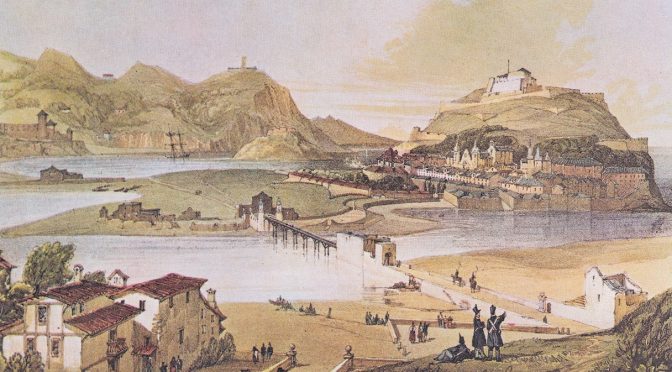
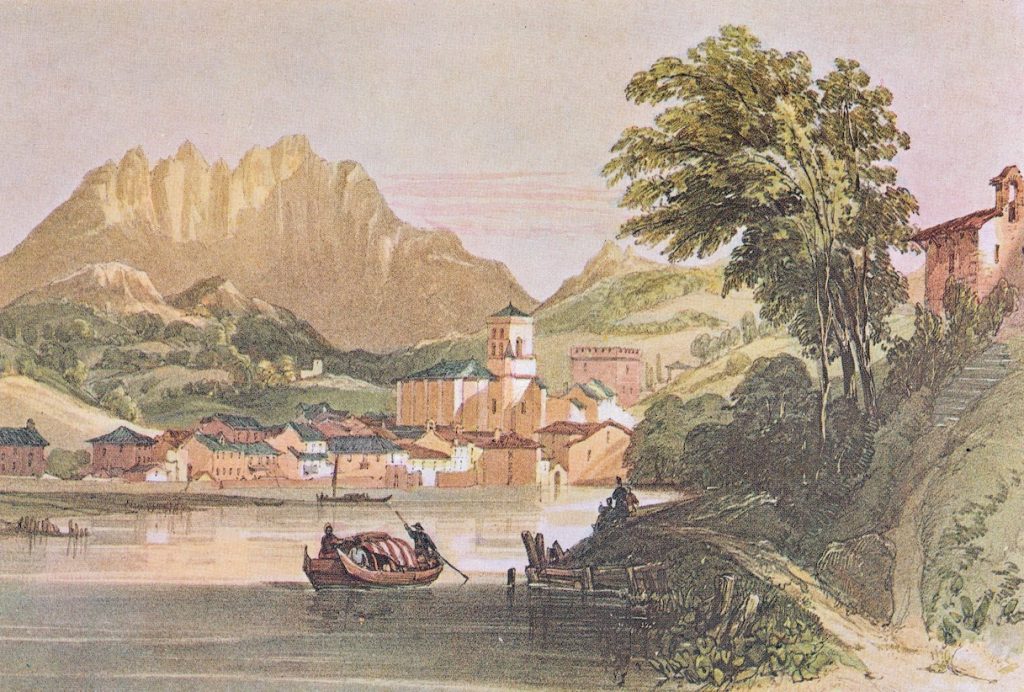
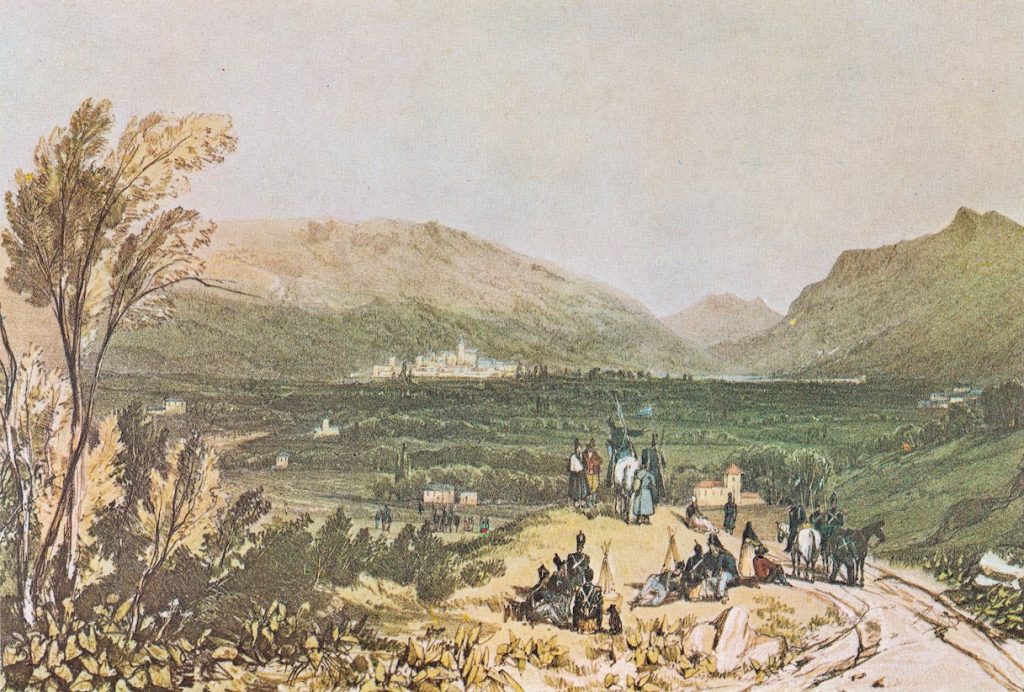
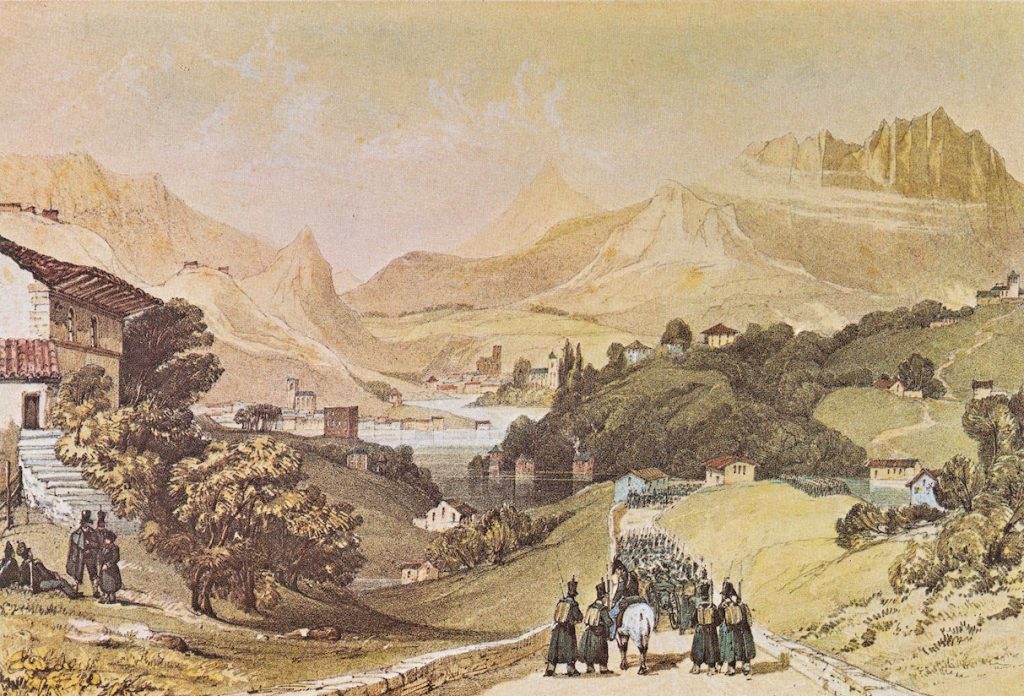
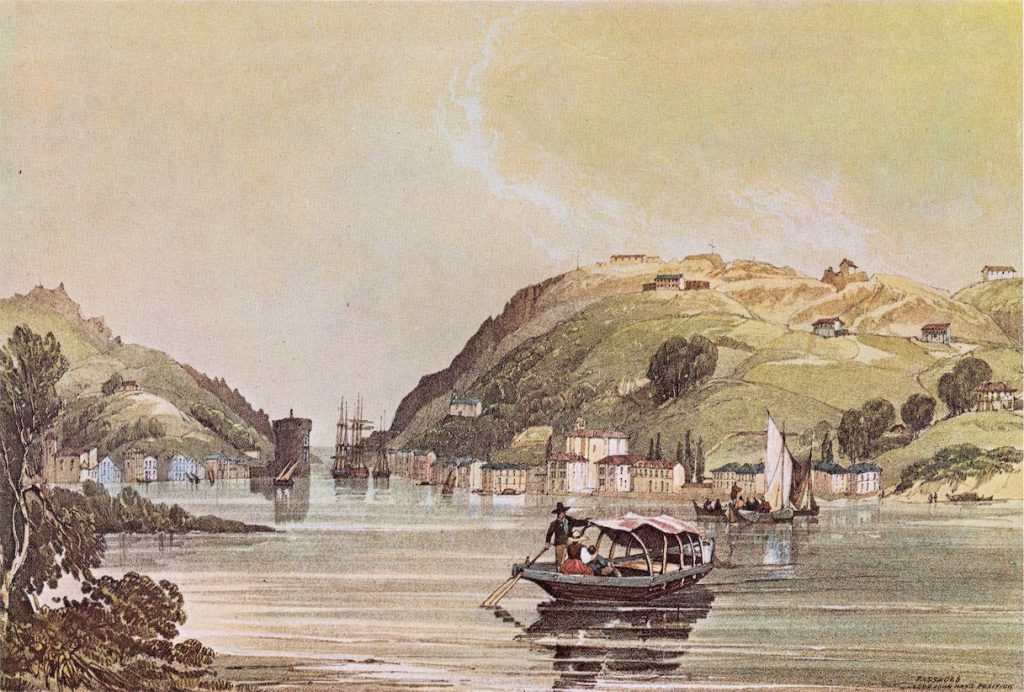
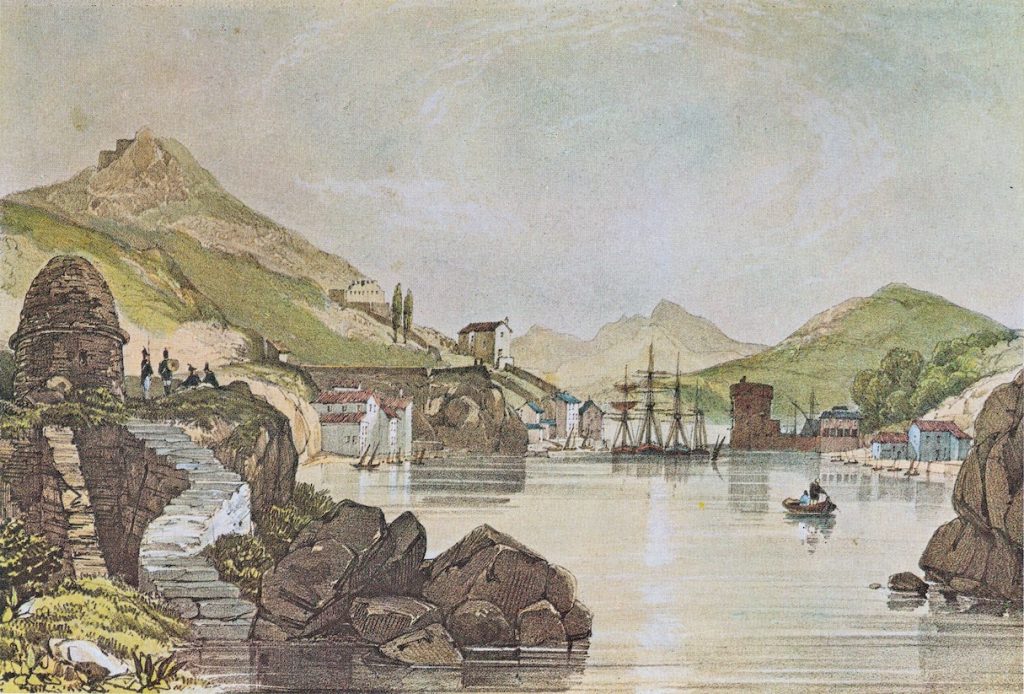
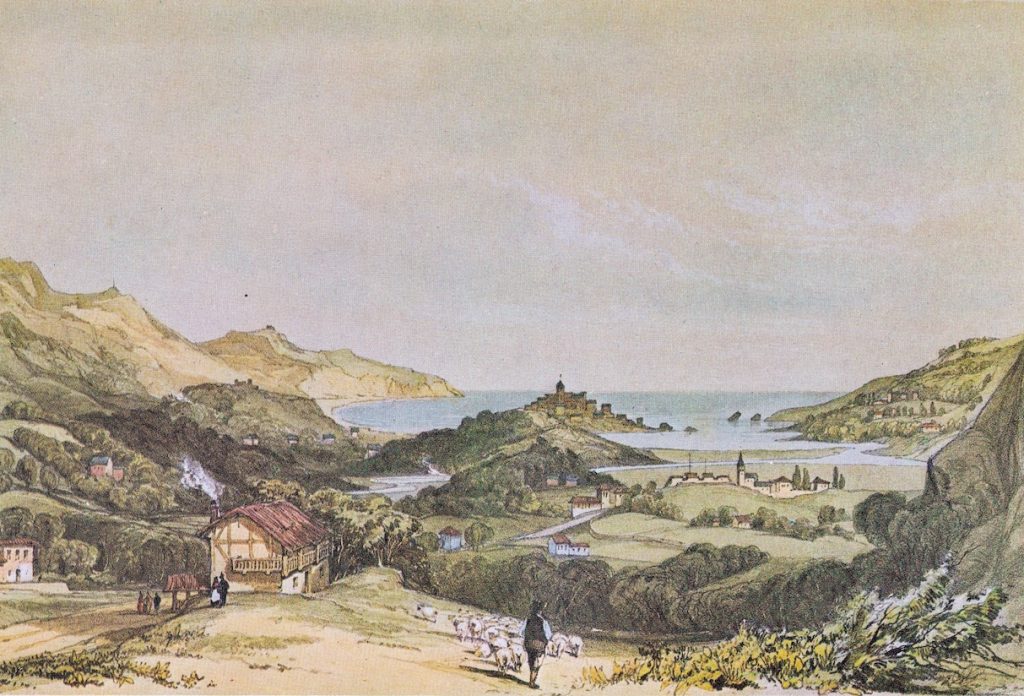
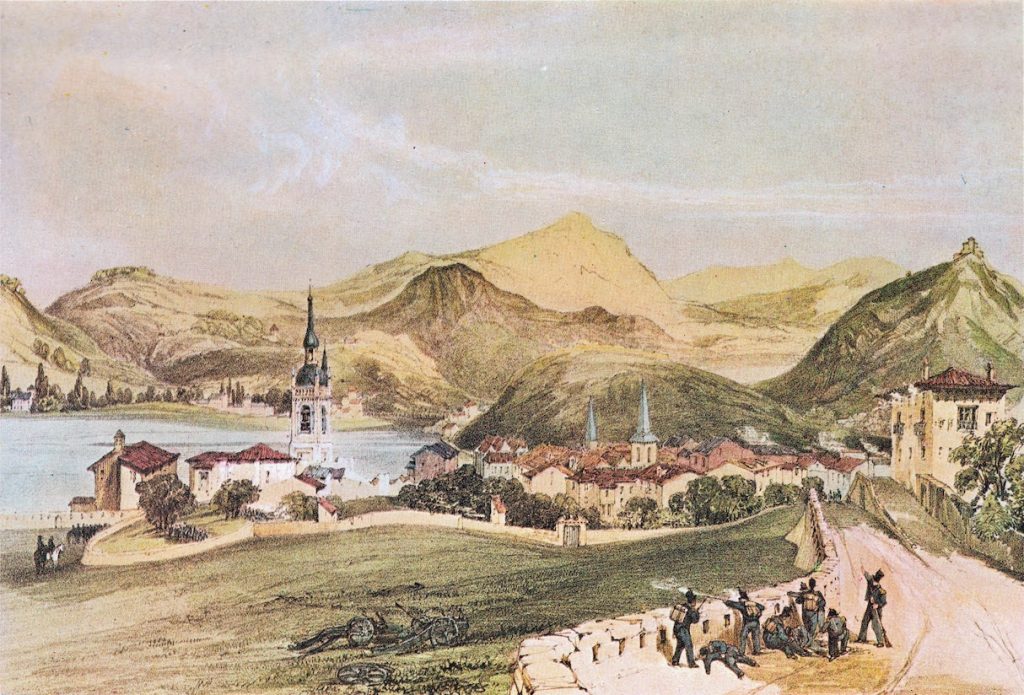
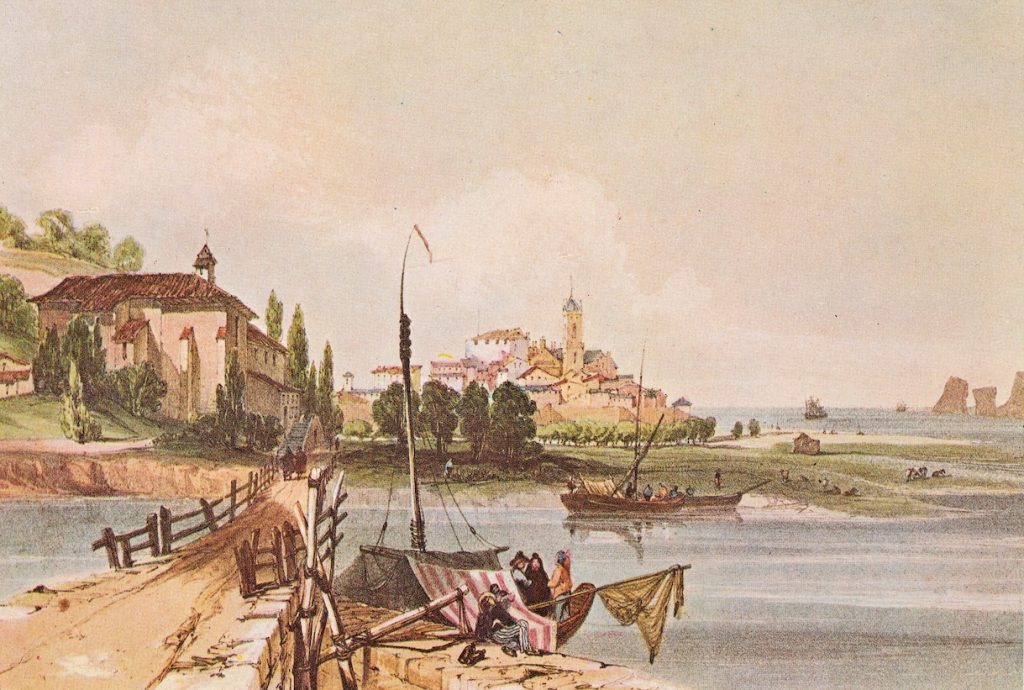
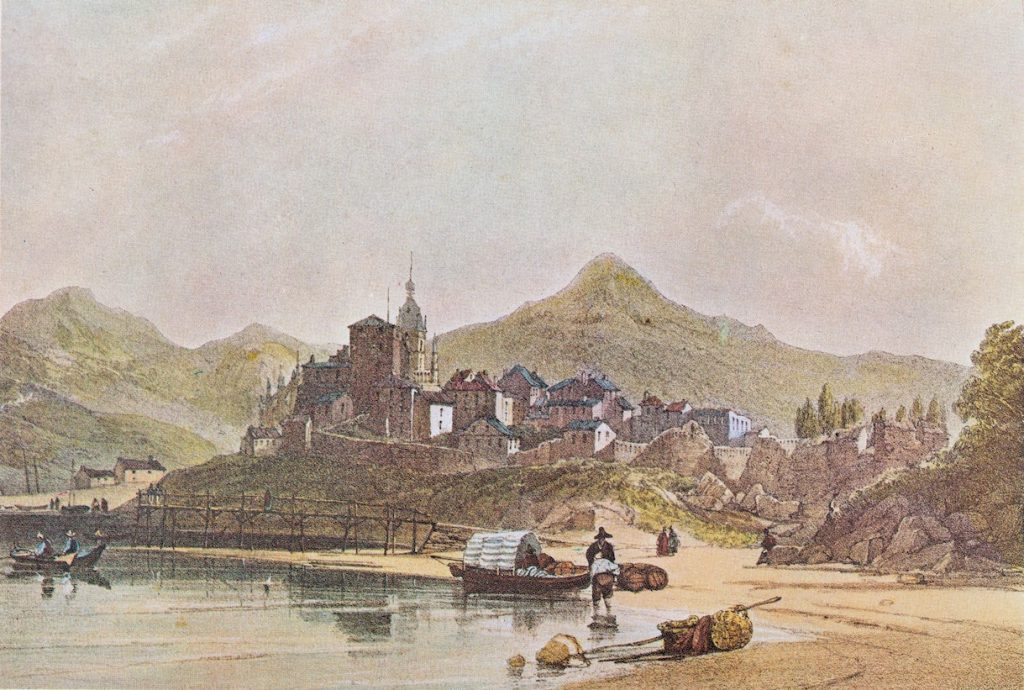
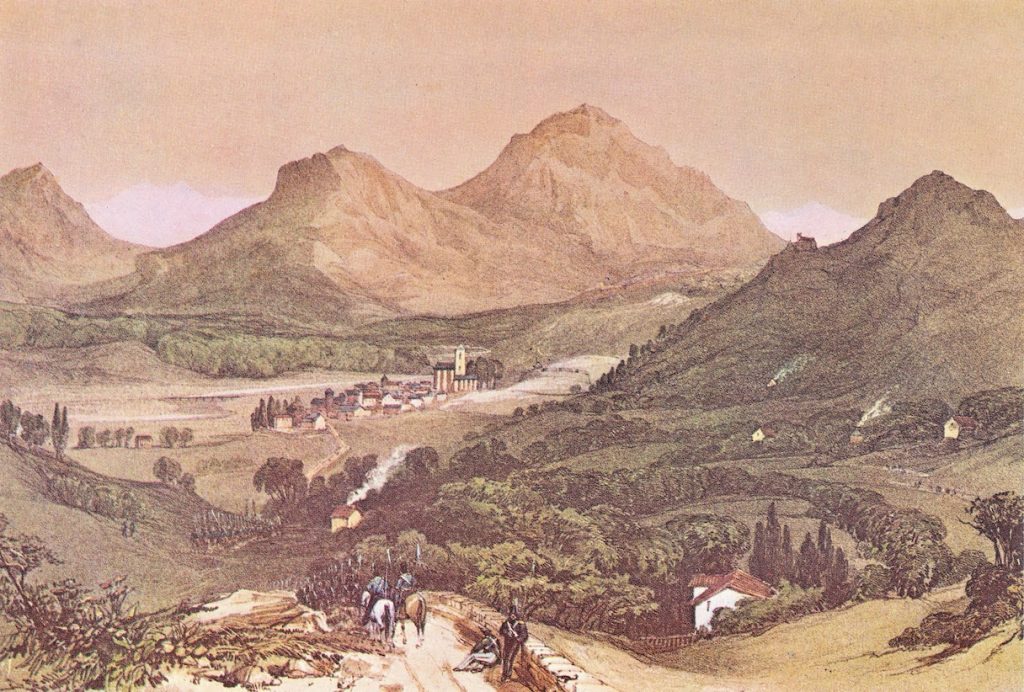
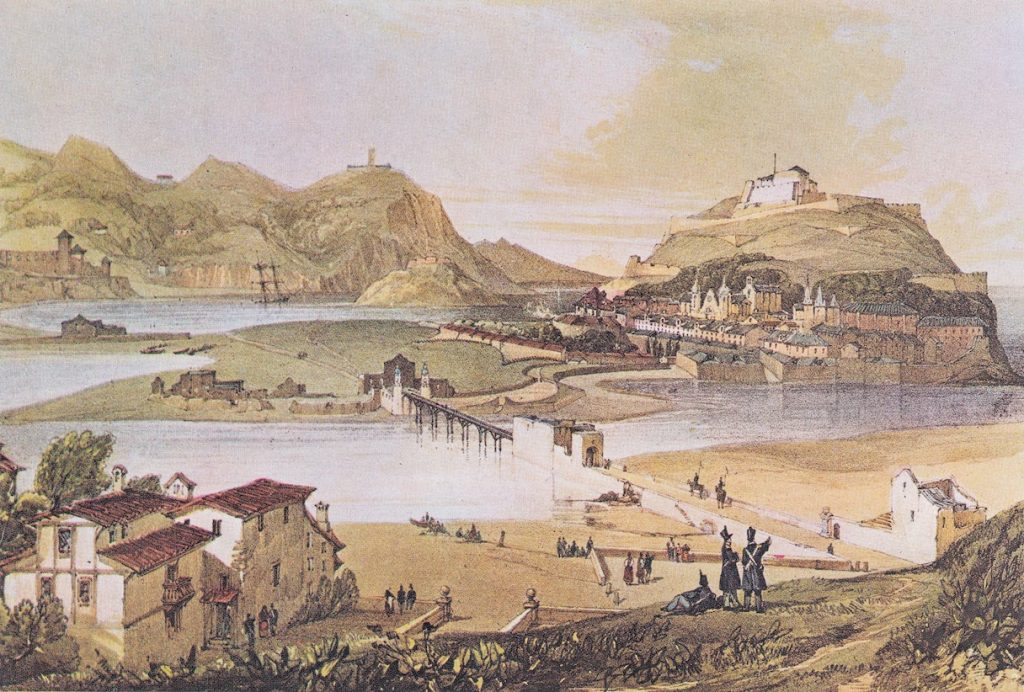
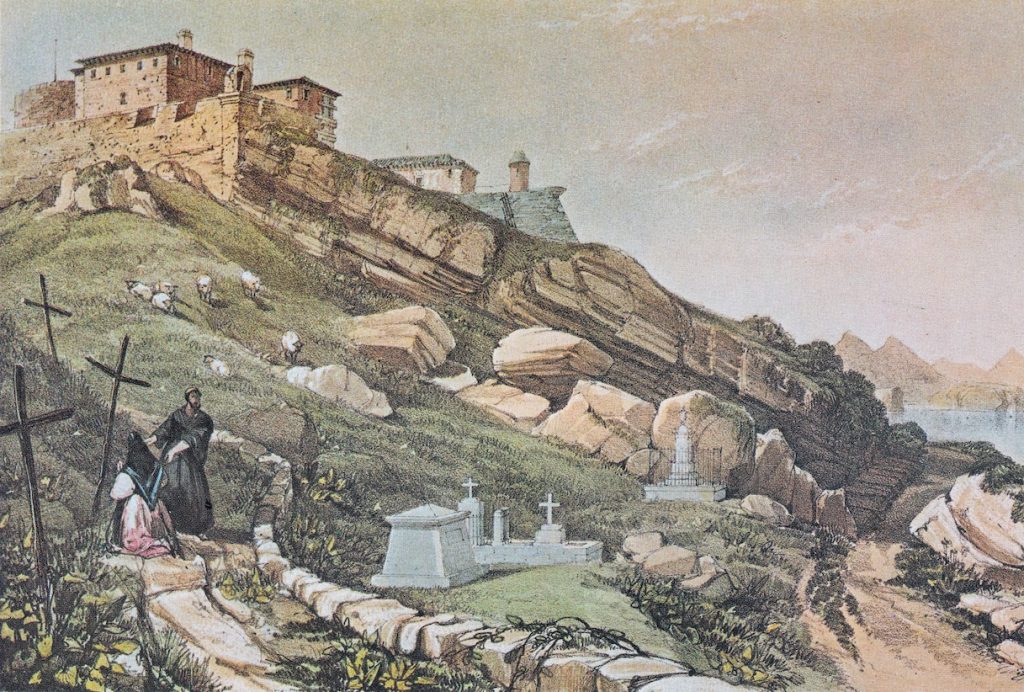
Sketches of Basque Scenery by Henry Wilkinson (1838)

Jon Aske sent this set of postcards originally drawn in 1838. This is part of a set of postcards that a savings bank in Donostia put out in 1975. They offer a fascinating look at some of the iconic places of the Basque Country nearly 200 years ago. A little more information about these sketches can be found here.

Update: Jon Aske’s original scans, which are higher quality than those found below, can be found here.

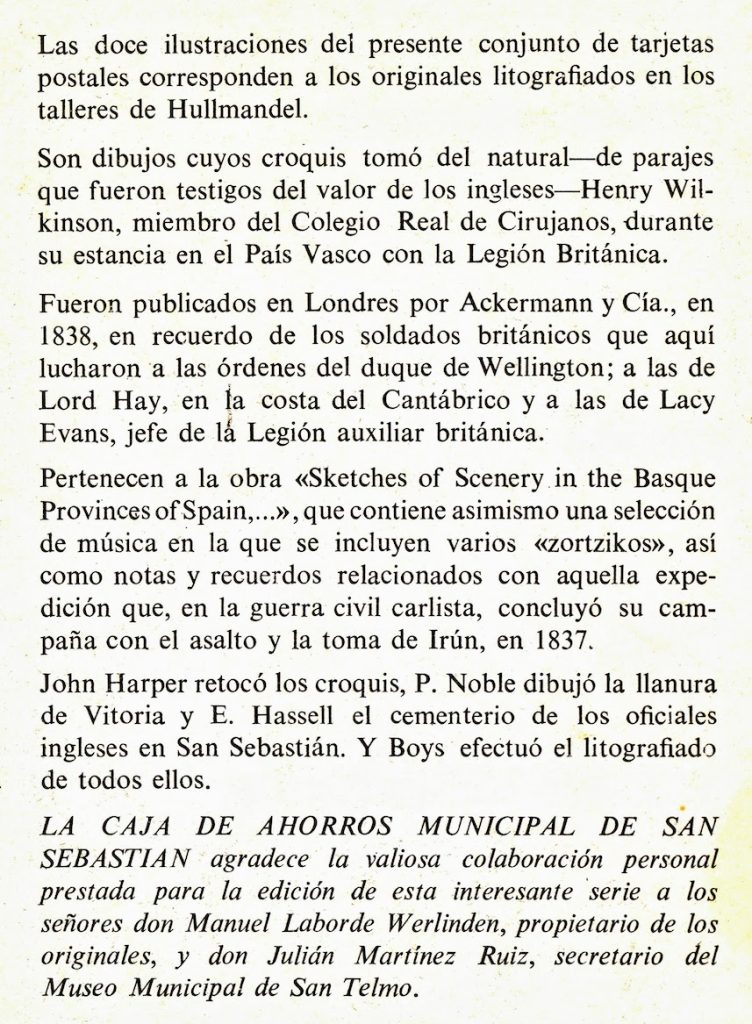
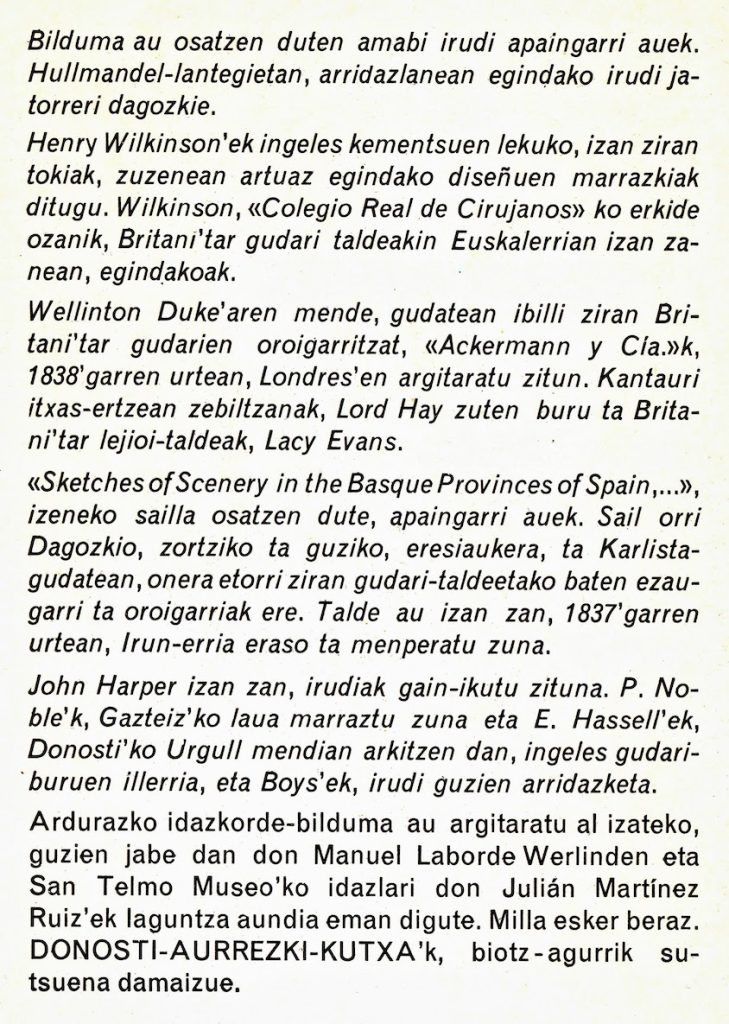
The twelve illustrations in this set of postcards correspond to the originals lithographed in Hullmandel’s workshops.

They are drawings whose sketches are taken from nature – of places that witnessed the courage of the English – Henry Wilkinson, a member of the Royal College of Surgeons, during his stay in the Basque Country with the British Legion.

They were published in London by Ackermann y Cia, in 1838, in memory of the British soldiers who fought here under the Duke of Wellington; to those of Lord Hay, on the Cantabrian coast; and to those of Lacy Evans, head of the British Auxiliary Legion.

They belong to the work “Sketches of Scenery in the Basque Provinces of Spain”, which also contains a selection of music that includes several “zortzikos,” as well as notes and memories related to that expedition that, in the Carlist civil war, concluded with the assault and capture of Irun, in 1837.

John Harper retouched the sketches, P. Noble drew the plain of Vitoria, and E. Hassell the cemetery of the English officers in San Sebastián. And Boys did the lithography of all of them.

The Municipal Savings Bank of San Sebastián is grateful for the valuable personal collaboration provided for the edition of this interesting series by Mr. Manuel Laborde Welinden, owner of the originals, and Mr. Julian Marinez Ruiz, secretary of the Municipal Museum of San Telmo.

Rentería
Plains and City of Vitoria
Alza, Rentería and Lazo
Position of Lord John Hay, at Pasajes
Port of Pasajes
Carlist fort “El Parque,” with Fuenterrabía and the mouth of the Bidasoa
Irun, with Mount San Marcial and the bridge of Behobia
Fuenterrabía, with the Convent and the bridge of Capuchinos
Fuenterrabía
Hernani
San Sebastián

Burial place of British officers on Castle hill of San Sebastián

Basque Fact of the Week: Basque Funerary Customs

During one of my visits to the Basque Country, we visited the hilerria, or cemetery, in Munitibar. I wasn’t clear what was going on, until they started digging up one of the graves. It seems that it was time to move my dad’s grandmother’s body. They dug up her grave — her son, my great-uncle, was there guiding the process — then placed the major bones in the family crypt. This was a shock to me, particularly since my great-uncle insisted that I take pictures of everything. Everywhere has their unique customs regarding death and the dead, and of course the Basque Country is no exception, though customs have changed dramatically over the centuries.

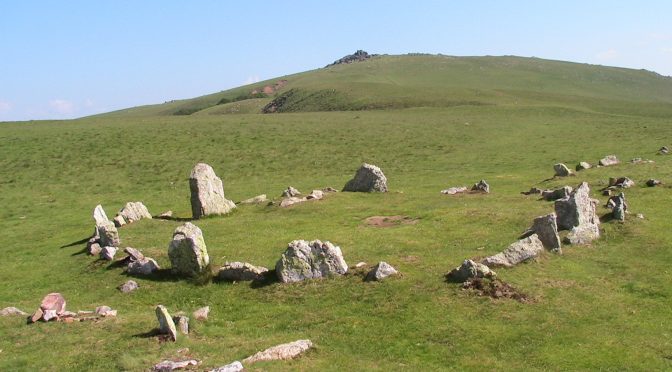
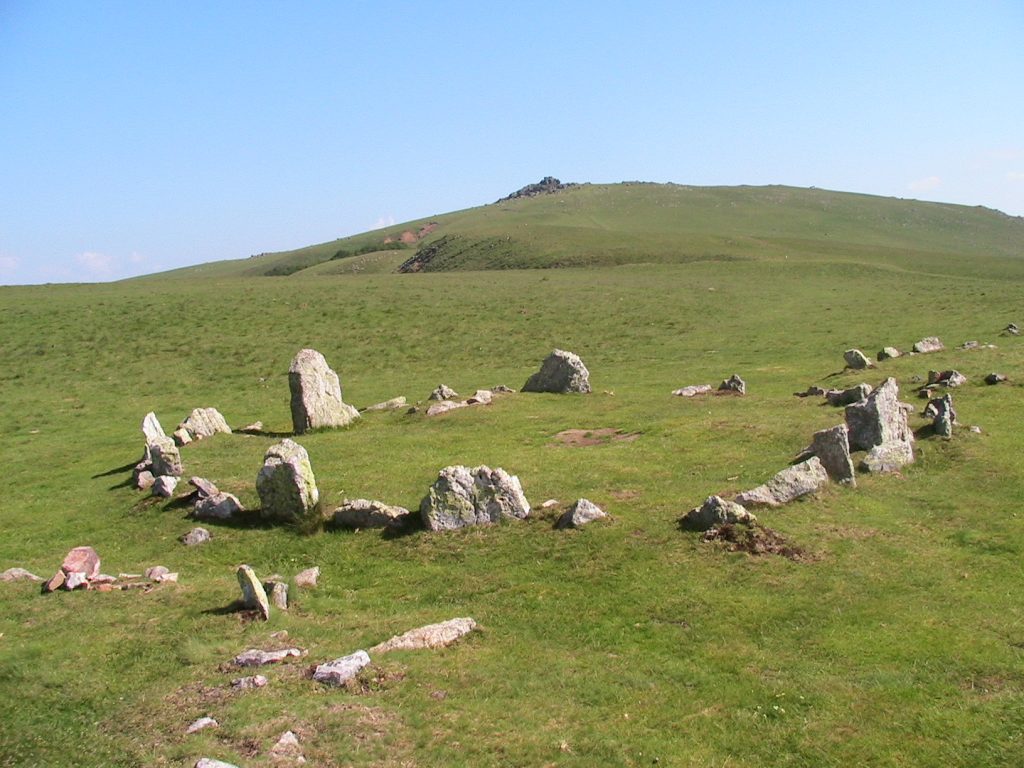
A harrespil, or stone circle, found on Okabe mountain in Nafarroa Beherea.
  • In the Basque Country, when someone died, a window in the bedroom was opened, or a tile on the roof removed, so that the soul could more easily pass through. Bells were rung and, depending on the series of bell tones, the bells announced if the deceased was a man — first the big bell was rung and then the smaller one; for a woman, the opposite sequence of bells tolled across the village. They would even announce the death to the domestic animals and the bees, as bees provide wax for torches and candles that give light to the dead.
  • The deceased was taken to the church and the village cemetery via special paths reserved for the dead. These were called, depending on the place, elizbidea, elizakobidea, gurutze-bidea, gorputz-bidea, auzotegiko bidea, or erribidea, which mean “way of the church,” “way of the cross,” “way of the body,” “way of the neighborhood or of the town.” Houses were usually not built near these funeral paths. In some cases, the bodies were buried, along with personal possessions, under dolmens. But, back in the Iron Age, there were also cases of cremation. The ashes were collected in vessels that were put into a baratz (“garden”) or harrespil (“stone circle”).
  • In more modern times, the funeral procession was led by children and young men carrying torches. These were followed by the coffin, carried by the youth closest to the deceased. After that came the family and the men of the village, followed by the women. Sometimes, they touched the houses they passed with the coffin to bid farewell. In some places, a girl would go in front of the casket, carrying a basket of bread. In others, meat, bread, and old cheese were brought to the funeral. And, in yet others, once in the church they placed a basket upside down, covered it with a black cloth, and placed a plate and cup upon the top, also upside down.
  • Interestingly, professional mourners were banned by law in parts of the Basque Country. Only a spouse could “pull their hair” or “howl” for the deceased — it was explicitly illegal for others to do so, with a penalty of ten marabedis.
  • Within the church itself, each family, based on importance and contributions, was assigned a specific place for the family burials. For larger towns, cemeteries, or hilerriak (cities of the dead), were built around the church.
  • In old times, the dead were buried under the eaves of the house itself. Lights of various forms, such as lamps or candles, were used to help guide the soul. It was believed that the soul might wander the local roads and even the house itself.

Primary source: Auñamendi Entziklopedia. FUNERAL. Available at: https://aunamendi.eusko-ikaskuntza.eus/es/funeral/ar-63385/

The Adventures of Maite and Kepa: Part 77

The Adventures of Maite and Kepa is a weekly serial. While it is a work of fiction, it has elements from both my own experiences and stories I’ve heard from various people. The characters, while in some cases inspired by real people, aren’t directly modeled on anyone in particular. I expect there will be inconsistencies and factual errors. I don’t know where it is going, and I’ll probably forget where it’s been. Why am I doing this? To give me an excuse and a deadline for some creative writing and because I thought people might enjoy it. Gozatu!

A couple of hours later, long after the sun had set and the night sky had filled with stars, they pulled into Javi’s driveway in Santa Barbara. Kepa had woken up just as Maite had pulled the car onto Javi’s street, the speedbumps jostling him awake. As they pulled in, the front door of the house burst open, and a figure silhouted by the bright lights from inside came rushing out.

“Kepa!” cried a voice as the figure reached the car. As Kepa opened his door, the man nearly pulled him out. “It’s been a long time!”

Kepa laughed. “It’s good to see you too, Javi!” They squeezed each other in a bear hug.

“Kaixo,” said Maite as she approached them from the other side of the car.

“Javi, you remember Maite, don’t you?” asked Kepa as he pulled her in, his arm around her waist.

“Of course!” exclaimed Javi. “I have to admit, I always thought you were the prettiest girl in the Basque Country.”

Maite blushed. 

“She still is,” added Kepa with a smile.

Maite blushed even stronger.

“Anyways,” said Javi, “Let’s get you inside. Are you hungry? Do you need anything to eat before we head out?”

Maite winked at Kepa. “What did I tell you?”

Kepa just shrugged. “I got that power nap in, I can go all night if I have to.”

Javi laughed. “We don’t do gau pasa very often here. I was just thinking a beer or two at the nearby pub to catch up. I figured you might need some rest after that drive. The real fun will be tomorrow. My girlfriend will join us for dinner and some dancing?”

“Girlfriend?” asked Kepa incredulously. “You? Shy little Javi?”

“Well,” said Javi as he lifted their suitcases out of the car. “I have grown up.”

Javi led them into the house. In the light of the room, Maite got a better view of Javi. He had changed from the scrawny kid she remembered from his visits to the Basque Country. He had certainly grown into his body, the muscles on his arms and chest rippling as he carried the three suitcases. He clearly worked out. A lot. But his t-shirt said something Maite couldn’t quite make out about Hogwarts, which told her that he still had some of that geeky nerd inside.

Javi carried their suitcases to a room in the back. “I hope this meets your expectations,” he said as he set the suitcases down at the foot of the bed.

The room wasn’t big, but there was a queen bed nicely made up with nightstands and bottles of water on either side. A large ikurrina was hanging from one wall and on the other sat a flat screen television.

“Looks perfect to me!” said Kepa.

“Bai,” added Maite. “Eskerrik asko!”

“Ez horregatik,” said Javi. 

Maite plopped down onto the bed with a dramatic fall. “Have fun you two. Gabon!”

“What?” asked Javi. “Aren’t you coming with us?” 

Maite looked up at the two of them. “I’ve been driving all night. I think I’ll crash and rejuvenate for tomorrow. Besides, I imagine you two have a lot of catching up to do, especially since you both have girlfriends now.”

It was Kepa’s turn to blush. 

If you get this post via email, the return-to address goes no where, so please write blas@buber.net if you want to get in touch with me.