Fighting Basques: A Love Story. The Ybarrola Family in the United States

This article originally appeared in Spanish at El Diario. You can find all of the English versions of the Fighting Basques series here.
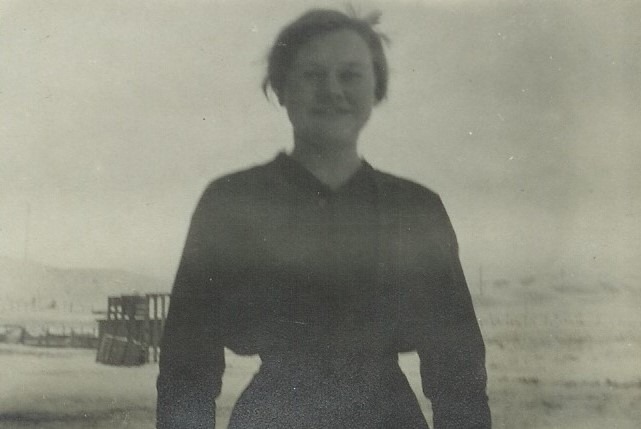
A young Maria “Mary” Kivimägi/Kewe poses smiling in one of the few images of her that remains. (All photos are courtesy of the Ybarrola family).

“Echoes of two wars, 1936-1945” aims to disseminate the stories of those Basques and Navarrese who participated in two of the warfare events that defined the future of much of the 20th century. With this blog, the intention of the Sancho de Beurko Association is to rescue from anonymity the thousands of people who constitute the backbone of the historical memory of the Basque and Navarre communities, on both sides of the Pyrenees, and their diasporas of emigrants and descendants, with a primary emphasis on the United States, during the period from 1936 to 1945.

THE AUTHORS
Guillermo Tabernilla
is a researcher and founder of the Sancho de Beurko Association, a non-profit organization that studies the history of the Basques and Navarrese from both sides of the Pyrenees in the Spanish Civil War and in World War II. He is currently their secretary and community manager. He is also editor of the digital magazine Saibigain. Between 2008 and 2016 he directed the catalog of the “Iron Belt” for the Heritage Directorate of the Basque Government and is, together with Pedro J. Oiarzabal, principal investigator of the Fighting Basques Project, a memory project on the Basques and Navarrese in the Second World War in collaboration with the federation of Basque Organizations of North America.

Pedro J. Oiarzabal is a Doctor in Political Science-Basque Studies, granted by the University of Nevada, Reno (USA). For two decades, his work has focused on research and consulting on public policies (citizenship abroad and return), diasporas and new technologies, and social and historical memory (oral history, migration and exile), with special emphasis on the Basque case. He is the author of more than twenty publications. He has authored the blog “Basque Identity 2.0” by EITB and “Diaspora Bizia” by EuskalKultura.eus. On Twitter @Oiarzabal.

Josu M. Aguirregabiria is a researcher and founder of the Sancho de Beurko Association and is currently its president. A specialist in the Civil War in Álava, he is the author of several publications related to this topic, among which “La batalla de Villarreal de Álava” (2015) y “Seis días de guerra en el frente de Álava. Comienza la ofensiva de Mola” (2018) stand out.

From the small Baltic province of present-day Estonia, located in northern Europe, the Kivimägi/Kewe family came to Tarhan — in the western part of the Crimean Peninsula bathed by the Black Sea. They were searching in these confines of the Russian Empire for a new beginning. Maria Kivimägi was born there in 1894. Within a few months, she, her parents, and five siblings (two boys and three girls) headed to North America. For a time they lived in South Dakota, United States, where three other sisters were born. Beginning in at least 1905, the family resided in the Province of Alberta, western Canada. At 17, Maria and her family crossed the border from Coutss, Alberta to Sweet Grass in Montana. Maria would make Montana her last home.

In 1897, the SS Rotterdam arrived at the port of New York from the French town of Boulogne-Sur-Mer. On board was the young Navarrese Juan Martin Ibarrola, born in 1876 in the town of Zilbeti in the Pyrenean Valley of Erro. His destination was Montana. It was upon entrance to the US where the spelling of his surname changed to Ybarrola. After a decade of hard work, Martin, together with his nephew Prudencio Agorreta Ibarrola who arrived in the country around 1910, established a sheep ranch. At least three other nephews, including Prudencio’s brother Benito, worked on the ranch for some time.

It was at Martin’s ranch — which converted each year into a sheep-shearing center open to his neighbors — that Maria met him. The ranch was located outside of Havre, near Chester, in Hill County, in north central Montana. With an area of nearly 3,000 square miles, Hill County in 1920 had a population of about 14,000 people. Other Basque families such as the Etchart-Urquilux also made Montana their new home. In 1918, Maria and Martin got married in Havre. Maria was 24 years old and Martin 42. They had 6 children: John Donald (1917), Catherine Josephine (Sister Ann Dolores) (1919-2015), James Martin (January 26, 1921), Ann Elizabeth (1922-1962), Rosemary ( 1924-2017) and Joseph (1926). They grew up on the Havre ranch, until the sudden death of their mother in 1928 from the flu changed their lives dramatically.
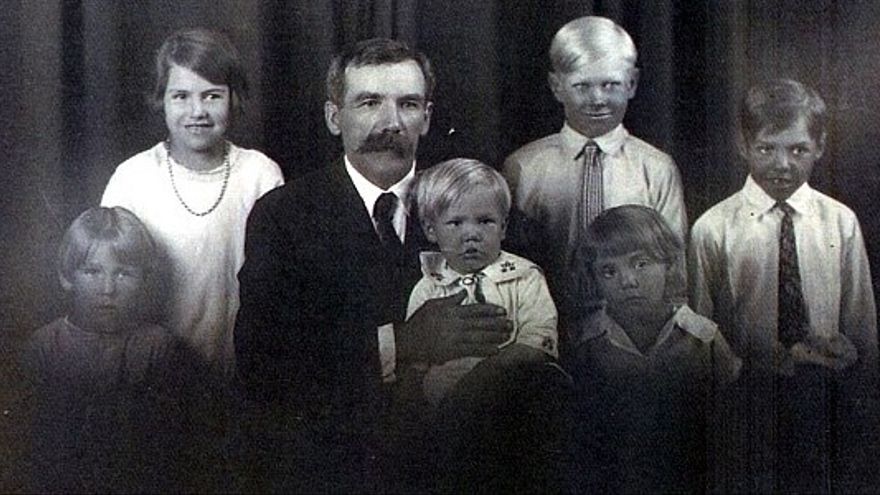
Family portrait of the Ybarrola-Kivimägi family made after Maria’s death. From left to right: Ann, Catherine, Martin, Joseph (sitting on his father’s lap), John (in the background), Rosemary and James.

Despite Martin’s efforts to keep the family together, he eventually had to take the children to the Santo Tomás Orphan Home in the town of Great Falls, Montana where they received housing and education. The orphanage had been founded by the Sisters of Providence in 1908. Later, Martin decided to move into the orphanage itself to be close to his children, giving the ranch to Prudencio. He took care of the Sisters’ animals to cover the cost of keeping his children, although they only had limited contact as they were in separate dwellings. After graduating from the orphanage in 1936, Catherine, the older sister, entered the Sisters of Providence in 1937 as a novice in Seattle, Washington. She made her final vows in 1941. She was renamed Sister Ann Dolores.
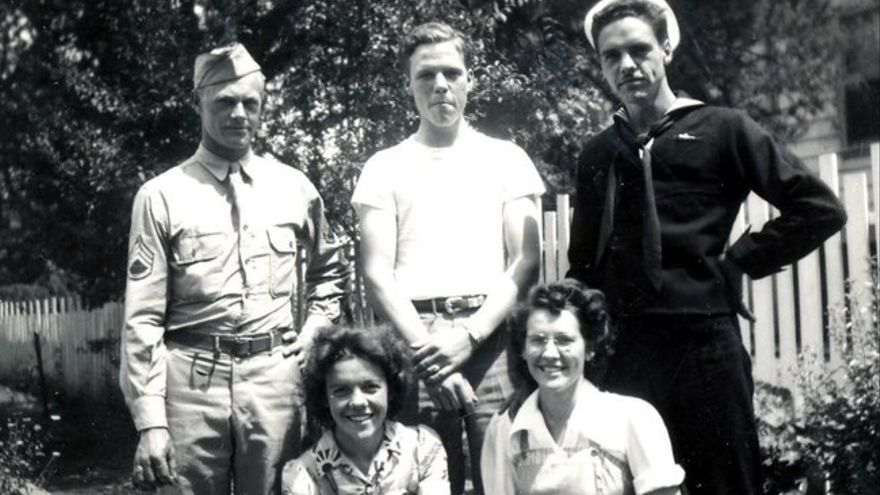
Five of the six siblings pose during a military leave for soldiers John and James in Stockton during WWII. Standing from left to right: John, Joseph and James. Below: Rosemary and Ann.

Like many children of Basque-American families, three of the Ybarrola brothers also served in the US military. The oldest, Don Ybarrola, enlisted six months before the attack on Pearl Harbor, and spent four years in the military, graduating with the rank of sergeant. He passed away in San Leandro, California, in 1980, at the age of 63. Joe Ybarrola, the youngest of the family, enlisted in the Air Force in the fall of 1944, passing away at age 70 in Stockton, California.
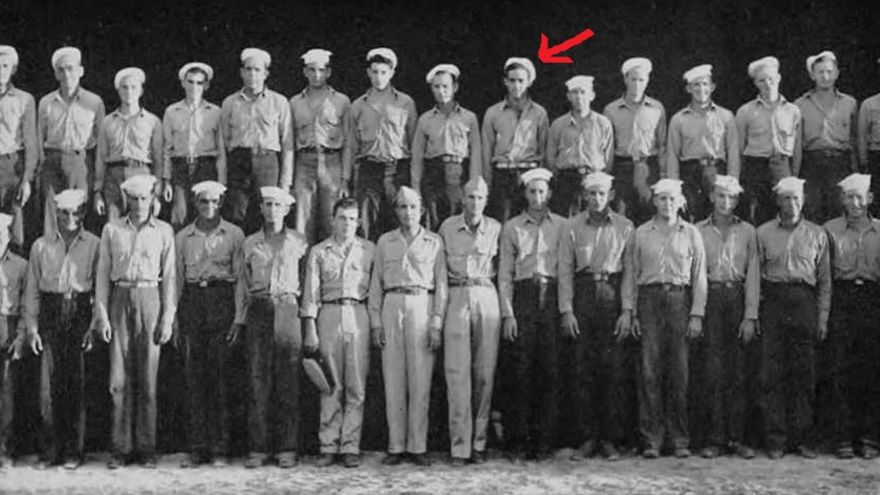
Official photo of Platoon 3, Company A, of the 46th United States Naval Construction Battalion in which Jim (indicated by the arrow) served for two long years. (US Navy Seabee Museum).

At the age of 22, Jim Ybarrola enlisted in the Navy in Seattle in 1943. He served in the 46th Naval Construction Battalion, known as the “seabees” (a nickname inspired by pronouncing the acronym CB, Construction Battalions). These battalions were created beginning in March 1942 and served on multiple fronts throughout the theaters of operations in the Atlantic — including D-Day in Normandy — and in the Pacific, with a presence on more than 300 islands. Their job was to build all kinds of infrastructure, including airfields, docks, ammunition bunkers, supply depots, hospitals, fuel tanks, and barracks. Jim developed his military career in the South Pacific. The 46th took part in the D + 2 Day (March 1, 1944) of the assault on Los Negros Island, of the Admiralty, occupied by Japan since April 7, 1942. The allied victory meant the definitive isolation of the largest Japanese base, located in the city of Rabaul, in New Guinea, clearing one more obstacle on the unstoppable road to Japan.
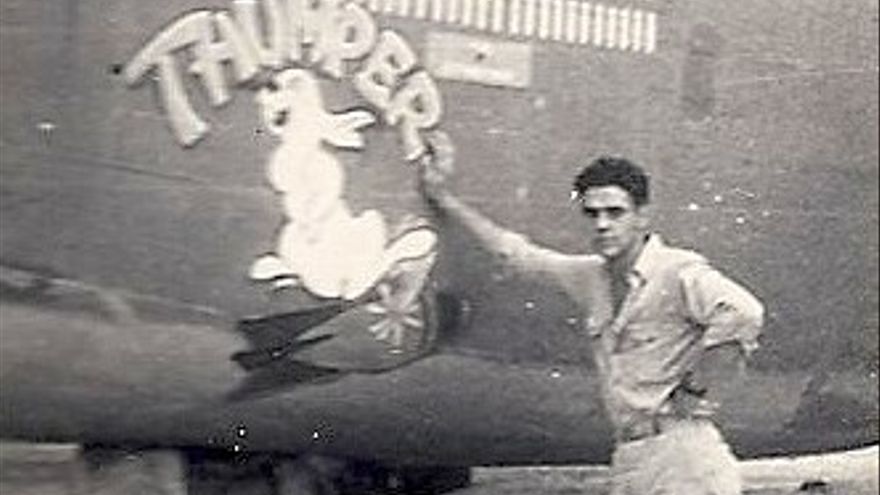
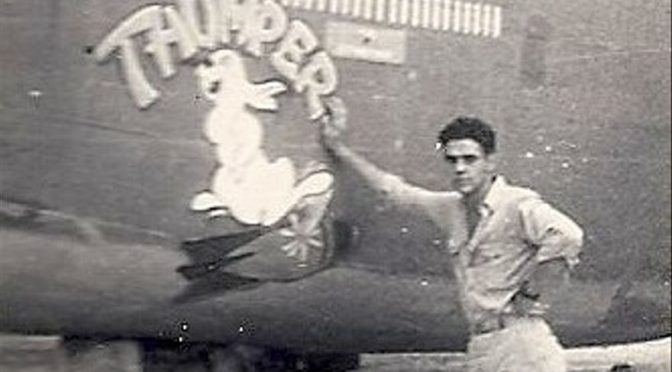
Jim leaning against a B-24 Liberator bomber while on one of the Pacific islands.

According to Jim’s son, the anthropologist Steven Ybarrola, “the war was one of the things my father talked about a lot. It had a huge impact on his life. It wasn’t traumatic for him, from what I could see, but rather a time of camaraderie. He rarely spoke of the traumas of the war, unless he spoke of having contracted malaria and its recurrence throughout his life after the war. This may be due to the fact that he was not in ‘active’ combat, but rather on a construction team. ” After the war, the entire family, with the exception of Sister Ann Dolores, managed to reunite in the city of Stockton, the last military destination to which Don was sent. The father of the family, Martin, passed away at the age of 75 in this Californian town. He never returned to Zilbeti. An implicit theme in the immigration stories of Maria and Martin — and the consequent separation from their own families (in Martin’s case since he was 21 years old) — is the great importance they conferred on the family, whether it was the sacrifice Martin made to keep his children together or the tenacity to keep the family together after WWII, values that they were able to instill in their children and their children in theirs.
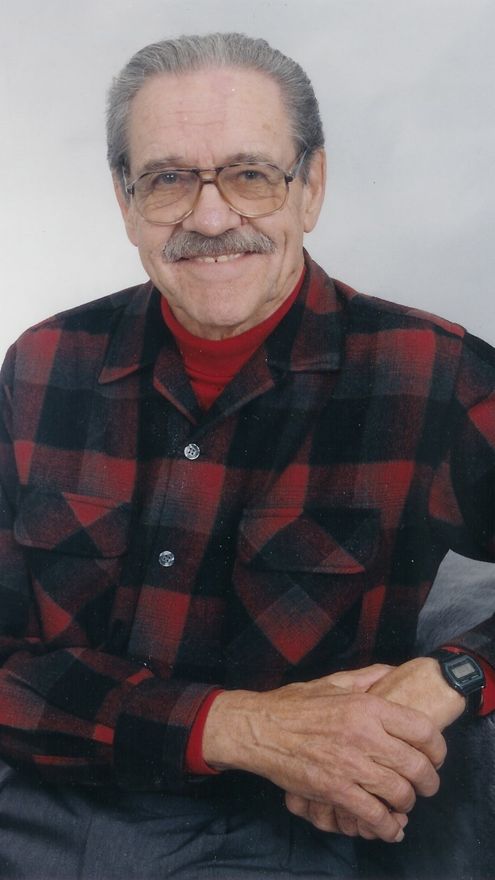
Portrait of James “Jim” Ybarrola. “He was with us for 98 years, but it still wasn’t enough!”

Jim passed away on November 3, 2019, in Stockton, at the age of 98. “My father had a sharp wit and a great sense of humor. He was with us for 98 years, but it still wasn’t enough!” laments his son Steven. With his departure, and that of many of his comrades in arms, an important part of the living memory of the United States and the Basque Country is lost. They put aside their families, their jobs and studies. Ultimately, they postponed their lives for an eventual allied victory that would make it possible for them to soon return to their homes and to their loved ones. An estimated 250,000 WWII veterans are still alive today. May this article, on the 75th Anniversary of the Victory in Europe, serve as a small tribute from the Sancho de Beurko Association and the research project “Fighting Basques: Basque Memory of WWII” to the hundreds of Basques and Americans of Basque origin who sacrificed their lives, and in some cases to the ultimate consequence, in favor of freedom.

Basque Fact of the Week: The Lauburu

It’s perhaps the most iconic Basque symbol. The lauburu — literally four-heads. This curvilinear swastika is ubiquitous in the Basque Country, appearing on store fronts, tombstones, the doorways to baserri, and, now, masks protecting us from COVID-19. If someone wants a Basque-themed tattoo, they often turn to the lauburu for inspiration. But, where does this symbol come from? What are its origins?

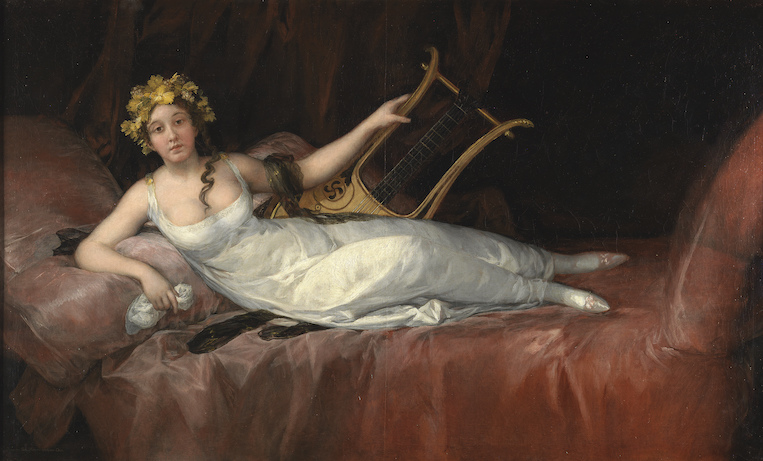
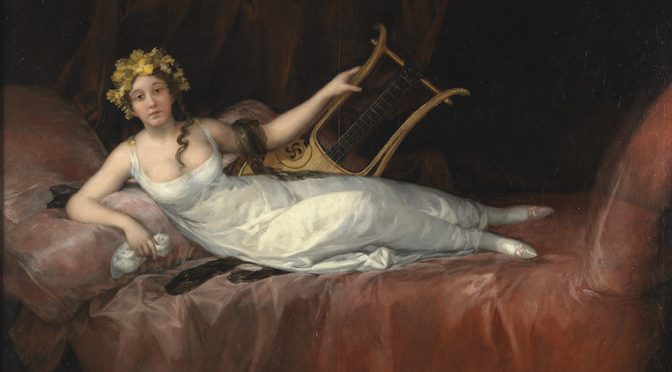
In his painting Joaquina Téllez-Girón, Marchioness of Santa CruzFrancisco de Goya decorated the lyre with a lauburu. Image from Wikipedia.
  • The swastika is, of course, an ancient symbol. While thought to have its origins in India (as does the word swastika itself), it can be found in pre-Columbian America. It is also found in China and Japan. However, the oldest symbols come from further west, dated to the Bronze and Iron Ages. These oldest found so far dates to 10,000 BCE from the Ukraine.
  • The ubiquitous appearance of swastika-like symbols around the world led the astronomer Carl Sagan to speculate that there could have been a comet that either broke up or whose tail split into four and curved around it due to its rotation. To him, only a celestial event like, visible across the globe, this would have inspired such a symbol to appear in cultures all around the world.
  • The word swastika comes from Sanskrit, meaning “sign of good luck” or “object of good omen.” The swastika has its arms rotating to the right. If the arms rotate the other way, the symbol is technically called a sauvastika and is a sign of bad luck.
  • The rectilinear swastika is not unknown in the Basque Country and was relatively wide spread on both sides of the Pyrenees in Roman and pre-Roman times, found on altars for example. However, the use of the swastika, curved or rectilinear, stopped for something like fifteen centuries. This gap makes any relationship between the lauburu and the rectilinear swastika unclear at best. While it is natural to assume such a relationship, there are enough examples of ‘commas’ being put together in various designs that maybe the lauburu was designed independently. A strong argument for this view is that, while the swastika is almost always an isolated symbol, the lauburu is often encircled. This points to an independent origin.
  • The oldest example of a lauburu comes from either the late 16th or early 17th century, from the town of Macaya, Nafarroa Beherea. While it is relatively common in the 17th century, it really starts to become popular in the 18th. Most of these earlier uses of the lauburu are from Nafarroa, Nafarroa Beherea, and Lapurdi — none are found in either Bizkaia or Araba.
  • While no one really knows where the lauburu comes from, there has been a lot of speculation about its meaning. Sabino Arana thought it was a sun symbol and that it proved that the Basques had been sun worshippers. Some think it represents the four ancient elements of fire, earth, air, and water. Louis Colas argued it was related to the healing profession as it appeared on certain tombs that he suspects belonged to priests or healers of flocks, derived from a magical symbol representing healing. Yet others see a connection to four Basque tribes. Maybe it was simply a decorative symbol. Its true origins are lost to time.

Primary sources: Auñamendi Entziklopedia. Lauburu. Available at: http://aunamendi.eusko-ikaskuntza.eus/es/lauburu/ar-87432/; Wikipedia: Swastika; Wikipedia: Lauburu; El lauburu. Política, cultura e identidad nacional en torno a un símbolo del País Vasco, Santiago de Pablo.

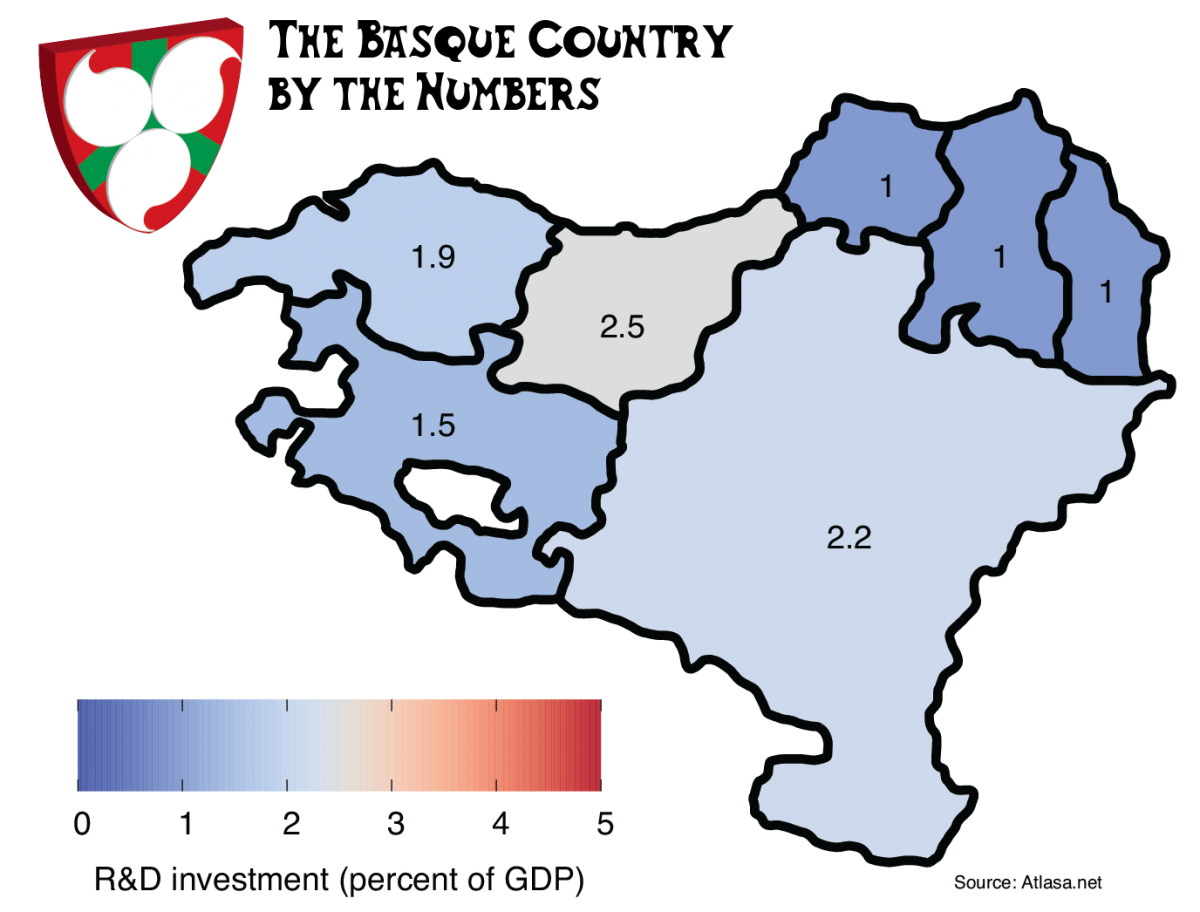
The Basque Country by the Numbers

Percent of GDP invested in research and development. All of Iparralde is lumped together. Source: http://atlasa.net/en/economy/provinces

Buber’s Basque Story: Part 25

“Wow,” whispered Kepa as he reached his hand out, his finger extended, moving to touch one of the zatiak.

“Hold on!” exclaimed Maite as she grabbed Kepa’s hand and pulled him away. “We’ll be right back, don’t go anywhere,” she said to Marina as she pulled Kepa down the path to talk in private.

“What are you doing?” she asked, exasperated. “You don’t believe her, do you?”

Kepa shrugged. “Didn’t you see what de Lancre did with the cave? And how Marina pulled us through the stone? Something is going on here that I can’t explain, and I don’t think you can either.”

Buber’s Basque Story is a weekly serial. While it is a work of fiction, it has elements from both my own experiences and stories I’ve heard from various people. The characters, while in some cases inspired by real people, aren’t directly modeled on anyone in particular. I expect there will be inconsistencies and factual errors. I don’t know where it is going, and I’ll probably forget where it’s been. Why am I doing this? To give me an excuse and a deadline for some creative writing and because I thought people might enjoy it. Gozatu!

Maite sighed as she sat down on a rock. “No,” she said, sounding defeated. “I can’t explain any of it.” Kepa knelt in front of her, taking her hands in his. “But, still,” she continued, “helping her? What about our plans? What about Berkeley?”

“Berkeley will still be there,” replied Kepa. “If this is really time travel, then we will always be back in time for whatever we need to do here. We won’t miss anything.”

“I supposed, theoretically,” said Maite. “But, still, why would we do this? Why us?”

“Look,” said Kepa as he looked into Maite’s eyes. “All my life, I’ve felt like I was drifting, like I was some sort of shadow that was there, but never really made any impression. No one ever notices me, no one ever remembers I was there.”

“I notice you,” interrupted Maite in a whisper.

Kepa’s eyes welled up with tears. “Bai, you notice me,” he said. “But the world doesn’t. The world doesn’t know I exist. What difference have I made in the world? The world would be the same if I hadn’t been born. I want to make a difference.”

“You make a difference to me,” replied Maite, returning Kepa’s gaze. 

“I know,” said Kepa. “And I’m so glad that I do. But, I want the world to care that I exist, I want to stop drifting through life, being a shadow. I want to matter.”

Maite reached up and wiped away a tear from Kepa’s cheek. “I know what you mean,” she said. “One of the reasons I am going into science is to make an impact, to make a difference. It’s not the only one, of course, I really do want to just understand how things work, but I understand the need to feel relevant.”

“And,” added Kepa, “think about it! If anything Marina said is true, there is so much to learn, about how this magic stuff works, how the time travel thing works. What better opportunity to learn fantastic new things about how the universe works?”

Maite smiled. “You were saving that, weren’t you? You knew I wouldn’t be able to resist that temptation.”

Kepa smiled back at her. “I’m not nearly so clever,” he said with a wink.

Maite pulled him closer into an embrace. “You are so much more clever than you give yourself credit for,” she whispered into his ear. After what felt like an eternity, they broke their embrace. Maite stood up and reached out her hand to Kepa. “Are you ready to do this?” she asked.

Basque Fact of the Week: Basque Clothing through the Ages

One of the very distinctive elements of any Basque festival is the dancing and, in particular, the costumes the dancers wear — the white shirt and pants, adorned with a bright sash and txapela for the men and the white blouse and black vest atop a bright red skirt and black apron with leather shoes and strapping weaving up the calf topped with a white scarf for the women. These costumes are so very Basque that they are instantly recognizable. They come from a long line of clothing elements and accessories that are uniquely Basque.

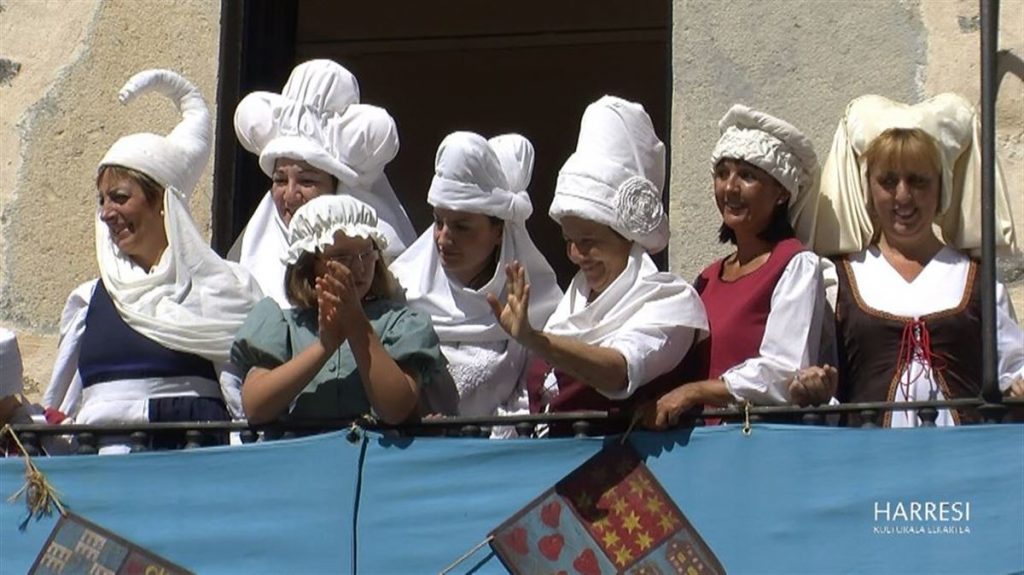
Image from EITB.eus. The photo accompanies a radio program describing the work of Marivi Canibe and her daughter, who have worked more than 30 years recreating these medieval headdresses.
  • We don’t really know much about what Basques or their ancestors wore before the Romans came and wrote about them. In the first century BCE, Strabo, the ever-present Greek geographer, described the way Basques dressed at the time: the men “let their hair stream down in thick masses after the manner of women, though before going into battle they bind their hair about the forehead… All the men dress in black, for the most part in coarse cloaks, in which they sleep, on their beds of litter… But the women always go clad in long mantles and gay-coloured gowns.”
  • Where the Romans had influence, however, the local dress changed. In cities like Baiona and Iruña-Veleia, people wore Roman-inspired clothing: overlapping undercloths, tunics and cloaks, made of linen and wool, whose number, quality and sumptuousness indicated the owner’s social status. On their feet they wore closed shoes and leather sandals. Short robes were relegated to the commoner population.
  • This trend of layered clothing to note wealth continued and was accelerated through the Middle Ages and as the country became more urbanized. Close to the skin were the undergarments; that remained similar until around the 17th century: panties fastened with trusses on men; seams and skirts for women and, for both, a shirt and leggings up to the thigh or rolled up under the knees. Over this, both genders wore skirts tied with cords and, on top of that, sleeveless tunics often with holes for arms that reached the hip. And, finally, there were overcoats, including cloaks and capes, open or closed; the wide garnacha with short open sleeves; and the tabard with no sleeves, manners and hood.
  • By the 15th century, headdress had become more and more important and very distinctive in the Basque Country. In his travels of the Iberian Peninsula with Baron Rosmithal, the Baron’s servant Schaschek noted that the headdresses of the Basque were the strangest they had seen, often shaped like chanterelles. Maidens shaved their heads, with the exception of a few locks that were kept long. Navagero later noted that these headdresses were linen, like Moorish turbans, but styled differently: “of a hood, with the tip folded, making a figure that resembles the chest, neck and beak of a crane; only that each woman makes the hood look like something different.” These headdresses became notorious, viewed by ecclesiastical authorities as “doorways for the devil,” yet another route by which women tempted men, leading to laws regulating their use and form. By the 18th century, these headdresses had all but disappeared. One of the last sightings of these headdresses occurred in 1783, during the Feast of the Assumption of Our Lady of Cenarruza, by a woman of Arbatzegi, Bizkaia.
  • Roughly in the 1500s or so, style became much more influenced by outside forces and people also shifted to more individual styles. Men’s and women’s styles also became more distinct. One unique Basque stylistic feature of this time is that women always wore an apron on top of their dress. By the 18th century, the typical dress of the Pyrenees consists of men dressed in shorts plus a cape with flannel, hat and shoes with buckles; and women, with a gathered canvas headdress and overcoat, wearing, over a doublet and basquiña, a brocatel bib with a sash and apron.
  • The popular costume, the one associated with the rural Basque grandparents, evolved from these elements to the form we recognize today. For women, the costume consists of a doublet, shawl or jacket matching a long and flowing skirt, colorful silk scarf at the neckline or shawl and apron, wide for work and elegant for church. Her long hair is gathered in a braid and tied with ribbons if she is a single woman and covered with a white or colored scarf if she is married. The men’s suit is made up of jackets of varied make, color and trim, and vests that, cut at the waist, form collars and lapels over linen or calico shirts, while the pants share space with the stockings, both made of canvas or cloth, with a colored sash. With the First Carlist War, the espartinak and the txapela were introduced, both becoming central elements of the popular costume. The costumes we see at Basque dances grew out of these traditional outfits.

Primary sources: Mujika Goñi, Amaia; Estornés Lasa, Bernardo. Indumentaria en Euskal Herria. Enciclopedia Auñamendi. Available at: http://aunamendi.eusko-ikaskuntza.eus/es/indumentaria-en-euskal-herria/ar-74070/; Las tocas vizcaínas, at deia.com.

Buber’s Basque Story: Part 24

“So,” mused Kepa as he stared at the sky, “that thing he was holding, that de Lancre put in that box, was one of these zatiak, one of your pieces of magic.”

“Bai,” answered Marina.

“And we got in the way. We stopped you from stopping him.” Kepa turned to face Marina. “Sentizen dut. I’m so sorry. Because of us, de Lancre has one more of the zatiak.”

“Ez,” replied Marina. “I mean, yes, he does. But, actually, I didn’t come here to stop him, not this time. I came here for you two.”

Maite spun. “You what?” she exclaimed.

Buber’s Basque Story is a weekly serial. While it is a work of fiction, it has elements from both my own experiences and stories I’ve heard from various people. The characters, while in some cases inspired by real people, aren’t directly modeled on anyone in particular. I expect there will be inconsistencies and factual errors. I don’t know where it is going, and I’ll probably forget where it’s been. Why am I doing this? To give me an excuse and a deadline for some creative writing and because I thought people might enjoy it. Gozatu!

Marina sighed, her gaze lingering at her feet. “I can’t do this alone. I can’t stop de Lancre. I’ve been able to collect a few zatiak, but he’s found more. At this rate, he will claim our magic for himself and who knows what he’ll do then. And I can feel my mind… It’s very hard to keep my mind in one piece when I’m constantly jumping from one body to another, from one personality to the next. So many lives, so many worlds, each so different. I can’t keep track and I fear my mind is starting to slip, starting to fragment.” She looked up, first at Maite and then Kepa. “I need help.”

“What does that have to do with us?” asked Maite.

“I need your help,” answered a frustrated Marina. “I need you to help me stop de Lancre.”

Maite laughed. “Assuming for a moment that I believe your story — and I don’t — how would we even be able to help you jump through time and stop a crazy French bastard from destroying the world?”

“Actually,” Kepa interjected, “de Lancre was — is — part Basque.”

Marina nodded. “De Lancre’s aitxitxe, Bernard, was from Nafarroa. His original surname was Rostegui. I suspect it was through him that de Lancre learned about the magics that infuse the Basque Country.”

“It doesn’t matter!” exclaimed Maite. “I don’t care if de Lancre was the most Basque person that ever lived! That’s not the point!” She turned away from Kepa and Marina, staring into the forest. Her hands were clenched by her side, her knuckles white. She took a few deep breaths before turning back to the others. “Look,” she said, forcing her voice to be calm. She looked at Marina. “I simply don’t believe your story, that you are jumping around time, chasing this guy, trying to find God-knows-what before he does. It goes against everything we know about how time works.”

“I understand your frustration,” said Marina plaintively. “I can’t explain any of this. I didn’t create the zatiak, exactly, they created me, created this ghost. I don’t know how they exist, I don’t know how I jump through time, I don’t know how de Lancre does either. All I know is that I can, that he can, and I have to get these zatiak before he does.”

“Don’t you already know how it all turns out?” asked Maite. “If you can jump through time, can’t you just go into the future and see what happens in the end?”

Marina shook her head. “It doesn’t work like that. The zatiak create bubbles in time. When I jump to when and where one of them is, I’m not aware of anything that happened before. I know my history, of course, but I don’t know the history of the moment I’m in. If you showed me a newspaper from today, I would forget anything it said once I left this time.”

“Is that what keeps you and de Lancre from messing with history?” asked Kepa. Maite glared at him.

“Uste dut, bai; I think so,” replied Marina. “The bubbles protect time and history from anything that de Lancre and I might do. We really can’t disrupt history exactly. We interact with the people we meet — like you two — but once we are gone, time somehow forgets we were there.”

“How are we supposed to help you then?” asked Maite. “Even if I believed you, the moment you leave, we won’t remember you.” She shook her head. “None of this makes any sense.”

“Because, I would give you these,” replied Marina. Kepa and Maite watched as a point of light appeared in Marina’s chest, between her breasts, and then proceeded to grow until it was about the size of a saucer. Two small balls of light emerged from the glowing hole in Marina’s chest, hovering for a moment in front of her before they settled down into her outstretched palms. “These two zatiak would let you help me.”

Basque Fact of the Week: The Aquitanians, Ancestors of the Basques

The Basque language is what is called an isolate — it has no known living relatives. Contrast that with the other languages of Europe, almost all of which are Indo-European languages, and you can see why Basque has attracted so much attention from linguists. However, just because the Basque language has no living relatives doesn’t mean it came out of nothing. Today, the scientific consensus seems to be that the language of Aquitaine was an ancestral form of Basque.

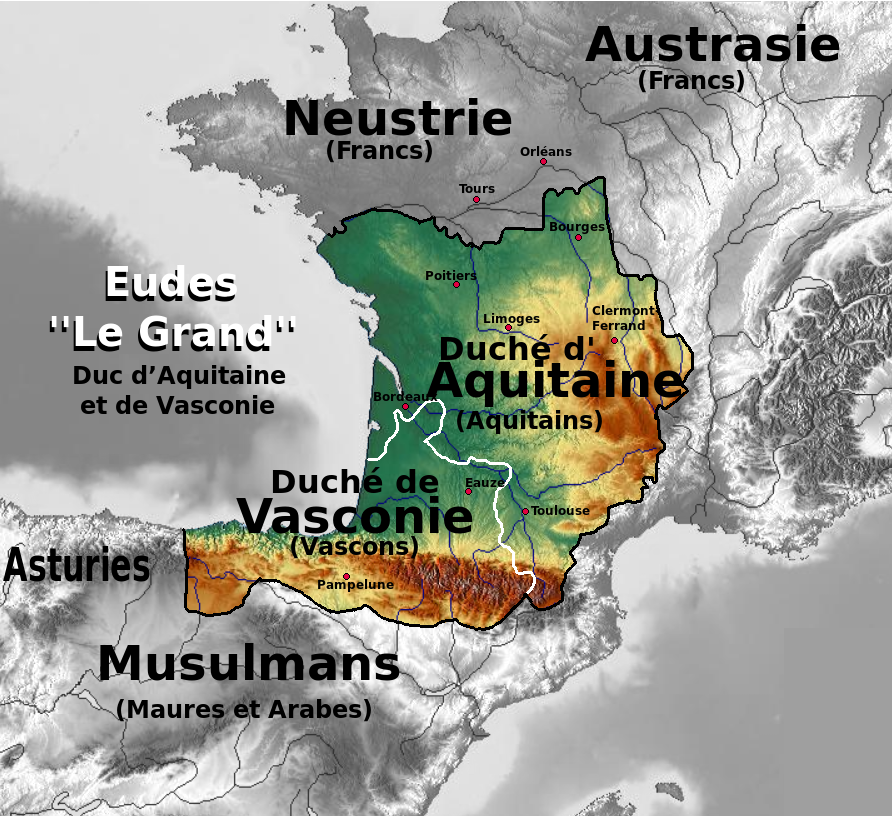
Image from kondaira.net.
  • Not much is known about the people of Aquitaine. Some time around the start of the common era (29 BCE-18 CE), Strabo, the Greek geographer, described them: “The akytanoi are completely different, not only because of their language but also because of their physical appearance, looking more like the Iberians than the Gauls” adding that “there are more than twenty Akytanoi peoples, all small and dark, most of which live on the shores of the Ocean…”
  • The idea that the language of these people was a form of Proto- or Pre-Basque comes from inscriptions containing the names of people and gods that can be directly related to modern Basque equivalents. As Larry Trask said, “Aquitanian is so closely related to Basque that we can, for practical purposes, regard it as being the more-or-less direct ancestor of Basque.”
  • Some examples of Aquitanian words that have clear Basque cognates include cis(s)son, gison –> gizon (man), belex –> bele (crow), corri, gorri –> gorri (red), nescato –> neska, neskato (girl, young woman), and sembe –> seme (son).
  • The Vascones were another pre-Roman tribe that resided to the south of the Aquitanians who spoke a similar language. While it seems very likely that these two groups of people were related, what that relationship was, exactly, is unclear.
  • In the 600 and 700s, there was an attempt to create a joint Aquitaine-Vascones duchy, which grew out of Charibert II‘s kingdom of Aquitaine. The first ruler of this duchy was most likely Felix of Aquitaine, though it reached its peak under the rule of Odo the Great, who ruled until 735 and earned the epithet “the Great” after defeating Umayyad forces. However, by 781, Charlemagne had installed his son as ruler, essentially bringing to an end the independence of the joint Duchy.

Primary sources: Peñalver Iribarren, Xabier; Uribarri Agirrebengoa, Eloísa. Aquitanos. Enciclopedia Auñamendi. Available at: http://aunamendi.eusko-ikaskuntza.eus/es/aquitanos/ar-154137/; Wikipedia.

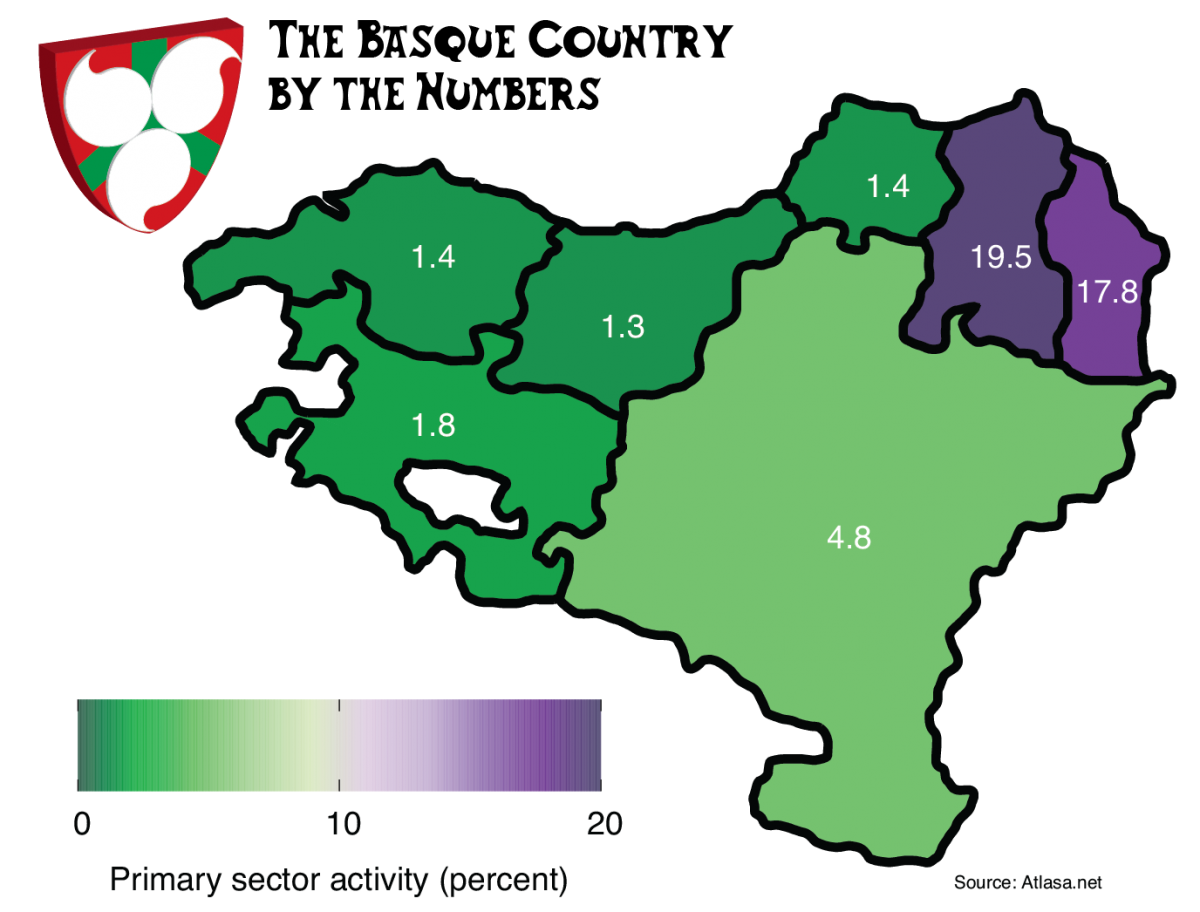
The Basque Country by the Numbers

Rate of activity in the primary sector (e.g. agriculture, mining, forestry, grazing, hunting and gathering, fishing, and quarrying). Source: http://atlasa.net/en/society/provinces

Buber’s Basque Story: Part 23

“Wow,” said Kepa. “That’s amazing!”

Maite glared at him. “You believe all of this? None of this is even possible. Magical stones thrown through time? An evil French judge trying to collect them?” She turned to Marina. “Why would he come here, to the Basque Country, in the first place?”

Marina gave a wan smile. “I know how fantastic it seems. If I wasn’t living it, I wouldn’t believe it myself. From what I can tell, the world used to be filled with magic, but the influence of that magic waned with time as people turned to other beliefs. In Europe, much of that happened with the spread of Christianity. As the Church spread, the belief in and, more importantly, practice of magic shrank until there was nothing left but one little alcove…”

Buber’s Basque Story is a weekly serial. While it is a work of fiction, it has elements from both my own experiences and stories I’ve heard from various people. The characters, while in some cases inspired by real people, aren’t directly modeled on anyone in particular. I expect there will be inconsistencies and factual errors. I don’t know where it is going, and I’ll probably forget where it’s been. Why am I doing this? To give me an excuse and a deadline for some creative writing and because I thought people might enjoy it. Gozatu!

“The Basque Country!” exclaimed Kepa. He turned to Maite. “Don’t you see? The Basque Country was one of the last parts of Europe to really embrace Christianity. It’s because they still held on to the older beliefs.”

Marina nodded. “That’s right. The Basques held on to magic longer than other Europeans. De Lancre realized this, and saw the potential for using that magic for more than healing one another, for changing the course of storms. He thought that if he could consolidate it, capture it for himself, that power would make him a god amongst men. There is no limit to his ambition. He truly believes he could rule the entire planet. All starting with that seed in the Basque Country.”

“If you are the Marina who died at the stake all those centuries ago, how are you here now then?” asked Maite, her disbelief clear in her words.

“I honestly don’t know,” replied Marina. “When I ‘died,’ somehow my spirit survived. I’m able to inhabit the bodies of blood relatives, of ancestors and descendants of my blood line. I didn’t have any children of my own, but my mom’s sister did, and I’m able to jump to any woman descended from her. So, I can follow de Lancre as he searches for the zatiak — the pieces of magic — but only if I have an iloba, a niece, or amuma in the same time and place. I’ve been lucky, so far, that most of the time there has been someone nearby, but that’s not always the case.”

“So,” interrupted Maite, “you are a mamua, a ghost, that jumps through time and possesses the bodies of your relatives?”

Marina shrugged. “Yes, I guess.”

“And Ainhoa is in there? Does she know what is going on?”

“Not really. She has a vague recollection that mostly manifests itself in her dreams. She won’t really recall being out here or talking to you. But, she’ll have dreams about me and about de Lancre…”

“That explains her song!” exclaimed Kepa. “That song about witches. It was about you!”

Marina smiled.

Basque Fact of the Week: The Conquest of the Americas

The Basques have always been known for their adventurous spirit. Their search for fishing grounds took them to Iceland and beyond, reaching the coast of what would become Canada, where they established whale processing sites and developed a pidgin with the local Native Americans (and the Icelanders too). However, they also played a big role in the Castilian conquest of the Americas. Their expertise as seamen made them valuable to both France and Castile. Much of the current shape of the Americas is due to the actions of the many Basques who were part of the conquest.

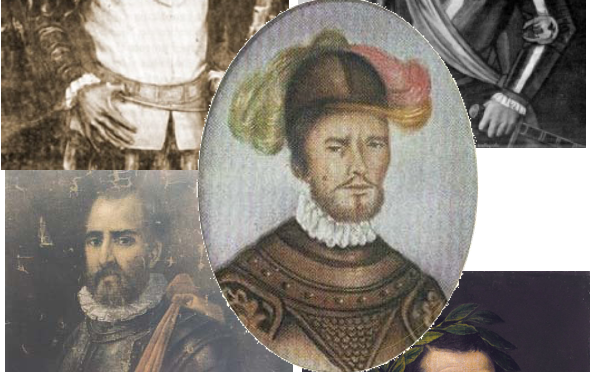
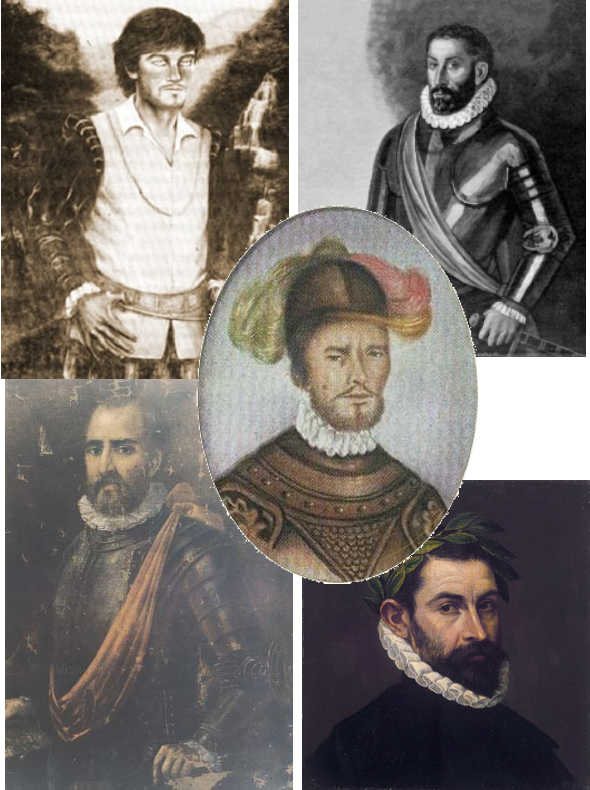
Basque conquistadors (top left) Francisco de Ibarra, (top right) Domingo Martínez de Irala, (center) Pedro de Ursúa, (bottom right) Alonso de Ercilla, and (bottom left) Juan de Garay.
  • From the beginning, Basques were there. Christopher Columbus’ expedition contained Basque seamen. The first Castilian colony in the Americas, Fort Navidad (created from the wreckage of the ship Santa Maria), had a number of Basque settlers, including the Santa Maria‘s boatswain, a Basque from Leikeito nicknamed “Chachu.”
  • In the early stages of the conquest and colonization of the Americas, that time between 1492 and 1520 referred to as the “Great Explorations,” Europeans didn’t tend to conquer large regions but rather made expeditions to trade with the local inhabitants. In this setting, Basque shipowners such as Sancho Ortiz de Urruela and Juan de Urrutia obtained permission for such expeditions along the Cumaná coast of modern Venezuela in 1519.
  • Dominion over the Americas began with the conquest of the Aztec empire and other parts of what became Mexico. Starting from the newly-formed Mexico City, built upon the ashes of the former Aztec capital Tenochtitlán, expeditions sought to expand the empire. Basques were central to this expansion, with the modern cities of Guadalajara and Zacatecas founded by Cristobal de Oñate (from Gasteiz, 1504-1567). Many other Basques came with him, including Santiago Aguirre, Juan Anuncibay, Alfonso Gaztañaga, Miguel Landeta, and Martin de Renteria.
  • As the empire expanded to the north, Basques were there. In 1563, a group led by Francisco de Ibarra, native of Eibar, who set out in search of the mythical land of Cíbola and founded the city of Durango, as the capital of a vast territory that received the name of Nueva Vizcaya. Juan de Oñate, the American Creole son of Cristóbal, followed in his father’s footsteps and conquered New Mexico in 1598. He is infamous for his actions in the Aroma War, where he was said to have cut off one foot of of every male 12 years and older for punishment. Juan de Montaño (Portugalete) took part in the expedition that reached the California peninsula in 1535.
  • To the south, Pascual de Andagoya from Andagoia, Araba, captained the first attempt to conquer Peru and the Incan empire. While his attempt in 1522 would end in failure, the news he spread about that kingdom led to its fall a few years later
  • After the fall of the Incas, the conquest entered a third phase, distinguished by expeditions to explore and conquer the rest of the Americas. Pedro de Ursua (Baztan, Nafarroa) led an expedition up the Amazon in search of the mythical El Dorado. There were many Basques who joined this expedition, among them the infamous Lope de Aguirre “El Loco” (Oñati, Gipuzkoa). Alonso de Ercilla, of Bizkaian origin, distinguished himself in the conquest of Chile.
  • In the Rio de la Plata region, Domingo Martinez de Irala (Bergara, Gipuzkoa) was involved in the founding of Buenos Aires in 1536. Years later, in an effort to link Peru to the Atlantic Ocean, Juan Ortiz de Zarate (Orduña, Bizkaia) led an army to establish such a route. His forces were defeated by the Charrúa in present-day Uruguay, and he had to be rescued by Juan de Garay, who may also have been from Orduña. Garay founded, amongst several cities, the second founding of Buenos Aires.
  • This is just a brief overview of some of the Basque who were involved in the conquest of the Americas. Stephen Bass has pulled together an extensive and outstanding history, documenting all of the Basque involvement in the Americas he could find. His Basques in the Americas From 1492 to1892: A Chronology is truly impressive.

Primary source: Álvarez Gila, Óscar. Vascos en la conquista y colonización de América. Enciclopedia Auñamendi. Available at: http://aunamendi.eusko-ikaskuntza.eus/es/vascos-en-la-conquista-y-colonizacion-de-america/ar-28435/

Note: The article in the Enciclopedia Auñamendi states “Juan de Ibarra” was the founder of the city of Durango, Mexico, but everything else I can find says it was “Francisco de Ibarra.” Also, some say he was from Eibar, but other sources say he named Durango after his home town.