It wasn’t long ago, in fact not even a month ago, that Spanish courts had ruled that a new party in the Basque Country couldn’t stand for elections held just yesterday. Bildu (Gather in English), a coalition of nationalist and left-of-center groups, was formed when Sortu (Create in English), another attempt to form a new nationalist party, was banned. Bildu itself had been banned by Spanish courts all the way to the Spanish Supreme Court. However, the Spanish Constitutional Court ruled that the party was legal and allowed it to stand for elections (I am not knowledgeable enough about the Spanish judicial system to know how these two courts are related).
The key, in my understanding, is that Bildu rejected violence. However, Sortu had done the same, but was still ruled to be an incarnation of Batasuna, widely viewed as ETA’s political arm. I am not entirely clear on what the difference between Bildu and Sortu is (except maybe the Constitutional Court never ruled on Sortu?).
In any case, today saw the first elections in which leftist nationalists were represented by a political party since the early 2000s when Batasuna had last been allowed to run. And, their success has been nothing short of amazing (see this EiTB article). Of all of the political parties represented, they received the second most votes (second only to PNV; 25 vs 29.9%) and the most seats in government (907 vs PNV’s 822) (I assume the disparity between number of votes and number of seats depends on where the votes were cast). Even in Nafarroa, which has recently been pushing to reduce Basque influence within the province, saw Bildu get about 11% of the vote.
After the PNV lost power in the Basque Autonomous Community to Patxi Lopez and the PSE-EE, it will be interesting to see how this new swing to the left and to another decidedly pro-nationalist party will affect things in the Basque Country. It is also amazing that a party that, until very recently, was banned is the choice of so many people. It makes you think that a large number of voters didn’t have a voice they felt represented them.
I’d be very interested in getting some reaction from people in the Basque Country about their view of the meaning of these election results as well as more insight into the history of these parties.
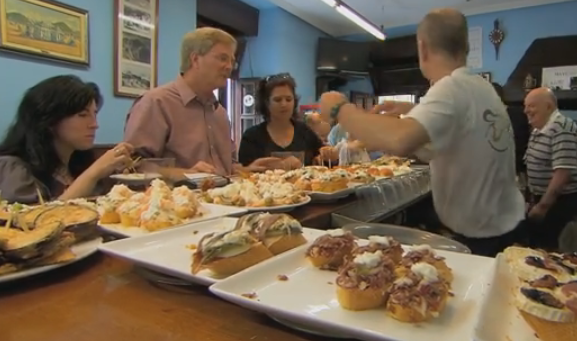
If you’ve never been to the Basque Country and are considering your first visit, you might have no idea of where to start your tour. Or if you’ve been several times to see family, you might want to break out of the routine of visiting the family baserria and find something new. Rick Steves, “America’s leading authority on European travel,” has a segment on the Basque Country which gives the standard overview of the Basque Country, but also gives a few glimpses into areas off the beaten path, even if he doesn’t stray from the main attractions of the Basque Countries. And, of course, he samples the local cuisine, giving some new things to try. In particular, he delves into the pintxo bar-hopping scene, which any visitor to the Basque Country absolutely must experience. He also delves into some odd tangents, such as growing marijuana. His tour takes him from Donostia to Gernika to Bilbao to Bainoa and finally to St-Jean-de-Luz.
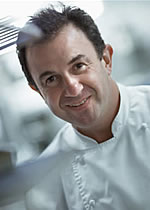
I just stumbled onto this by pure accident (sometimes, spending too much time just surfing the web does lead to serendipitous discoveries). Basque Stage is part project, part contest, with the goal of teaming up young chefs with world-renowned chef Martin Berasategui, owner of his signature restaurant in Lasarte-Oria, Gipuzkoa. Basque Stage will award two scholarships for young people to journey to the Basque Country and learn from Berasategui. If you are into cooking, sounds like a marvelous opportunity.
Basque Stage has a channel on the video site vimeo, where they share recipes for things like kokotxas and bizcocho. Two students are at Berasategui’s restaurant right now, learning from him and sharing what they learn for the rest of us to see. The two students are Athena Thickstun and Tracy Chang. They are also blogging about their experiences in the Basque Country, Spain, and France — links can be found on the Basque Stage site. The next two students, who will start this July, have already been identified, Marco Bahena and Cameron Rolka. But, it looks like this is an ongoing effort, so you still have your chance.
The project is sponsored by Sammic, a company in Gipuzkoa that produces equipment for the food industry.
It’s been way too quiet around here. My apologies. I have my typical excuse, real life. But, to ensure that these pages are vibrant and alive, I want to do a much better job of posting, of sharing all things Basque. So, if you have suggestions, please let me know. What should I be posting? What is missing? Do you have anything to contribute? I’m always looking…
Nor Naiz, Gu Gara (Who I Am, We Are) is a series aiming to explore the meaning of Basque Identity around the world, both within Euskal Herria as well as in the diaspora. For an introduction to the series, look here, and for a list of the previous entries, look here.
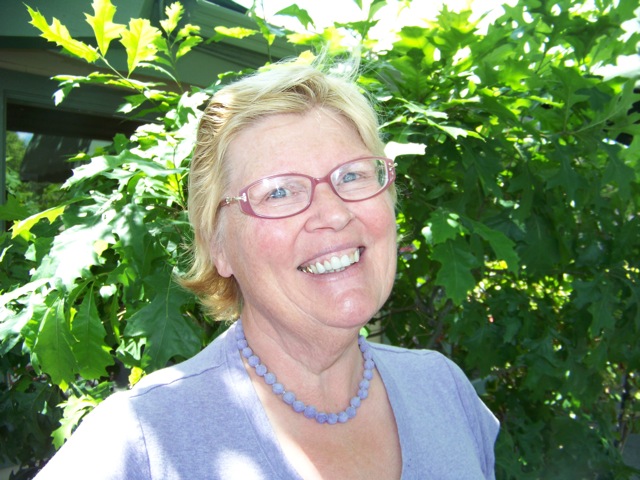
What a pleasure to appear on Buber’s Basque Pages! Throughout my career at the Center for Basque Studies, I have experienced the Basque community from the privileged position of “welcome guest.” Genetically, I am not Basque. I certainly do not look Basque. People meet me here and in the Basque country and ask, “Why have you studied the language? How did you come to spend your life studying the Basques, their language, and their culture?”
The role of Basque friends and professors in my life has been a huge motivator. In college, the late Professor Eloy Placer intrigued me by speaking Basque in the halls of the humanities building. He loved and encouraged his students, tolerating our faulty Spanish, laughing with us at his own silly jokes, and giving us second (and third) chances to understand the material he was trying to impart about Spanish literature. I find it amusing and ironic that my love of Spanish literature was instilled in me by a Basque professor. But he also inspired a curiosity about the Basque language.
My first Basque class was a night class with the late Jon Bilbao. We used the tiny pocketbook, Euskera, Nire Laguna, and we thoroughly enjoyed ourselves. Did we learn much Euskera? Not really. But as a language teacher, I know that one night a week does not bode well for progress in a language. What we did learn was that the attempt to learn Basque, in and of itself, imparts a special camaraderie to a group of people who had been strangers before coming together in that setting.
After joining the staff of Basque Studies in 1981, I studied on my own for six months. Dr. Gorka Aulestia noticed my interest and my dedication, and he offered me Basque lessons! I jumped at the chance. We met two mornings a week before work in our own private classes, while I went home every weekend and spent twenty hours preparing for the next week’s lessons.
“Oh, no,” I hear you groan. “Twenty hours a week to learn Basque?! I don’t have that much time!”
Of course not. Learning Basque was my passion, but it was also encouraged by my employers, and admired by my growing group of Basque friends. My college degrees were in foreign language and literature. My job title soon became “Lexicographer” as I assisted Dr. Aulestia with the Basque-English dictionary.
But as David Cox explained in his entry for this column, you don’t have to be fluent to warm the hearts of the generous Basque people. Nowhere have I seen greater rewards for one’s earliest steps toward learning a language. Communicating in Euskara at a very low level is like wielding a key to the kingdom of Basqueness. But even if you despair of ever producing a full coherent sentence in Euskara, studying the language provides an insight into the way Euskara shapes the thinking and world outlook of those who do speak Euskara.
As someone who has always felt warmly welcomed by the Basque-American community, I can report that any and every effort to respect Basque history and culture through learning something about the language is well worth while. It was in this spirit that I spent the last several years completing my textbooks for studying Basque, either at home or in a classroom. Dialogs and pronunciation guides are available on-line as MP3 files for downloading. Answers to exercises are provided in the books.
Those who might be interested can visit www.studybasque.com for more info on Dr. White’s two-volume textbook Aurrera! A Textbook for Studying Basque, along with vocabulary study tips.
Nor Naiz, Gu Gara (Who I Am, We Are) is a series aiming to explore the meaning of Basque Identity around the world, both within Euskal Herria as well as in the diaspora. For an introduction to the series, look here, and for a list of the previous entries, look here.
For me, to be Basque is to have a Basque surname—a name that is tied to the land and house of your ancestors—a name that has lived on through the test of time. Even if one does not have a Basque name, one can still feel Basque. This feeling of being Basque runs real deep and is represented by these traits: hard work, brevity, independence and stubbornness. It represents being different—using creativity for innovation and change. A Basque is proud of their heritage and enjoys celebrating and sharing it with others. Being Basque is also using the language, Euskara— reading, writing, speaking and teaching it to others.
My Basque ancestors voyaged to the New World from Irun/Hondarribia, Gipuzkoa in the mid 16th century and settled throughout Latin America. I get my Basque heritage from my father, who is from Guatemala. In 2003, a distant relative reached out to my father and I from Hendaia with a bit of family history and the hope of uniting the greater Alcayaga family. It was not until 2008, when I decided to visit Euskal Herria for the first time to learn Basque and to meet with family.
Nor Naiz, Gu Gara (Who I Am, We Are) is a series aiming to explore the meaning of Basque Identity around the world, both within Euskal Herria as well as in the diaspora. For an introduction to the series, look here, and for a list of the previous entries, look here.
My parents’ generation and, in my opinion, the Basques living in the diaspora have a “traditional”, let’s say, more Aranist point of view about what being a Basque is. I therefore agree, more or less, with what Gloria Totoricaguena states in her book, Identity, Culture and Politics in the Basque Diaspora. In other words, that the vast majority of those that were born roughly during the first half of the 20th century and those that emigrated abroad have a more ethnic, blood related viewpoint of what being a Basque is (ancestors, Basque surnames, etc.). That thought about what it means to be Basque was probably passed from generation to generation amongst the diaspora and I do not think I’d be mistaken in saying that the diaspora, at least until now, has had a romantic, idealistic image of the Basque Country. I do not believe, however, that diaspora Basques think that language is a must, as is blood. For example, most Basques in the diaspora do not believe that knowledge and grasp of the Basque language is necessary to be considered Basque because that would/might rule them out. Nevertheless, maintaining the Basque identity in the world is tough and a lot of hard work is done in keeping it alive. The intention alone and the effort in learning the language is, in my opinion, worthy of mention. That’s what I value the most, the intention and eagerness to learn. So I, as a Basque, am greatly thankful of that and do not think that more can be demanded. What’s more, even if that person from, let’s say Argentina, does not have Basque ancestors but does have a passion towards everything Basque and has the intent in learning Basque, could be considered Basque. Why not? Why can a Spaniard, that has no intention in learning anything about our culture and that immigrated to Barakaldo, for example, be considered a Basque and not someone that loves our culture and wants to be a Basque, even though he or she lives thousands of kilometres away?
For me Basque is one who simply wants to be Basque and proclaims him or herself as that. I would differ although, in that sense, between those who live in the Basque Country and those abroad. I do think that those living in the homeland have, as Basque citizens, a responsibility in maintaining the Basque traditions, culture, language, etc alive. If there is no Basque language, culture, etc, there can be no Basques, not in the homeland nor abroad in the host countries. I think we should demand from those that live in the Basque Country and from all those who want to be Basque (all those new Basques that are now coming to the Basque Country looking for new opportunities like our ancestors did when they went to the US, Argentina, Mexico, Canada, etc.) a commitment from their side in terms of learning some Basque and facts about the Basque people, our history and heritage. This is something that is done in other nations and countries (ie Catalonia, Quebec, US). During decades there have been many, many people from Spain that came to the BC looking for work opportunities and I am sometimes appalled when I see that a lot of them and their children not only do not know Basque, they do not even intend to learn it. I sometimes feel as if some people from the Bilbao area, for example, live on another planet with a different culture because they are less familiar with the Basque heritage than the Basques from Boise or Bakersfield.
The Basque government should guarantee that all Basques (those from Bilbao or Vitoria-Gasteiz or those that have just arrived from Romania or Colombia) know basic things (culture, history, and language) about the country where they live and want to belong to, if in fact they do want to belong to it. This however would bring political conflict because PSOE and PP would raise their voice. We’d now be talking about politics. That’s something that the Basques abroad, especially in the US I believe, don’t understand. They don’t understand how they have managed to, despite the difficulties, culturally and linguistically flourish in the diaspora and see, on the other hand, that in the BC there are people that know less Basque than they do. I have been told in the US that the Basque culture in the BC has been too politicized. But by whom?
There is another question that should be addressed as well. What do the people abroad originally from Navarre consider themselves? I think that the vast majority consider themselves Basque. But what does the present day Navarrese government think about that? There is a real challenge here for the Basque-Navarrese abroad to clarify with the government of Pamplone. I know it is difficult and risky for the Basques abroad to take a politic stance but I think it would be the best tribute they could pay to their homeland.
Summarizing, we the Basques constitute a nation. We have a distinct identity, language, history, culture. Not better. Not worse. We are simply different. In my opinion, the Basques abroad, although American, Argentine, or Australian are part of that nation and must play a very important role in consolidating it. Those with no Basque ancestors but with a passion towards everything related to us are welcomed. I therefore believe in a very broad, modern and open view of being Basque but with commitments from the other person’s side as well. Why? Our feeble nation needs in this globalized world all the help it can get and those that live abroad, that live in the Basque Country, or come to live in the Basque Country must/should help us.
I don’t know if it’s just an idea who’s time has come or if great ideas come in pairs, but there are two movies in the works about the Basque experience in the US West.
The first, appropriately entitled Basques in the West, is an effort of Canyons Studio. I first heard about this one this summer, at Jaialdi, when I talked to the directors, Amaya Oxarango-Ingram and Brent Barras. Basques in the West is still in production, but they have a clip showing selected scenes on their website here, and they have a Facebook page for the movie here, where they’ve just posted their official trailer to the movie. Basques in the West focuses on interviews with Basques of all generations, those from the Basque Country, those raised on the ranches, and those younger Basques that are trying to continue the traditions however they can.
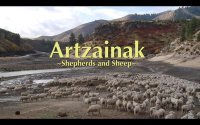
The second film, directed by Javi Zubizaretta and Jacob Griswold, is Artzainak: Shepherds and Sheep, which again deals with the Basque experience in the American West, but focusing a bit more on the sheepherder experience. The trailer, on YouTube, shows the life of sheepherders, both an old time Basque as well as what I presume are Peruvians, the modern day equivalent of the Basque sheepherder. Thus, it moves a bit beyond the Basque experience, examining how sheepherding has moved beyond those original Basque immigrants and now encompasses a new group of immigrants. Artzainak also has a Facebook page and a blog with updates about the promotion of the film.
As an aside, my dad was one of those Basque immigrants, coming to America to herd sheep. These days, he is still involved, but now he assists and guides the Peruvians that are the heart of the sheep herding industry in Idaho. He drives them where they need to go, helps him move camp, etc. While still an extremely difficult life, it is also a world away from what my dad knew. When he was herding, they were in the hills for months at a time, with little-to-no contact with civilization. Today, the Peruvians drive to the herds and have camps that are significantly more sophisticated than what they had 50 years ago. Plus, while they probably don’t have a signal every where they go, they can take cell phones with them and thus have contact with the outside world.
Back to the films, both of these films celebrate the Basque life in the American West and thus, as the descendant of Basque shepherds, I am extremely interested in seeing them both. I hope they both do well in the market and I look forward to following their successes.
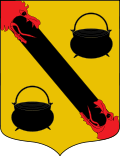
A while back I found an awesome book that showed the coats-of-arms of most of the towns and villages of Bizkaia. Each town was given a different page, with a drawing of the escudo and some information about the town. I’d always hoped to find something similar for the other provinces, but was never able to. These days, though, if it’s in a book, it’s very likely to be online as well. Thus, it should come as no surprise that there are lists of the municipalities of the various provinces and their heraldry, and maybe the best site for this is Wikipedia.
They have different sections for the coats-of-arms of the towns of Bizkaia, Gipuzkoa, Araba, Nafarroa, and, lumped together with other provinces of the Pyrénées-Atlantiques, Iparralde — the French Basque Country.
I imagine these aren’t complete, but they do give a very nice visual display of the towns and villages of the Basque Country. I think it would be great to also have something about the origins of each individual coat-of-arms, but that is asking a lot.
There are versions of these on the Spanish version of Wikipedia as well, which do give more detail, such as the actual description of the coat-of-arms. For example, see this page for Bizkaia and this one for Nafarroa.
I received this query way back in June (ugh! I’m so far behind). It describes the efforts of a group of historians and archeologists that are trying to document and save the historic castles of the Basque Country. If you have interest in their project, please leave a comment and I’ll make sure they see it.
Estimados amigos de la tierra vasca.
Desde la lejanía y con el recuerdo de la historia de nuestro pueblo os escribimos con la intención de hacer participativo nuestra ilusión y trabajo.
Antes de nada presentarme: me llamo Iñaki Sagredo Garde. Historiador navarro y cooperante del grupo arqueológico: Gestión Cultural Larrate –Bera de Bidasoa-.
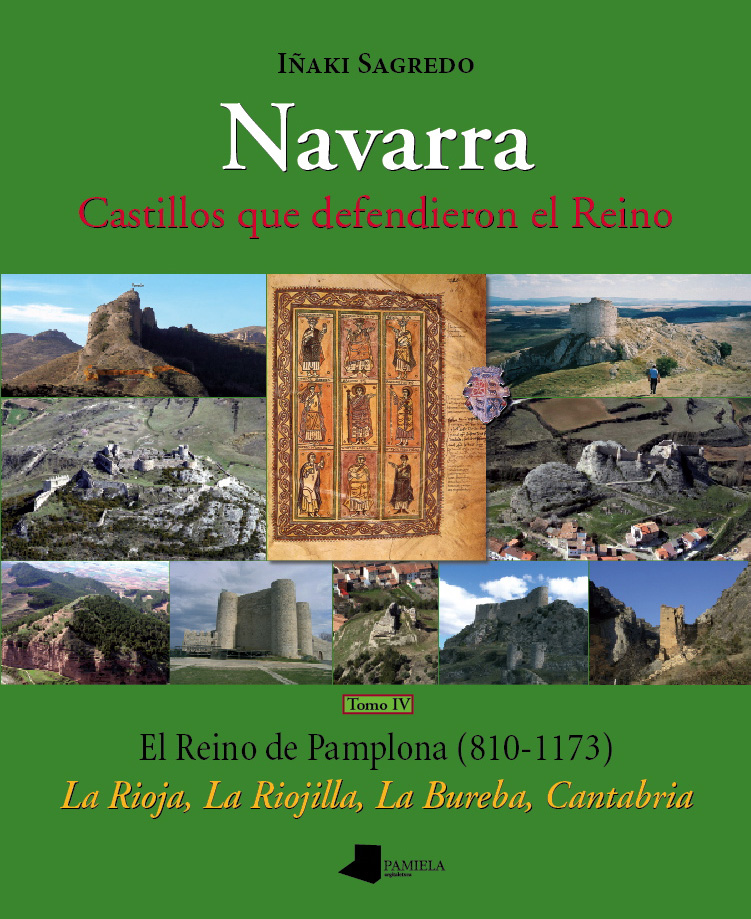
Hace ya unos años, en el 2006, publicamos el primer libro Navarra. Castillos que defendieron el reino –Editorial Pamiela-, un trabajo donde repasamos y localizamos casi los cien castillos que tuvo el viejo reino de Navarra. Posteriormente publicamos los siguientes tomos de la misma colección donde se recogieron los castillos de la Navarra occidental del 1200: Gipuzkoa, Bizkaia, Araba, la anterior que llegaba hasta la Rioja y Bureba –lugares donde la toponimia vasca es notable y por lo tanto recordamos con ahínco para evitar su pérdida.
Cada libro intentaba sensibilizar sobre nuestra historia: Localización de los restos, la toponimia, los documentos, etc.
Nuestra intención es la recuperación histórica de los castillos. Tras la conquista de Navarra en el año 1512, Cristóbal Villalba, coronel castellano que ejecutó las órdenes del regente de Castilla Cardenal Cisneros. Dicho coronel escribió lo siguiente:
Navarra está tan baja de fantasía después de que vuestra señoría mandó derrocar los muros que no hay hombre que alce la cabeza.
Es posible que de esos cien castillos apenas queden 5 en pie y por esa razón estos años hemos trabajado en un proyecto de volver a levantar de manera simbólica o estudiar estos castillos coincidiendo con el quinto centenario de su conquista. De esta forma nos pusimos manos a la obra. Ajenos a otros proyectos arqueológicos que pueden acometer trabajos parecidos nuestro fin fue divulgar y explicar la historia in situ, en el mismo lugar y poder acceder a su conocimiento desde la perspectiva histórica de un reino independiente que tuvo un protagonismo en la Europa de entonces.
En Mayo trabajamos en Eskoriatza – castillo de Aitzorrotz-, y allí explicamos su historia a cientos de estudiantes que a través de los centro escolares visitaron el yacimiento. En Junio trabajaremos en la Burunda y en agosto será en el valle de Ollo; en Urdax y Bera durante los meses siguientes, etc.
Queríamos haceros partícipes de nuestro esfuerzo y compartir nuestra ilusión. La idea es lenta por los problemas de toda índole que sugiere realizar un trabajo desde la tutela gubernamental y con los problemas lógicos económicos pero seguimos intentándolo. Si desean conocer algo más de nuestro trabajo, en la editorial Pamiela, en su parte del patrimonio, pueden obtener información. Cada libro que puedan solicitar es un impulso a nuestro trabajo de recuperación. http://www.pamiela.com/

 It wasn’t long ago, in fact not even a month ago, that Spanish courts had ruled that a new party in the Basque Country couldn’t stand for elections held just yesterday. Bildu (Gather in English), a coalition of nationalist and left-of-center groups, was formed when Sortu (Create in English), another attempt to form a new nationalist party, was banned. Bildu itself had been banned by Spanish courts all the way to the Spanish Supreme Court. However, the Spanish Constitutional Court ruled that the party was legal and allowed it to stand for elections (I am not knowledgeable enough about the Spanish judicial system to know how these two courts are related).
 In any case, today saw the first elections in which leftist nationalists were represented by a political party since the early 2000s when Batasuna had last been allowed to run. And, their success has been nothing short of amazing (see this EiTB article). Of all of the political parties represented, they received the second most votes (second only to PNV; 25 vs 29.9%) and the most seats in government (907 vs PNV’s 822) (I assume the disparity between number of votes and number of seats depends on where the votes were cast). Even in Nafarroa, which has recently been pushing to reduce Basque influence within the province, saw Bildu get about 11% of the vote.