Bururik ez duenak, hankak ibili behar.
If you don’t have a good head, then you better have good legs.
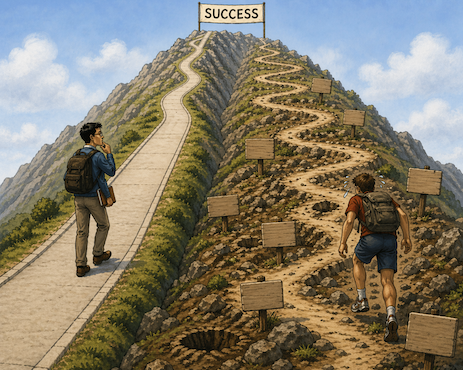
These proverbs were collected by Jon Aske. For the full list, along with the origin and interpretation of each proverb, click this link.

Bururik ez duenak, hankak ibili behar.
If you don’t have a good head, then you better have good legs.

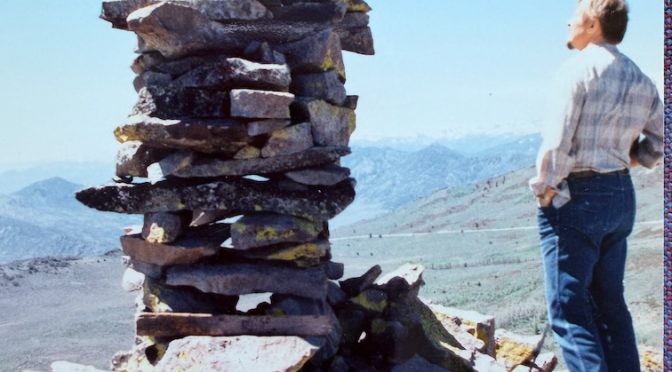
Joxe Mallea-Olaetxe, a long-time friend, is a historian who has worked tirelessly to document the history of Basques in the American West. One very visible example is his work on the arboglyphs Basque sheepherders left behind as they roamed the hills, valleys, and mountains of states such as Nevada, Idaho, and Oregon, but he has done much more. But, as with any attempt to document history, there are always holes that can’t be filled through evidence alone, and that is particularly acute for any and all things Basque. Thus, Joxe has turned to fiction to fill that void, rooted in his long years of study. Below is a trailer for his first novel.
Language Speaks Louder Than Bones: The Story of The Basques Naming Themselves, ca. 500,000 BP
A Trailer by Joxe Mallea-Olaetxe
Most of my life I have been a historian and a history-writer, until recently when I embarked in a new career as a fiction writer. I am young enough to undertake it, because writing fiction is less taxing than historical research. Besides, Saint Augustin says that fiction is another aspect of history, therefore I am not running away from it.
I am also a linguist, and though I do not have a proper university degree in linguistics, I have taught several languages at the university and college level.
My first novel is finished. It is not your run-of-the-mill novel that happens tomorrow or a century ago. Action is set ca. 500,000 BP.
What,? you might say; What do you know about life half a million years ago? Not much, but that’s the point. Is there anyone else who knows much about it? A lot has been written about our cave-dwelling ancestors, but the evidence comes from a few old bones and stone tools. The discovery of a new bone is enough to trigger someone to write a book demolishing all we thought we knew before.
I find it curious that no scientist ever attempted to use language to gaze into our deep past. Perhaps nobody thought that their language had any value, which might as well be true, but Euskara, the language of the Basques, does.
Appropriately, the title of the novel is Language Speaks Louder than Bones.
I am the narrator and thus an eye witness, which means I am there where the actions is. By the time I am done with the novel, I — and you — will probably know more than anyone about the cave dwellers. There are some — many — holes in my narrative, it happened so suddenly. I don’t know how but I found myself on a tree watching below a group of pre-Neanderthal hunters, or bears? At first I thought they were bears, until I realized that they were holding spears. Do bears hold spears?
I have still no idea where I was, but certainly somewhere in the Atlantic Europe. The huge discovery was that the dozen or so clans that I came into contact with, had some proto-Euskara words in their languages. The next finding was that these clans lived at considerable distance from each other, but they could communicate, because their languages shared some common basic words, of which some sounded like Basque.
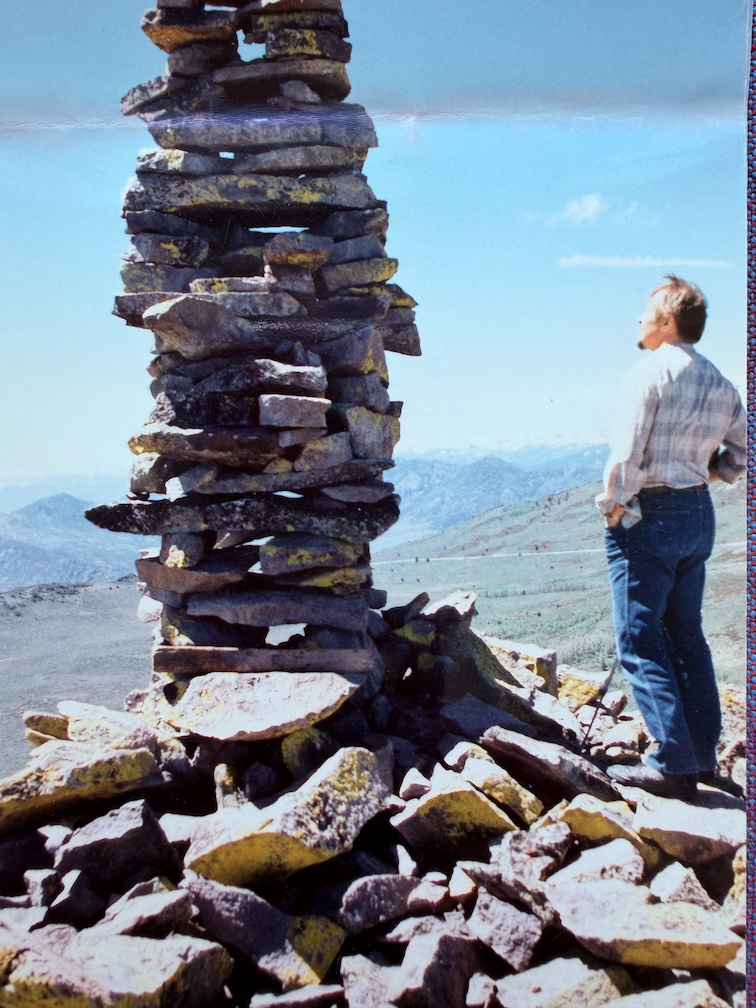
The Basque language, Euskara, has words that literally take us back to the time when “gize” (humans) had four hands, so before they embarked their bipedal journey.
The gist of the novel is that I was at the meeting when eight clans came together to choose a common name for themselves. In fact, they ended up selecting two names, one picked by the men and one preferred by women.
It did not happen overnight. It came after the realization that they, the cave dwellers, were not any different from bears, but had some differences, for example, making tools and building a fire, something they didn’t see other animals do, in fact, all animals avoided fire. The other monumental discovery was the language, so let no one call them primitive or brutes anymore.
I haven’t decided where or how I want to publish; I may end up going the Kindle way.

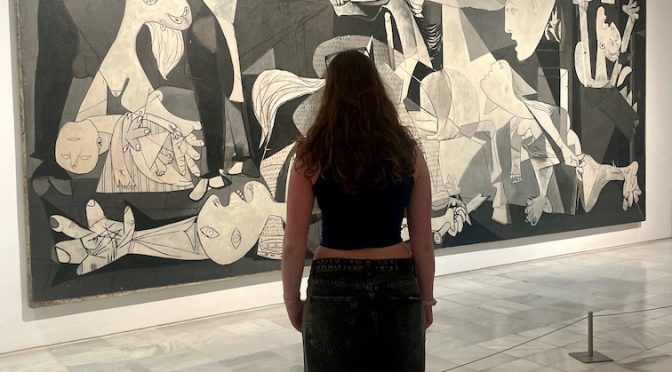
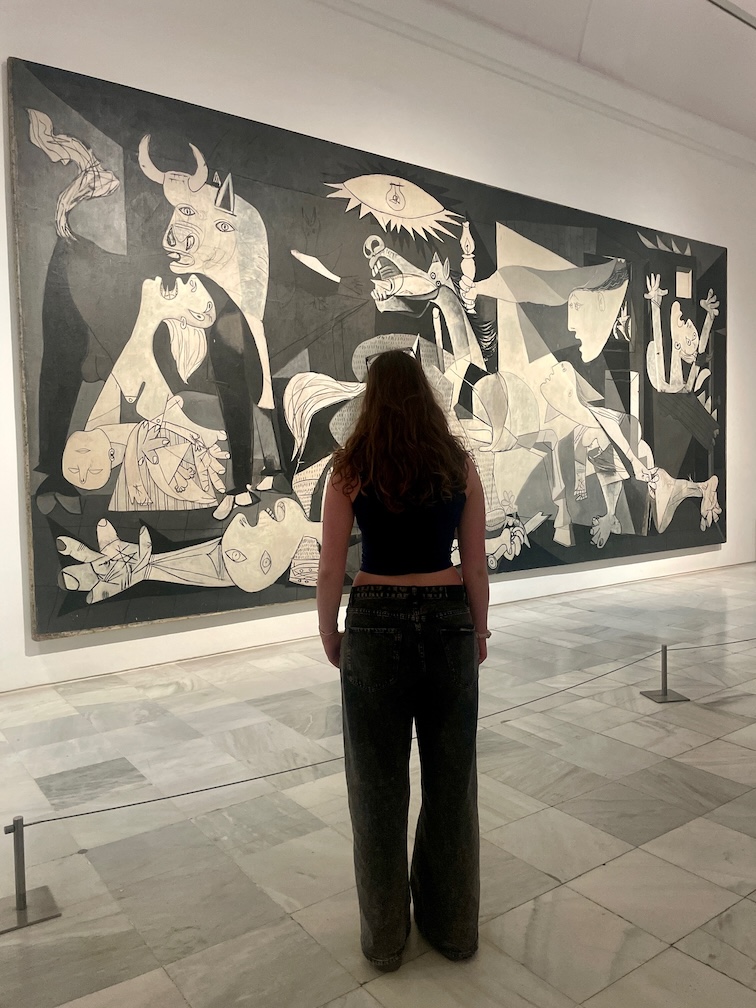
Today marks the 89th anniversary of the bombing of Gernika. Last month, in March, we made a quick trip to the Basque Country over spring break to visit my dad’s family and made of point of seeing Picasso’s Guernica. As we near the 90th anniversary of the bombing, the painting is once again in the news as the Basque government has requested that the painting be loaned to the Basque Country. This request has been denied, based on arguments that the painting is too fragile.
A full list of all of Buber’s Basque Facts of the Week can be found in the Archive.
Primary sources: Castaño García, Manu; Editorial Auñamendi. Gernika-Lumo. Auñamendi Encyclopedia, 2026. Available at: https://aunamendi.eusko-ikaskuntza.eus/en/gernika-lumo/ar-57197/; Bombing of Guernica, Wikipedia


Burla minena, egia dioena.
The most painful mockery is the one that’s true.


While Athletic Bilbao receives more international attention, primarily due to their unique policy of signing only Basque players, they are not the only team in the Basque Country – there are several. Yesterday, April 18, 2026, the soccer team from Donostia, Real Sociedad de Fútbol, won the Copa del Rey, their first win since 2000 and only their fourth win in their history. Star player Mikel Oyarzabal scored one of their goals, with rising star Ander Barrenetxea scoring the other. Led by an American-born coach, this win caps a remarkable turnaround where they were almost relegated to second division only a year ago.

A full list of all of Buber’s Basque Facts of the Week can be found in the Archive.
Primary sources: Cuesta Olaizola, Eneko de la. Real Sociedad de San Sebastián. Auñamendi Encyclopedia, 2026. Available at: https://aunamendi.eusko-ikaskuntza.eus/en/real-sociedad-de-san-sebastian/ar-124806/; Real Sociedad, Wikipedia


Over 100 years ago, in 1921, José Miguel de Barandiaran began publishing a series of articles under the banner of Eusko-Folklore. His work was interrupted by the Spanish Civil War but in 1954 he resumed publishing what he then called his third series of articles. These appeared in the journal Munibre, Natural Sciences Supplement of the Bulletin of the Royal Basque Society of Friends of the Country. While various writings of Barandiaran have been translated to English, I don’t believe these articles have. As I find this topic so fascinating, I have decided to translate them to English (with the help of Google Translate). The original version of this article can be found here.

(continued)
Mari’s Abodes
Mari’s ordinary abode is the regions beneath the earth. But these regions communicate with the earth’s surface through various channels, which are certain caverns and chasms. For this reason, Mari appears in such places more frequently than in others. For this purpose, several caverns and chasms and mountains are pointed out where the numen can be seen perfectly. Such are the mountains of Gorbea, Peña de Orduña, Oiz, Mugarra, Aizkorri, Aralar, Peña de Aya, Ory; the caves and chasms of Balzola, Supelaur, Atxali, Sarrimendi, Marijen-kobia (Amboto), Gabaro, Kanterazar (Jemein), Otoyo and Damazulo (Ispaster) in Biscay; those of Kapildui, Okina and Zaldiaran in Alava; those of Garagarza, Kurtzeberri (Escoriaza), Atxorrotx (Escoriaza), Gaiztozulo (Oñate), Aketegi (Cegama), Sugaarzulo (Ataun), Agamunda (Ataun), Ustaatsu (Ataun), Iturriotz (Ataun), Aspildi (Ataun), Ubea (Ataun), Murumendi, Marizulo (Aralar), Txindoki, Azarizulo (Amézqueta), Olanoi (Beizama), Otsabio (Lizarza), Leizazulo de Lapar (Lizarza) and Obantzun (Berástegui) in Gupúzcoa; those of Odebe (Alsasua), Udabe, Beraingo-leze (Burunda), Mugiro, Akelarre (Zugarramurdi) and Auza in Navarra; those of Arrobibeltz (Ascain), Lezia (Sara), Faardiko-harri (Sara), Marixilo (Biriatu) and Mondarrain in Laburdi; that of Zelharburu (Bidarray) in Lower Navarra; those of Lexarrigibele (near Ahuski), Lezenobi, Beli, Azalegi (Alzay) and Otxibarre (Camou) in Zuberoa.
Attributes and Functions of Mari
They say in Cegama that Mari is often seen in the kitchen of her cave, sitting by the fire, arranging her hair. In Oñate, they have seen her spinning. Others have seen her combing her hair sitting in the sun at the entrance to her cave. In Goyaz, they say that Mari is busy unraveling thread at the entrance to her dwelling in Muru, when the sun is shining and there are stormy clouds in the sky. In Zuazo de Gamboa, they say that Mari makes balls of gold thread in her cave in Amboto, placing the skein on the horns of a ram that acts as the winder. In Aketegi, she does her laundry on Wednesdays and bakes bread on Fridays; a small cloud at the mouth of that cave announces such operations. The residents of Ispaster, seeing a cloud on Mount Otoyo, say that Mari has lit her oven.
According to Oñate and Arechavaleta, when Mari is in Amboto, it rains heavily; when in Aloña, there is persistent drought. In Orozco, they say that when she is in Supelaur, there is an abundant harvest.
Mari brews storms. In Oyarzun, they say she creates them in Aralar and Trinidademendi. In Cegama and other villages in Goyerri, it is believed that she launches them, either from the Aketegi cave or from the Murumendi cave. In Arano, they say she sends them from a chasm in Muguiro, and that she then crosses the air in the form of a horse. In Gorriti, they believe that Aldureko Mari (Mari of Aldura) brings storm clouds from a chasm in Aralar. According to beliefs in Leiza, Mai-mur forms the stormy winds that emerge from a well located next to the bridge called Maimurren zubia (Mai-mur Bridge), not far from that town. In the villages of Alava, it is widely believed that such winds and storm clouds emerge from the Okina chasm. In those of La Rioja, it is often said that they come from the Urbion well. In the Lescun region, they say that Yona-Gorri, who is the lady of Anié Peak, hurls them from her home. In Tolosa, they say that Mari, riding in a horse-drawn chariot, crosses the air during storms, directing the clouds. The mere sight of this deity is usually a sign of an impending storm.
Mari rewards the faith of those who believe in her. Some travelers who wanted to cross the Atxorrotx mountain in Escoriaza found themselves at the end of their journey in an
instant, a fact they attributed to their belief in that deity.
Mari listens to those who call upon her. If she is called three times in succession, saying “Aketegiko Damea,” she places herself on the head of the person who invoked her, according to the aforementioned data from Cegama.
In certain situations, Mari was consulted, and her oracles proved true and helpful. The blacksmith of Iraeta, seeing that his forge was failing, went to see Mari in Amboto. She explained the cause and solution to the problem, and the blacksmith was able to get his factory up and running. A similar case is said to have occurred in the Zubillaga forge, and thanks to the oracle of Amboto,
it was able to continue working.
In the 14th century, she must have also been consulted in difficult cases, as can be seen from an incident recounted in the aforementioned “Livro dos Linhagens.” In it we read the following: “After some time, this Don Diego López went to harm the Moors, and they captured him and took him to Toledo as a prisoner. His (son) Iñigo Guerra felt very sorry for his imprisonment, and he came to discuss with the people of the land how they could get him out of prison. And they said they didn’t know of any way, except that he should go to the mountains and look for his mother (the mysterious lady of the mountain whom Don Diego López de Haro had married), and ask her for advice. And he went there alone on his horse, and found her on top of a rock, and she said to him: “Son Iñigo Guerra, come to me, because I know very well what you are here for.” And he went to her, and she said to him: “You have come to ask me how you will get your father out of prison.” Then she called by name a horse that was wandering loose in the mountains, told it Pardal, and
put a bridle on it, and instructed her son not to use any force to unsaddle it or unbridle it, or to feed it, or to water it, or to shoe it; and he told him that this horse would last him a lifetime, and that he would never enter a fight that he didn’t win, and that he should ride it, and that he would stand that very day in Toledo before the door of his father’s prison, and there he should dismount, and finding his father in a corral, take him by the hand, and pretending to want to speak to him, he would lead him to the door where the horse was, and when they arrived there they would both mount, and before nightfall they would be back in their homeland. And so it was.”
The theme of the preternatural transfer of Don Diego López de Haro from the Toledo prison to Vizcaya by the work of Mari’s horse appears today, located in Dima (Vizcaya), where a soldier
from the Iturriondobeitia baserri was transported during the time of the Moors from distant lands by the art of Sugoi, or snake, who lived in the Balzola cave.
Cult of Mari
Whoever makes an annual gift to Mari will not see hail fall on their harvest, according to belief in the Kortezubi region. The best gift one could give her was undoubtedly to bring a ram to her den. In many legends, this animal appears as Mari’s favorite species.
A legend from Aya tells of the adventures of a procession that shepherds made to the cave of Mari de Amboto to ensure that no hail or other storm would harm their flocks.
According to another legend, the residents of Muguiro would go in procession,
on May 3rd, to a cave of Mari‘s located not far from that place, and the village priest would celebrate the Mass at its entrance. The legend adds that if Mari was in the cave during the ceremony, no hail would fall in the region for the entire following year.
It is also said that the priest of Isasondo would climb Murumendi once every seven years to celebrate the Mass at the entrance to the cave where Mari appears.
A pilgrimage is held annually at the Arpeko Saindua cave (Bidarray) on Trinity Day. The petrified young woman venerated there is invoked in cases of skin and eye diseases, and she performs cures through the water that runs down the surface of the stalagmite statue. Devotees offer her candles (which are burned in front of the supposed effigy of the saint) and coins and crosses, etc., which are placed in the grotto itself, as noted before.
The custom of placing coins in caves as an offering to the spirit who resides there was widespread in pre-Christian times. As for the Basque Country, Roman coins have been found in the Isturitz and Santimamiñe caves. What devotees do today in the Zelharburu grotto (Arpeko Saindua) seems, therefore, to be a reminiscence of the Gentile era.
Something similar is also practiced in other parts of the country, although not exactly in caves but in the open air. Thus, in the Aralar mountain range, when a shepherd loses a sheep, he offers Saint Michael a monetary alm and places it on top of the rock called Amabirjiña-arrie (Stone of the Virgin Mother), located near the Igaratza meadow.
In the 14th century, the lords of Biscay placed cow entrails on a rock in Busturia as an offering to their ancestor Mari. This is what the aforementioned Count Pedro Barcellos asserts in his book, with these words: “In Vizcaya, they said, and still say, that this mother of Iñigo Guerra is the sorcerer or enchanter of Vizcaya. And as a sign of offering to him, whenever the lord of Vizcaya is in a village called Vusturio, he has all the entrails of the cows he slaughters in his house placed outside the village on a rock, and in the morning they find nothing. They say that if he didn’t do this, he would be harmed that day and that night by a squire in his household or by something that would greatly distress him. And the lords of Vizcaya always did this until the death of Don Juan the One-Eyed, and some tried not to do so, but found themselves in bad shape.”
How to Conduct Oneself in Mari’s Dwelling
Whoever goes to consult Mari or visit her must meet certain requirements. They are:
Commandments of Mari
This deity condemns lying, theft, pride and boasting, failure to keep one’s word, and the lack of respect due to persons and mutual assistance. Criminals are punished by deprivation or loss of that which has been the object of the lie, theft, pride, etc. It is common to say that Mari supplies her pantry at the expense of those who deny what is and those who affirm what is not (ezagaz eta baiagaz), with denial and affirmation. A shepherd was tending sheep in Murumendi. He felt thirsty and began to wander through the mountains in search of a spring. He approached the mouth of a cave and there saw an elegantly dressed young woman who asked him: “What are you looking for, good man?” “I am looking, miss, for water to quench my thirst.” “Water? You mean cider.” Immediately, the young lady presented him with a beautiful jar full of cider and gave it to him to drink. As soon as the shepherd tasted it, he said, “Beautiful cider. What apples is it made with?” “With those given by denial by Mr. Montes de Ikaztegieta,” replied the young woman from the cave, implying that they were apples whose existence their owner had denied. There is a proverb that says: Ezai emana ezak eaman (what is given to denial, the denial takes it). Ezai eman (to give to denial) is to fail in truth and in the duties imposed by mutual assistance.
Inviolability of Mari’s Room
Whoever enters Mari’s caves uninvited and whoever improperly seizes any object belonging to her is immediately punished or threatened with punishment. A boy who stole a gold canteen that was near the Amboto cave was snatched away that same night and disappeared forever. Some hunters who threw stones into the Gaiztozulo chasm (Oñate) were later knocked down by a wind and a cloud that emerged from it. A woman stole a gold comb from the Otsibarre cave, and that same night a piece of land belonging to her was completely covered with stones.
Punishments and Spells.—Mari often punishes misdemeanors, sending inner unrest into the criminals. She also punishes by seizing something that belongs to the guilty. If the guilty are shepherds, Mari takes a sheep from them.
The most resounding punishment Mari sends to the villages is hail. She herself or her son Mikelats casts storm clouds from the underworld, and she herself or other subordinate spirits,
among whom Odei and Eate are named, direct them from valley to valley and mountain to mountain.
To avoid hail and other evils, according to various legends, people used to resort in ancient times
to the celebration of masses and the casting of spells at the mouths of certain caves.
If the formation of a storm cannot be avoided, there is still the option of warding it off through gestures and magical formulas. Upon seeing a storm cloud approaching, a resident of Ipiñizar (Ceánuri) would wrap a herb called uztai-bedarra (Rumex crisus) around the wrist of his left hand and with his right hand point the storm in the direction it should follow. Thus, it was said, he managed to prevent hail from falling in his neighborhood.
There are people who believe themselves endowed with magical power and address the storm spirit (Mari or her subordinates Odei and Eate) with certain time-honored phrases, sometimes indicating where the hail should fall and where it should not fall.
Lightning and thunderbolt are phenomena attributed to Mari or her subordinates. To prevent lightning from striking a house, it is customary to place an axe in the doorway with the blade pointing upward. It is believed that lightning is a polished stone (Neolithic axe) or a piece of flint thrown by the spirit of the storm. In the Guernica region, lightning is called oñezturri (from oñeztu, meaning “lightning,” and “arri, stone”), which means “lightning stone.” This Neolithic stone or axe is considered a symbol of lightning that protects the house from its harmful effects. However, since the stone axe is little known, a steel axe is used today as an antidote to lightning.
Mari’s symbol is the sickle. According to certain legends, Mari is known to cross the firmament in the form of a fiery sickle. For this reason, this instrument is considered a protector against lightning, and is placed during storms on the tip of a pole in front of the house, to prevent lightning from striking it.
From what we have said about Mari, it is clear that this deity constitutes a thematic core or point of convergence for numerous mythical themes from diverse origins. But considering some of her attributes (mastery of terrestrial forces and subterranean spirits, her identification with various telluric phenomena, etc.), we are inclined to consider her a symbol—perhaps a personification—of the earth.
MARI IN TOPONYMS
According to certain beliefs and popular stories, Mari has given her name to various places, caves, fountains, and monuments. Here are some such place names:
The names Maritxikar and Maierroda, from Bolívar and Soule respectively, which mean whirlwind, also include Mari as one of their elements.
Mari is also the name of a character who, associated with Peru, appears in several stories from the Basque Country (1). Both names also refer to two trees in Mújica (Vizcaya). Father Francisco de Gandarias (O.F.M.) wrote to me about them on April 25, 1921, as follows:
(1) Eusko-Folklore, 1923, pág. 13.
“On the border between my town (Ajánguiz) and Muxika, there are two enormous trees that, according to tradition, are Peru and Marija transformed into chestnut trees. More than once as a child, I went with my brother to see such interesting characters from our stories.”
Another informant, José de Echebarri, a native of Mújica, sent me this news:
In a corner of Mújica, there are two trees named Peru and Mari: one (Peru) is an oak and the other (Mari) a chestnut. They are in the lower room of the house called Borikene: they actually belong to the owner of the Okana caca (house?).
And these trees are very renowned throughout the surrounding area. In the past, many, and many more got married in front of them, as if they were witnesses.
Also, in the sales that took place on Mondays [the day of the fair] in Guernica, many agreed to make the payments in front of Peru and Mari. One would sell the ox or the team of oxen and say to the buyer: “Where will you pay me?”
“In front of Peru and Mari at nine o’clock tonight.”
And both would meet in that place.
Another of my informants, Ruperto Aurre, from Ajánguiz, told me in 1924 that Peru and Mari were two trees, in front of which, sales contracts were once signed.
On September 15, 1924, Don Telesforo Aranzadi and I went to Mújica to see Peru and Mari. We were accompanied by the aforementioned informant José de Echebarri. From the diary of that time, I extract and translate this note: “Peru and Mari occupy a hollow between two hills of Okanabaso, property of the Okana baserri in the jurisdiction of Mújica, not far from the limits of Ajanguiz. They are two large chestnut trees (2), already old and covered in ivy. Peru is located to the right of the road that goes up from the Mújica railway station to Ajánguiz, and the so-called Mari, already dry and fallen, is a few meters away, also to the right.”
(2) Therefore, the so-called Peru oak is not an oak, as stated in the note above copied from José de Echebarri.
Mari is one of the names for witches in Basque legends. Ez gerala, baiño ba-gaittun; Mari-Petraliñ ex beste guztiik emen gaittun (That we are not [you say]; but yes, we are; except for Mari Petraliñ, the rest of us are all here) the witches told a young woman from Ataun who did not believe in their existence, and each one plucked a hair from her head, leaving her completely bald.
Mariturri “Mari’s fountain,” located between Orenin and Arbulo, owes its name to the fact that it is frequented by witches, especially at night, according to local beliefs.
Mari has also been the name of other mythological spirits who today are designated by the names lami (Oyarzun, Amézqueta), lamin (Sara, Biriatu, Vera, Uhart Mixe, Laguinge, Camu), lamiñ
(Ataun, Mondragón, Deva, Lequeitio, Orozco), laminaku (Elanchove), and amilamia (Salvatierra), names that correspond to the classic lamia of the Greeks and Latins, although the characters attributed to them may be different. “Lamia: witch who eats children“:”Lamia devours her lover” (Stith Thompson, Motif-index of Folkliterature, G 262.0.1; G 262.0.1.1). The lamias in Basque legends are not like that. They are timid and benign. Furthermore, many themes related
to the numen Mari also appear associated with lamias. We have previously discussed them in Eusko-Folklore, 1921: (pag. 48) and 1926 (pags. 1-14).
According to a story from Dima, lamias are shaped like women, except for their legs, which are like chicken feet (Eusko-Jakintza, vol II, pag. 594).
According to other legends, they have feet like goose feet (Garagarza), or duck feet (Arano, Oñate, Elorrio).
In a legend recorded in Ataun, it is said that lamias are like a monkey (Eusko-Jakintza, vol. II, p. 593).
In Ceánuri and Elanchove, it is believed that they are small women who have only one eye in the middle of their forehead.
In Orozco, I was told that lamias are small women and that their footprints are like those left by children when walking in the mud.
In coastal villages, the belief is more widespread that lamias had the upper half of their bodies like women and the other half lower as fish (Cortézubi, Cenarruza, Lequeitio, Deva, Motrico).
José Miguel de Barandiaran

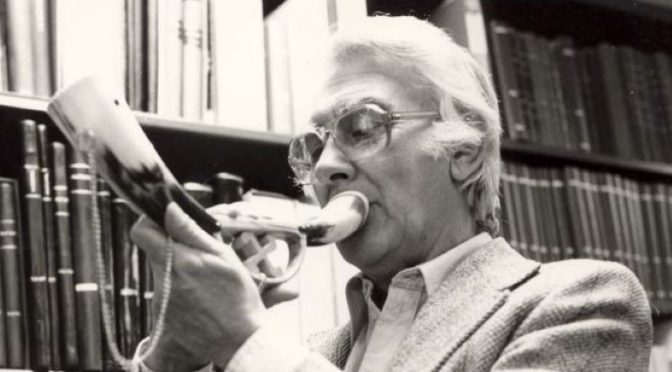
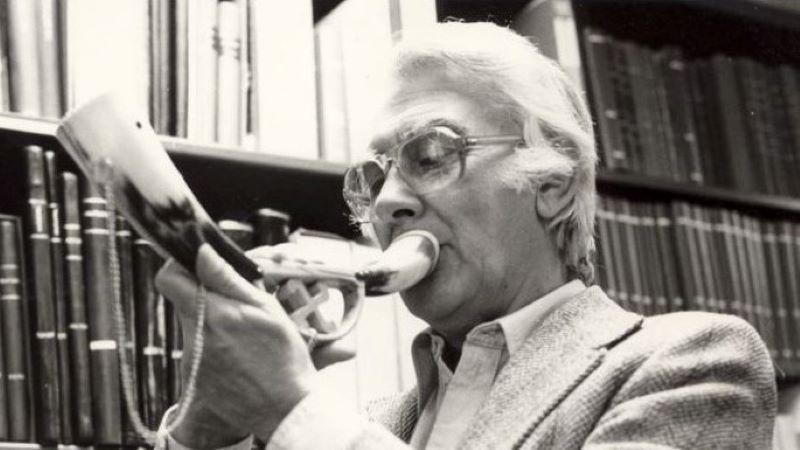
Last year, the pioneering work Amerikanuak celebrated its 50th anniversary. Written by Willian Douglass and Jon Bilbao back in 1975, this book surveys the history of Basques in the Americas – not just the United States but all of North and South America. Bilbao had spent many years chronically all works written about the Basques which undoubtedly served as a foundation for Amerikanuak. Bilbao lived a complex life, bouncing back and forth between the United States and Europe as political tides ebbed and flowed. Studies of Basques in the Americas owe a great debt to Bilbao.
A full list of all of Buber’s Basque Facts of the Week can be found in the Archive.
Primary sources: Jon Bilbao, Wikipedia; Estornés Zubizarreta, Idoia; Elia Itzultzaile automatikoa. Bilbao Azcarreta, Jon. Auñamendi Encyclopedia. Available at: https://aunamendi.eusko-ikaskuntza.eus/en/bilbao-azcarreta-jon/ar-14146/

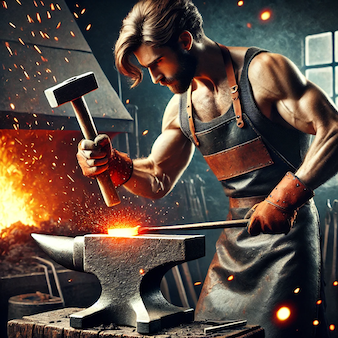
Burdina berotan jo behar da.
Iron must be hammered when it’s hot.

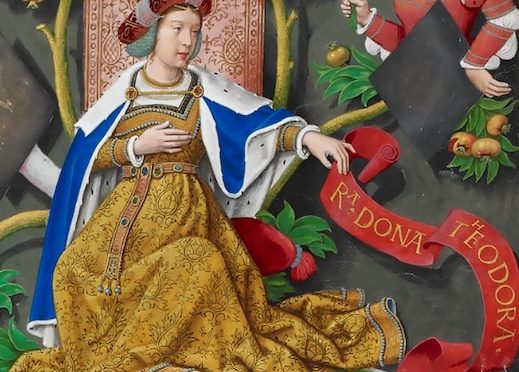
The medieval history of the Basque Country is both fascinating and so convoluted. There are so many marriages back and forth between different families as royals tried to consolidate and expand power that it becomes dizzying. A great example is Tota, or Toda, Aznar of Pamplona. Her skill as a diplomat and in establishing power through marrying her children places her as a central figure in the history of the Basque Country.

A full list of all of Buber’s Basque Facts of the Week can be found in the Archive.
Primary sources: Estornés Lasa, Bernardo. Toda Aznárez de Larraun. Auñamendi Encyclopedia. Available at: https://aunamendi.eusko-ikaskuntza.eus/en/toda-aznarez-de-larraun/ar-139997/; Toda of Pamplona, Wikipedia


Bost sosen pupua, eta hamar sosen trapua.
A ten cent bandage for a five cent booboo.

.jpg)