Random Bits of Basqueness


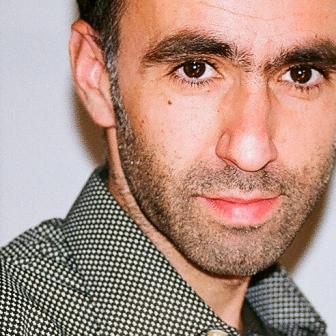
The New Yorker recently published the poem Reasons, by Basque poet Harkaitz Cano. Actually, they published the translation by Elizabeth Macklin, but on their site you can also find an audio clip of both reading the poem. I’m copying the translated version below. I admit, I’m not much of a poetry reader, not really having read much since forced to in school, but this one resonates with me. And, it was cool to see Elizabeth’s work in The New Yorker. 🙂
Because I have nothing to say.
Because, though I’ve got plenty to say, you’re not paying attention.
Because I’d rather listen to what you’re saying.
So as not to talk to myself.
So as not to talk to the wall.
So as not to talk to the crack in the wall.
So as not to waken the cricket who lives in the crack in the wall.
Because they’ve sealed my lips with honey.
Because I’m kissing you.
Because I’m sulking.
Because I’m sulking and I’m kissing you.
Because I like to remain silent.
Because our breath is speaking all on its own.
Because I’m keeping a secret larger than words.
Because my heart is in my mouth.
Because you haven’t let out a yell in ages.
To make sure all your vowels are still in their proper places.
Because you’re alone and in desperate need of an echo.
To measure the height of a Gothic cathedral.
To cheer on an Italian cyclist.
To shoo off a grouchy mouse.
So they hear you from the last row of the theatre.
So they hear you from the other side of the creek.
So the fishes caught in the fish trap hear you.
When you’re in water up to your neck, to call for a ring buoy.
To measure the depth of a bottomless well.
To invite the wolves to your birthday party.
So everyone knows that yelling is not so easy.
Because some others are unable to yell.
So that the woods will learn your name.

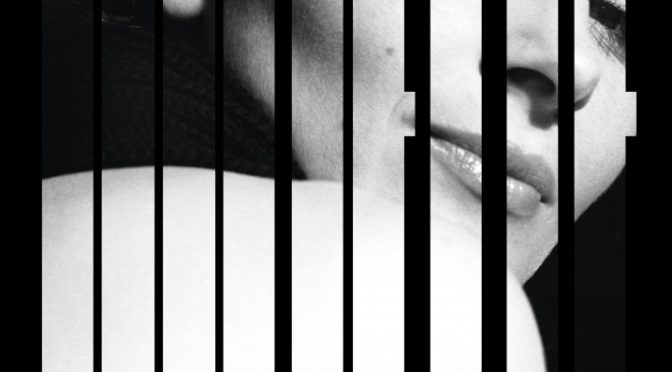
The 70th edition of the San Sebastián International Film Festival began on Friday and runs through this week. Donostia Zinemaldia, as it is known in Basque, has been a showcase of some of the best of the film industry since 1953. Some of the most recognized names in cinema have appeared on the festival’s red carpet.

Primary sources: Roldán Larreta, Carlos. Festival de San Sebastián. Auñamendi Encyclopedia. Available at: https://aunamendi.eusko-ikaskuntza.eus/en/festival-de-san-sebastian/ar-65485/; San Sebastián International Film Festival, Wikipedia


Maite had entered her pod with the hope of getting some rest and taking her mind off of de Lancre and his obvious attempts to get into her good graces. She found it hard, however, to truly relax without the familiar comfort of a blanket that she could pull over her head. Simply standing in this mechanical tube, no matter how refreshed she felt when she woke up, wasn’t the same. And she always woke up with a strange itching sensation all over her body.

The tube would normally emit some kind of gentle mist that had the effect of making her drowsy. Before the mist came, Maite canceled the tube’s sleep routine and stepped out into her room. Lights at her feet came on automatically, lighting her way. Lights also appeared in front of her, almost like the beam of a flashlight, but followered her gaze as she looked around. She shook her head, momentarily causing the lights to shake violently across the wall before they equilibrated. She sighed. Sometimes, she thought, technology makes things more difficult, not less.
She opened her door and stepped outside. While she was technically de Lancre’s prisoner, he knew she had no where to go so didn’t confine her to her room. She stepped through the dining room and out to the balcony. While the city was nearly unrecognizable from her own version of Bilbao, she still found comfort in gazing over the wonderous skyline. She even recognized some of the mountains in the distance. She gave herself a small hug as she thought about her ama and aita back at home. Though she missed them, she knew she would see them again. The bubble had to pop some time, didn’t it? It couldn’t last forever. Even if it was centuries after she died, if anyone found that zatia and popped the bubble, she would return to her own time.
She cursed de Lancre for not popping the bubble of this timeline. She didn’t even care if he collected the zatia for himself and got its power. Keeping these bubbles going when he had the power to pop them, to end the disruption to all of these lives, how could he be so damn selfish?
Maite looked down at the ground below her. Even though it was the middle of the night, she could see people moving between buildings and hanging out in the street, almost as many people as there were during the daytime. She wondered if any of them ever slept. With the tube, maybe the human body didn’t need to sleep so much. And she suspected it also helped clear away toxins from alcohol so there were little after effects of drinking too much. The future had become one long gau pasa.
Watching the people, almost like ants from her view, Maite realized that these people had lives too. Yes, they were part of this bubble and, because of that, they weren’t living the lives they were intended to live, but they were still living their lives. Who was she, or de Lancre, or Marina, to pop their existance away? Was there no other way of collecting the zatiak and preventing de Lancre from becoming so powerful than to end the trajectories of so many lives?
But, at the same time, all of these people had parallel lives, in the main timeline, that they were also living. At what point did they become a different enough person that they deserved to live their own lives? What about babies and children that were born in this bubble? Maybe they never existed in the regular timeline. What about them?
Maite shivered, not so much from the cold but from the unsettling thoughts that clouded her mind. She really wished Kepa were here to hold her. He’d have something clever to say to put her mind at ease. Feeling defeated, Maite wandered back to her room and welcomed the numbing mist that enveloped her.
If you get this post via email, the return-to address goes no where, so please write blas@buber.net if you want to get in touch with me.

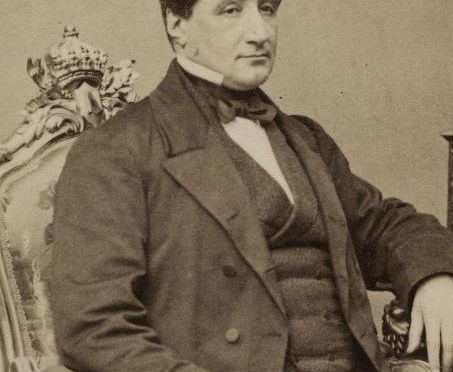
How does an aristocrat – a man born into privilege and titles, the nephew of one of the most powerful leaders of Europe – become one of the most important researchers of the Basque language? Louis Lucien Bonaparte, Napoleon’s nephew, extensively studied the regional variations of Euskara, establishing a critical map of the dialects. While he also studied other languages, including the Celtic languages, his work on Euskara was particularly profound and seminal.
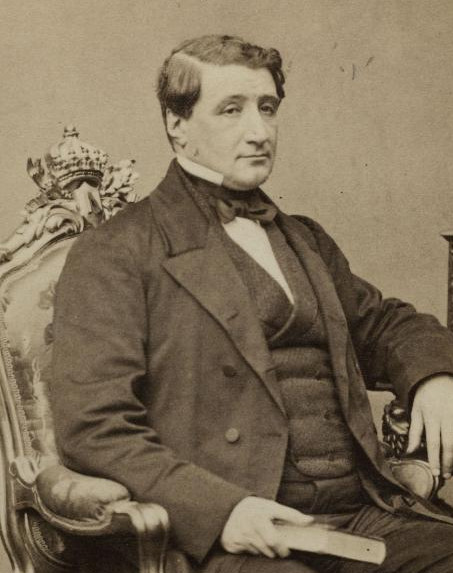
Primary sources: Estornés Lasa, Bernardo. Bonaparte, Louis-Lucien (1813-1891). Auñamendi Encyclopedia. Available at: https://aunamendi.eusko-ikaskuntza.eus/en/bonaparte-louis-lucien-1813-1891/ar-32829/; Louis Lucien Bonaparte, Wikipedia;


A few nights later, Kepa found himself at the base of de Lancre’s tower. Kepa had wondered why they didn’t wait for a new moon, but everyone had told him that the streets were too well lit for there to be any advantage. He looked up at the moon hovering above them and noticed some strange lights coming from it. Nudging Latxe in the side with his elbow, he pointed to the moon.
“What are those lights?” he asked.
“Those?” she asked, looking at him quizically. “That’s the Chinese colony. Everyone knows that.”
“There is a colony on the moon?” Kepa asked incredulously. And then, with excitement growing in his voice, he added “That’s so cool! Maite is going to be flabbergasted!”
Latxe shook her head. “Some day, you are going to have to tell me where you really come from.”
Kepa gave her a sheepish grin before changing the subject. “So, how do we get in again?”
Latxe pulled out what looked like to Kepa a small phone or tablet. “With this,” she said, “we can hijack the nanobots within a small radius.” Her finger danced across the face of the screen, touching and highlighting various symbols and icons that Kepa couldn’t decipher. She ended with a sweep of her finger in a circle and then a sudden motion upward. Within moments, an opening appeared in the side of the wall. Latxe stepped through, beckoning Kepa to follow her.
“That’s amazing!” he said as he watched the opening disappear as if it never existed.
“The nanobots are pretty cool,” she admitted. “I can’t imagine life without them.”
“But, they are everywhere, right?” asked Kepa. “Isn’t that a little… creepy?”
Latxe shrugged. “I don’t know. They’ve been around all my life, working in the background, keeping things clean and making sure that we have the right infrastructure for the current population. None of us have any material needs since the nanobots provide everything we might want.”
“Are they all over us too?” asked Kepa with a shiver, absentmindedly brushing off his arms.
“They are programmed to stay off of living beings,” said Latxe. “I mean, if you wanted a change of clothes, they could make that happen, but only touching the fabric and not you. I guess that is one step too far for most of us.”
“What do you mean, ‘most of us?’”
“Well, there is a whole counterculture where people actually hijack the nanobots to force them to modify their own bodies. I’ve seen a few people whose faces constantly morph as the nanobots reconstruct their facial features. One moment they might be an African woman and the next a Nordic boy. Others have the nanobots cover their bodies in metallic scales, literally transmuting their skin into metal.”
“Won’t that kill them?” asked Kepa in shock.
“The nanobots also compensate for any damage they do, providing the body with just enough medical aid to counter the effects of these changes.” Latxe shrugged. “I’ve thought about it myself, about having the nanobots change me, but I haven’t thought of anything I wanted bad enough to go through with it.”
“This place is so weird,” said Kepa under his breath.
“Not as weird as you, my friend,” said Latxe with a chuckle. She looked down at her device. “Come on, we have a long ways to go.”
If you get this post via email, the return-to address goes no where, so please write blas@buber.net if you want to get in touch with me.

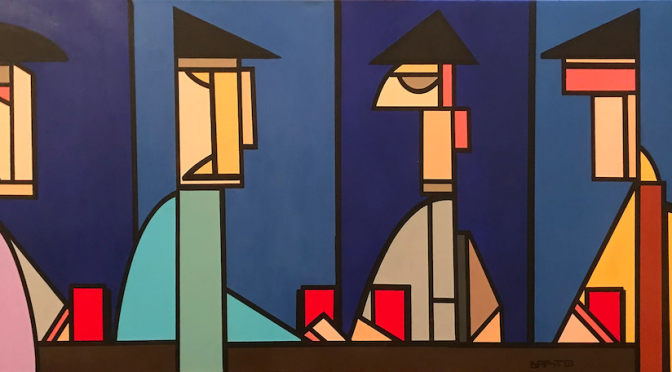
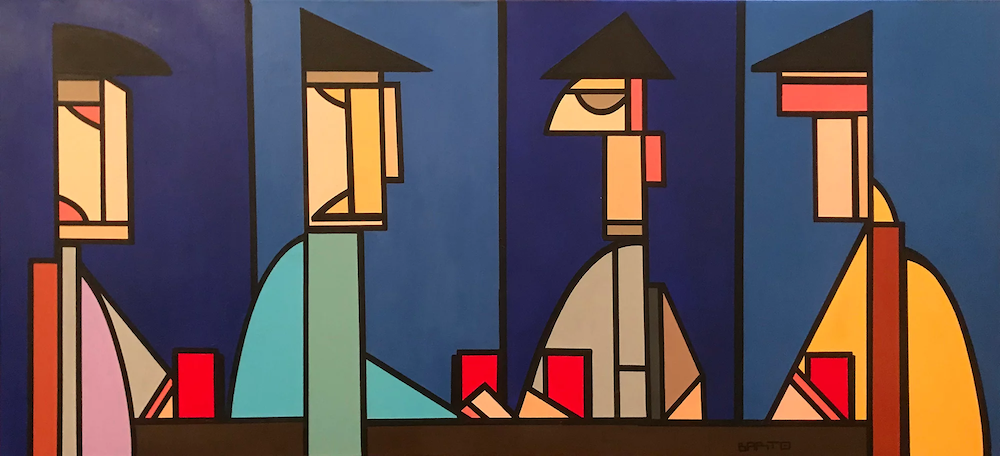
I just discovered Bertrand Linne and his art. He’s from Hendaia. His art is very geometrical. It’s just great, capturing the essence of his subjects with lines and a few colors. Every image looks like a stained glass window. Ikaragarria da!

One of the challenges I had when I tried to learn Euskara in Donostia was that I was learning Batua but when I went to visit my dad’s family, they spoken the Bizkaian dialect and I had a hard time understanding them. When I told my dad about it, he nodded, saying he couldn’t understand the Basque from Iparralde. Indeed, it almost seems that every valley, every baserri, has its own dialect of Euskara. One of the goals of standardizing Basque is to make communication in the language easier, but of course that comes with loss of richness of the language.
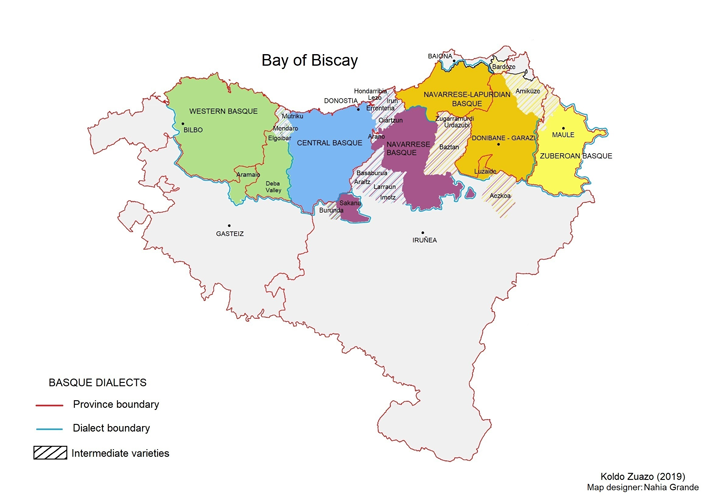
Primary sources: Auñamendi Entziklopedia. DIALECTO. Available at: https://aunamendi.eusko-ikaskuntza.eus/en/dialecto/ar-44516/; Basque dialects, Wikipedia; Euskalkiak.eus

Kepa and Latxe were back at the baserri, sitting at a table with Olatz/Marina and a few other of her acolytes. To be honest, Kepa wasn’t quite sure how to think about Olatz’s followers. They seemed to blindly follow her direction, but he had to admit that their cause seemed just, at least as far as he understood it. Is a demogauge ok if they are pointing people in a good direction?
Kepa decided to table that thought for the moment. It would prove a fruitful and interesting discussion point with Maite sometime when they were bored, sitting in some bar somewhere waiting for the next mission to chase a zatia. For the moment, he was focused on making that a reality, to find Maite and the zatia and escape this bubble.
Looking across the table at Marina (he could tell she was in control because of the slight distance in her eyes), he asked “How do we free Maite?”
Marina looked back at Kepa and he could tell that she was supressing a sigh. It seemed to him that she would be happy enough letting Maite rot with de Lancre if she could win her revolution. He wasn’t so sure that Marina cared to pop this bubble.
“Well,” began Marina, speaking in Olatz’s voice, “we need to get into that tower. I’m sure Salazar is holding Maite there.”
“How can you be so sure?” asked Kepa.
One of Olatz’s eyebrows raised. “Let’s just say that he has a fondness for a certain type of young women. He’ll keep her close.”
Kepa grimmaced. He couldn’t image de Lancre’s hands touching Maite, not that he thought she would ever allow it.
“Fine. How do we get into the tower?”
Olatz/Marina looked at the others around the table. Some shook their heads, others simply looked down at the table. No one offered any ideas.
“Well,” started Latxe after an agonizing silence. “We could use the nanobots.”
“Go on,” said Olatz after Latxe had paused.
“Just like we do here. We can use the nanobots to create temporary doors into the tower and stairs between floors. We can also use them to disguise us from any monitoring equipment.”
“Excellent!” exclaimed Kepa, smacking his hands on the table as he stood up. “Goazen. Let’s go!”
“Hold your horses,” said Olatz in a stern voice. She turned to Latxe. “But…?” she asked.
Latxe smiled weakly. “But,” she said, “we only have the ability to hijack a relatively small number of nanobots. Only enough for one, maybe two, people.”
“What?” exclaimed Jorge. “Two people to storm Salazar’s tower? Are you insane?”
“We aren’t storming it, exactly…” began Latxe as her voice trailed off.
“It’s suicide!” continued Jorge. “Even with the nanobots covering your tracks, it would only be a matter of time before they failed or you ran into humans that couldn’t be deceived.” He turned to Olatz. “Tell them, Olatz!”
“What else can we do?” asked Olatz.
Jorge threw up his hands. “If they get caught, and reveal our ability to hijack the nanobots, we are all screwed.”
“Do you have another idea?” asked Latxe, defiantly.
Jorge stuttered, looking first at Olatz, and then Latxe. He then looked at Kepa and saw the hope on his face. His own face fell.
“No,” he said, glumly.
If you get this post via email, the return-to address goes no where, so please write blas@buber.net if you want to get in touch with me.