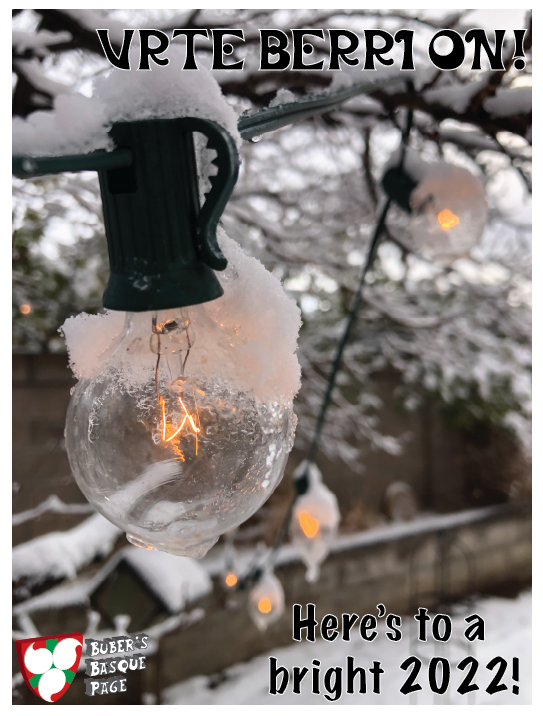
Urte Berri On!


It was late, almost two in the morning, when they finally left the club.
“It’s been so long since I went dancing like that,” said Maite, her cheeks flush from the heat and physical exertion. She sighed as a gentle breeze hit her face.
“You guys have great clubs over there,” replied Javi. “Why aren’t you dancing every weekend if you like it so much?”
Maite shrugged. “Life just gets in the way, I guess.”
“That, and some of our cuadrilla don’t like to dance so much,” added Kepa. “They prefer to listen to the metal bands at the fiestas.”
Javi nodded. “I can appreciate that too. But, it seems there would be room for both.”
“Javi’s played me some Basque metal,” said Julie. “I don’t understand a thing, but I really like the music.”
“When you come over, we’ll take you on a little tour of the fiestas,” replied Kepa. “We’ve got some friends in one of the bands. They aren’t well known yet, but they are really good. At least, I think so.”
“Sounds like a date!” said Julie as they began the walk back to Javi’s place. They had decided to leave Javi’s car downtown as they had all had a few drinks. And Javi’s place wasn’t so far away, only thirty minutes walking.
“It’s nice to be walking,” said Javi. “We rely on our cars too much. I liked that about the Basque Country, how people walk to things a lot more.”
“Well,” replied Maite, “our towns are a lot more compact and vertical. It’s a lot easier to walk to the store or the pub from our homes.”
“True,” continued Javi, “but it’s still nice to just walk.”
They reached an intersection and Javi pushed the button to activate the crosswalk. As they stood there waiting, the calm night sky was suddenly interrupted with a loud “Bang!” Kepa immediately fell to the ground, his eyes wide in panic.
“Lasai!” said Javi as he knelt down next to his cousin. “Calm down, it was only a car backfiring.”
Kepa got to his feet, his legs weak, his face wet with sweat. “Barkatu,” he said, his voice small. “I guess I’m still not over from when I got shot.”
“Got shot?” exclaimed Javi incredulously. “When did that happen? I didn’t know you got shot!”
A new look of panic crossed his face as Kepa looked over at Maite, his eyes pleading.
“Ehm,” said Maite, searching for something to say. “It was in a play,” she said at last. “Kepa had a part where he got shot. They made it look very convincing. His ama fainted when she saw him get shot and fall to the stage. I think the alcohol and dancing must have confused him, made it seem like he was back in the play.”
Javi gave first Maite and then Kepa a wary look. He shook his head. “There’s something strange going on with you two,” he said as he led the cuadrilla across the intersection.
If you get this post via email, the return-to address goes no where, so please write blas@buber.net if you want to get in touch with me.

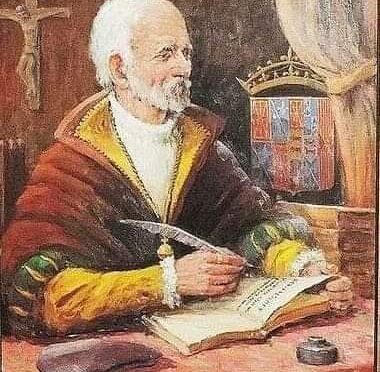
As compared to its neighbors, the Basque language was standardized only recently, in the 1970s. The challenges in standardizing the language so that all Basque speakers could communicate with one another was expressed by Joanes Leizarraga, one of the first to attempt the task. One of the first to refer to the Basque Country in print as heuscal herria, he said “everyone knows how the manner of speaking almost changes from one house to the next in the Basque Country.” While it took centuries more for Basque to be standardized, Leizarraga’s translation of the New Testament was a critical first step along that path.
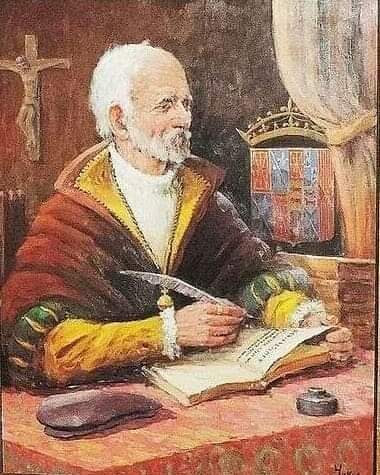
Primary sources: Zuloaga San Román, Eneko. Leizarraga, Joanes. Enciclopedia Auñamendi; Available at https://aunamendi.eusko-ikaskuntza.eus/es/leizarraga-joanes/ar-80231/; Joanes Leizarraga, Wikipedia

Before long, dinner came and went. As they were finishing up, Javi looked over at his cousin and Maite. “Are you still up for dancing?”
Kepa looked over at Maite who simply smiled and gave him a slight nod. Kepa beamed as he turned back to Javi. “Bai! Noski!”
Javi led them out of the restaurant and across the street. “There aren’t many good places to go dancing around here, but we’ve found them all. This is our favorite.” He smiled at Julie.
There was a small cover to get into the club, which Javi paid for all of them. Inside, the lights were dim and the room filled with bass. There were tables on the sides surrounding a dance floor that was lit up with a disco ball above them. Maite couldn’t help but think of the clubs they would hit when she was a teenager. It had been so long since she’d gone out dancing. Kepa more felt than heard her sigh.
“Is everything ok?” he asked, almost yelling into her ear to be heard. “We can go if you want.”
“No,” she yelled back. “I’m good. It’s just been so long since I’ve been dancing like this.”
Kepa nodded. “I know what you mean.”
They found a small table in one of the corners. Kepa and Javi went to the bar to fetch drinks, leaving Maite and Julie at the table. They sat next to each other so they could hear themselves over the music.
“I’m so happy for Javi,” said Maite. “You really make him happy.”
Julie smiled. “He’s just so great. I’m so glad we found each other.” Julie looked up toward the bar and saw Javi looking back at her. Her smile widened. Turning back to Maite, she continued. “Kepa seems like a great guy too.”
Maite nodded. “He is. We’ve been friends forever, but only recently decided to make things more.”
“What happens if you go to Berkeley?”
Maite’s shoulders slumped a bit. “I don’t know. He says he would come out with me, but I know he needs to help take care of his mom. I think it would be hard for him. And I don’t think I could ask him to do that.”
“He’s a big boy,” replied Julie. “He can make his own decisions. And,” she said, nodding toward the bar, “the way he looks at you, I don’t think you could keep him away if you tried.”
Maite looked over and saw Kepa looking at her, a large smile on his face as he talked to Javi. Maite’s heart fluttered just a little.
If you get this post via email, the return-to address goes no where, so please write blas@buber.net if you want to get in touch with me.

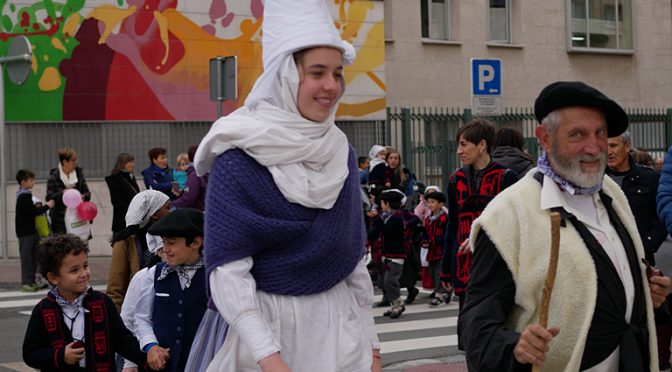
These days, Olentzero, the Basque “Santa Claus” who brings gifts to children during Christmas, is reasonably well recognized in the Basque diaspora. He not only visits children in Euskal Herria, but can often be found in Basque clubs in the United States, South America, and elsewhere. Even the New Mexico Euskal Etxea, back when it was active, saw Olentzero come for a visit at one of our Christmas parties. Less well known is his companion and accomplice, Mari Domingi, who is often found at Christmas celebrations in the Basque Country.
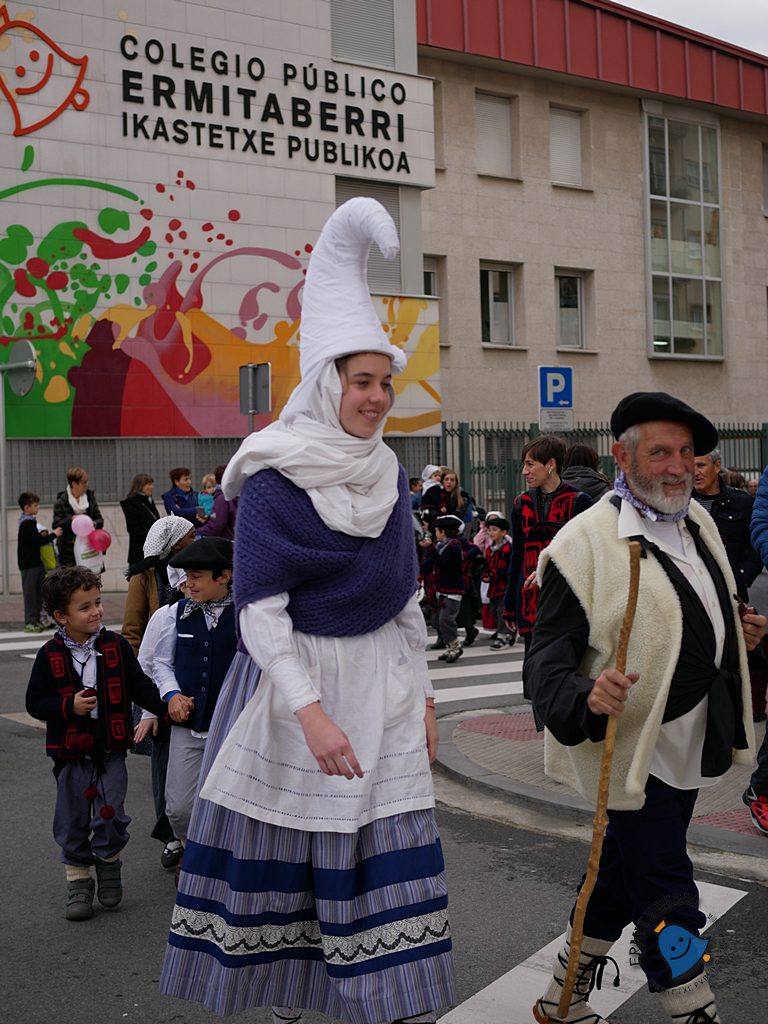
Primary sources: Mari Domingi, Wikipedia

After lunch, the small cuadrilla wandered to some of the wine tasting rooms that dotted downtown. At each stop, they got a small glass of wine, just for tasting, before moving on to the next one. It really reminded Maite of the txikiteo of the Basque Country and she felt more at home than she had since they had left the Basque Country.
“So,” she heard Kepa asking Julie, “when is Javi going to bring you to the Basque Country?”
Julie shrugged. “Good question.” She turned to Javi. “When are we going?” she asked with a mischievous smile.
“Well,” began Javi, “we haven’t really talked about it. With school and everything else, there just hasn’t been time to think about a trip like that.”
“We can make time,” replied Julie. “It would be nice to go when these two are still there, before they end up over here.”
“That’s true,” said Javi. He turned back to Kepa. “I guess as soon as we can,” he said with a big smile.
“Everyone will be happy to see you again,” said Kepa. “It’s been a while, hasn’t it?”
“Maybe five years, at least,” replied Javi. “Before I started school, that’s for sure.”
Maite turned to Julie. “Just be careful. Knowing his mom -” she nodded in Kepa’s direction “- you’ll literally be eating the entire time you are there.”
Javi laughed. “That’s for sure! Every time I went, I must have gained at least ten pounds. Everyone thinks that the long lunches are for siesta, but it seemed that you all eat the entire time.”
“Bah,” said Kepa, waving his hand dismissively. “That’s only for visitors.”
“Well,” continued Javi, “since I’m always a visitor, that’s all I see.” He turned to Julie. “They all want to play host and have this spectacular meal together, but when everyone wants to do that, well, it can really add up.”
“Tell you what,” said Kepa. “We can organize one big dinner with the whole family so that you can see everyone at once and don’t have to feel obligated to go to everyone’s house. That way, you’ll have time to see other things too. Maybe have a romantic getaway to the big city or something.”
Javi smiled as he looked over at Julie. “That would indeed be nice.” Julie simply nodded and smiled as she took another sip of her wine.
They stopped at a few more tasting rooms, each of them trying different wines and passing glasses around when they found a particularly nice one. The conversation drifted to Javi and Kepa’s family, what everyone was doing these days, particularly all of the cousins. Javi knew who everyone was and had a vague sense of what they had been up to, but was ignorant of the details – “There are just so many of them!” he exclaimed. Kepa was happy to fill in the gaps. Javi, in turn, caught him up on his parents and what they were doing.
If you get this post via email, the return-to address goes no where, so please write blas@buber.net if you want to get in touch with me.

You can do worse than having La Concha be the path you take to class. When I lived in Donostia, during my attempt to learn a bit of Euskara, I lived in the neighborhood Egia. While I often took the bus, when I wasn’t late and the weather was decent, I’d walk along the beach to the university – the building where our classes were held was just a few “blocks” away from the beach. Most times, I’d walk along the sidewalk above the beach, but once in a while I’d actually walk on the beach itself. It was certainly a magnificent view. As I walked along the promenade, little did I ponder the history of La Concha.
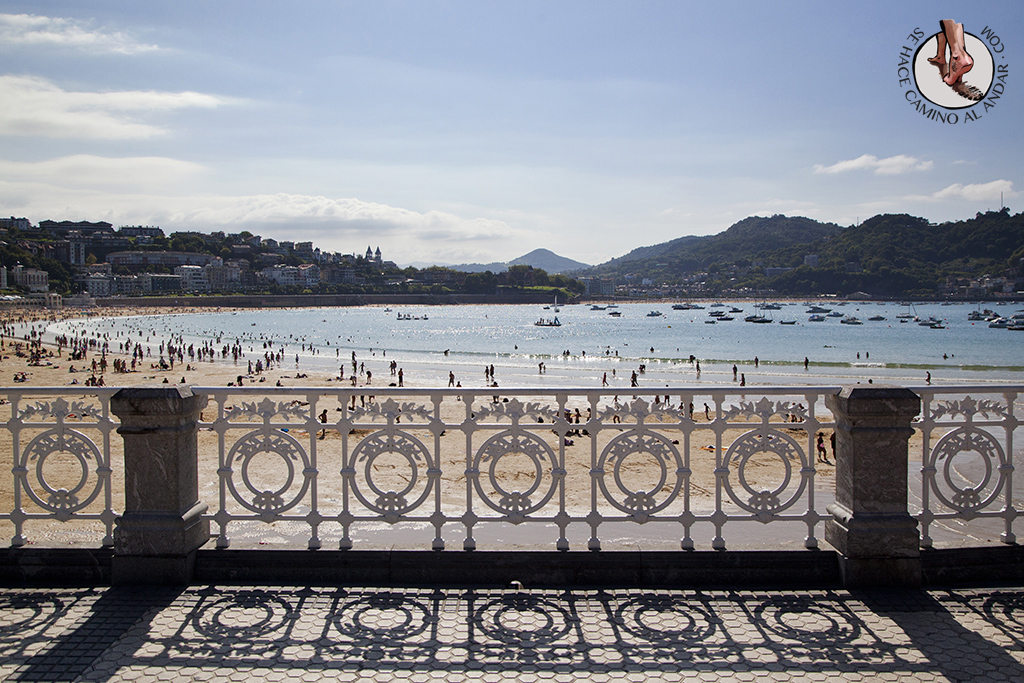
Auñamendi Entziklopedia. Paseo de la Concha. Available at: https://aunamendi.eusko-ikaskuntza.eus/es/paseo-de-la-concha/ar-31981/; Historia y curiosidades de la barandilla de La Concha, Se Hace Camino Al Andar; Bahía de La Concha, Wikipedia; Kontxa, Wikipedia.

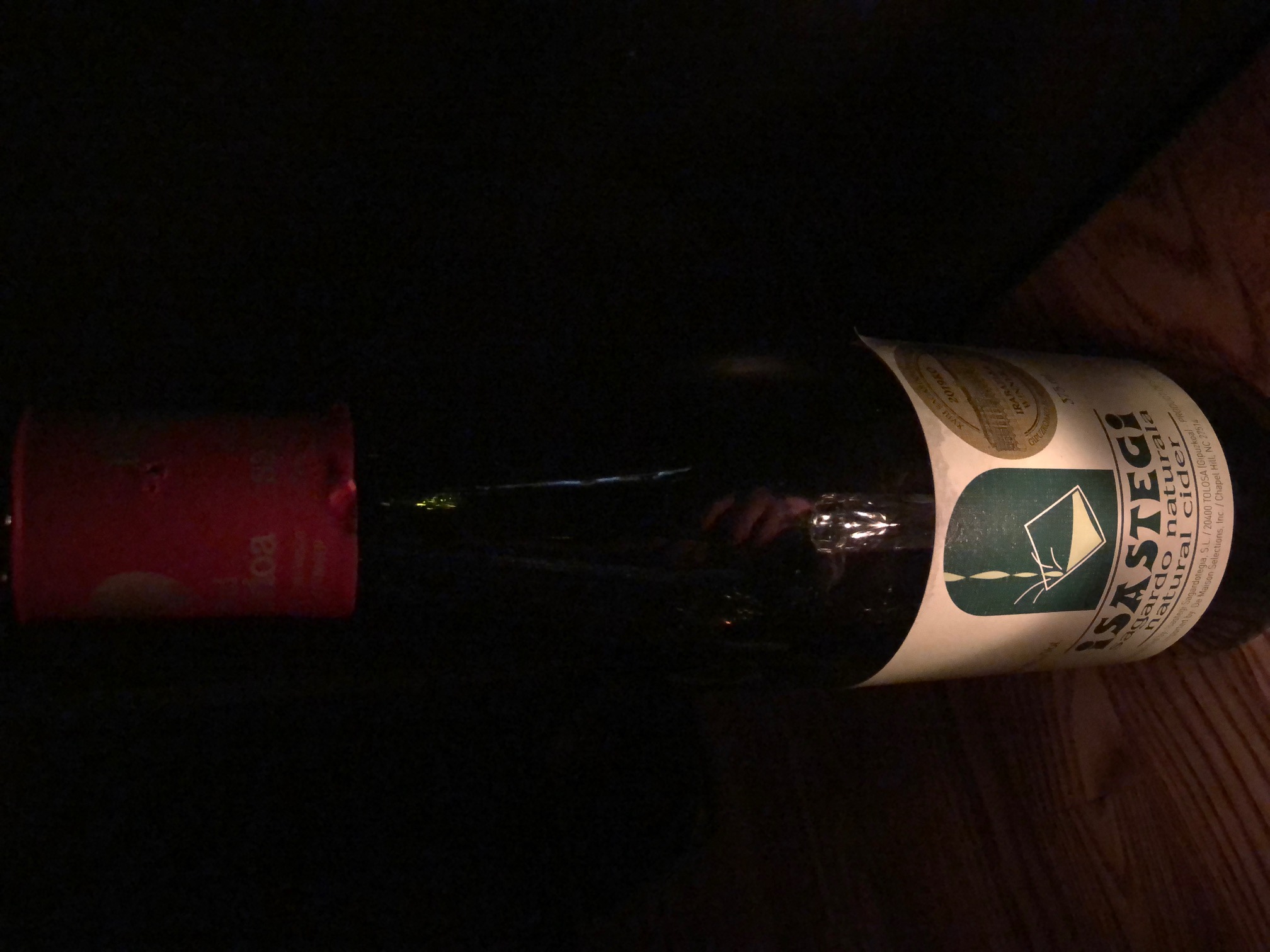

Soon, they all found themselves downtown. Javi led them to a small pub tucked in a corner.
“This is one of my favorite places. Low key, but good food. And good beer if you want it. Julie’s going to meet us here.”
As Javi checked in with the host, Kepa noticed a woman sitting at a table waving at them.
“Is that her?” he asked, pointing to the redheaded woman.
Javi smiled. “Bai, that’s her!”
Julie stood as they made their way to the table, her smile beaming. She was wearing a floral-print sundress that didn’t quite reach her knees. Her red hair was matched by freckles on her cheeks, making Kepa think she must have Irish ancestry. She gave Javi a hug and a kiss.
“Thanks for snagging a table for us!” said Javi after they broke their kiss.
“No problem!” She turned her attention to the other two. “You must be Kepa. Javi’s told me so much about you.” She gave Kepa a kiss on each cheek. “And you are Maite? Javi told me about his childhood crush on you; I understand why!” She gave Maite a kiss on each cheek as well.
“Mil esker…?” questioned Maite as she sat down. “Seems I’m the only one who didn’t know about Javi’s crush.”
Javi blushed. “Well, that was a long time ago. Now, Julie has my heart.”
“How are you liking California? It’s your first time here, right?” asked Julie.
“So far, it’s been great,” replied Kepa. “I admit, a bit more… how do you say? Rugged or less glamorous than what I expected from the movies.”
“Once you get away from the coast,” said Javi, “it’s like anywhere else. Ranches and farms, and no movie stars.”
Maite laughed. “We certainly haven’t seen any movie stars yet! Though Kepa is still hoping to bump into Jon Hamm.”
Julie returned her laugh. “So would I!” she said with a wink.
It was Kepa’s turn to blush. “It’s not like that…” he began.
“I’m just teasing,” interrupted Julie. She turned to Maite. “Javi said you were thinking about going to Berkeley?”
Maite shrugged. “Thinking about it. That’s why we came out here, so I could interview with one of the professors. And I think it went well. But, they haven’t made a decision yet. And, besides, I don’t know if I can leave my parents behind.”
“I can understand that,” said Julie. “It isn’t quite the same, but I moved here from Boston. All of my family is back there. It took me a while to get used to being out here on my own.” She reached over and squeezed Javi’s hand. “Having Javi has sure helped a lot.”
Maite nodded. “My parents are older and I would just hate to not be there if they needed anything. I’m an only child, so they don’t have anyone else to help.”
Javi shrugged. “It’s what my dad did, leave everything there behind to come out here. But it was hard for him. When his dad died, he couldn’t make it back for the funeral. I think that always gnawed at him.”
“It had to be so hard, coming out here to be a sheepherder,” said Julie.
“You have no idea,” replied Kepa, with an air of authority. Javi and Julie looked at him, quizzically. “Or so I imagine,” he sputtered.
Javi gave his cousin a strange look before continuing. “It’s funny, when my dad first came over, he’d call home maybe once a year. It was so expensive. But, now, he’s on his cell phone talking to his brother back home almost every day. It’s amazing how the world changes.”
“I agree,” said Maite. “It certainly wouldn’t be as hard for me to come out here as it was for people like your dad. But, it’s still far away.”
Javi nodded as the waiter came to take their orders.
If you get this post via email, the return-to address goes no where, so please write blas@buber.net if you want to get in touch with me.

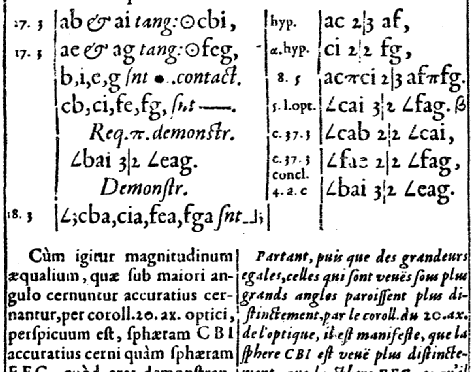
Not long ago, I posted about mathematician Pierre de Fermat and his possible Basque connections (spoiler: he had none). However, in reading about this Pierre, I discovered another mathematician who certainly did have a Basque origin: Pierre Hérigone. His greatest contribution to math was in further developing the idea that math could be conveyed in symbols, rather than local language, making it universal. So, all of you who hated sitting through high school algebra, you have people like Pierre Hérigone to blame. For a detailed account of Hérigone’s contributions to algebra, see Maria Rosa Massa Esteve’s article Symbolic language in early modern mathematics: The Algebra of Pierre Hérigone (1580–1643). (Ok, after this post, I’ll lay off the mathematicians for a while…)
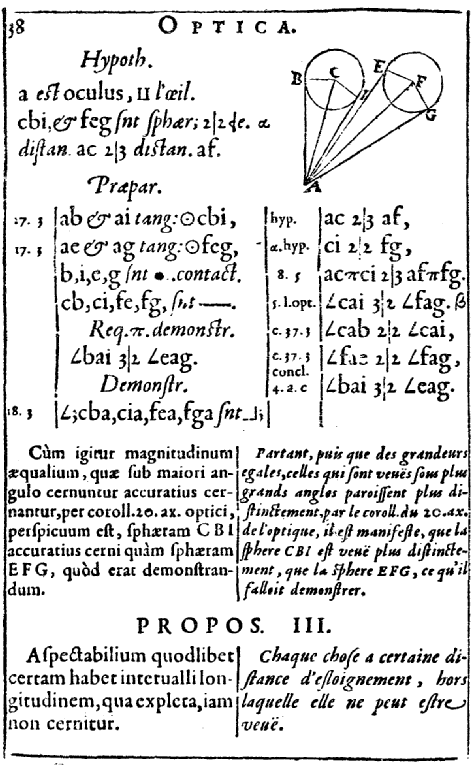
Primary sources: Pierre Hérigone, J J O’Connor and E F Robertson, University of St Andrews; Pierre Hérigone, Wikipedia.
