
Aupa Athletic!


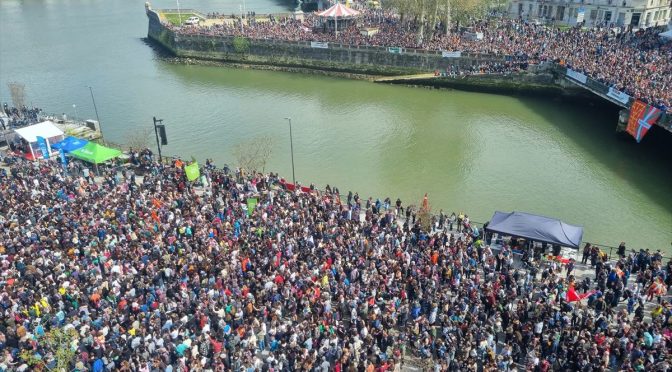
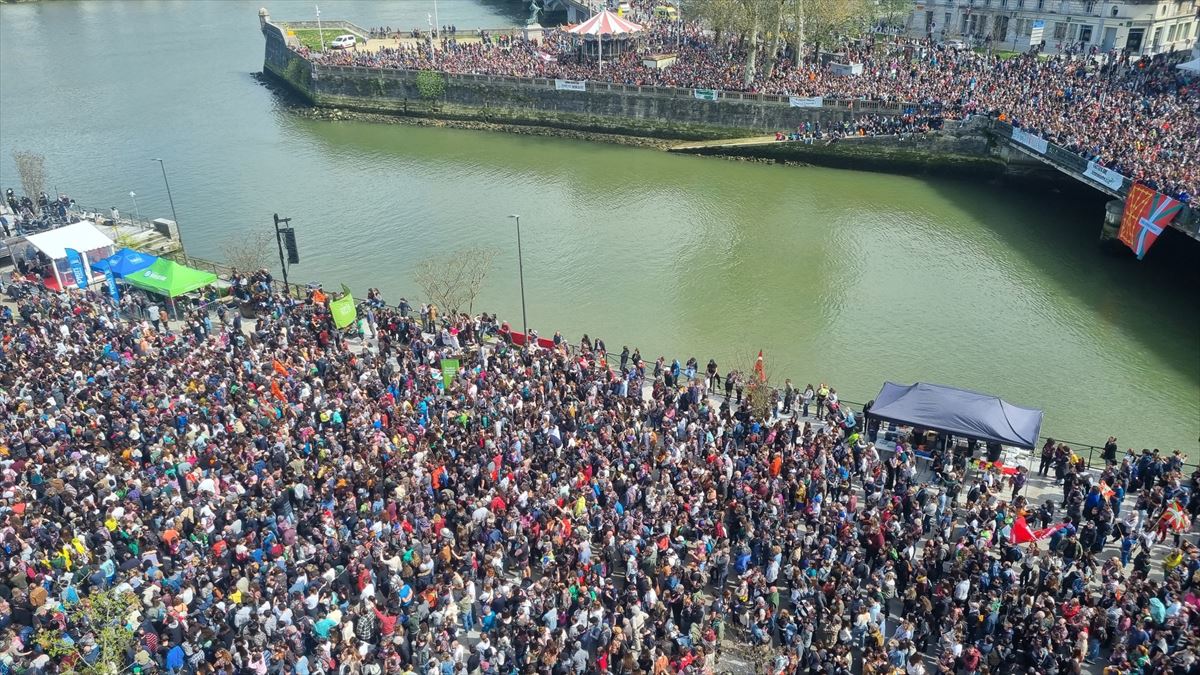
Earlier this month, the Basque Country witnessed what has become an amazing spectacle in support of the Basque language. Starting on March 14 in Irun and ending in Baiona after 11 days and more than 2,700 kilometers, thousands upon thousands of people ran across the Basque Country in support of Euskara. It is an event like no other in the world, though other places are trying to mimic its success. This is Korrika.
A full list of all of Buber’s Basque Facts of the Week can be found in the Archive.
Primary sources: Korrika, Korrika.eus; Korrika, Wikipedia
Thanks to Robert Uselton for suggesting this Basque Fact of the Week.

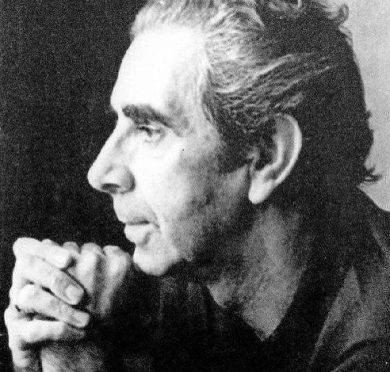
It is sometimes amazing that, despite the long history of the Basque language, we know so little about it. Since it wasn’t a written language for so long and other languages like French and Spanish dominated the regions, Basque didn’t receive much attention from scholars. At least, not until relatively recently. It was people like Koldo Mitxelena who turned things around, who not only studied the language, but made it a subject worthy of pursuit. Larry Trask called Mitxelena “the greatest scholar the Basque language has ever seen.”
A full list of all of Buber’s Basque Facts of the Week can be found in the Archive.
Primary sources: Koldo Mitxelena, Wikipedia; Estornés Zubizarreta, Idoia. Mitxelena Elissalt, Koldo. Auñamendi Encyclopedia, 2024. Available at: https://aunamendi.eusko-ikaskuntza.eus/en/mitxelena-elissalt-koldo/ar-79333/

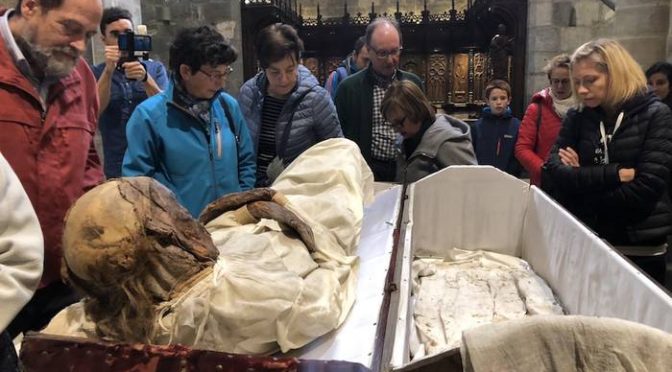
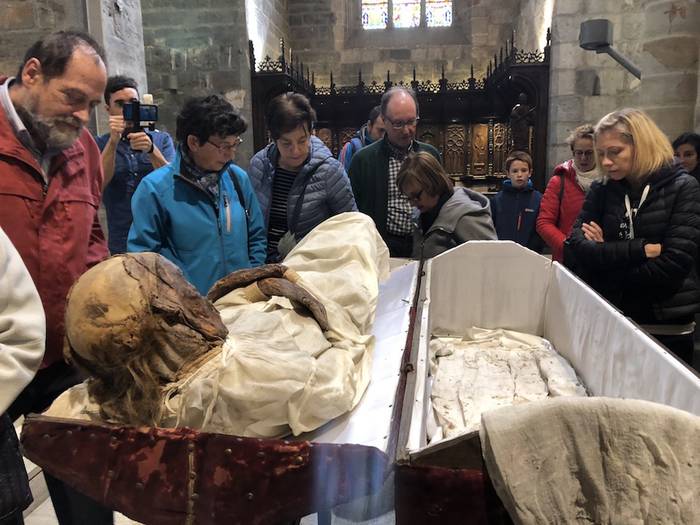
The paths I take to finding these facts of the week can be a bit tortuous, winding here and there, but they lead in the most interesting of directions. A few weeks ago, I posted about Inguma, the bringer of nightmares. One way to protect against Inguma is to say a short prayer to Santa Inés. It turns out, Santa Inés is a mummy, the remains of a woman who died in the early 1600s. And she isn’t the only mummy in the Basque Country – there are several. We don’t know the truth about all of them, but several are venerated for their healing powers.
A full list of all of Buber’s Basque Facts of the Week can be found in the Archive.
Primary sources: Antropologia, historia y creencias populares en torno a las momias conservadas en el Pais Vasco, Francisco Etxeberria, Angel Armendariz, José Angel Barrutiabengoa, Miguel Angel Carnicero, Lourdes Herrasti, Germán Tamayo, José Ignacio Vegas, Cuadernos de Sección. Ciencias Médicas 3, 11 (1994); Estornés Lasa, Bernardo. OTALORA, Inés Ruiz de. Auñamendi Encyclopedia, 2024. Available at: https://aunamendi.eusko-ikaskuntza.eus/en/otalora-ines-ruiz-de/ar-112905/; Una ‘amandre’ de 405 años by Kepa Oliden, El Diaro Vasco; Urzainqui Miqueleiz, Iosune. SANTA FELICIA. Auñamendi Encyclopedia, 2024. Available at: https://aunamendi.eusko-ikaskuntza.eus/en/santa-felicia/ar-126489/

“Paris?” asked Maite. “Why Paris?”

Kepa shrugged his shoulders. “Why not? I’ve never been and it seems like a pretty cool city.”
Maite nodded absentmindedly. “I’ve never been either. Ok, why not. How do we do this?”
“Let me show you.”
Kepa waved his hand in the air in a circle. At first nothing happened, but then the faint outline of a circle started hovering in the air before them, glowing dimly at first but, with each circling of his hand, it brightened. Soon, a glowing globe floated in front of them. Most of it was fuzzy, but Maite could clearly see the outlines of the continents. Kepa then sliced the air with his hand and seemingly pulled the globe apart. It flattened into a map. He then pinched his fingers and pulled them apart, and the area in front of them zoomed in. Maite could clearly see Donostia at the center. It was also the clearest part of the map – the further away she looked, the blurrier it became. But, she could make things out clearly across most of Spain and France, including Paris. There were pulsing white dots all over the map.
“Are those…?” she began.
Kepa nodded. “Yep, every one of those dots is a zatia.” He paused. “We have a lot of work to do.”
As they watched, one of the dots disappeared with a sudden flash.
“That was a bubble bursting,” said Kepa. “I can only guess that de Lancre found a zatia. Or Marina.”
“Seriously?” exclaimed Maite. “How often does that happen?”
“Not very,” replied Kepa. “Maybe once every few days.”
“Every few days?” Maite collapsed on the bed. “I can’t, Kepa. It’s too much. How can we keep up with de Lancre? There are so many…”
“And that’s why we don’t have to stress it so much. There are so many, so if he gets a few, what does it matter. There are so many more to get.”
“But if he gets enough…”
“Maybe, but for all we know those are another team that Marina has recruited to find zatiak. We might not be alone.”
Maite nodded. “That’s probably true. There could be a lot of others out there doing her bidding. Maybe they are the ones that found that zatia.”
“Maybe. Anyways, that’s why I think we should pick a place we want to go to and enjoy it a little bit before we search for the zatia, assuming of course that de Lancre hasn’t already corrupted the place.”
“That sounds like a good plan. So, Paris. When in Paris? I mean, what year will we be going there?”
Kepa shrugged. “If I can tell when the zatia are, I haven’t figured it out. So far, I can only see where, not when.”
“I guess as long as it isn’t in the middle of the French Revolution…”
If you get this post via email, the return-to address goes no where, so please write blas@buber.net if you want to get in touch with me.

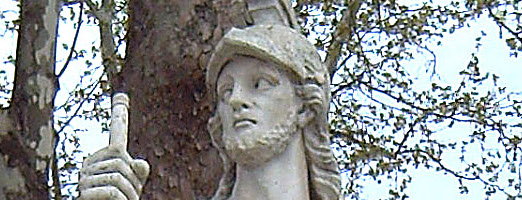
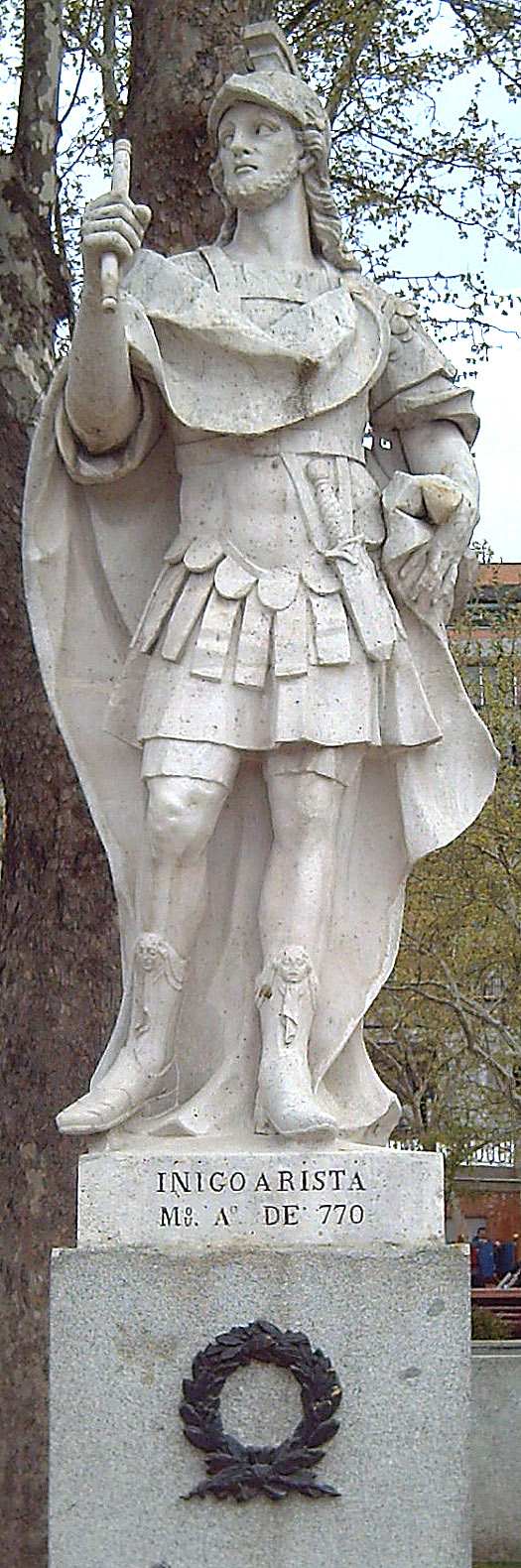
If there was a time when the Basques were unified as one political entity, it was under the Kingdom of Nafarroa, which started out as the Kingdom of Pamplona. The first king of Pamplona, Eneko Arista, founded the kingdom sometime around 824. His family was closely intertwined with the neighboring Banu Qasi family – indeed, the leader of that clan was Eneko’s half brother. Though not always friendly, they were often allies and it is said that it was their defeat of the Carolingians that led to the formation of the Kingdom of Pamplona.
A full list of all of Buber’s Basque Facts of the Week can be found in the Archive.
Primary sources: Estornés Lasa, Bernardo [et al.]. Íñigo Íñiguez Arista. Auñamendi Encyclopedia, 2024. Available at: https://aunamendi.eusko-ikaskuntza.eus/en/inigo-iniguez-arista/ar-52052/; Íñigo Arista, Wikipedia

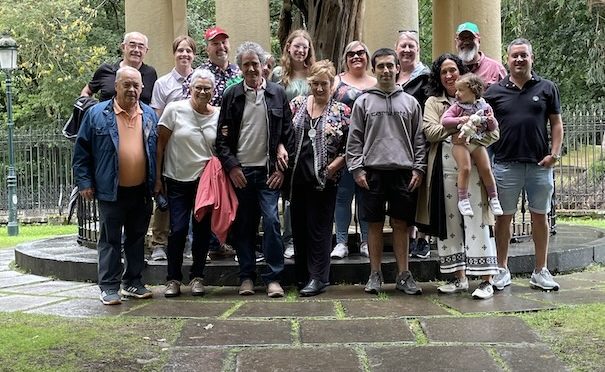
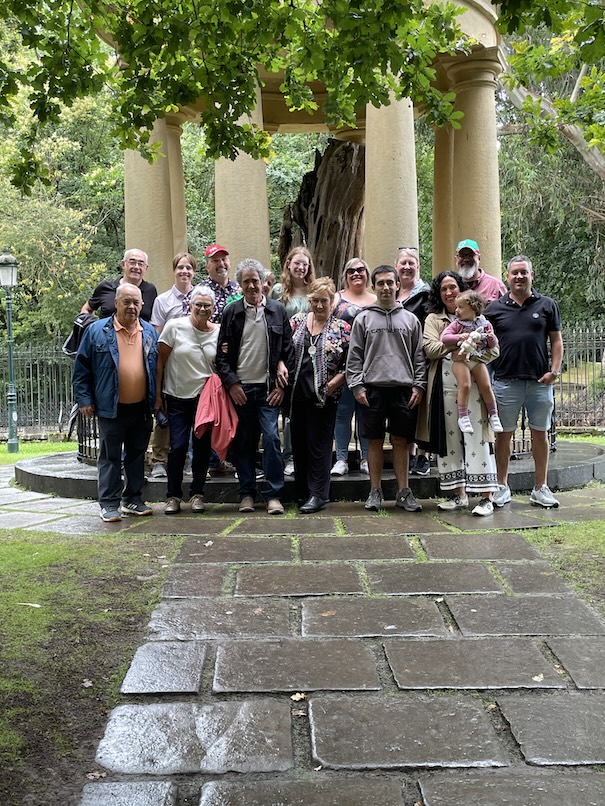
The Basque city of Gernika, in the heart of Bizkaia, holds a particularly special place in Basque consciousness. It is hugely important as a symbol of Basque rights and democracy, as kings would have to meet local leaders under the famous Tree of Gernika to swear to uphold the rights of the Basques. However, more recently, Gernika has become a darker symbol, a testament to the horrors of war when it was bombed by the German Air Force at the behest of Franco during the Spanish Civil War.
Primary sources: Castaño García, Manu. Gernika-Lumo. Auñamendi Encyclopedia, 2024. Available at: https://aunamendi.eusko-ikaskuntza.eus/en/gernika-lumo/ar-57197/; Guernica, Wikipedia

by Pedro Oiarzabal
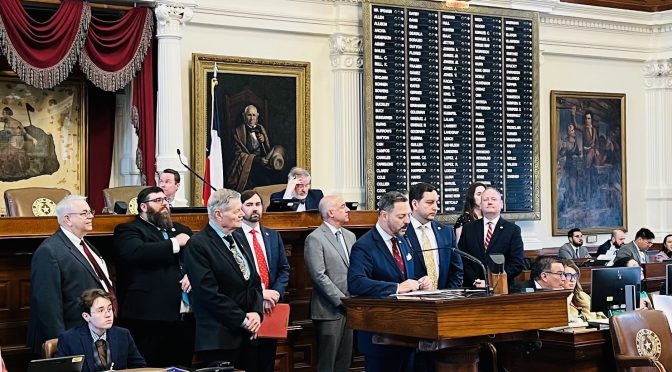
March 1 marks the first anniversary of the historical resolution that honors, for the first time in the history of the United States, our WWII veterans of Basque origin. The resolution was passed by the Texas House of Representatives, in Austin, thanks to the efforts of Representative Rafael Anchia (HD 103) and the Basque history association, Sancho de Beurko, with the enthusiastic support of the North American Basque Organizations (N.A.B.O.) and the Basque Educational Organization. The non-profit association Sancho de Beurko has led the research project, “Fighting Basques: Memory of WWII,” under the direction of Dr. Pedro J. Oiarzabal and Guillermo Tabernilla, since 2015. “Fighting Basques” is the first-ever systematic academic research on the contributions of WWII veterans of Basque origin in the U.S. Armed Forces and the Merchant Marines. As a result of their work, over 16,000 Basque WWII veterans have been identified so far – very little to nothing was known about most of these veterans prior to the research.
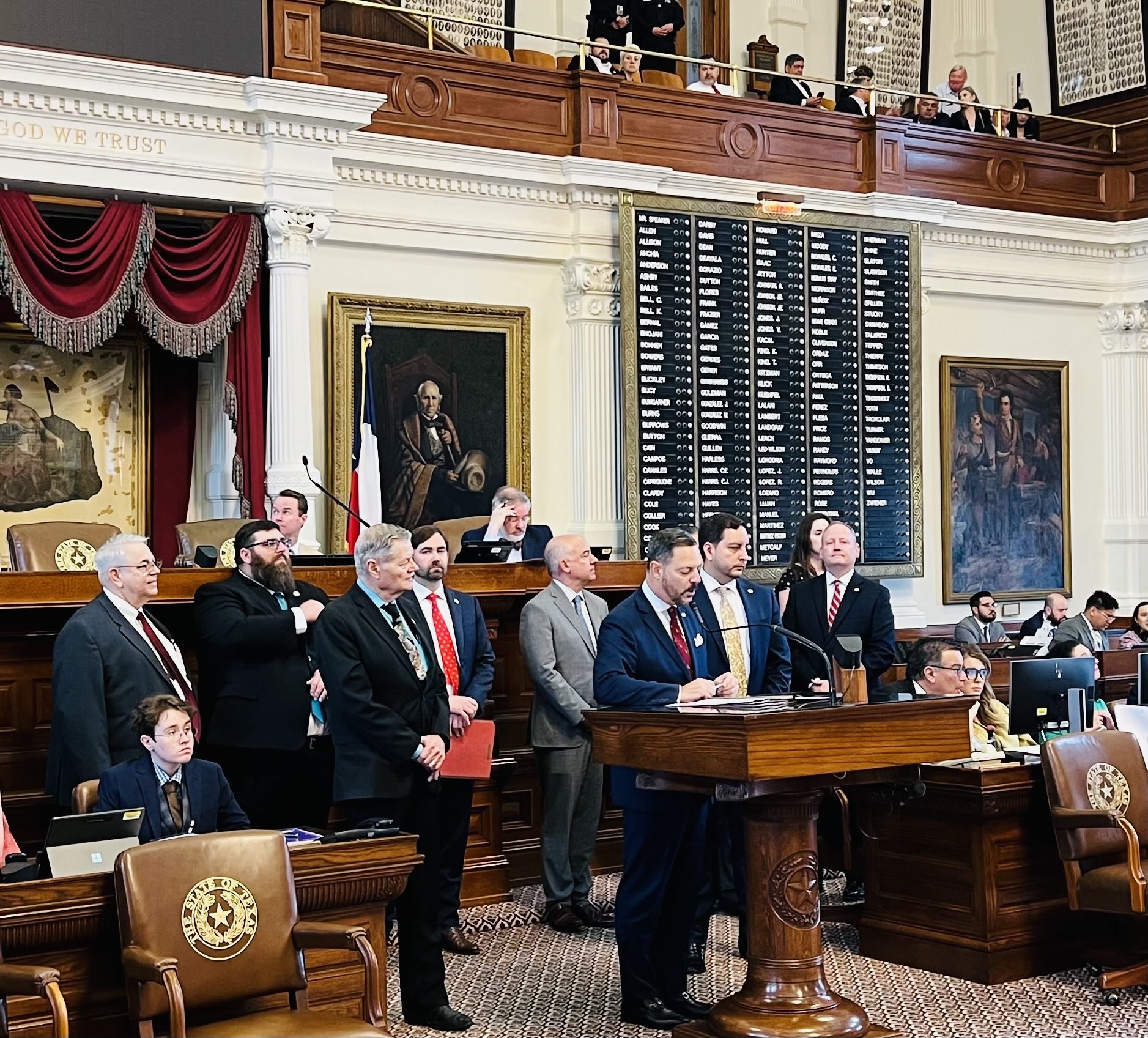
On the Texas House Floor, we witnessed one of the most memorable and heart-warming events in the recent history of the Basque American community. Also, for the first time, Basque was spoken on the House Floor.
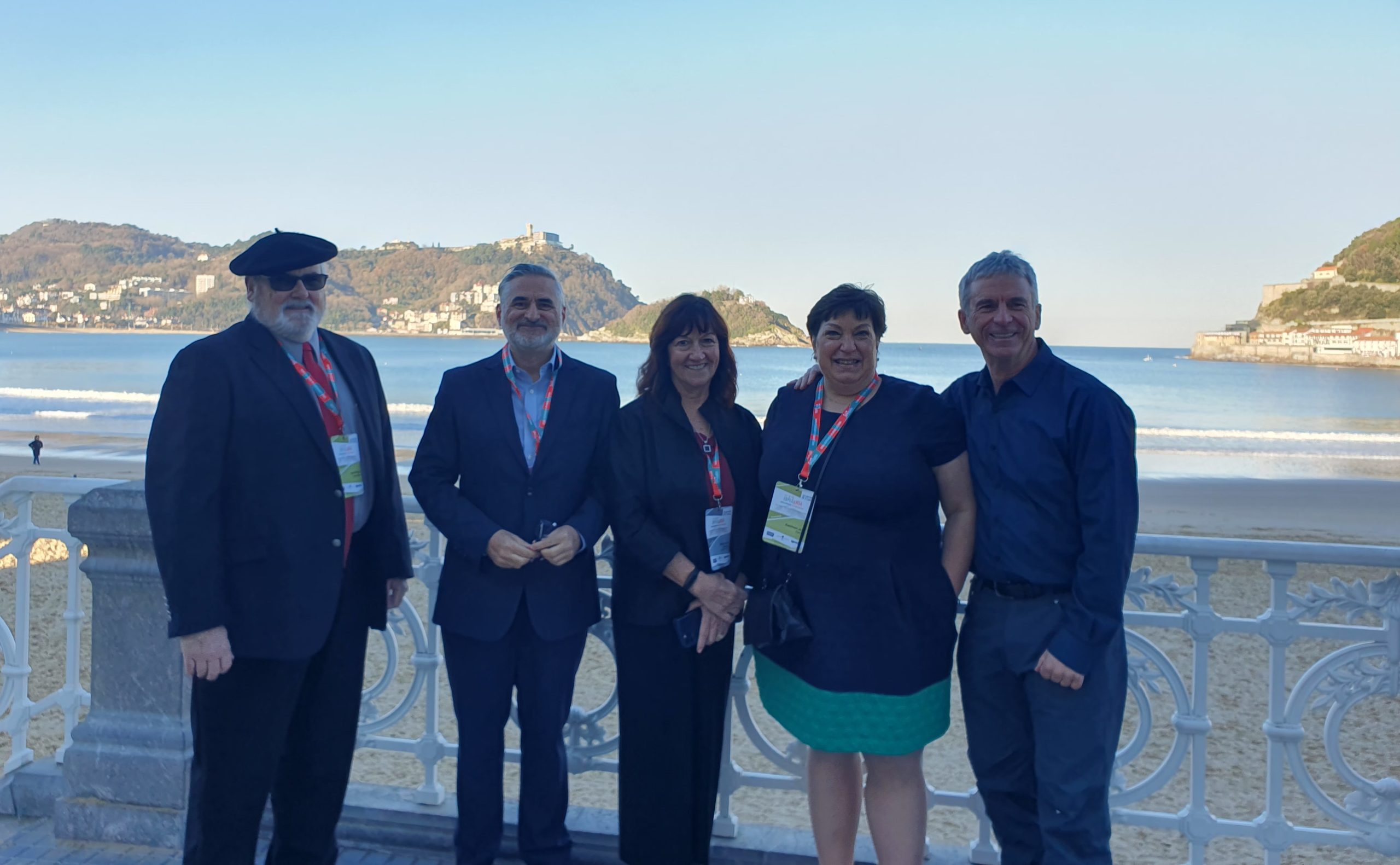
Two months later, in May 2023, during the Kern County Basque Club’s Memorial Day Weekend festival, N.A.B.O.’s delegates overwhelmingly approved the establishment of the Basques in World War II Memorial Special Committee, led by N.A.B.O.’s treasurer Mayi Berterretche Petracek, with the goal of assisting with the completion of the research of Basques who served in the armed forces during World War II and to explore the feasibility of the creation and installation of a memorial to these Basques. In November 2023, N.A.B.O.’s delegates ratified the Special Committee’s goals:
1. To seek funding to complete the research, by 2025-2026.
2. To establish the first official memorial site, under the leadership of N.A.B.O., for veterans of Basque origin who served honorably in every branch of the U.S. Armed Forces during WWII in order to recognize their unselfish service to the country, by the end of 2026, coinciding with the 85th anniversary of the U.S. entering war.
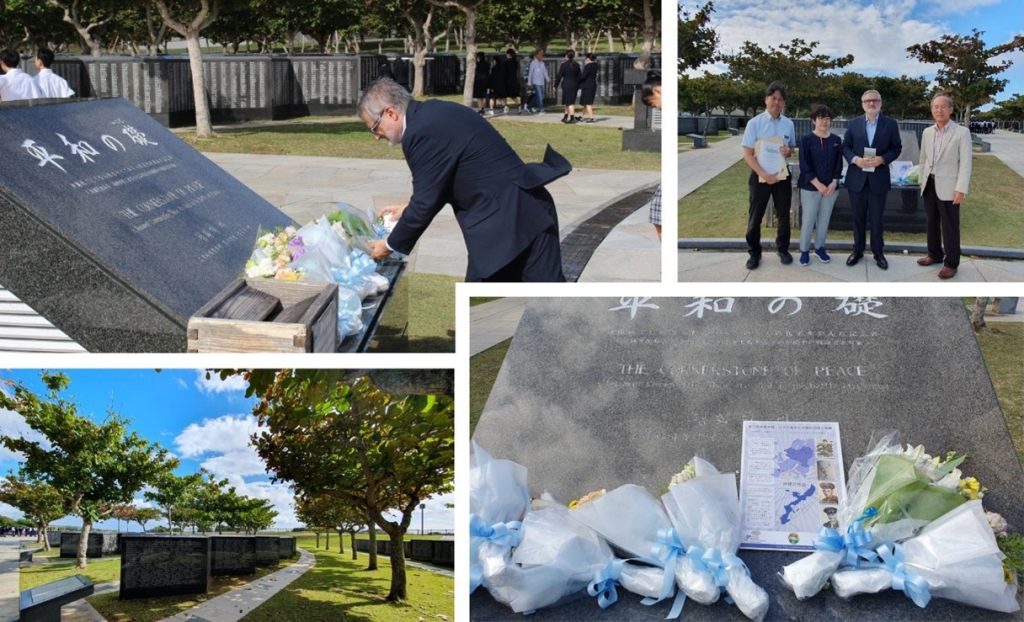
In the meantime, on December 5, 2023, a small ceremony took place at the Okinawa Peace Memorial Park’s Cornerstone of Peace monument on the Japanese island of Okinawa in which tribute was paid to all American veterans of Basque origin who died during World War II in the Pacific, with special recognition for those who perished on the island. They were over twenty young Basque-Americans, six of them killed in Okinawa. The Cornerstone of Peace monument features the names of over 240,000 who died during the fighting, from both sides of war. During the planning of the event, sadly we found out that none of the six Basque Americans were on the memorial wall. The Okinawa Prefecture requested from the U.S. government official evidence that the six Basques had died in Okinawa so that they could be included in the memorial. Well, we have some great news to share with you. In mid-February, the U.S. Army and the Department of Defense released all their personnel files to us, so we will be able to add their names to the monument in the near future.

Within the context of the 42nd anniversary of the San Francisco Basque Cultural Center’s festival, held on February 17-18, in an effort to complete the research and eventually establish a physical memorial to our Basque WWII veterans, N.A.B.O. launched a fundraising campaign. The goal is to complete research by 2025-2026, so that efforts could then turn to creating “The National Basque World War II Veterans Memorial.” In addition, Oiarzabal gave a public talk, entitled “A WWII Memorial for the Basque American Greatest Generation,” which was very well attended. Among the audience there were several families of veterans.
We strongly believe that the National Basque WWII Veterans Memorial will become a permanent testament to their lives, families’ histories, sacrifices, and contributions to the country. Please consider donating to achieve this noble goal. Remember, your contribution to support this important project is tax-deductible.
“Let no veteran be forgotten.”

After cocktails, the four of them wandered the old part of town, stopping here and there for pintxos and drinks. Kepa figured he might regret it the next day, but he tended to order kalimotxos to have that combination of caffeine and alcohol. In the moment, he felt like he could drink them forever, but he knew the morning would tell him otherwise. Still, he indulged himself.
Maite, on the other hand, was significantly more temperate. She didn’t have an exam coming up or any big homework assignment due, but she planned to spend the next few days in her new research group and she wanted to make a good impression. At the very least, she didn’t want to get on the wrong foot and on the bad side of her professor. Maite had heard that her professor, brilliant though she was, was also very demanding. Having done her graduate work in the United States, she expected long hours and even weekends, something that was almost antethema to the Basque way of life. In any case, Maite knew this was essentially a trial run and if she did not impress her professor, she’d likely have to find a new one.
Belen and Joseba seemed to have no cares. They ate and drank with abandon, as if tomorrow would never come. They were also all over each other – the public displays of affection were almost uncomfortable for Maite. While Joseba had said that his grandfather was from the Basque Country, Maite couldn’t help but wonder if his grandmother might have been Italian.
At one point, Belen seemed to notice Maite’s discomfort. She chuckled as she said “We’re sorry. It’s just been a little while since we last saw each other.”
“Oh?” asked Maite.
Joseba also chuckled as he dove in to give Belen a kiss on her neck. “I had to go back to Mexico for a few months. My mother had surgery…”
“I hope she is ok!” interjected Kepa.
Joseba nodded. “She is fine, but for a while it wasn’t clear she would be. My father needed some help around the business while my mother was recovering. But,” he added with a sparkle in his eye as he looked at Belen, “I’m back!” He grabbed Belen and pulled her tight against his body as she squealed in delight.
It was late when Kepa and Maite finally got back to their apartment.
“Ugh,” said Maite as she collapsed on the bed. “The morning is going to be here too soon. I feel like I could sleep for a week.”
Kepa lay down next to her on his side, twirling the curls in her hair. “I have an idea,” he began.
Maite looked at him. “Seriously? I just told you I’m dead tired. I don’t have the energy for…”
Kepa interrupted her with a “Shhh. That’s not what I was thinking.”
Maite sat up, intrigued. “What were you thinking then?”
“Well,” he said. “What if we escaped to one of the bubbles for a little while? It would be like a vacation, except we wouldn’t miss any time here.”
“Most of the bubbles seem to be a dystopian nightmare,” exclaimed Maite. “How would that be relaxing?”
“Well, they are that way because we keep searching out the zatiak. What if we just took a break and relaxed before the mission?”
“Huh.” Maite just sat there, staring off into space. “Did you just think of that?”
“No,” replied Kepa. “I’ve been thinking about it for a while. The bubbles offer us endless possibilities to explore new places without much risk.”
“Ok. I like it. But, how do we even find a bubble on demand? So far, we’ve just accidentally bumped into one.”
Kepa sat up excitedly. “So, I’ve been playing around with my powers while you’ve been at the uni. Up until now, we’ve only been able to find bubbles when we crossed paths with one. But, I think we can find any of them across the world with our powers. Well, at least the ones near us. I think that, as our powers grow, we might be able to reach more and more, but that is just a guess.”
“A nice hypothesis,” added Maite. “It’s worth a shot. Where should we go?”
Kepa’s smile widened. “What do you think about Paris?”
If you get this post via email, the return-to address goes no where, so please write blas@buber.net if you want to get in touch with me.

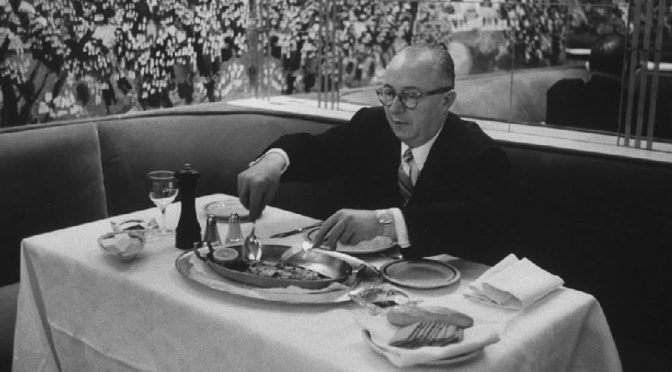
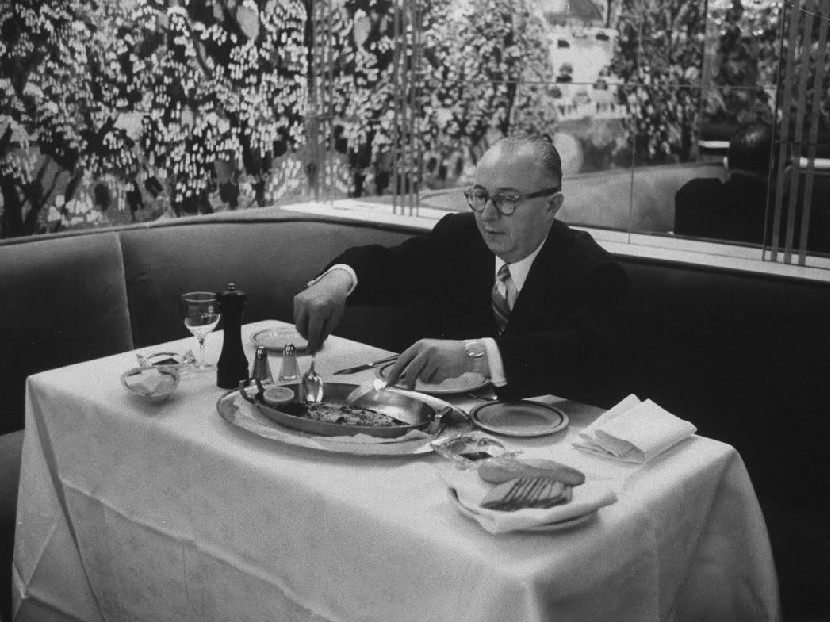
This one maybe goes in the “if” category. La Côte Basque has been in the news a lot lately. La Côte Basque is a chapter in an unfinished novel by Truman Capote named after a famed New York restaurant – it is about New York socialites and is being brought to the small screen as part of Feud: Capote vs the Swans. Of course, the name La Côte Basque is intriguing to someone who runs a blog about all things Basque. The restaurant was opened by Henri Soulé who was from very near the Basque Country. Several places refer to him as being Basque, though I’ve had a hard time definitively pinpointing if he was Basque or not. If anyone has more information, I’d more than welcome it. In any case, it is an interesting story and Soulé certainly lived and worked in the Basque Country.
Primary sources: Ten Restaurants That Changed America by Paul Freedman, Henri Soulé, Wikipedia; Dining at the Pavillon by Joseph Wechsberg
