Found in a French-themed restaurant in Ginowan, Okinawa, Japan.
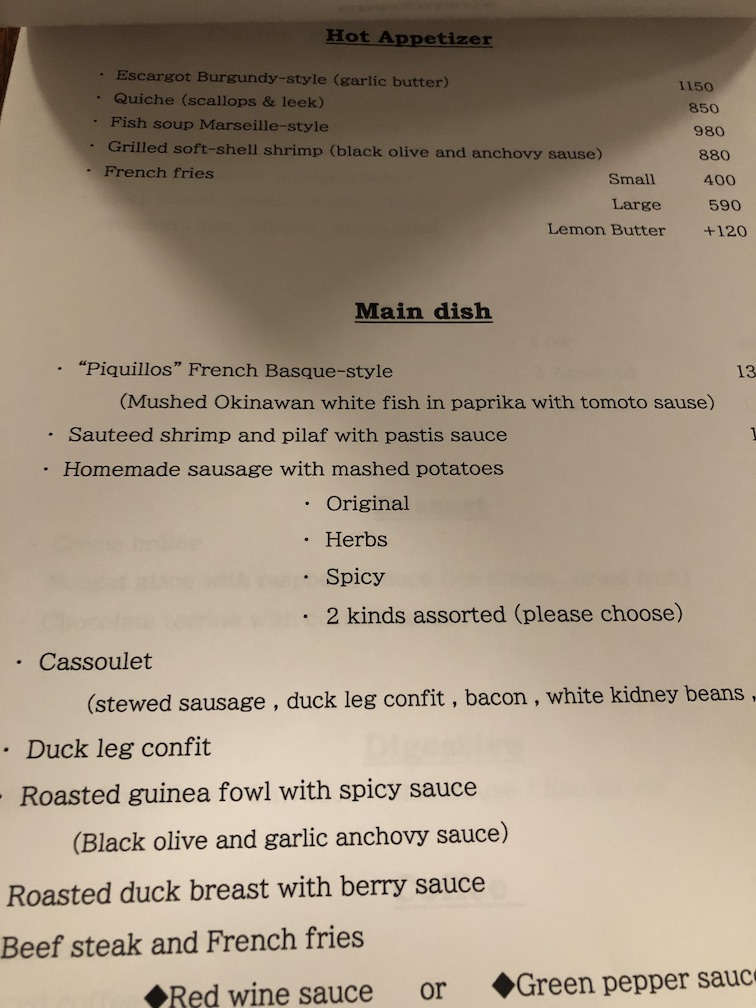

Found in a French-themed restaurant in Ginowan, Okinawa, Japan.

The Basque Country is well known for its cuisine. Building on a rich tradition of food — pintxos, txokos, fish, cheese, and more — Basques have also been leaders in pushing the boundaries of gastronomy. Two news stories popped up in my feed that exemplify both the importance of Basque cuisine and the leadership of the Basque Country in the world of food.
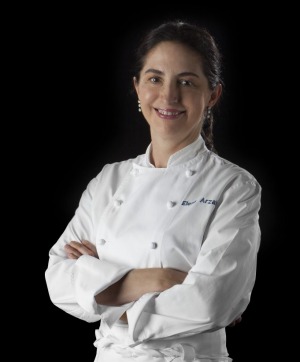
Elena Arzak is one of the two chefs — the other being her dad Juan Mari — that lead the restaurant Arzak, a three Michelin star restaurant and one of the top 50 in the world in 2018. In an article in GoodFood, she describes how important food is to the Basque culture. She highlights how the Basque Country’s distinct geography gives it the best of both the land and the sea and how that leads to a special relationship with food. The article highlights her own list of the best of the Basque Country, from avant-garde restaurants to craft brews.

Then there is Usune Etxeberria, a scientist who is pushing the frontier of so-called precision gastronomy, in which modern genetics are used to help develop very specific diets to help avoid disease while keeping the pleasure in the food. She and her colleagues have already shown how examining the gut microbe can be used to help develop diets that help prevent injuries in soccer players. They are also using artificial intelligence to complement these studies. The ultimate goal is to develop personalized menus that help combat disease specific to each of us.
Both women emphasize the life-long connection to food that being from the Basque Country brings. Whether it is developing world-class menus or specialized menus tailored to each of us, this connection is the foundation for revolutions in cuisine.

The Sanctuary of Arantzazu is nestled in the mountains just outside of the city of Oñati, famous itself for the University of Oñati, one of the oldest buildings in Iberia. Arantzazu is known for its uncharacteristic and distinctly modern look, “one of the most avant-garde religious buildings in the world“. The spires are covered in pointed stones evoking thorns while the entrance is overshadowed by abstract representations of the apostles. It was also the site of my uncle and aunt’s wedding.

Primary sources: Naiz (by Gara); Basque Country Magazine; Wikipedia; Mujika Aldasoro, Xabier. Santuario de Arantzazu. Oñati. Enciclopedia Auñamendi [online], 2019. Available at: http://aunamendi.eusko-ikaskuntza.eus/es/santuario-de-arantzazu-onati/ar-143208/

Nor Naiz, Gu Gara (Who I Am, We Are) is a series aiming to explore the meaning of Basque Identity around the world, both within Euskal Herria as well as in the diaspora. For an introduction to the series, look here, and for a list of the previous entries, look here. I started this series back in 2010 and am reviving it. If you are interested in contributing, let me know.
I am most grateful to Buber for giving me the opportunity to tell you why I am an Euskadunen Laguna. I was born in one of the few places in the world with an Ikurriña as part of its flag: the islands of St Pierre and Miquelon.

When I was a small child, my first exposure to the Basque language and culture was our famous Zazpiak Bat fronton right across from my elementary school in St Pierre, which we affectionately called the “Zazpi”. This massive concrete wall, probably the oldest in the New World, was a permanent presence in our lives: it was right at the end of the school yard. Every recess, we’d play near it. After school, the local Basque club would play Pala Ancha or Pelote and every August the Basque festival would bring music, games and joy to our town.
Although I am not of Basque extraction, save a great-grandmother named Detcheverry, many of my friends’ names were Basque: Daguerre, Delizarraga, Teletchea, Goicoetchea … Our islands have roots in Normandy, Brittany, Ireland and the Basque Country and everybody is a little of each. The Basque language disappeared in Saint-Pierre et Miquelon in the 1950s, yet nobody mourned its extinction; this was just how things were in a French Overseas Territory in the middle of the 20th century.
After graduating from high school, university studies meant packing my bags for France, a year at a time, and I chose to settle in the southwest city of Bordeaux for four years. Since I chose to study in the capital of Aquitaine, I ended up quite close to the French Basque Country. It was therefore, at the Université de Bordeaux, that I befriended a large contingent of Basque students from Hendaye, Bayonne, Biarritz, Behobie and St Jean de Luz. I spend many holidays in that part of France, often crossing over into Irun and Behobia and learning about the language, complex politics and traditions of the region and its peoples. I am to this day indebted to the people of that region for their hospitality and kindness. Often my friends would joke about making me an honorary Basque: “the paperwork is almost done” they’d say laughingly to anyone who queried.
Years later, when I moved to Toronto, Canada, I decided to pursue my interest in the history of the islands of Saint-Pierre et Miquelon only to discover the strong ties between my native islands and the French and Spanish Basque regions, from the 19th century fishing companies to the 16th century establishments that had been described by Martin de Hoyarçabal and Pierre Detcheverry Dorre. Through my research, I was able to demonstrate that the name of Miquelon had, in fact, been given to the great island by the Basques. One must understand that many place names in Newfoundland and the islands were also given by mariners from that country. From Placentia (Plentzia) to Port-aux-Choix (Portuchoa), Burin (Buru) to Barachois, and Lizardie, the Basque toponomy was inescapable. I also owe a great debt to Selma Barkham who introduced me to the works of Hoyarçabal.
To better understand certain archives and primary sources, I decided to learn some Euskara, only to realize the vast variety of dialects one can encounter in archives and other primary sources. To this day, I remain convinced archives from the Basque Country will yield more information related to the history of my islands and of the great fishing expeditions to the New Found Land. Decades later, the love affair continues and I shall always be an Euskaldunen Laguna.
Born abroad, with Irish, Scottish, Mi’kmaq and Acadian roots from Cape Breton, Nova Scotia, Marc Albert Cormier was raised in Saint-Pierre et Miquelon. After four years at Université de Bordeaux in France, he moved to Canada in 1992 and studied at the University of Toronto, obtaining a Bachelors in Education. For 10 years, Marc was a director of a nationwide education system for homework help working with a virtual office staff of 20 professionally trained teachers from across Canada which year-over-year increased usability stats for students desiring to get better grades in school. In September 2018, Marc moved to back to his teaching roots to inspire kids in math and science. For his work as a teacher, principal and project manager in education, Marc was awarded two knighthoods for his groundbreaking work in online education and his passion for maintaining one’s culture.

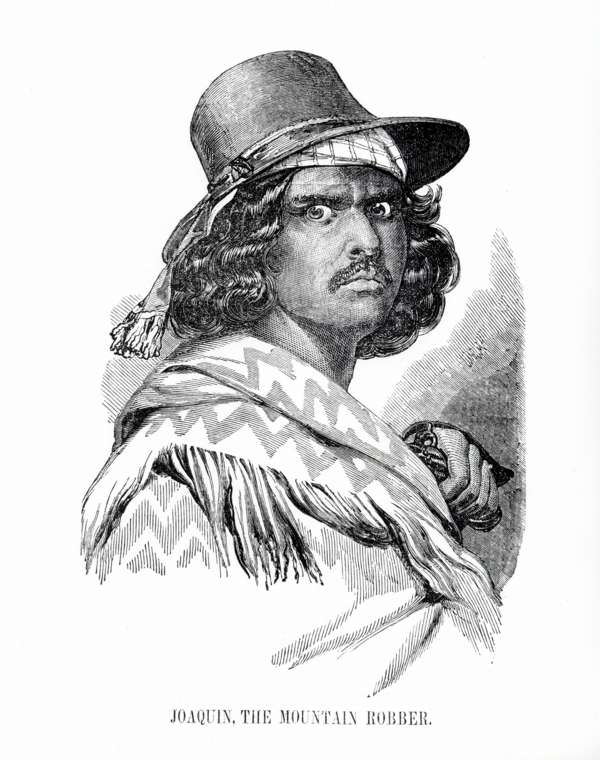
The US West is literally littered with Basque names. Basques came directly to herd sheep, but they also came earlier as part of the Spanish Conquest. One part of the conquistador legacy is the surnames that abound not only in the US but in other parts of the Americas. Murrieta, a name that possibly means “a place full of hazelnuts.” Though I doubt he knew where his name came from, Joaquin Murrieta terrorized California and was maybe the inspiration for the literary and movie character Zorro.
Primary sources: Santurtzi Historian Zehar; Wikipedia; HistoryNet.com; Stephen Andes’ Zorro’s Ghost.

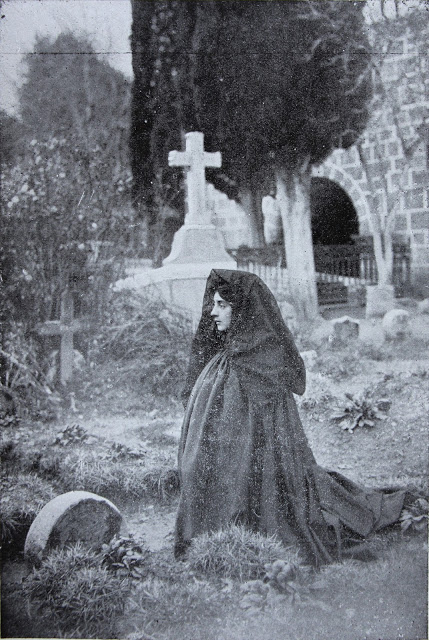
It is often said that the Basque people came to Christianity relatively late as compared to their neighbors in the rest of Europe. When they did, however, they did so with fervor and Catholicism is the dominant religion of the region. While only fragments of the pre-Catholic religion remain, they find their way into the practice of Catholicism in sometimes surprising ways. The Basque seroras are one such example.
Primary sources: “A Diachronic Analysis of the Religious Role of the Woman in Euskal Herria: The Serora and her Helpers” by Roslyn M. Frank; The Basque Seroras, by Amanda L. Scott (Scott has a book forthcoming on these women and their role in Basque society); Larrañaga Arregi, Mikel; Serora. Enciclopedia Auñamendi, 2019. Available at: http://aunamendi.eusko-ikaskuntza.eus/es/serora/ar-153053/. Inspired by Invoking the Akelarre by Emma Wilby.
.

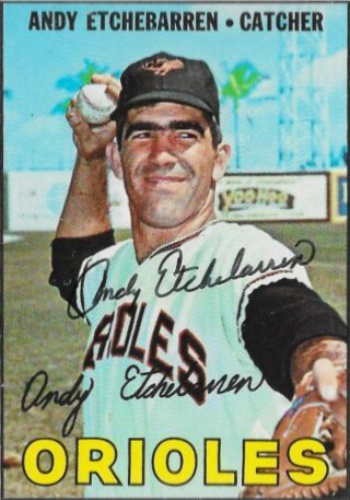
Andy Etchebarren was an All-Star catcher for the Baltimore Orioles, a fixture in their line-up from 1965-1975. While his offensive stats were not overly impressive, he was known for his toughness and his defensive skills. He appeared in four World Series, with his team winning twice. Etchebarren had the distinction of being the last player ever to face Sandy Koufax in a game, in Game Two of the 1966 World Series, in his rookie year. Etchebarren died on October 5, 2019.
Primary sources: Society for American Baseball Research; Wikipedia. Inspired by a post on Facebook by Xabier Berrueta.

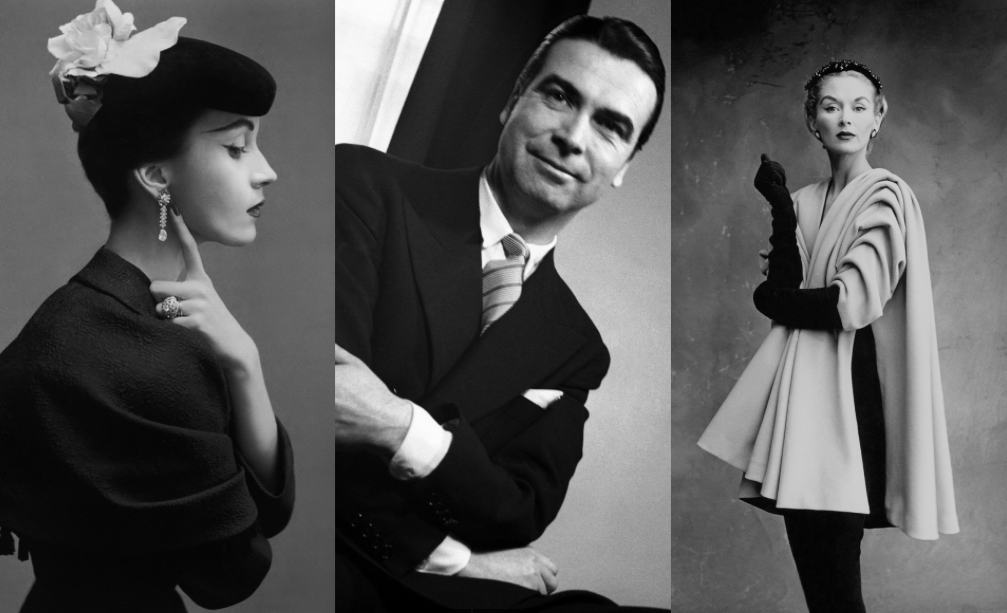
This year is the 500th anniversary of Magellan’s expedition, which culminated in Juan Sebastián Elcano becoming the first person to intentionally circumnavigate the planet. Elcano hailed from the small Basque coastal town Getaria, Gipuzkoa, just twenty-five kilometers west of Donostia/San Sebastián. However, Elcano is not the only famous son of Getaria and, in fact, isn’t the one that is most celebrated in the town. Rather, the museum that sits in the heart of the town is dedicated to Getaria’s other most-famous son, Cristóbal Balenciaga Eizaguirre.

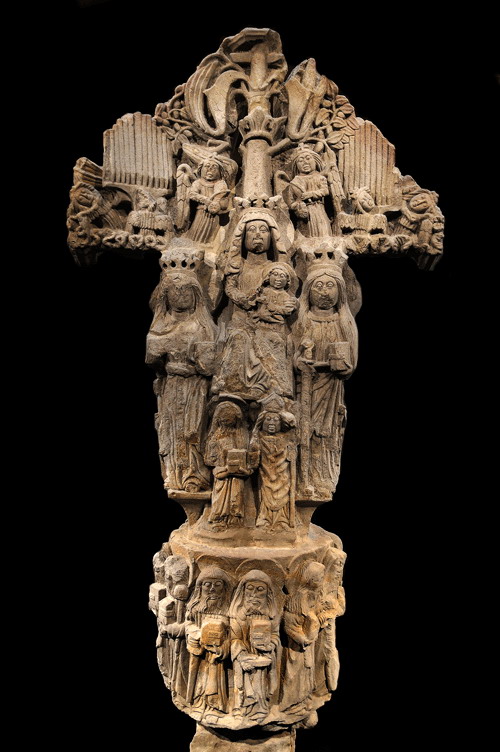
Durango, in the heart of Bizkaia, is one of the province’s most important towns. It is the namesake of both the city and state of Durango in Mexico and of Durango, Colorado in the United States. During its history, Durango has been involved in events such as the War of the Bands and bombing during the Spanish Civil War. Founded some time before 1179, Durango has been ravaged by multiple plagues, floods, and fires over the centuries. One of the most intriguing episodes involving the city is the so-called Heresy of Durango.
Primary sources: durango-udala.net, The Basques by Julio Caro Baroja.
This Fact inspired by a passage in Emma Wilby’s upcoming book Invoking the Akelarre: Voices of the Accused in the Basque Witch-craze, 1609–1614.


When I was a kid, the world of superheroes was, for the most part, confined to geeks like myself. Today, with the enormous success of the Marvel movies, superheroes are now mainstream like never before. Given the enormous universes and the thousands of characters that Marvel, DC, and the like have created, it is unfortunate that they lack any superheroes with a Basque backstory. However, there was a Basque superhero created in Bilbao, the Burdinjaun.


