Gazta! A new cheese route in Euskadi!

mutiloa.jpgAnyone who has visited the Basque Country knows how important cheese is to the cuisine of the Basques. Idiazabal might be the most famous, but cheese is everywhere in Euskadi. Meals often end with a plate of cheese and membrillo.

Basque cheese was central to more than one of my visits to the Basque Country. During my first stay, in 1991, I visited my dad’s aunt, who lived outside of Munitibar. Her caserio was at the end of the road that wound up the side of the mountain. It was an old caserio, with the barn still occupied by animals. On the kitchen table was the biggest wheel of cheese I’d ever seen. My dad’s aunt and her family raised sheep for their milk and made their own homemade cheese. It had been many years since she had seen my dad and she insisted I take two small wheels of cheese back to the United States for my dad. How was I supposed to make it through customs with homemade cheese? The smell alone would give me away, but, more importantly, this was cheese made on a farm, with no controls. There was no way… Suffice it to say, I did get those blocks of cheese to my dad. How is a story for another day.

Years later, I was visiting the Basque Country with my whole family, the first time for my mom, my brothers, and my wife-to-be. My dad took us all to that same baserria and again there was a huge wheel of cheese sitting on the same table. While we were all sitting at the table, doing our best to be patient as my dad and his aunt traded stories in Basque, my future wife looked out the window and saw the herd of sheep, my dad’s cousin milking them. My future wife jumped at the chance to take her turn at the sheep, doing her part in making the next wheel of cheese.

My mom’s grandfather, Blas (who I’m named after), was from Mutiloa, Gipuzkoa, in the heart of the Goierri, the region where Idiazabal, so famous for that cheese, lies. I first went there with my friend Joseba Etxarri (director of the euskalkultura site), who found where my mom’s grandfather’s baserria was. As we tried to find the exact place, we stopped at a few houses and Joseba asked in Euskara if anyone knew where the Telleria caserio was. Of course they did, and they pointed us in the right direction, but every house seemed to have a master cheese maker and we had our share of wonderful cheese on the way to rediscovering my great-grandfather’s birth house.

logo-inicioAll of this leads to the most awesome new vacation idea. In that same Goierri region, including Idiazabal, a number of cheese makers in a variety of towns have established what I can only imagine is a unique trail. The “Idiazabal Cheese Route“, or Idiazabal Gaztaren Ibilbidea, is a 6 stage walk of about 100 kilometers through the Goierri. Along each stage, there is ample opportunity to taste some of the best cheese the Basque Country has to offer, along with sagardoa (hard cider) and the most amazing natural vistas. Paul Richardson of the Financial Times shares his experiences along the trail. It seems like a most amazing vacation idea, one I’ll have to try some day.

Making Dreams Come True: An Interview with Argia Beristain

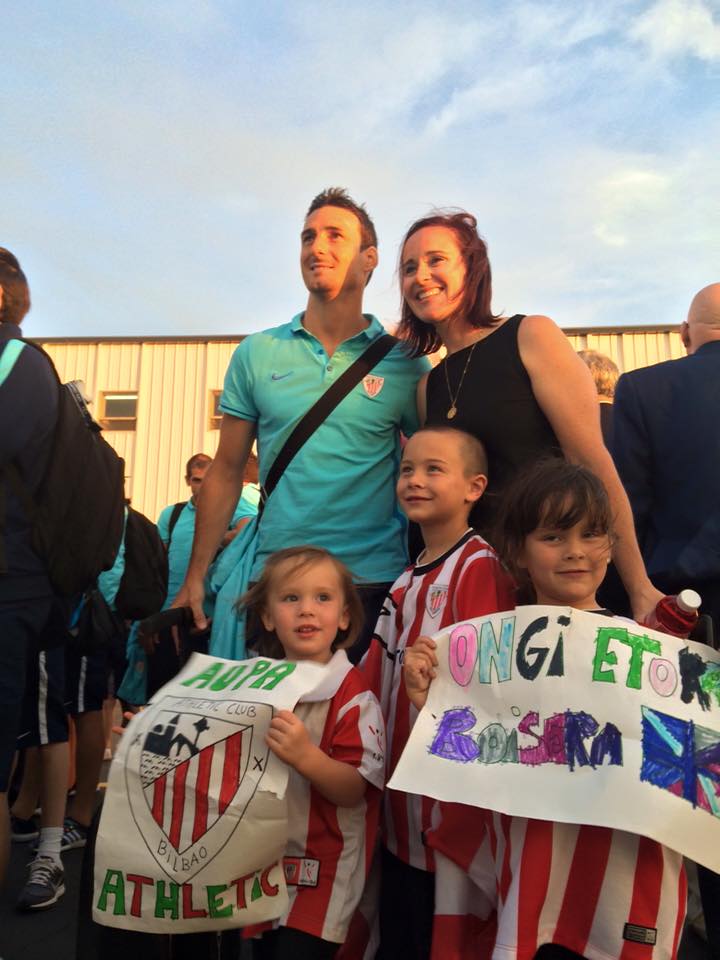
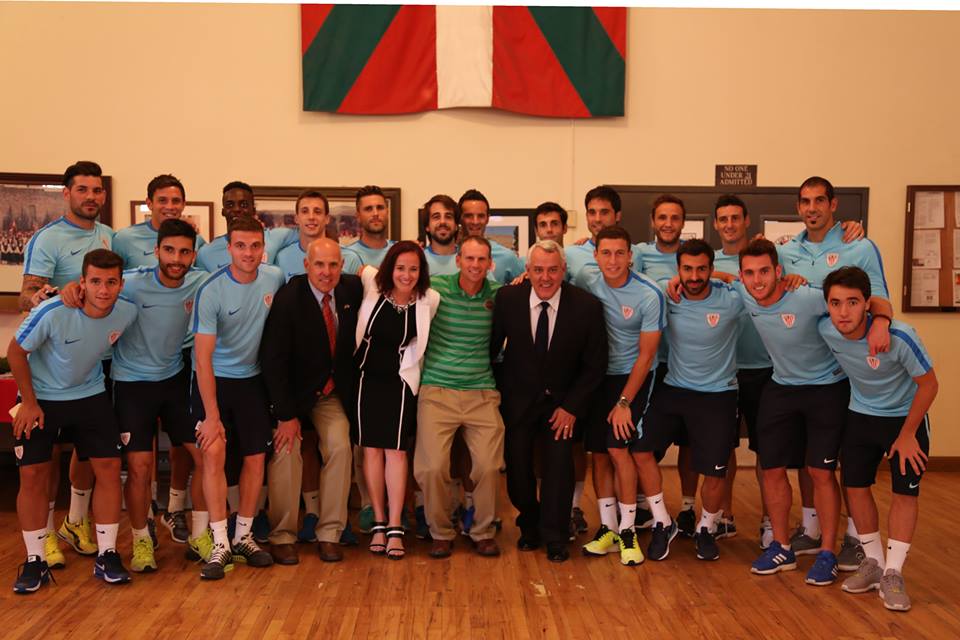
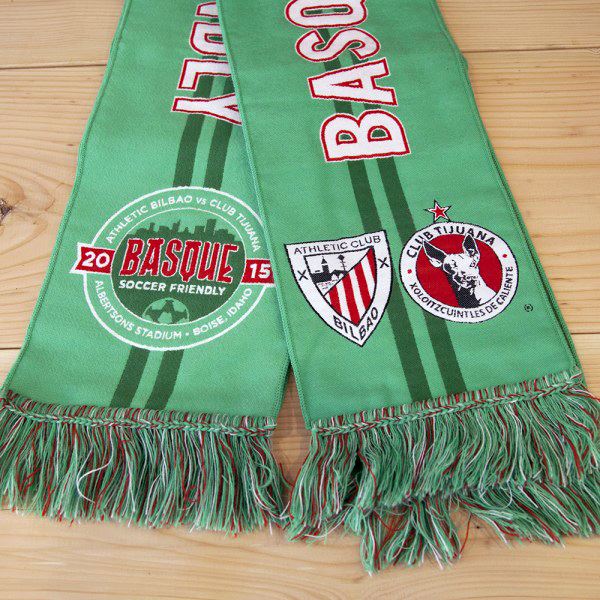
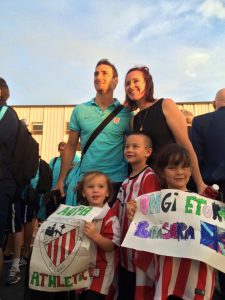
11709776_10153547206780159_6103263036434097161_nI’ve known Argia Beristain for about 20 years now, having first met her during our joint activities in the Seattle Euskal Etxea. She has since moved back and forth between the two coasts of the United States and has been extremely active in promoting Basque culture, culminating in the Basque Soccer Friendly that was held in Boise, Idaho this past summer. 

In this interview, I ask Argia about the planning and organization of the Basque Soccer Friendly, her experiences being part of four very different Basque communities in the United States, and her favorite places in the Basque Country.

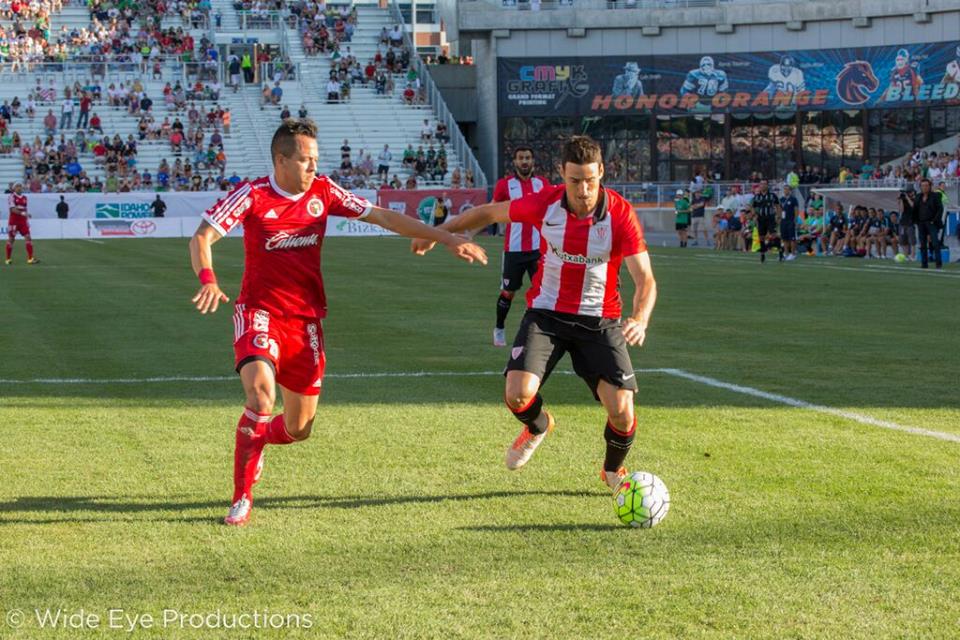
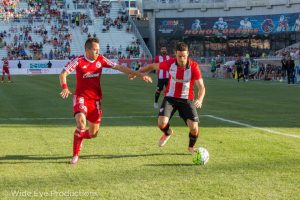
Buber’s Basque Page: Last summer (July 18), you saw the culmination of a lot of your blood, sweat and tears over the last year or so in the Basque Soccer Friendly, which brought both Athletic Bilbao and Club Tijuana to Boise to play an exhibition soccer match. What was this experience like? What was the most gratifying part of organizing this amazing event? What challenges surprised you the most?

Argia Beristain: The experience of planning, organizing and executing the Basque Soccer Friendly was an exhausting emotional roller coaster. There were so many times along the way that new obstacles were placed in front of us and many thought “oh there’s no way they can overcome this” and we refused to give up and somehow overcame each and every one of them. You can call it tenacity or stubbornness I guess but it was a passion of mine to make sure that I personally tried everything I could to make it a reality. We had worked so hard, I knew I would never forgive myself for turning back and not doing absolutely everything I could think of to keep the project moving forward.
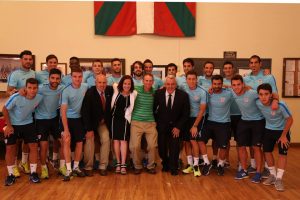
11892257_10206785476549746_1339441297480742596_nThe most gratifying part of organizing this amazing event has to be seeing how so many people’s dreams came true, not only my own or my Aita’s which was personally motivating all along the way. The overall feeling/vibe on the Basque Block and at the game was pure happiness — it’s so great to know I helped bring that happiness to the community. To point to one specific moment though, it would have to be when I saw an interview my husband, Keegan, did with the local newspaper that was recorded and posted online after Athletic Club’s arrival in Boise. I could not have done any of the work on this without his endless support, he held me up and gave me encouragement every single step of the way. But at that moment, seeing his own personal excitement and satisfaction that all of our hard work had paid off and that our team was actually arriving in Boise, Idaho thousands of miles away from the Basque Country was beyond gratifying.

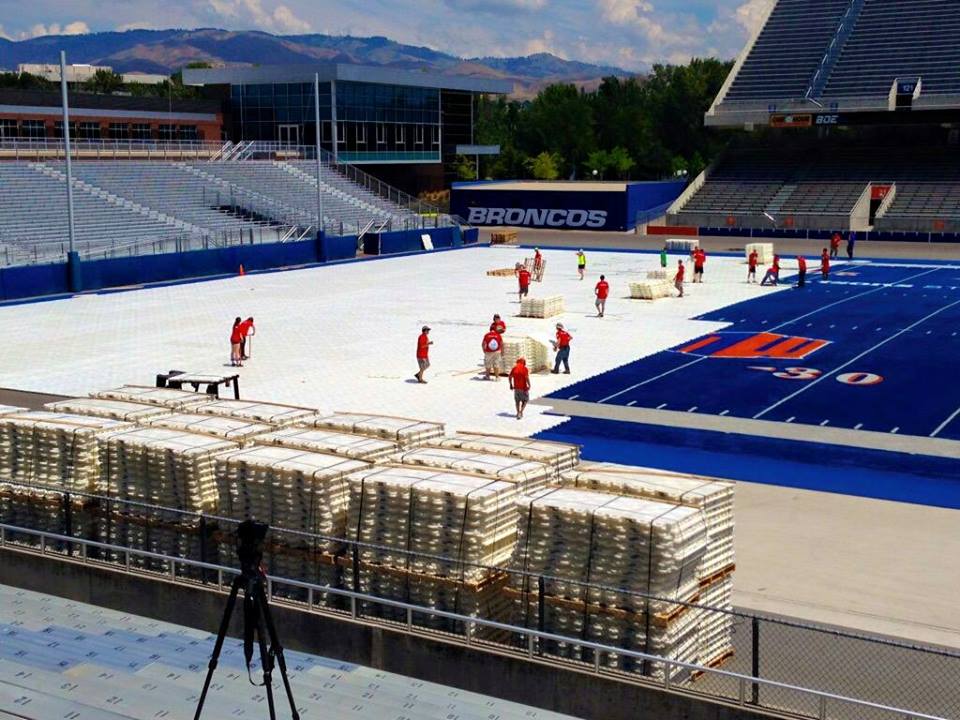
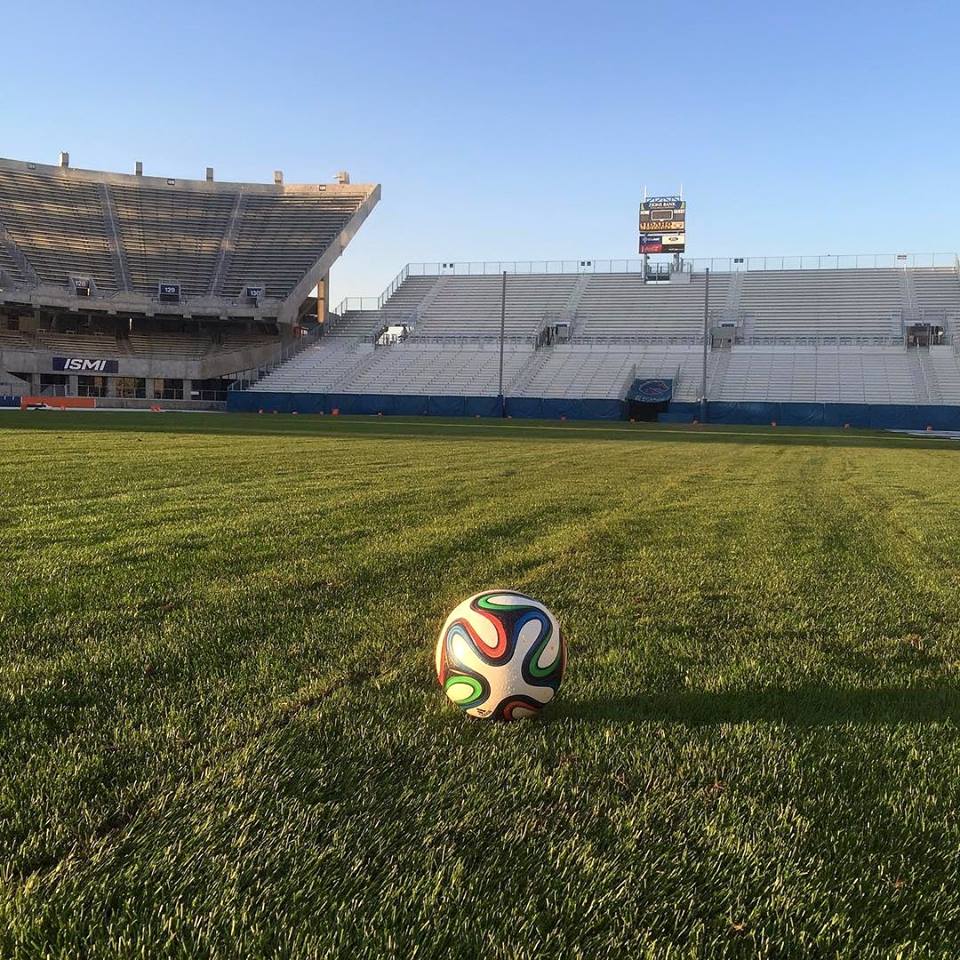
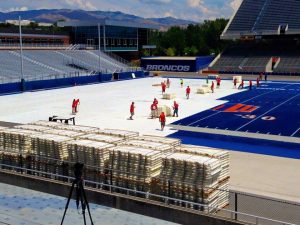
Of all the challenges that surprised me throughout the process, the most staggering element is just how expensive putting on an event like this really is. Even with Athletic Club waiving their appearance fee, the cost of Tijuana’s appearance fee, flying both teams to Boise, hotels, food, transportation, on top of all of the expenses associated with use of Albertsons Stadium, signage and the major budget needed for the installation of the sod, it all adds up very quickly. That doesn’t even include marketing or merchandise which we had committees of amazing volunteers dedicating hundreds of hours to in-kind. We all knew it was going be expensive and, quite honestly, our budget projections from a year ago are not that far off, but when you step back and look at everything including all of the “in-kind” our sponsors gave us to support the game, it’s truly staggering how much money is needed to pull this thing off.

Buber’s Basque Page: What was the history of this project? When did it first get discussed? Who else had been involved in bringing this event from the concept stage to final fruition?

Argia Beristain: This history of this project starts at Jaialdi 2010 with Mayor Dave Bieter, John Bieter, and representatives from the Province of Bizkaia enjoying a nice dinner and a good amount of wine while dreaming up ways to make Jaialdi “even bigger next time”. Their conversation started focusing in on sports and ultimately it was suggested that a team from the Basque Country should come and play a game in Boise. Then a couple years later, John Bieter pulled together some people on the Boise State campus to see if they agreed it was a good idea in April 2013. That June, I moved to Boise and even before my furniture arrived, I received a call from Dave Lachiondo, Associate Director for Basque Studies at Boise State, asking me if I wanted to be involved since my background was in non-profit fundraising and we’d inevitably need to raise quite a bit of money to make this possible. From that point we formed a small committee and people joined and left the committee at various stages based upon our needs for the next year or so.
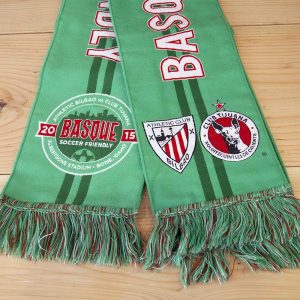
20018_1582353802017575_4348328858576978449_nEventually, at the core there was John Bieter (Basque Studies), Bill Taylor (Idaho Youth Soccer Association) and myself as Directors to lead the way. I worked hand-in-hand with Bill Taylor on all things soccer related (teams, FIFA Agents, equipment, field, etc.) then for all things sponsor and donor related, John and I worked together. We were quite the team. All along John was there to ride the up and downs of this event with me every step of the way. It helped that we could also go and meet with Mayor Dave Bieter when we needed some additional help opening doors along the way.

Along the way we found an amazing designer, Paul Carew, and other marketing professionals like Jason Hamilton who helped steer us in right direction. By January 2015, we formed a volunteer marketing committee that met weekly with Paul (all things brand related, logos, signage, merchandise, etc.), Jason Hamilton (managed our tv commercials and relationship with hispanic tv and our media partner, KTVB), Drew Lorona (social media and email campaigns), Ana Overgaard (production of videos as needed), Keegan Dougherty (website, live stream, online store and retail space manager) and myself. It was a fun but small group of amazing individuals who all wanted to see the game happen and be the best event it could be. I joked at one point that I was going to stop coming to marketing meetings because I always left there with a lot more work to do. But all kidding aside, they were awesome and the event’s success can be attributed directly to them. When you step back and think about how volunteers pulled off this major event, it’s inspiring.

Another major person behind the scenes for the Basque Soccer Friendly was Fred Mack of Holland & Hart, our legal team. An event like this requires very detailed team, vendor and sponsor contracts, as well as an elaborate agreement with Boise State University. Fred joined our team “pro bono” in March 2015 and suddenly everything started moving much more smoothly.

Add to that our Volunteer Director Daniel Brunham and the numerous amazing volunteers that he coordinated to support our events leading up to the game, retail store and install/removal of the field and it’s clear to see it took quite a team.

On the Basque Studies side, we also could not have done it without John Ysursa. He was there to support John Bieter, Keegan and I with anything we needed help with from painting the retail location walls, filling shifts as “Johnny Retail”, installing/removing the sod, storing our merchandise, you name it. Whenever we needed anything, we always knew we could count on Y.

All in all, it was a small group of individuals committed to making this game a success. Some of us have been on the team for 2 years, most 6-9 months but at the end of the day, we all gave endless hours that in my opinion paid off by a successful event.
11695786_1588319494754339_462829284359832730_nBuber’s Basque Page: Originally, the Basque Soccer Friendly was going to be during the same week as Jaialdi, but it got moved due to Athletic Bilbao’s making it to the Europa League competition. I heard more than one person say that, in the end, this was a good thing as dealing with the sod during Jaialdi would have been a nightmare. How did you feel about the change in time?

Argia Beristain: Moving the date of the game was the last thing we wanted to do but, in the end, we know everything happens for a reason and for this first time event we can honestly say we think it worked out best this way. There are countless stories of friends, family and soccer fans from throughout the United States, Mexico and the Basque Country who had plans to come to the game on the 29th during the week of Jaialdi who were not able to go with the date change to the 18th. We can’t help but think that we would have had a lot more than 22,000 in the Stadium if it had been during Jaialdi; however, from the logistics and event experience for Athletic Club Bilbao’s side of things, it was definitely better off on the 18th.

For example, logistically no one in Boise had ever been through the process of installing the sod over turf and we relied heavily upon our volunteers to help with the plastic event decking and tarp installation and removal portions of that process. That equaled a lot of hours of hard work and it was hard enough to find enough dedicated volunteers who were willing to pitch in. If it had been during Jaialdi when many of the local Basque community is already busy putting on the various Jaialdi events, it would have been even more difficult to accomplish this major volunteer effort that took multiple days of physical labor. Another logistical issue beyond the already full hotels throughout Boise during Jaialdi is the busses that were needed for the teams. With the demand for busses that Jaialdi puts on the local community with shuttles from hotels, performer shuttles, etc., I don’t think there are physically enough busses in the greater Treasure Valley area to meet the needs of Jaialdi and the soccer teams at the same time.

Then, as for Athletic Club’s experience and our community’s access to the team, I don’t think they would have been able to have the freedom to visit the Basque Block, the Basque Museum and the Basque Center, Basque Soccer Friendly store and have autograph signings as they were able to if it had been during Jaialdi. With the game on the 18th, they were able to spend the entire afternoon on the 17th playing Pala in the Fronton, checking out the museum and boarding house, enjoying a meal at the Basque Center, playing FIFA at the Basque Soccer Friendly store and visiting the Ikastola. The team gave the Boise community unprecedented access by making all players available for autographs so we split them into groups at the Basque Center, the Basque Soccer Friendly store and the Ikastola. Each location had lines around the block with Basques and non-Basques alike eager to meet them and get their autographs. They were so gracious and stayed until they signed for everyone which gave them a real opportunity to meet the Basque diaspora and greater Boise community which resulted in so many dreams made true. Now, if it had been during Jaialdi, they would have seen even larger crowds on the Block and a lot more in the Stadium I’m sure, however they would have been mobbed and we would not have been able to have the autograph signings and they would not have had the freedom to explore the Basque Block or visit with distant family like they did.

Buber’s Basque Page: You’ve now been part of Basque communities in Seattle, Washington DC, and Boise, and grew up in the Las Vegas Basque community. What do you see as the big differences in these different clubs/communities and the commonalities?

Argia Beristain: Wow, that’s a good question. My experiences working in support of the Basque Communities in Las Vegas, Seattle, Washington, DC and now Boise have all been very different and are dependent upon the demographics of the communities, yet it always comes down to a few dedicated volunteers who are willing to give so much of themselves to keep the clubs or projects going.

In Las Vegas, our biggest challenge is that the original Basque immigrants who started the Lagun Onak Las Vegas Basque Club are getting older and unable to sustain the club forever. The heart of the club at the beginning and today are the pelotaris or Jai Alai players who used to play professionally on the Las Vegas Strip until 1980 when the casinos closed the frontons. At that time many of the players stayed to become card dealers for the casinos and what was originally a group of Jai Alai friends became an organized Basque Club in 1980. This however was the last major immigration of Basques to the Las Vegas valley and many of the children of these pelotaris and dedicated Basques are either not interested in maintaining or preserving their Basque Culture or they have moved away. As a result, as the founders of the Basque Club enter their 70s it’s difficult for them that all of the activities of the club and organization of the events fall solely upon their shoulders.

In Seattle, as you know, there isn’t quite that distinct time that you can point to when most of the Basque immigrants came to the area. Instead, the major hurdle that I see for the Seattle Basque Community is just how vast the area is and how spread out all of the Basques are. In this continuously evolving cultural society there are many demands on us as individuals and families from social engagements to soccer practice, dance classes, etc. — it’s helpful if the Basque component is convenient too, which isn’t always possible for all of the Basques throughout Washington.

Now Washington, DC is completely different as the majority of our members are in their 30s and 40s yet were born in the Basque Country and are in DC working for maybe only a few years. A few of the Basque Americans who have grown up in Boise, Elko, Chicago, etc. have moved there too and are members of the club however the biggest hurdle is conveying the need or necessity to preserve or celebrate our Basque Culture to those who “being Basque” is compulsory because they grew up in the Basque Country and thats just how they lived. It’s interesting to note that of the 5 current Board of Directors for the Washington, DC Euskal Etxea, 4 of us are Basque Americans and there is just 1 who was born in the Basque Country yet our membership base is heavily Basque Country born. Now, at different times we have had other Basque Country born Board members but as the club gets older and faces more challenges, it appears the Basque Americans who have grown up in other Basque Diaspora communities are the ones pushing the hardest to keep it going in DC.
11813462_1592530124333276_7437631682627407954_nThen there’s Boise. I think the best thing going for the Boise Basque Community is it’s numbers and the sheer volume of Basques that have immigrated to Idaho throughout the years. With there being so many generations of Basques and Basque Americans who have grown up celebrating Basque culture and having Basque culture celebrated by the greater Boise community it makes it, in my opinion, easier to perpetuate. It’s cool to be Basque in Boise. At the end of the day, the work and responsibility still only falls on a few dedicated volunteers no matter where you live; however, with such a large population to pull from in Boise/Treasure Valley, you’re more likely to find those people willing to help. Furthermore, the burden placed upon one person is less when there are more people willing to teach euskal dantza, euskera, mus, briska, movie night, etc. and one when one person gets tired, overwhelmed or needs to handle the soccer practice car pool instead, there is more of a chance to find someone else in the Basque community to pick up where they left off rather than the effort halting completely.

I wouldn’t trade my experiences in any of the communities for anything and I think that what it means to me to be “Basque” and the type of volunteer that I am today is a result of all of the experiences I’ve had in these various Basque communities.

Buber’s Basque Page: The next big event in Basque cultural space in the US looks to be the 2016 Folklife Festival, put on by the Smithsonian in Washington, DC. I understand you were involved in making this event happen. What can you tell us about the event?

Argia Beristain: Yes, I’m very excited about the Smithsonian Folklife Festival that will present Basque Culture on the National Mall in DC in June/July 2016. Mark Bieter and I have been meeting with the folks from the Smithsonian since 2006 to make this dream come true. With the help of the Basque Government’s Aitor Sotes and more recently Ander Caballero and the recent addition of the representatives from the Province of Bizkaia, it’s finally happening!

Every summer the Smithsonian presents a living museum featuring cultures from around the world and 2016 is the 50th Anniversary of the festival. The Washington, DC Euskal Etxea is helping connect the Smithsonian with local vendors and contacts to have authentic Basque food, cider, wine and more. Most of the performers will probably come from the Basque Country but it’s expected that a number of them will be from the Basque American Diaspora as well. The Smithsonian team is working directly with NABO on that selection process as we speak. It’s exciting stuff! I hope Basque Americans make an effort to get to DC this summer to see it, it’s sure to be a once in a lifetime moment for our culture and language.

Buber’s Basque Page: Now, a few questions about the Basque Country itself. What is your favorite spot in the Basque Country?

Argia Beristain: My favorite place in the Basque Country is Ondarru (Ondarroa). Specifically the port and beach area. I have fond memories of waking up early as little kid and sitting on my Amama’s patio to watch the fishing boats come in during the early morning. As I got older, I’ve enjoyed sitting at Moby Dick enjoying a txikito with my kuadrilla along the beach. Ondarru is so beautiful and the people are uniquely Ondarrutarra. I love that.

Buber’s Basque Page: What is your favorite Basque food?

Argia Beristain: My favorite Basque food would be comfort food my family makes. Like my Itxiko Miren’s zapu (fish) or her soup. My aita’s paella or when he makes tongue (only ever in a red sauce). Once while I was living in DC and pregnant and unable to travel to visit family, I asked my aita to ship me some of his paella (frozen of course) and his tortilla patata. I’ve never received a gift that made me feel so comforted and close to family even though I was 2,500 miles away from all of them in Las Vegas and 3,800 miles away from Ondarru.

Buber’s Basque Page: What is your favorite Basque fiesta?

Argia Beristain: My favorite fiesta is Ondarruko Jaixak in August celebrating Andra Mari but a close second would be Madalenas in Elantxobe, Bermeo…..

Buber’s Basque Page: Finally, is there anything else you would like to add?
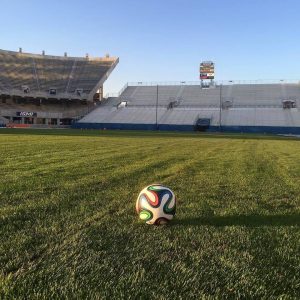
11755196_1589935321259423_5857486168369343882_nArgia Beristain: As it’s been a few months now since the game in July, I’ve had some time to reflect on just how amazing it is that it all came together and we actually brought Athletic Club Bilbao to Boise, Idaho! On top of that, we covered the iconic blue turf at Boise State University and introduced high level professional soccer/futbol to a traditionally American Football community. Lastly, even though we had to move the game away from Jaialdi and lost a lot of the Basque community’s ability to attend, we still had 22,000 people fill the stadium. It’s amazing to me when I stop and reflect on all of that. I’m proud of the fact that we pulled it off and it was a great success.

The Basque Soccer Friendly is truly a testament to remaining positive, not giving up and doing whatever it takes to reach a dream/goal. I hope to have more opportunities to pour myself into a project like this in the future.

Buber’s Basque Page: Eskerrik asko Argia!

My Goodbye to My Dad

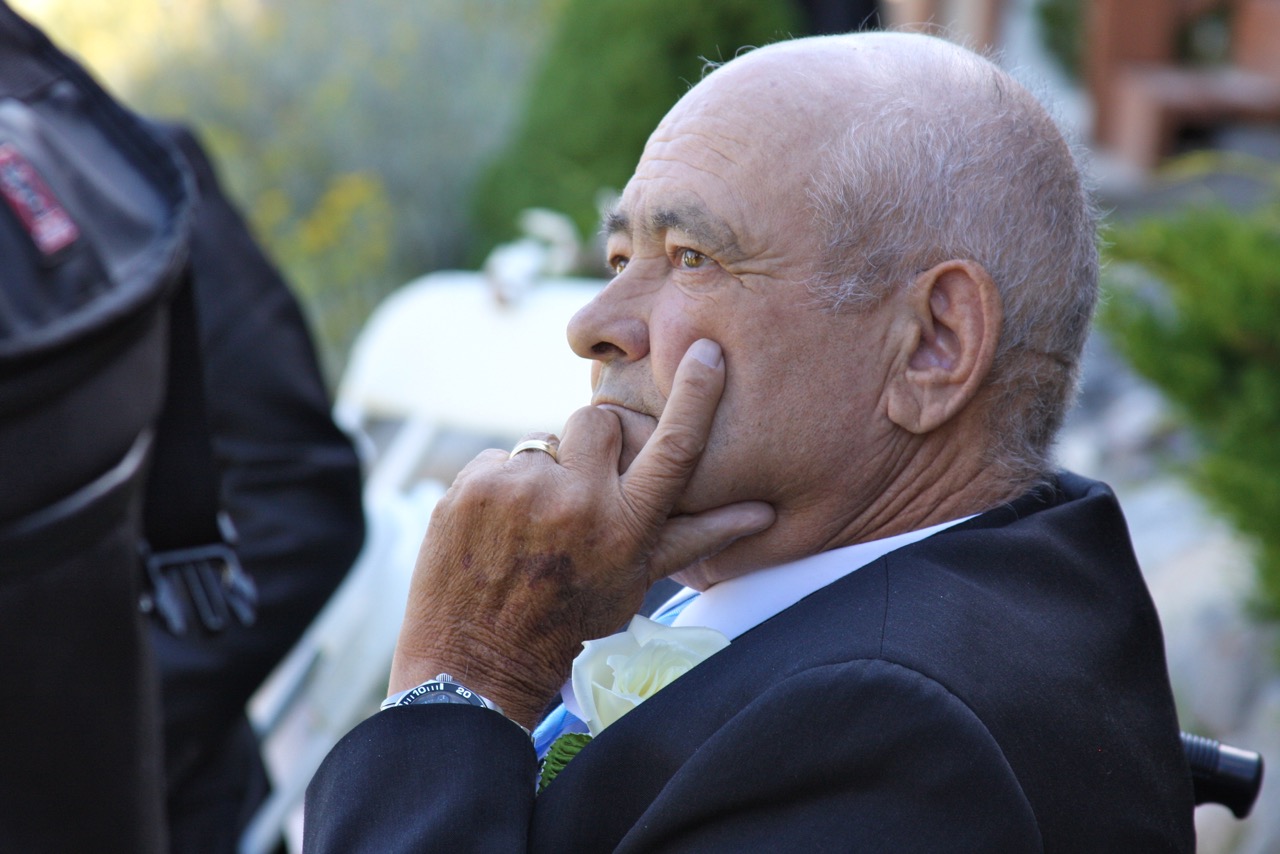
I gave the eulogy at my dad’s funeral on Wednesday, December 2. I’m posting my words here to honor his memory.
IMG_4582Pete – dad – was my inspiration. Like many of you here today, or your parents or grandparents, he gave up everything he knew, everything he grew up with, to build a better life. He came to what must have seemed the most desolate place on earth, especially compared to the vibrant green mountains and fiestas of the Basque Country. He left all of that behind to start a new life, a life that left him the hills around Silver City with nothing more than one fellow sheepherder and a dog to keep him company for months at a time. From this new beginning, he found a new life.
In his way, dad was a great man. He came from the most humble beginnings on a small farm in the heart of the Basque Country. He worked hard every day, eventually building his own business. He wasn’t always successful. Everyone he talked to knew about his “deep shit hole.” But, his work ethic was an inspiration. Though he never went to school – he actually ran from the priests that had come to take him to the seminary back in the Basque Country – he made sure that me and my brothers Tony and David had the opportunity he had passed on, to give us an even better life than he had.

Dad never gave me much life advice. At least with me, he was a man of few words. The one thing he did tell me was that he wanted me to have a job with an air conditioner. He had worked so many hours in the heat of the sun and the cold of the winter that he hoped I wouldn’t have to do the same. So, in his own way, he encouraged me to follow my dreams, to strive for more, and to be the best man I could become. I owe him a debt greater than he ever realized.

As for many Bascos forged in the ruins of the Spanish Civil War and tempered in the lonely and barren hills of the American West, dad had a rough and gruff exterior. He wasn’t an emotional man. Once in a while, his temper would flair up. But, hidden beneath that rough exterior was the most generous heart, a heart that was generous even before it was replaced by a younger model. His door was always open, a sol y sombra always ready for any visitor. And, more often than not, they would leave with a bag of peppers, a chunk of jamon, or a package of chorizo. Remembering the harsh days when he was in the back hills of Idaho and Oregon, he took the next generation of sheepherders, now from Peru, under his wing and helped them navigate life in their new home. He lived for his family and friends, and his home was always open to all of them.

Dad worked hard every day, until his health got in the way. In 1997, after a series of heart attacks, he had a heart transplant that gave him a new lease on life. As he liked to say, he got a new engine, but the chassis needed a lot of work.

And little by little, that chassis began to fail him. A long series of problems, rivaled only by the number of pills he took every day, slowly took away his strength. While his mind was sharp and alert to the end, his body slowly deteriorated. This was a new struggle, as his physical strength was the basis of everything he did. All he knew and did was about work, about physical labor, and that was taken away. He never had any hobbies that didn’t involve physical labor, and this challenge was probably as great as any of the others.

But, with the constant and loving support of his wife Monica, he fought on. Together, they got nearly 20 years out of that heart and, because of it, he got to see so many things. He got to see his mom and brothers come visit him from the Basque Country, and me and my brothers got to see where our argumentative sides really came from. For me, some of my most precious memories are being able to take him back to Spain, the first time we had gone together, and drive him around his old stomping grounds. We visited so many distant cousins, it seemed that the whole Basque Country had to be related to us somehow. I didn’t understand most of what I heard, but I could tell that dad enjoyed reliving his childhood adventures with all of those old friends.

Because of the time he and mom eked out of that new heart, he got to see all of his sons graduate from college, he got to see them all marry the most beautiful women, and he got to see all of them start their own families. That twinkle in his eye, the way he would stick out and bite his tongue, his smile – all of these live on in his grandchildren. He is a part of them and through them he continues to live on. His grandchildren are his greatest legacy.

Pete – dad – is gone. He will be missed. But he will never be forgotten. He lives on in the hearts of everyone he knew. If that isn’t the sign of a great man, I don’t know what is.

Goian bego, Aita. Maite zaitut.

New insights into the origins of the Basques

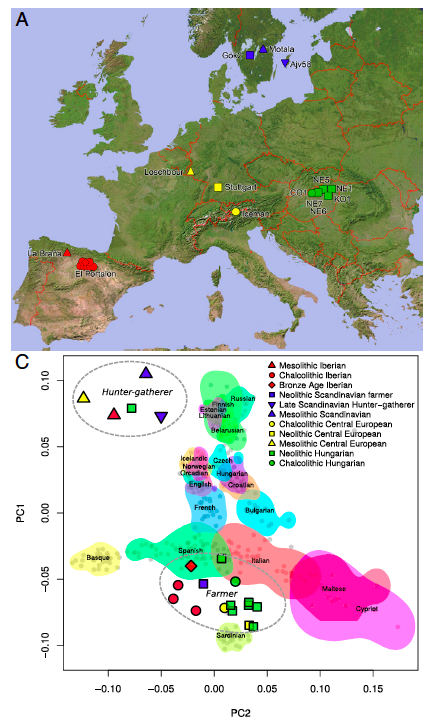
Screen Shot 2015-11-05 at 5.28.02 PMA few months back, a paper published in the journal Proceedings of the National Academy of Sciences of the United States of America (PNAS) (Ancient genomes link early farmers from Atapuerca in Spain to modern-day Basques) caused quite the stir on the Basque portion of the internet. The paper examined the genetics of various populations, including Spanish, Italian, Russian, and, of course, Basque, and compared those genetics to determine where the Basques came from. Many reports had sensational headlines like Cave DNA unravels riddle of the Basque people, Ancient DNA cracks puzzle of Basque origins, Basques Linked to Ancient Iberian Farmers, Basque ancestors were farmers, Mystery of Basque origins solvedScience Seeks Answers to Riddles of the Mysterious Basques, and Unusual ‘relic language’ comes from small group of farmers isolated for thousands of years.

To the best of my understanding, what the paper claims is that the Basques are most closely related to European farmers from the Atapuerca region of northern Spain. My interpretation of the previous theory was that the Basques were a remnant of the paleolithic populations of Europe, the hunter/gatherer Cromagnon peoples effectively. What this new paper says is that, no, the Basques are more closely related to farmers that arrived in the region during the Neolithic or Chalcolithic periods of time, not the earlier Mesolithic period.

However, the Basques still exhibit genetic differences with their neighbors, such as the French and the Spanish. Rather than being isolated since stone age times, the authors of this study attribute these differences to more recent isolation. After the farmers spread through Europe, the ones that would eventually become the Basques were isolated from the Caucasian/Central Asian and North African populations and the later Moorish influence in Spain. While their neighbors intermixed with these populations, they did not.

The paper also claimed that this shed light on the origins of the Basque language. At least to me, that isn’t so clear. While the genetic history of a people might correlate to some degree with language, it is not an absolute connection and the language that those farmers-who-became-Basques spoke could easily, it seems to me, have even older roots. While these new genetic studies provide valuable new insight into the history of the Basques from a population point of view, they can’t directly inform the linguistic history. The paper admits this, saying that the farming populations that migrated to the area and mingled with the local hunter-gatherer populations to form what would ultimately be the Basques “could have” spoken some non-Indo-European language, but what it was, they don’t know. And they may have brought it with them, or it could have been there already.

That said, I am certainly not a geneticist and I would love to hear from people who are actually in the field and might be able to provide even more detailed commentary on this paper. It seems to have fascinating and important implications, but I would certainly like to know more.

A Basque Day of the Dead Story

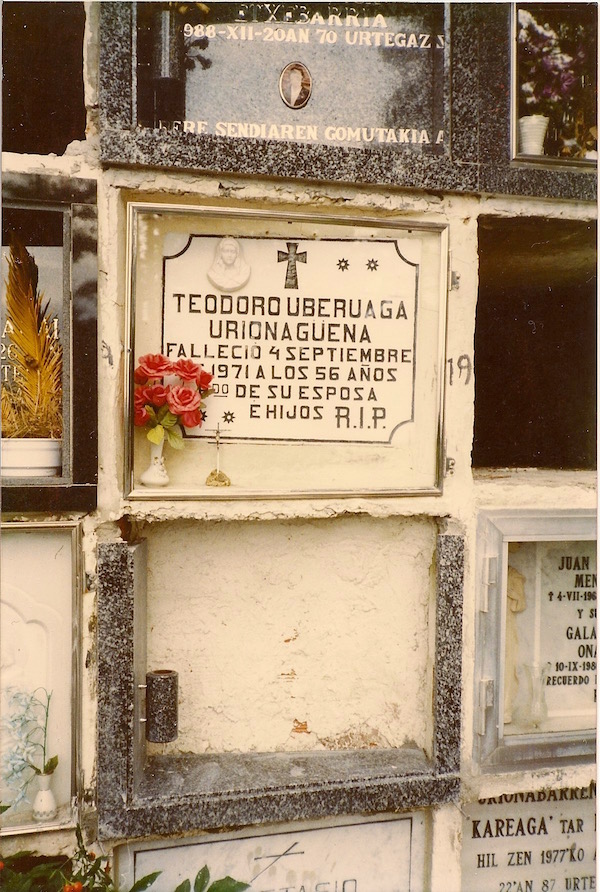
BlasScan003One of the most interesting and surreal experiences I had when I lived in the Basque Country during 1991-92 was when I went with my great uncle to the Gerrikaitz-Arbatzegi emetery. Cemeteries in the Basque Country are not as expansive as they are in the United States.
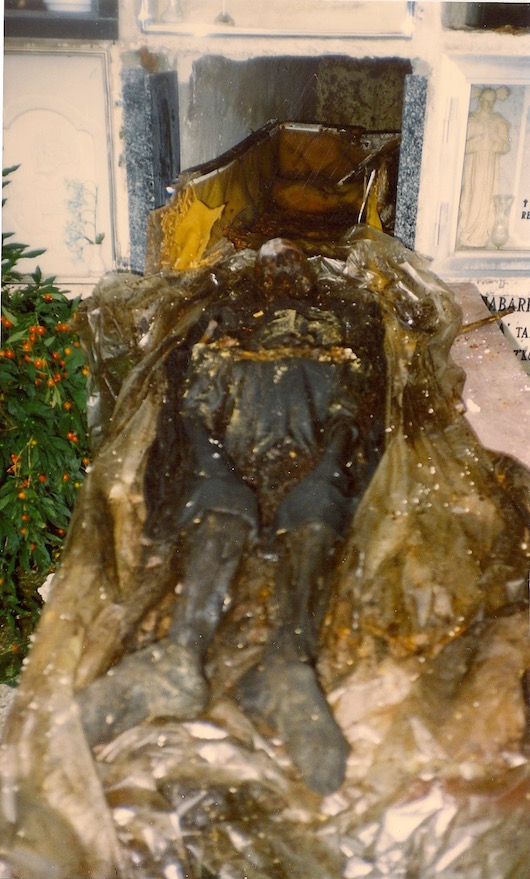
While there is a small tract of land set aside for burials, many of the deceased are placed in tombs within a mausoleum that faces the main cemetery grounds.
BlasScan002I went with my great uncle to the cemetery because it was time to consolidate a few family members. He had a brother that had died young and they were digging up his grave to collect his remains. I remember this part pretty vividly because they seemed to have lost the location of the grave, which caused a bit of anxiety on the part of my uncle. If I recall correctly, the grave had been marked but it seemed that the coffin was exactly where the marker was.
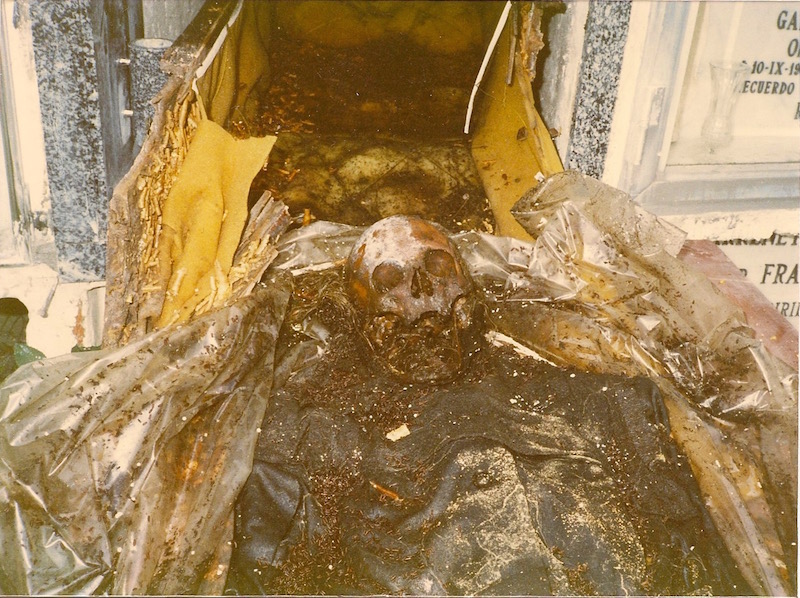
Ultimately, they found it, but the next step was to open the mausoleum of my great uncle’s mother, my great great grandmother. The point is that multiple family members would share the same mausoleum and they were going to put my great uncle’s brother’s remains in the same mausoleum as my great great grandmother. She had died maybe 17 years before. As they opened her tomb, my great uncle encouraged me to photograph her remains. There, staring back at me, were her empty eye sockets. Her body was dressed in her black burial clothes with her arms still crossed across her front. I’d never seen a real skeleton before, especially one that was effectively removed from her coffin. It was fascinating, but also very strange.

BlasScan001They collected her major bones — skull, pelvis, maybe a few others — to be kept in the mausoleum, while the rest were not. I’m not sure what they do with the others. To be honest, my memory is a bit vague on some of the details. But, I do remember that not everything was kept.

They placed the bones of her son into the same mausoleum and sealed it.

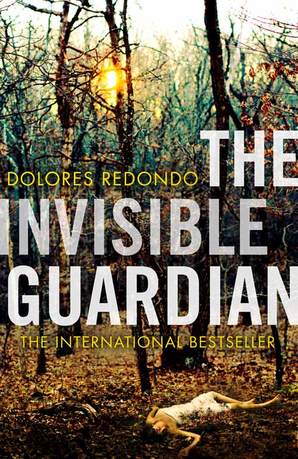
The Invisible Guardian by Dolores Redondo (review by David Cox)

This book has been on my to-read pile for a while, but I haven’t gotten the English translation yet. Long-time contributor David Cox is ahead of me and has not only read the novel, but kindly provided this review. Eskerrik asko David!

9780007525324The Invisible Guardian
Dolores Redondo
2013

Translation by Harper Collins 2015 (UK, Canada) Atria (USA) Isabelle Kaufeler

Police Inspector Amaia Salazar comes from the small Basque town of Elizondo, a place surrounded by mysterious forests and full of family secrets. Trained in North America and now working in the large city of Pamplona, she’s called to investigate the murder of a teenaged girl in her home town.

In this novel – first of a trilogy – that’s had great success in the Basque lands, across Spain, and in about 30 translations, Spanish/Basque author Dolores Redondo takes us into the deepest heart of Basque mythology and tradition.

Inspector Salazar struggles against chauvinistic prejudices, closely-kept secrets, superstitions, and traditional values as she attempts to solve not one, but now a series of brutal and bizarre murders that begin to take on a pattern.

Before solving the murder she must confront the ancient beliefs in the basajaun, legendary guardian of the Basque forest, and at the same time, begin to deal with her own personal demons as well. You can believe in the basajaun if you wish to, but the personal and family issues she faces are all too real.

While Basque women are stereotypically strong characters in reality, many of the female characters in this novel take on supernatural powers, and whether for good or evil, it’s not always clear.

No matter how hard we try to escape it, the past always imprints itself upon the present. All the more so in the Basque Country, where the modern industrial city is literally within sight of the peasant communities from which it evolved, often quite recently. While Amaia lives the life of a professional in busy Pamplona, her Elizondo past is never far from the surface.

While perhaps not the most adept at tying up “loose ends” – and remember, this is a trilogy – Redondo is expert at painting a picture of the people and landscape of northern Navarra, an area with a strong Basque identity and attachment to the language.

The area was known for its “witch hunt” during the days of the Inquisition, and many times the author references the fact that the old beliefs never died out and were never far below the surface, hidden under the veneer of official Catholicism. (Just as the Basque identity itself, so long suppressed under various governments, remained strong despite official Spanish being imposed).

Without delving into the intricacies of the mystery, it is sufficient to say that much of it revolves around a traditional Basque bakery or pastry shop, and its products. This kind of family business is a bastion of the matrilineal, bourgeois Basque society and a marker of belonging.

It’s unusual if perhaps refreshing to read a book set in the Basque Country with no reference to recent struggles. Redondo completely avoids all references to recent and contemporary politics, which is essential if a book is to avoid controversy and gain a wider readership. It is, for instance, impossible to enter any Basque village without reference to the political signs and banners calling for repatriation of Basque prisoners. While it is almost impossible to mention such events without alienating someone, the complete omission of any such references is a matter unto itself. In this light the characters may, or may not, symbolize groups or events within the current struggle. Those so inclined may wish to analyze the book in that aspect.

This is a lively read, especially if you get past the first 100 pages or so, and survives a somewhat clunky translation – one doesn’t “fall pregnant” in English, however much they may do so in French or Spanish – to give just one example; but in a mystery of this pace that’s not a deadly sin. A number of the scenes are truly frightening and horrifying; this is maintained in the translation.

The strength of the book is the attention to detail; Elizondo is vividly evoked and the myths and legends of the place seem ever-present. The ties that appear to bind many Basques to the family and to the land are palpable elements in the story.

This book has taken a long time to appear in English – it had already appeared in most European languages including Basque, Galician and Catalan two years ago. A short and helpful glossary is provided, as well, for those unfamiliar with local terms. But I must say it lacks the sparkle of, say Stephen Sartorelli’s translations of Andrea Camilleri’s detective fictions set in Sicily. It’ll be interesting to see if Redondo makes any impact on the English-speaking market.

For anyone interested in European-based detective/police stories or those with an interest in Basque culture, it’s a worthwhile read. And I’m certainly looking forward to the remaining stories of the trilogy.

http://www.doloresredondomeira.com/eng-index.html

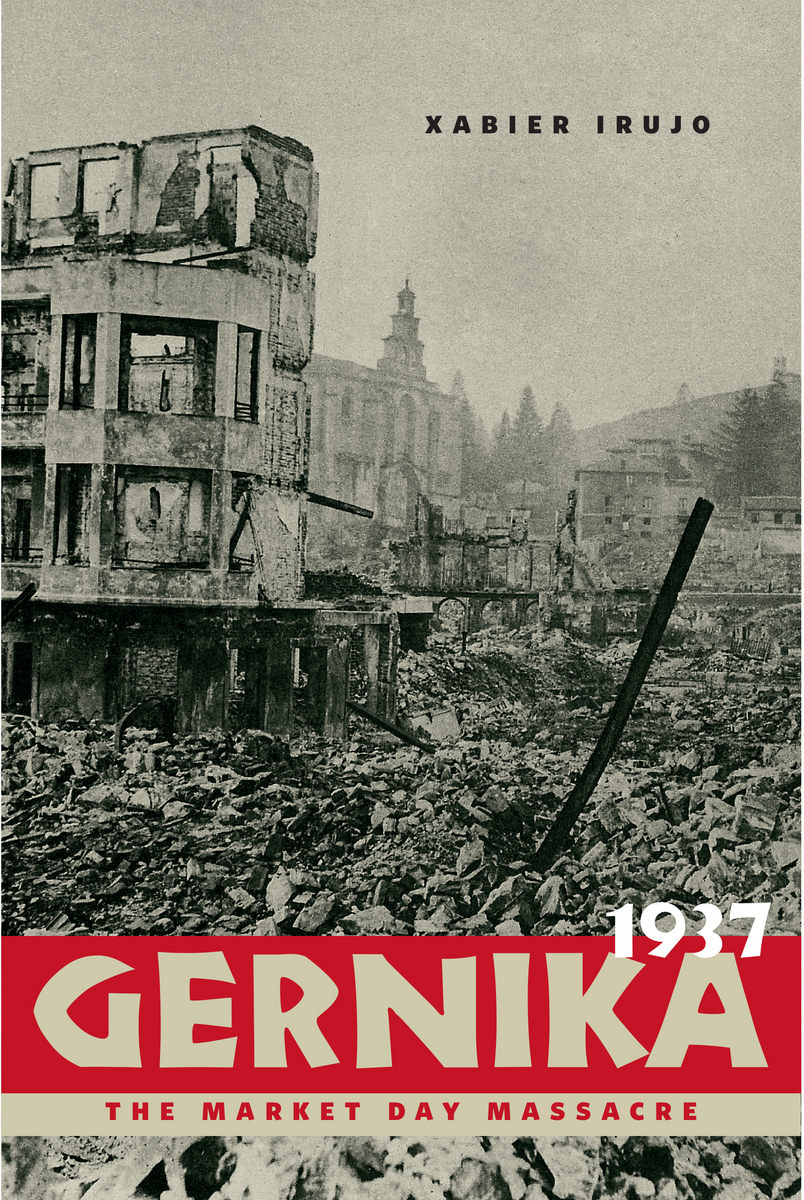
Gernika, 1937: The Market Day Massacre

978-0-87417-978-1-frontcoverApril 26, 1937. Market day in the Basque village of Gernika. Though the Spanish Civil War raged around them, villagers still gathered at the market. However, that day would come to live in infamy as the Condor Legion of Germany, at the behest of the Franco and his forces, bombed the symbolic Basque town. Not only did they bomb it, they strafed the fleeing populace. They planned an attack that maximized casualties and terror, avoiding the few strategic targets in Gernika, such as the factories, while destroying nearly every thing else. As the first civilian population that was bombed solely to inflict terror and maximize damage, Gernika has become a symbol of the horrors of war.

Of the three countries involved in the bombing — Spain, Germany, and Italy — only Germany has issued any statement of apology. During Franco’s dictatorship, Spain never even acknowledged that Gernika had been bombed by him and his allies, instead blaming the destruction on Basque “Reds” that burned the city for propaganda. Because of the denials and the lack of a consistent historical record, and as a consequence of new documents brought to light from a variety of sources, Xabier Irujo, in his book Gernika, 1937: The Market Day Massacre, details the evidence for both the involvement of those three countries in the bombing as well as the level of destruction it created.

Irujo’s analysis describes exactly how meticulously planned the attack was. According to Irujo, the German Air Force, lead by Hermann Göring, used the bombing as a demonstration of the power of an air force to inflict fear and terror on the populace. The goal was to show Hitler and the rest of the German military the might of the air force. As such, documents record various participants as saying that the mission was a complete success, even though the few military targets were not hit.

The number of casulties is still in dispute. The entry on the bombing at Wikipedia, for example, claims that while there was some exagerated claims in the past, recent consensus places the number of deaths at around 400 or less. However, Irujo argues convincingly, based on numerous eye-witness testimony and the structure of the bomb shelters in Gernika, that the number is significantly higher, more likely near the 1500 or more that was originally reported by the Basque government.

It seems remarkable that the facts surrounding such an event are in so much dispute. This is the true motivation of Irujo’s study, quantifying at every possible point the numbers associated with the bombing: the numbers and types of planes, the locations and capacities of all bomb shelters in Gernika, the attacks on neighboring towns before and after the bombing of Gernika (Gernika was not the first Basque town, nor Spanish town for that matter, to be bombed (my dad’s home town of Gerrikaitz was also bombed) but it was the first to be attacked in a manner to destroy the civilian population). At some points, the recounting of these numbers becomes a bit heavy, as the litany of facts distracts from the narrative of the bombing itself. But, these facts serve the vital role of precisely documenting exactly what is known about the bombing, as a counterpoint to those that would still downplay the events of that day.

The historical importance of events such as the bombing of Gernika cannot be lost. Particularly the context of the bombing, the Spanish Civil War, has uncanny parallels to our own time, in which proxy wars seem the norm. The Germans and Italians could deny involvement in the Spanish Civil War because the democratic powers wanted to avoid what was increasingly seen as an inevitable world war that would engulf all of Europe and beyond. Thus, they willingly turned a blind eye to what was going on in Spain, even though there were official policies, agreed to by all parties (Germany and Italy included) to not intervene. After the bombing, Nationalist forces quickly overtook Gernika and hid from the world all evidence of the bombing, making it nearly impossible for an accurate accounting. Feels eirily like multiple warzones in 2015.

In the end, Irujo does the world a service in detailing the facts about what is known about the bombing of Gernika, providing an updated historical record for future generations. Gernika, Dresden, Hiroshima… these cities represent the capacity for humanity’s destructive tendencies towards ourselves and must not be forgotten.

Did you know…?

euskal-etxeak-whalers-2
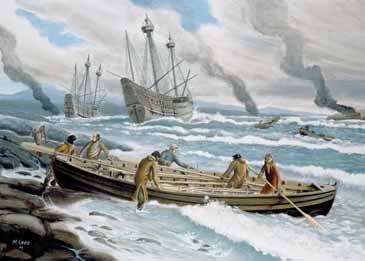
Interesting facts about Basque Whalers/Sailors that I learned from Christine Echeverria Bender during a presentation she gave at Jaialdi:

  • The first recorded transaction involving Basque sailors selling whale oil was in the year 670. The customer was a French abbey.
  • The contracts of Basque sailors stipulated that they would receive a specific amount, 2-3 liters, of sagardoa — Basque hard cider — each day.
  • euskal-etxeak-whalers-1In addition, all of the people on the ship, including the cabin boys, were paid, at least in part, with oil.
    • This model was unique in Europe.
    • It provided a greater incentive for success.
  • The churches in the Basque Country taxed each ship returning to port, wanting the tongue of the whale and some percent of the oil.
    • Many churches were financed by Basque whale oil.
  • Often, cabin boys were left behind on foreign shores, such as Newfoundland, to learn the local languages.
  • Some times, local populations fought each other for the right to trade with the Basques.

Images were found in this issue of Euskal Etxeak.

Images from Jaialdi

Jaialdi is in the books, already 2 weeks past, and I thought I’d share a few photos and moments from the festival.

Jaialdi 2015-Basque Whalers

For me and my family, Jaialdi began with a visit to the Basque Block on Wednesday, when we quickly ran into some old friends from our Seattle days. On Thursday, I attended a presentation by Aimar Arizmendi, who, with his father, is organizing a cruise in Newfoundland that will visit some of the sites frequented by the Basque Whalers of yesteryear. The presentation featured Christine Echeverria Bender, author of The Whaler’s Forge, and her experiences researching the history of Basque whalers in America. It sounds like an exciting trip!

Jaialdi 2015-NABO Lehendakari

Jaialdi 2015-Reception Lehendakari

Friday was dominated by the NABO convention, which I attended representing New Mexico Euskal Etxea. During the meeting, the Lehendakari of the Basque Government, Iñigo Urkullu, addressed the NABO delegates and, shortly later, Jaialdi as a whole at a reception at the Convention Center. He highlighted the continuing ties between those Basques in the diaspora and those in Euskadi and the need for even stronger ties between all of us.

Jaialdi 2015-Market

On Saturday, things shifted to Expo Idaho, which featured food and drink booths, dancing, and sports. There was also an indoor market, with wares of all types from a number of vendors. It was packed, a testament to the wonderful items on display. And maybe the high temperatures outside the air-conditioned market…

Jaialdi 2015-Dantza 1

Jaialdi 2015-Dantza 2

Jaialdi 2015-Dantza 3

No Basque festival is complete without dancing and we saw a few groups perform. The last group we saw was from Nafarroa, and I was told by John Ysursa that this was the first time that a group from Nafarroa had come to Jaialdi. They were extremely entertaining, at one point each of them kissing one of the Oinkari dancers watching from the floor.

My daughter really enjoyed watching the dancers. I asked Gloria Lejardi, who tried to teach me Basque dancing when I was a kid, if she would teach my daughter a few steps. I’ve still got to work on her a bit. I keep teasing her that, if as a boy I’d only realized how much women liked a good dancer, I may have stuck with it…

Jaialdi 2015-Aizkolarri Blurry

That other staple of Jaialdi is the sporting events. We didn’t make it to Sports Night as it seemed a bit much for a 7-year-old. However, we did get to see some wood chopping. I don’t recall now if my daughter took this picture from my shoulders, or if I did. I thought it turned out cool. You can blame it either on my moving too much (if my daughter took it) or the kalimotxo (if I did).

Jaialdi 2015-Basque Center Singing

Every night the Basque Block was full of revelers that would break into song or dance at a moment’s notice. The singing really seems to make a Basque festival.

Jaialdi 2015-Amuma Says No

On Sunday, the last night of Jaialdi, Amuma Says No played at the Basque Block. It was the first time I had heard them live. The crowd was really into it, with kids both young and old dancing to the music. It was a great ending to a great festival.

Jaialdi was also filled with family, as my dad had a cousin visit from Euskadi and my mom’s family had a big reunion. Almost all of the cousins gathered, one of the few times since my grandmother died. It was great seeing everyone! I tried to keep up with the younger cousins as they went bar hopping. I held my own for a while, but bowed out a little earlier as the NABO meeting was coming up the next day. Yeah, that is my excuse…

It was great seeing so many old friends as well as meeting new ones, ones I’ve only known via email before. I look forward to the next Jaialdi!

That Old Bilbao Moon: An Interview with Joseba Zulaika

thatoldbilbaomoonThat Old Bilbao Moon is a complex and multifaceted book. Part memoir, part the history of a generation of Basques growing up in the aftermath of the Spanish Civil War and World War II, and part the story of the city of Bilbao and her people, Joseba Zulaika’s book takes a page from Dante and describes the history of the Basque Country via the lens of Bilbao. It is a wide ranging account, touching on the various underpriviledged and stigmatized classes of Bilbao’s people and the multitude of characters Zulaika has known that were connected, in one way or another, with the political and social upheaval that typified Euskadi in the later half of the 20th century. These were the Basques who formed the first Basque government and were subsequently exiled after Franco won the Spanish Civil War and, later, the young men and women who were disgruntled with the perceived failure of the earlier generation and turned to violence as a way of pursuing their goals.

Zulaika’s tour of his generation and the forces that shaped it delves deep into the collective psyche of those men and women, often through philosophical discussions that, to be honest, were beyond me. But they provide a touch-stone for the environment in which the men and women that formed ETA and, in some cases, later found alternative paths to shape the future of their country. After the turmoil of a generation that rejected the politics of Aguirre and his contemporaries, modern Basque politics has begun a return to that approach that offers new paths for the future. As Bilbao has been reborn with the construction of the Guggenheim Museum and the so-called “Bilbao effect”, so to does the entirety of the Basque Country see new possibilities for a bright future.

Joseba Zulaika kindly “sat down” (at his computer) and answered some questions I had about That Old Bilbao Moon.

Buber’s Basque Page: In your book, the history and struggle of the Basque Country, at least over the last 100 years, is embodied by Bilbao. Bilbao is an inferno in which the Basque identity is both forged and struggles. I’m curious as to what the other two Basque capitals, or for that matter, Pamplona, symbolize for you? Gipuzkoa has a higher percentage of Euskara speakers. Does Donostia have a different symbolism than Bilbao? Or is Bilbao special because of its history of the workers and its proximity to Gernika?

Joseba-ZulaikaJoseba Zulaika: There are several reasons why I chose Bilbao for my book. Its historical proximity with and symbolic centrality of Gernika was one (and its relevance in the politics and history of art — Picasso — of the 20th century). The immediate reason was the establishment of the Guggenheim Museum and the international echo this had in the world of architecture, art and urbanism. I was writing in English for an international audience and the readers could have a reference about the Basques though the Guggenheim. And there were other reasons having to do with the recent history of the modern Basque Country, my generation’s struggles (euskera, ETA, nationalism, socialism), as well as autobiographical (I was in a convent there and studied in Deusto). Donostia or Gasteiz or Pamplona would share some of my generation’s themes and would have other historical and cultural references. Given my own interests and from the perspective of an international audience, Bilbao was the city.

BBP: It seems to me that your generation delved deep into philosophy, something which I think isn’t happening so much anymore. Why was philosophy such an important factor in your generation’s lives as compared to today’s youth? Are you alarmed by a seemingly lack of interest in philosophy today?

Joseba Zulaika: I wouldn’t say we were necessarily more “philosophical” than other generations, but those of us who grew up in the 1960s in the Basque Country, many forced into an educational system controlled by religious orders, and in a convulse period of fighting dictatorship with revolutionary ideals, we were subject to conflicting worldviews and moralities that required thinking and philosophical arguments.

BBP: You mention how, in the last three generations, leisure has supplanted work as a source of satisfaction. Where do you see this going? Is this sustainable? Can a culture or economy that exists solely to consume survive?

Joseba Zulaika: On the one hand, there is a remarkable change regarding the value of work, leisure, consumption. On the other hand, as the majority of the youth can’t find work in the current Spanish economic slump, the search for employment is pushing many young people abroad, work being the only way for having a middle-class lifestyle.

BBP: As you write, your generation, the generation of ETA, rejected the politics of Aguirre as failed, as “impotent fathers” who had not fulfilled their promise of Basque nationalism. However, at the same time, you show how Aguirre and Prieto resolved, at least at a personal level, their political impasse and that modern politicians almost embrace the ideas of Aguirre. What do you think the true legacy of Aguirre and his generation is, post-ETA? Did Aguirre accomplish more than what was thought?

jose antonio aguirreJoseba Zulaika: You could say that Aguirre and Prieto’s complicity has been repeated to some extent between Arnaldo Otegi and Jesus Egiguren in their search for overcoming the political impasse posed by ETA. Aguirre was an extraordinary man whose fate in a fascist Europe was tragic; he was a radical Christian and democrat who had to antagonize the Catholic Church and was abandoned by the European democracies. Some founders of ETA dismissed him as too accommodating with Spain, but his figure is unparalleled in the history of Basque nationalism and for many, including people on the nationalist left, he is the best guide for the kind of politics that is currently needed.

BBP: For your generation, the abondonment of Christianity is linked to the previous generation, their failure to establish an independent Euskadi, and a rejection of what they believed. However, it seems to me that atheism has risen across Europe and is not uniquely a Basque phenomenon. What other factors, broader than the Basque experience, have also pushed society in this direction?

Joseba Zulaika: Bilbao, like Basque society in general, has been a very Catholic city. But large pockets of atheism became a social reality at the turn of the 20th century with the creation of the socialist movement and the struggles of the working class. Many Basque nationalists stopped going to church as the result of the Catholic Church’s implication with Franco. Many of my generation, raised in seminaries, lost their religious faith as the result of getting involved in political protest. But this was nothing exclusively Basque of course; we were part of a larger European trend towards a more secular culture.

ela-valentin-bengoari-bubu_3BBP: When you describe your discussion with the priest Bengoa, you highlight how he saw the break with ritual and ceremony as possibly beneficial, that breaking with religiousity might be good. That those who are most Christian are those that are the most anti-Christian in their language. It seems to me that the opposite is also often true, at least in the US. Those that profess their Christian values the most are often the least Christian, in some sense. How do you view this dichotomy?

Joseba Zulaika: That was exactly how those radical Christians saw it: true religion is not about going to church and taking the sacraments, it is about helping the poor. The only God they accepted was the God of the poor. This led to the theology of liberation and to accepting ideas that might sound revolutionary. What they were doing was taking literally the Christ’s message that “what you do to one of these people, you do it to me.” Nothing was more deplorable to them than a Church that sided with the rich.

BBP: What is your view of the recent efforts by Scotland and Catalonia, and the ongoing efforts in Euskadi via Gure Esku Dago, for a voice? At least in Scotland, the people, in the end, rejected separating from the United Kingdom. If given the chance, will events turn out differently for the Basques and Catalans?

Joseba Zulaika: Scotland is fortunate to be in the United Kingdom and to be allowed to express the people’s will through a referendum. Basques and Catalans are simply not allowed such a referendum. This has been the losing struggle for Basques: the denied right to express their political will. The current situation in Catalonia is explosive, as they have decided to dismiss Spain’s prohibition to hold a referendum by framing the September 27 elections as “plebiscitary”—meaning that they will interpret a favorable vote to the parties seeking independence as a mandate to act and go ahead with secession.

BBP: Basque society today seems to be a series of polar opposites: Catholocism versus atheism, folk versus punk music, leisure versus the working poor, factories versus basseria. Is this simply a transition period from one time to the next, or is this inherent in Basque society?

Joseba Zulaika: Such polar opposites are primarily the creation of the analyst who has to make sense of the cultural and social complexity. But a century of sharp changes and transitions in every aspect of life has tended to create antagonistic oppositions that have made for turbulent times. This is not something uniquely Basque but, given the enormity of changes in concrete areas of culture and politics, the share among Basques for such polar opposites has been remarkable.

BBP: You mention that Aguirre finally became disillusioned when the US policy to contain communism meant siding with Franco’s government. In fact, the outcome of the Spanish Civil War was in large part a consequence of the West not wanting to get involved. Maybe it is foolish to play “what if”, but how do you think things might have turned out if the West had taken up the Republican and Basque causes?

Joseba Zulaika: Hitler and Mussolini sided openly with Franco. The democratic powers hypocritically adopted a policy of “neutrality.” Had they sided with the Republic, Franco would not have won. The U.S. was Aguirre’s only promised land of freedom where he found refuge—until even the U.S. sided with Franco in the early 1950s. The betrayals suffered by Aguirre would lead soon to ETA and another half a century of political turmoil for the Basques.

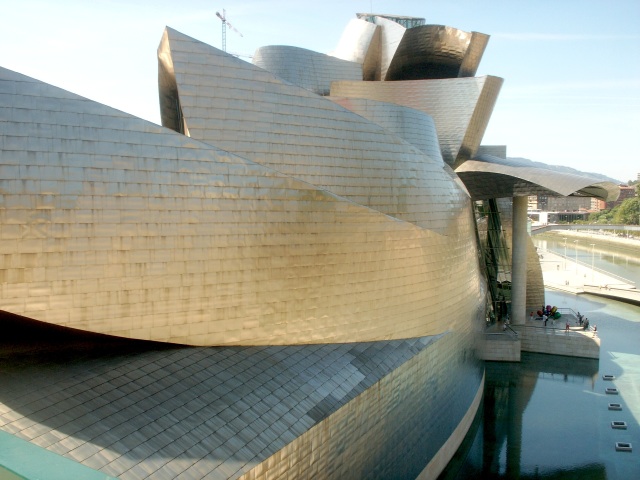
bilbo09-1BBP: As you mention, you were one of those that was initially opposed to the idea of the Guggenheim in Bilbao. Later, however, you changed your mind. Was there a specific thing that changed your mind? What lessons do you think the Guggenheim effect has for other cities or nations? Is it a uniquely Basque phenomenon or something that has broader lessons?

Joseba Zulaika: I changed my mind when I saw Gehry’s masterpiece of a building and the worldwide effect it had on architecture and art. Bilbao became the paradigm of a city transformed by iconic architecture and every city wanted to replicate the same “Bilbao effect.” I soon realized that the ironies I had seen in the deal between the Guggenheim and Bilbao were not the true story, but rather the power of the architecture and the will of Bilbao to transform itself into a new postindustrial city. Gehry says that the relationship with the client is the most important thing in the creation of his work and it says a lot about Bilbao and the Basques that he built his masterpiece there. There have been news about dozens of other similar Guggenheim projects worldwide but so far it has materialized only in Bilbao. The broader lesson is that a success story such as Bilbao doesn’t happen unless a city really believes in its future and is willing to do what it takes to make it happen.

BBP: What is next for Joseba Zulaika? What projects are you working on?

c0ade769951bdf1b_shutterstock_153923993.jpg.xxxlarge_2xJoseba Zulaika: My next project is a book on Las Vegas. Lately I have been working mostly on two main areas of research — the transformation of cities, and drones and counterterrorism. Las Vegas combines both these interests, as drones are operated mostly from the Creech Air Force Base near Vegas. Besides, I have lived in Nevada close to three decades and this now my place.