A Man on the Move Studying Movement of Basques: An Interview with Pedro Oiarzabal

Pedro Oiarzabal has traveled the world, taking the pulse of Basque diaspora communities across the globe. In normal times, he can often be found at Basque festivals, talking to everyone he can, to understand what being Basque means. Currently, he is the co-lead of a project that aims to document the stories of Basque veterans of World War II. In this interview, Pedro discusses the evolution of Basque identity, the origin of his own interest in the immigration experience, and how Basque groups have used technology to keep connected during the pandemic.

Buber’s Basque Page: Pedro, while many know you through your various efforts to document the history of the Basque diaspora, there are likely a few who do not, so let’s start with an introduction. Who is Pedro Oiarzabal?

Pedro Oiarzabal: First of all, thank you Blas for your time and for the opportunity to share with you my thoughts and work on the Basque diaspora.

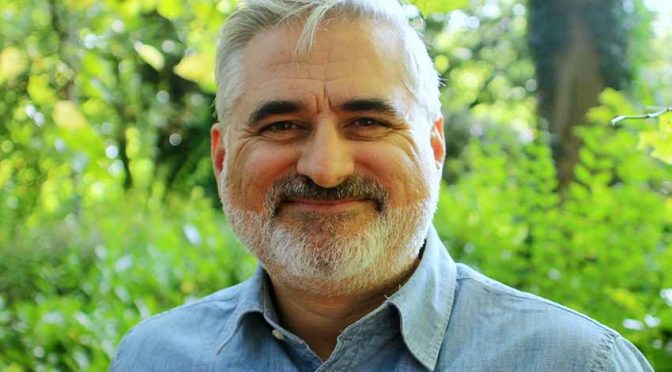
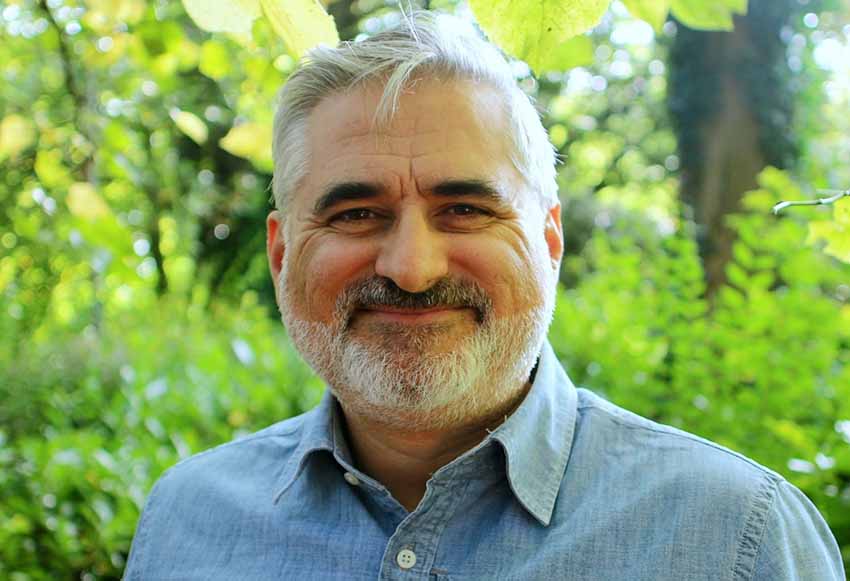
Pedro J. Oiarzabal was born and raised in Bilbao and has spent much of his life between the Basque Country, Ireland, and the United States. He holds a PhD in Basque Studies-Political Science from the University of Nevada, Reno. He is the Director of Social Innovation Research at Arima Social Lab. His research examines the interaction of diaspora communities with information and communication technologies, with particular emphasis on the Basque case. Among his publications are Gardeners of Identity: Basques in the San Francisco Bay Area (2009), Diasporas in the New Media Age: Identity, Politics, and Community (2010), and The Basque Diaspora Webscape: Identity, Nation, and Homeland, 1990s-2010s (2013).

I am just an ordinary person, quite fortunate to have a great family and wonderful friends who have always been behind me, supporting all my endeavors. I was raised in a happy home filled with love. Our parents instilled in us the ethics of work and the love for learning. They did everything for us so we could reach our dreams. For that, I will always be in debt to them.

BBP: Much of your professional work has focused on the diaspora. What attracted you to this specific subject?

Pedro Oiarzabal: At home, we grew up listening to stories about our relatives emigrating to Cuba and Mexico… In fact, my grandfather, my mother’s dad, left the farmhouse – the baserri – and made a new beginning in Madrid, Spain, where my mother was born; though, she grew up in the family’s baserri and was educated in Bizkaia. My great-grandfather, on my father’s side, also left his hometown in Gipuzkoa and made Bizkaia his new home. So, the narrative of migration has been a part of my entire life. My interest for the subject, for learning about our common history of migration from a family level to a macro level, has always been there. I also left my hometown of Bilbao when I was 22 years old to continue my university studies, which led me, years later, to the Center for Basque Studies at the University of Nevada, Reno. There, I obtained my PhD degree with the subject of the Basque diaspora and the Internet, opening up a new and exciting subfield in Basque Studies.

BBP: When I last interviewed you in 2006 (https://buber.net/Basque/2020/11/25/an-interview-with-pedro-oiarzabal/; we are getting old!), one of the questions we discussed was the evolving view of Basque identity. During the course of your career, how have you seen what it means to be Basque change or evolve?

Pedro Oiarzabal: Indeed, time has gone by since then, which means that we are still here enjoying another conversation on the meaning of Basque identity and its underlying factors. We are not the same as we were 14 years ago and for sure we will not be the same for our next talk in the near future. Similarly, our sense of individual and collective Basqueness has also been evolving with the pass of time. What I have learned in my studies during all those years is the growing importance that the emotional aspect of identity is gaining, particularly within the realm of the Basque diaspora. New Basque diaspora generations across the planet are increasingly relying on their Basque identity’s emotional side, which goes hand in hand with the prolific use and display of Basque symbols. 
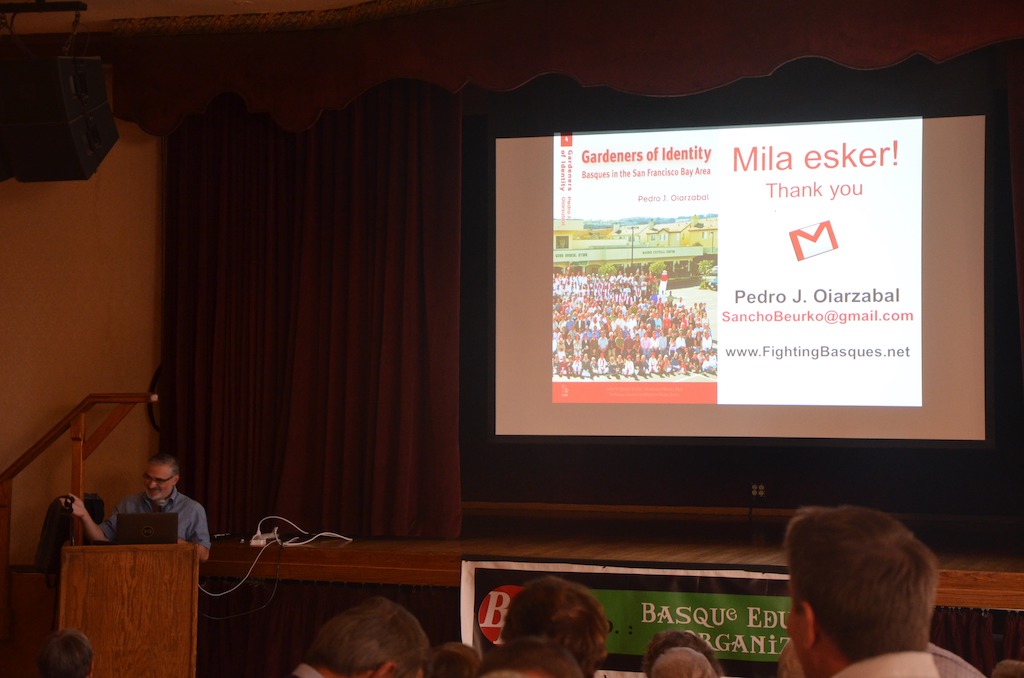
Pedro giving a talk at the Basque Cultural Center for the Basque Educational Organization’s Cultural Day (San Francisco, CA, 2019; his last time in the US for now). Photo taken by Philippe Acheritogaray.

BBP: Can you elaborate on this point a bit? When you say that the emotional aspect of identity is growing, what aspect is then diminishing? Do you see the attachment to symbols overall positive, or is there some level of superficialness associated with it?

Pedro Oiarzabal: Anthropologists such as William Douglass and Lisa Corcostegui already expressed their concerns over the increasing dependency of symbols to elaborate different aspects of Basque identity in the diaspora and as you said the somehow superficialness associated with it. They talk about Basque diaspora identity in terms of becoming “more show than substance.” For instance, Basque Argentinean Mikel Ezkerro and Basque American John Ysursa, both historians, advocate for the importance of educating new generations. Basque children and teens may become masterful dancers but ignore why they dance what they dance. On St. Patrick’s Day, everybody is Irish, right? If you wear green, drink “green” beer (something unheard of in Ireland) etc., etc., does it make you Irish? Is this what the Basque diaspora is heading to? So, this takes us back to square one: What is today’s meaning of Basque identity in the world?

BBP: How do we avoid becoming a group, a culture, that is more show than substance? Are there examples you’ve seen, either in the Basque diaspora or in the broader immigrant communities, where people have been able to keep a real connection with their culture?

Pedro Oiarzabal: There are good examples of efforts carried out by Basque diaspora communities worldwide that continuously counteract the dangers of becoming more show than substance, by, for instance, teaching the language, culture, and history; organizing summer camps for their youngest members; collecting oral testimonies and local histories; and hosting public lectures and cultural tours in an attempt to educate and enhance the knowledge about all things Basque. Diaspora communities and their institutions are constantly struggling to survive and keep their traditions alive. Particularly, the pandemic and its consequences have really tested the Basque diaspora associations’ capabilities for survival. Many have passed this “stress test,” others without any external help will fail and may never recover. All those activities require resources. The cost of becoming a “show” is higher than the cost of keeping the “substance” behind the show. Can we afford to lose for good a single diaspora association?

BBP: Another question we discussed back then was the role of the Internet in helping groups such as the Basques maintain their identity. Do you think that promise has been largely fulfilled, or have important opportunities been missed? Has your view of the Internet and its role in maintaining identity changed over the years?

Pedro Oiarzabal: The result of my work demonstrates that the promise has been fulfilled, though unevenly. If not all, nearly all Basque diaspora clubs in the world have a presence in multiple platforms on the Web. The majority has really taken advantage of the opportunities offered by those platforms, and particularly by social network sites. Some others remain disengaged.

I think that physical confinement as a result of the pandemic – if anything positive has come out of this terrible situation – has helped many individuals and organizations at home and abroad to rethink and somehow renew their relationship with the Internet, the Web, and the social network sites. For instance, many Basque diaspora associations around the world have rediscovered the usefulness of those technologies in order to keep alive their social and cultural agenda, but 100% online. For some clubs this has been nothing new, for others it has been a new experience. Anyhow, the Basque diaspora nowadays is also an effective community, largely based on the Web and its social network sites.
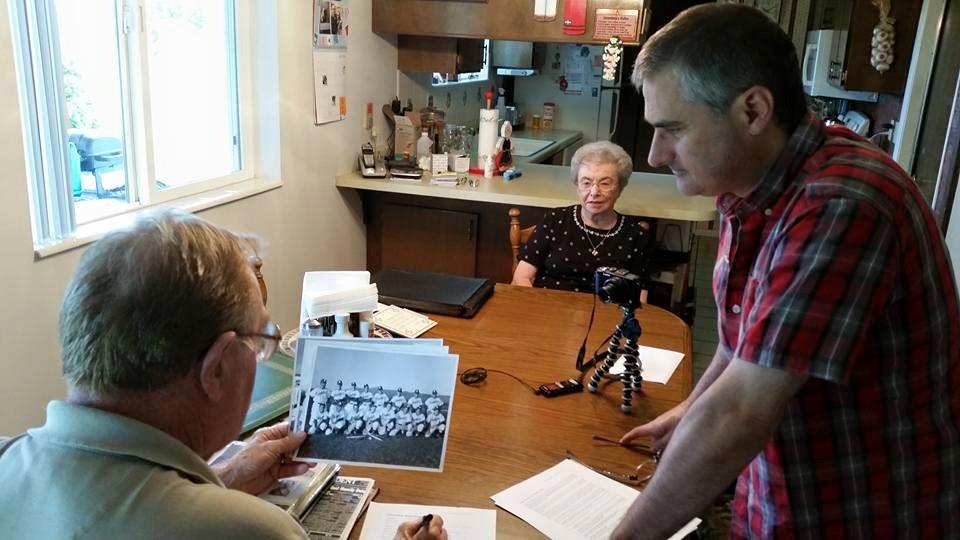
Pedro interviewing Frank Yraguen, with his wife Rosie, at their home in Elko, NV in 2015. Photo taken by Anita Anacabe.

BBP: Your current project, “Fighting Basques,” focuses on the contributions of Basques in the diaspora to the efforts of World War II. How did this project arise? What drew you to this particular historical era?

Pedro Oiarzabal: The research project “Fighting Basques: Memory of World War II” was created by the Basque non-profit historical association Sancho de Beurko in 2015 with the goal of studying the Basque participation in the Allies side during WWII. Though I was involved from the very beginning with the project, my role was just as a consultant. Later on, the association offered me to lead the research project as co-principal investigator with Guillermo Tabernilla, founder of the association and a military specialist. By then, research had been completed regarding Basque involvement with the United Kingdom, Free France, and the Soviet Union during the last world war. Right now, under the auspices of the North American Basque Organizations, we have focused on Basque America’s contributions to the war efforts. So far, we have completed research in 33 States and Puerto Rico, with the result of writing up nearly 900 biographies. We are constantly publishing original articles on Basque WWII veterans on our blog, which you kindly translate for us, and we are producing a short documentary film on Basques in the US Marine Corps.

For being our “greatest generation” little academic attention has been given to our Basque veterans. Most history books had never recorded the involvement of Basques and Basques Americans in WWII under US leadership. This research project is a window through which to explore not only the military side of those men and women of Basque origin, which by itself is already good, but also to learn about their individual and family biographical histories. In a way, we will be able to study the migration and settlement history of hundreds of Basque families across the country from the mid-19th Century to post-WWII.

BBP: Is there a particular story that you found particularly inspiring or surprising?

Pedro Oiarzabal: Most, if not all, of the histories that we help to identify and make visible through the “Fighting Basques” project are perfect material for any Hollywood epic movie on WWII. It is difficult to just talk about one or another particular hero. We have Basque veterans in every single branch of the US Armed Forces and in every single Theatre of Operations throughout the world. For being a small ethnic community, the Basques had played a significant role in WWII. Our case study may help not only to educate our communities but for other researchers to learn about other migrant communities’ participation in the last world war.
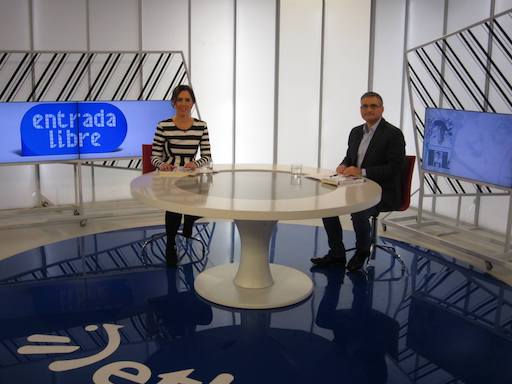
Pedro being interviewed by Vanessa Sanchez for EITB in 2013, for his book The Basque Diaspora Webscape.

BBP: What other aspects of the Basque diaspora are you currently studying?

Pedro Oiarzabal: Beyond “Fighting Basques,” which takes most of my time, I continue conducting research on the Basque diaspora and its projection to the Web, with particular emphasis on the social network sites. Right now, I am looking into Instagram to find out how the Basque diasporans perform their identities and sense of belonging. 

BBP: A big change in the Basque diaspora, at least in the United States, is the cutoff of the flow of immigrants from the Basque Country to the United States. In real ways, the direct connection we in the United States have with the Basque Country is being lost. How do you think we can best keep the relationship alive, even strengthen it?

Pedro Oiarzabal: For decades, many social scientists have called for the defunction of Basques at home and abroad, but we are still here. And there is no evidence suggesting that we will not be here in a near future. Basques are constantly leaving their home country but not in big numbers and not for exceptionally long time. In the US, it is quite common to hear among Basques that they are a “dying race.” It is perfectly understandable. The last migrant generation is disappearing and there are no newcomers (in massive numbers) for the past fifty years. The chain migration that began over a century ago has been broken. That direct connection that you mentioned is indeed (partially) lost. However, it has been somehow replaced by temporary visitors, family, personal and professional short stays in the Basque Country, educational exchange programs such as USAC, cultural and musical tours, mus tournaments (one of the most important transnational cultural programs of the Basques nowadays), mass media, the Web and its social network sites. It is up to us to keep those relationships alive, to keep our culture alive.

BBP: In many ways, 2020 was a lost year, with lots of plans and opportunities postponed or outright canceled. What are you most looking forward to in 2021, in terms of your research and travels?

Pedro Oiarzabal: Regaining a certain degree of “normality” would be a great step forward in our part of the world. Obviously, this would entail the physical participation in international academic gatherings and field research, which I miss the most. I am always open to new ideas, projects, and collaborations with private and public institutions, with a special emphasis on community-based work. Unfortunately, we live in a quite uncertain time, and it is not clear when this “normality” would be fully back. Maybe, it will not happen until the end of the year. So, for now, I will continue to take part in virtual conferences, while I am planning new venues of research maximizing the resources that exist on the Web. 

BBP: Do you have any parting thoughts as we conclude this discussion?

Pedro Oiarzabal: Financial resources aside (which are always of great need), my work on the Basque diaspora has mostly been possible because of the active participation of individuals and associations, including the North American Basque Organizations, through the worldwide diaspora for which I am extremely grateful. Also, I would like to thank you for your time and for allowing me to discuss my research with you. Eskerrik asko bihotz bihotzez!

BBP: Mil esker, Pedro!

Basque Fact of the Week: San Martin Txiki, the Basque Trickster

Lots of stories describe how humans discovered the elements of civilization. We have fire because Prometheus was able to steal it from the gods. And such stories about the theft of fire are particularly common, with Rabbit or Coyote stealing fire in the Americas, Prometheus stealing it for the Greeks, and Pkharmat of the Vainakh peoples bringing fire to humankind. And it isn’t just fire. The Hebrew Book of Enoch tells of the fallen angel Azazel teaching people, amongst other things, the ways of metalsmithing. All around the world, there are stories of characters that help civilize people, that teach us how to tame nature. For the Basques, this hero is San Martin Txiki.

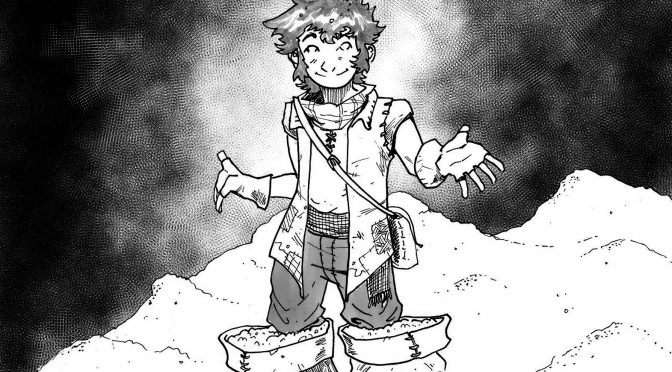
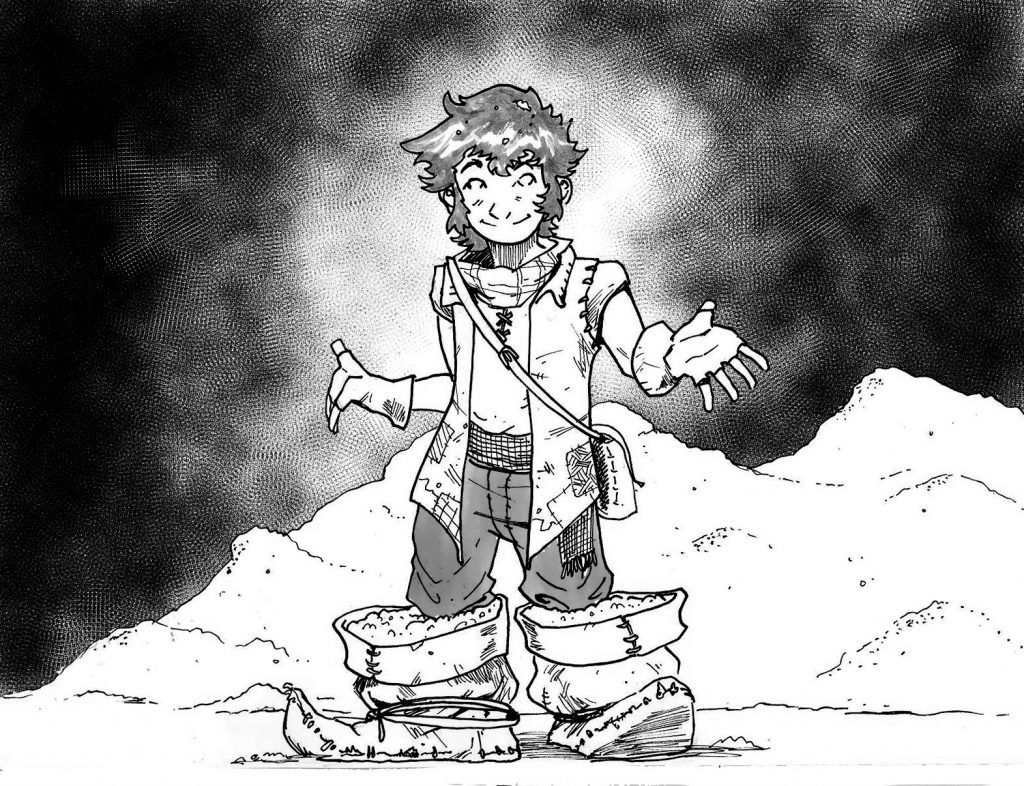
One rendition of San Martin Txiki, the trickster, with his boots full of grain, by Iñaki Sendino. He has a few other cool drawings of Basque characters.
  • San Martin Txiki was the first to bring wheat to people. He climbed up to a cave where the Basajaunak, who knew how to cultivate wheat, lived. He bet them that he could jump over their piles of wheat more gracefully than they could. Of course, they jumped over the piles with ease and grace, not touching a grain of wheat. When San Martin Txiki jumped, he fell in the middle of the pile. But, he had worn extra large boots that filled up with grains of wheat when he fell in the pile, which he then brought back to the people.
  • Similarly, he tricked the Basajaunak to learn to make a saw. The Basajaunak already knew the secret of making a saw. San Martin Txiki had his servant announce to the Basajaunak that he too had made a saw. Bewildered, they asked if he had seen the leaf of a chestnut tree as inspiration. The servant replied no, but conveyed this information to San Martin Txiki who was then inspired to make a saw. The Basajaunak snuck in at night to see Txiki’s work and tried to destroy the new saw by bending the teeth back and forth, but this actually made the saw better.
  • He did the same thing to learn how to solder iron, by having his servant announce that he had done so and then having the Basajaun naively reveal the secret: sprinkle clay water on the iron. In some stories, it is the Devil that he tricks, not the Basajaun, as when he learned (again, via his servant) that he needed the sturdy alder as a shaft in his mill, not the weaker oak.
  • In Basque mythology, it is rare to have stories about saints, where saints are the hero. Those stories that do exist revolve around a saint helping locate a hermitage. The stories about San Martin Txiki are the only ones featuring a saint-hero. The other element of his stories that is unique is the special role of the Basajaunak. Usually, they are depicted as wild men linked to nature, not to agriculture and industry. That is, most of the time, they are more wild than humans, not less. That they play this role of being civilized in these stories suggests a more complex origin.
  • Further, the stories of San Martin are unique to Europe. While one might be tempted to look at the Greek stories of Prometheus as potentially connected, that hero stole from the gods and was punished for it. San Martin Txiki stole from the local wild men and was never punished. One possible connection that explains all of the curious attributes of San Martin Txiki is with Scandinavian mythology.
  • In Scandinavian mythology, giants are not simply dumb brutes who terrorize humans, as they are in, for example, Celtic mythology. They are ingenious but naive, masters of technology but easily tricked. Further, one of the Norse gods, Thor, always has servants in tow when interacting with the giants, be it Loki or Thialfi. It is often Loki or Thialfi that trick the giants so that Thor can best them, in much the same way that San Martin Txiki uses his servants. This doesn’t prove that the stories of San Martin Txiki have a Norse origin, but this is the best link between those Basque stories and any others in Europe. So maybe San Martin Txiki is an ancient Basque-ization of Thor, or maybe Loki. Or maybe it is the other way around?

Primary source: Hartsuaga Uranga, Juan Inazio. San Martin Txiki. Enciclopedia Auñamendi, 2020. Available at: http://aunamendi.eusko-ikaskuntza.eus/es/san-martin-txiki/ar-114042/

Buber’s Basque Story: Part 35

“Where did he go?” asked Maite as they crossed the threshold of the exit. Maite had been nervous when the inspector had begun questioning them, but somehow they knew the answers. Whatever had happened to them when they went back in time, they had brought a full complement of memories, as if they had a complete backstory to facilitate their jaunt through time.

Kepa scanned the room in front of him. People were amassed at the top of a great staircase. A man yelled instructions. “Those going west or south, keep to the right! Those going east or north, keep to the left!” 

Buber’s Basque Story is a weekly serial. While it is a work of fiction, it has elements from both my own experiences and stories I’ve heard from various people. The characters, while in some cases inspired by real people, aren’t directly modeled on anyone in particular. I expect there will be inconsistencies and factual errors. I don’t know where it is going, and I’ll probably forget where it’s been. Why am I doing this? To give me an excuse and a deadline for some creative writing and because I thought people might enjoy it. Gozatu!

Kepa saw Blas in the crowd, moving to the right. “There!” he exclaimed as he grabbed Maite’s hand and pulled her behind him. But, before they got to him, another man intercepted Blas and took him down the central staircase. The man was dressed in the same nondescript suit that most of the men in the room wore. However, when he led Blas down the stairs, he turned to scan the crowd. Kepa and Maite saw a glimpse of his face as he and Blas disappeared down the stairs. The sight of the man’s immaculate goatee hit them like a punch to the gut. 

Maite turned to Kepa. “De Lancre!” she exclaimed as both she and Kepa pushed their way through the crowd toward the central staircase. When they reached the top, they saw de Lancre lead Blas through a door. They rushed down the stairs as men, women, and children on each side of them watched, some of them shaking their heads. When they reached the bottom, they pushed the door open and found themselves at the end of a long and empty corridor.

Rushing down the corridor, they followed it as it curved to the right. The sides were flanked by large windows and they could see the grounds of the complex outside and, in the distance, the water that surrounded the small island. As they continued to run down the passageway, it connected to another building. Suddenly, they found themselves at a fork where the corridor split into two.

“Where are they?” asked Maite. “Which way do we go?”

“Entzun! Listen!” replied Kepa. “Do you hear that?”

From down the hall to the left, they could hear the sounds of a struggle. Intermingled with the sounds of scuffle, they heard a voice yell “Ez!” and “Gelditu!”

“Blas!” Maite and Kepa exclaimed in unison as they dashed to the left. They stopped in front of one of the doors labeled “laundry.” The sounds were clearly coming from behind that door. They could hear Blas yelling in his thick Gipuzkoan accent. “Itzuli hori! Give that back!”

Kepa looked at Maite as he grabbed the doorknob and turned it, pushing the door open with a show of force, hoping to surprise the men on the other side.

Basque Fact of the Week: The Concept of Being

The desire to understand what is real and what is not has been central to human thought for millennia and has driven some of our greatest philosophers to tackle the question: “I think, therefore I am.” There are two Basque phrases that epitomize the dueling views of being. On one hand, ‘izena duen guztiak izatea ere badauke — everything with a name exists.’ But, at the same time, ‘izenak ez du egiten izana — a name does not make something true.’ While today, we take it as a given that we are all individuals with certain unalienable rights, that hasn’t always been the way people, including Basques, viewed things. What is more “real,” the individual or the group? These questions are at the heart of our concepts of rights and of government.

  • While we don’t have any real written evidence of how ancient Basques, or proto-Basques, viewed themselves as beings, we can get some sense from analyzing myths. One thing that jumps out immediately is that characters in Basque myths are rarely given proper names. They are always referred to as, for example, “the Lady of Anboto,” “the Jentilak of Arrola,” “the Basajaunes of Muskia,” or “the Lamiñas of Bazterretxe.” That is, they are not given their own name, but the name of a place — the place lends its name to the characters.
  • Of course, in the Basque Country, this practice of taking names from places extended well into the 18th century as people were known not by their parents’ names, but by the names of their houses, of their baserri. Today, those names have moved beyond the place and adopted as ancestral names, passed from parent to child, but their origins are clearly taken from places, not people. A name like Uberuaga referred not to one’s father but rather to the house one lived in.
  • This suggests that the role of the individual in society was viewed very differently. Today, we are accustomed to placing the individual at the center of the system, and everything grows from there. However, in a society where places are at the heart of identity, the collective becomes the central element. Instead of individual achievement, the benefit to the group becomes the defining characteristic. People themselves become anonymous while the way their actions benefit others becomes the central story.
  • From this perspective, certain themes arise around the ancient concepts of being and self. People live and die, but the group, the collective, persists, as does the place it inhabits. People are transient, but places are permanent (at least relatively). That is why places are given names and people are named after places — those places will long outlast the people. Groups — home, neighborhood, town — are eternal and constant, even if people are not.
  • As described by Juan Inazio Hartsuaga Uranga, the head of some house, say Bazterretxea, is simply called Bazterretxe. If, while he is still alive, his son becomes the head of the house, the son is called Bazterretxe while the old man becomes Bazterretxe Zaharra (the Old Bazterretxe). And when he dies, he becomes Bazterretxe zena (the one who was Bazterretxe) according to the traditional use of Basque, because he cannot keep the name with him, it was never his, he was just borrowing it from the place.
  • The idea that the collective is the center of identity, not the individual, means that glory and curses belong to all, not just to the perpetrator of deeds. When the people of Agerre baserri tried to steal a gold bedspread from the Jentilak, their entire house was cursed, a curse that its current inhabitants still suffer many generations later — Agerre Agerre den bitartean (as long as Agerre is Agerre) — the curse does not expire as long as the Agerre house exists.
  • Whether the individual or collective is at the center of society has profound consequences. In an ontology — a concept of being — that is focused on the group, such as what ancient Basque culture may have been like, society can more easily mobilize people for the greater good. However, those people also have less freedom to pursue their own interests. On the other hand, if the individual is at the center, freedom is valued more highly, but solidarity with the group and the ability to mobilize for a common goal may be weakened.

Primary source: Hartsuaga Uranga, Juan Inazio. Ontología en la Mitología Vasca. Enciclopedia Auñamendi, 2020. Available at: http://aunamendi.eusko-ikaskuntza.eus/es/ontologia-en-la-mitologia-vasca/ar-153826/

Buber’s Basque Story: Part 34

Kepa and Maite found themselves shuffling along in a long line that snaked across the room, guided by a series of metal rails, toward several booths at the end of the room. Kepa turned and saw what seemed like thousands of people waiting in line behind them. He leaned over and whispered in Maite’s ear. “Whatever happened, at least we didn’t appear at the end of the line.”

Maite turned and also saw the throngs of people behind her. Many looked like they hadn’t slept for days and were barely upright on their feet. Unwashed faces betrayed the days they had been confined to the deepest levels of steerage. She wondered what hardships back at home had forced so many to brave the trip across the ocean and the unknown of a new country.

Buber’s Basque Story is a weekly serial. While it is a work of fiction, it has elements from both my own experiences and stories I’ve heard from various people. The characters, while in some cases inspired by real people, aren’t directly modeled on anyone in particular. I expect there will be inconsistencies and factual errors. I don’t know where it is going, and I’ll probably forget where it’s been. Why am I doing this? To give me an excuse and a deadline for some creative writing and because I thought people might enjoy it. Gozatu!

They continued to shuffle forward as the man in front of them presented his papers to the inspector who sat behind the large desk. The man was dressed as many others, with a dark suit and a felt hat with a crease down the center. He had a large mustache that he had clearly taken some time to groom before getting off the ship. He carried a small suitcase. He took off his hat as he faced the clerk.

“Name,” asked the inspector indifferently.

“Blas Telleria,” replied the man.

“Where are you from?”

“Zer? Que?” 

The clerk sighed as he waived over another man. “I need you to translate,” the inspector demanded. He then asked again, which the other man translated into Spanish, “Where are you from?”

“Mutiloa, Spain.”

“Age?” 

“Twenty-three.”

“Destination?”

“Yordan Bally.”

“Where?” asked the translator.

Blas handed the translator another piece of paper. “Oh,” said the translator as he turned to the inspector. “Jordan Valley, Oregon.”

The inspector, seemingly satisfied with Blas’s answers, stamped his landing card and let him pass. As Kepa and Maite took their place in front of the inspector, Blas made his way through the doorway off to the side. As he disappeared, Kepa and Maite noticed that his suitcase was glowing.

“We have to follow him!” said Kepa but before he could do anything, the inspector started interrogating them.

“Names,” he asked indifferently.

Fighting Basques: The Two Burials of the Sailor Peter Paul Parisena Mendionde

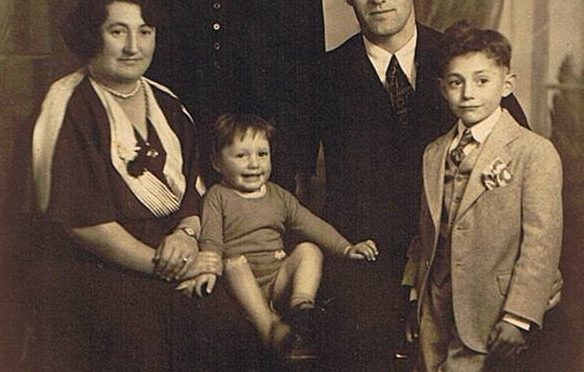
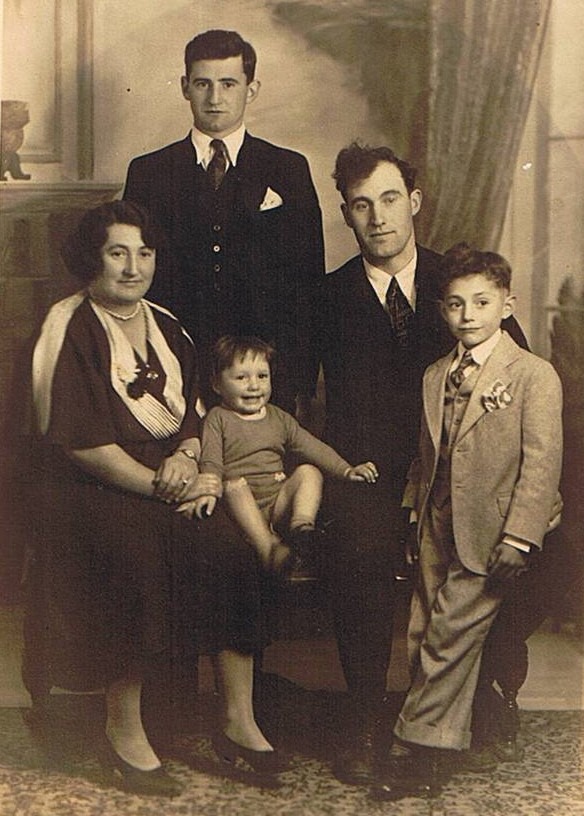
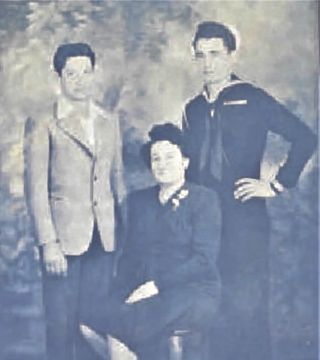
Photograph of the Parisena-Mendionde family in the early 1930s. From left to right Catherine Mendionde, little John, John Parisena and Peter. Standing is Catherine’s brother, Dominique Mendionde. (Courtesy of Domingo Mendionde’s grandson, Mitch Gariador, http://www.gariador.com/genealogy).

“Echoes of two wars, 1936-1945” aims to disseminate the stories of those Basques and Navarrese who participated in two of the warfare events that defined the future of much of the 20th century. With this blog, the intention of the Sancho de Beurko Association is to rescue from anonymity the thousands of people who constitute the backbone of the historical memory of the Basque and Navarre communities, on both sides of the Pyrenees, and their diasporas of emigrants and descendants, with a primary emphasis on the United States, during the period from 1936 to 1945.

THE AUTHORS
Guillermo Tabernilla
is a researcher and founder of the Sancho de Beurko Association, a non-profit organization that studies the history of the Basques and Navarrese from both sides of the Pyrenees in the Spanish Civil War and in World War II. He is currently their secretary and community manager. He is also editor of the digital magazine Saibigain. Between 2008 and 2016 he directed the catalog of the “Iron Belt” for the Heritage Directorate of the Basque Government and is, together with Pedro J. Oiarzabal, principal investigator of the Fighting Basques Project, a memory project on the Basques and Navarrese in the Second World War in collaboration with the federation of Basque Organizations of North America.

Pedro J. Oiarzabal is a Doctor in Political Science-Basque Studies, granted by the University of Nevada, Reno (USA). For two decades, his work has focused on research and consulting on public policies (citizenship abroad and return), diasporas and new technologies, and social and historical memory (oral history, migration and exile), with special emphasis on the Basque case. He is the author of more than twenty publications. He has authored the blog “Basque Identity 2.0” by EITB and “Diaspora Bizia” by EuskalKultura.eus. On Twitter @Oiarzabal.

Josu M. Aguirregabiria is a researcher and founder of the Sancho de Beurko Association and is currently its president. A specialist in the Civil War in Álava, he is the author of several publications related to this topic, among which “La batalla de Villarreal de Álava” (2015) y “Seis días de guerra en el frente de Álava. Comienza la ofensiva de Mola” (2018) stand out.

Pierre “Peter” Paul Parisena Mendionde was born on March 3, 1925 in the French town of Bordeaux, to parents from Nafarroa Beherea. His father, Jean “John” Santiago Parisena Maya, a veteran of the French Army during the Great War, was born in Banka in 1902, while his mother Catherine Mendionde Antchagno was born in Urepele in 1905. Although the exact date of Peter’s father’s immigration to the United States is unknown, it is known that at least three of his brothers (José, Francisco and Juan) also made the United States their new home. Francisco “Frank” and José “Joe” were born in Elbete, Nafarroa, in 1886 and 1897, respectively. José came to the country in 1920 and managed to run a small pension in the Californian town of Susanville in the 1930s.

Peter and his mother came to the United States in 1929 in the midst of a financial and socioeconomic crisis. At the end of that same year they were joined by their uncle Dominique “Domingo” Mendionde, who was only 17 years old. Born in Urepele in 1912, he resided in Southern California for most of his life, where he was dedicated to raising sheep. Domingo passed away in Chino, California at the age of 77. In 1930, Peter and his mother resided in the boarding house of his uncle José in Susanville. The following year Catherine had her second and last child, John, born in this northeastern California city.

Catherine and John eventually divorced, and between 1935 and 1940, the children lived with their father in Westwood, California, where he worked for a sawmill. Beginning in 1940, the children moved in with their mother and her now new husband in Reno, Nevada. According to Peter’s son Gary Parisena, “My grandmother ran the Star Hotel [for many years] on Second Street between Lake and Center [in Reno]. My family is Basque and they cared for Basque families.” [1]

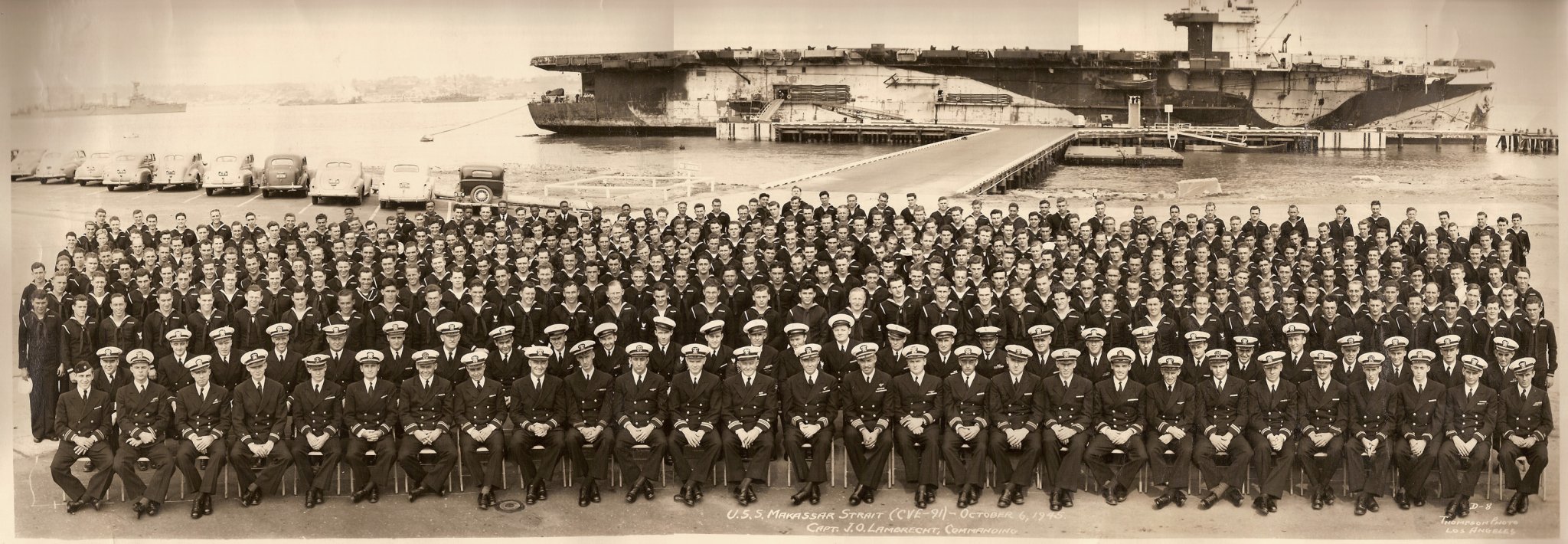
Peter was in his final year of high school at Lassen County High School in Susanville when he enlisted in the Navy on November 20, 1943, in Sacramento, California. He was dispatched to the Farragut Naval Training Station, in Idaho, and from there he was assigned to the escort carrier USS Makassar Strait, where he served as a gunner from April 27, 1944 until the end of the war. Also on board the aircraft carrier was the Basque-American Raymond Jay Garteiz (born in Ogden, Utah, in 1922), pilot of Composite Squadron 97 (VC-97). From September to October 1944, the Makassar Strait had the mission of transporting replacement aircraft to Hawaii and the Admiralty Islands, located north of New Guinea, in the southern Pacific Ocean. From April to May 1945, the USS Makassar Strait entered the fray, participating in covering fire during the Okinawa invasion. Peter had the opportunity to demonstrate his prowess as a gunner, while Raymond flew adventurous bombing flights over the island. Replaced by the escort carrier USS Shipple Bay, which received Squadron 97 aboard, Peter’s carrier headed to the Mariana Islands in the northwest of the Pacific, where it became a training center. Finally, it carried out repatriation of soldiers.

Family photo of Peter Parisena, in his army uniform, with his mother Catherine Mendionde and brother John Parisena during World War II (Reno Gazette Journal, April 22, 2019).

Peter returned to Pearl Harbor, Hawaii, on July 29, 1945, and from there he was dispatched to the Naval Base San Diego, California. Unfortunately, his father had died two months earlier, on May 29, in Susanville. (His mother would pass away in 1979 in Reno.) Peter was honorably discharged on December 9, 1945 with the rank of Seaman Second Class. “He never discussed the war with his family or friends, he never revealed the name of his aircraft carrier or his general experiences. He told a couple of generic stories, but said he saw some horrible things,”confesses his son Gary. [2]

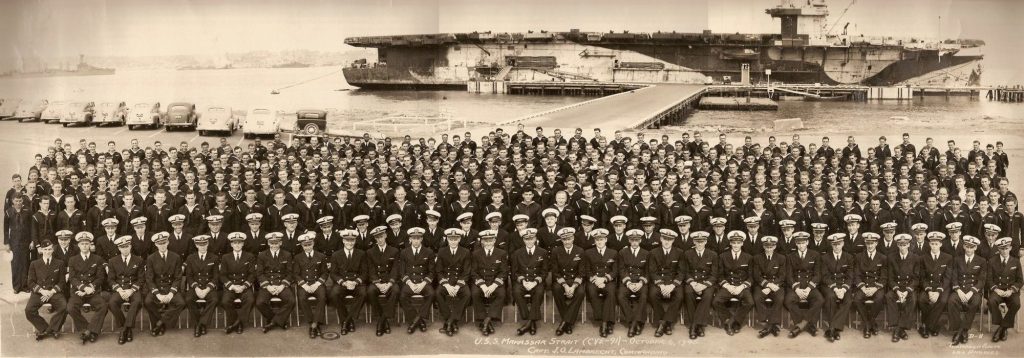
Official photograph of the crew of the USS Makassar Strait dated October 6, 1945 (NavSource Naval History, https://www.navsource.org/archives/03/0309102.jpg).

After the war, Peter returned to Reno where he worked in metallurgy for a time. He married and had two children. Peter passed away on July 24, 1988 in Reno, at the age of 63. He and his wife had divorced and the family had grown apart. Inexplicably, Peter was never buried and his remains, unclaimed, were kept by a local morgue. His brother John died five years later in Olympia, Washington. John had fought in the Korean War with the 1st Provisional Marine Brigade of the Marine Corps, being wounded in Seoul in 1950. He received the Purple Heart. The Parisena family, father and children, had taken part in three of the most important conflicts of the first half of the 20th century.

“Proud patriot” reads the inscription on Peter Parisena’s tombstone where his remains finally rest in the Northern Nevada Veterans Memorial Cemetery, Fernley.

On April 12, 2019, 31 years after Peter’s death, he and 14 other veterans, whose remains were unclaimed at the time of their death, were finally buried, with full military honors, in the columbarium of Northern Nevada Veterans Memorial Cemetery in Fernley. “Five members of the Nevada Army National Guard and seven sailors from the Fallon Naval Air Station, along with members of the [Nevada Veterans Coalition] carried the urns to the columbarium […] Gary Parisena received a folded American flag on behalf of his father and the other 14 veterans.” [3]. Rest in peace.

If you want to collaborate with “Echoes of two wars” send us an original article on any aspect of WWII or the Civil War and Basque or Navarre participation to the following email: sanchobeurko@gmail.com 

Articles selected for publication will receive a signed copy of “Basque Combatants in World War II”. 

[1, 2, 3] Steve Ranson interview with Gary Parisena on April 18, 2019. “Final farewell for Nevada World War II veteran”. Lahontan Valley News for The State.

Basque Fact of the Week: The Basque Word ‘agur’

2020 has been a tough year for many. There is the stay-at-home, social distancing, mask wearing to protect us all from catching the coronavirus, but then there is all of the collateral effects that resulted: small businesses that struggled to stay afloat, kids attending classes virtually and missing out on all of the social aspects of school, parents juggling a million things at home while still trying to work, and, of course, the overworked frontline responders and medical staff that have endeavored to keep us all as safe as possible during this time. As we say goodbye to 2020 and welcome 2021, let’s take a look at that hallowed Basque word, agur.

Agur, agur! Fireworks image from Wikimedia.
  • Agur is a very versatile word in Euskara. We often hear it used in the context of goodbye. For example, agur, banoa means “goodbye, I’m going.” In this sense, agur-afaria is a farewell dinner.
  • However, agur has a broader meaning than just goodbye. It can also mean hello. You can use it when greeting people. Jaun-andereok, agur means “good evening, ladies and gentlemen.” It is maybe a bit more formal than something like kaixo, but conveys a similar sense of welcome. agur-hitzak are words of greeting. agur egin, literally to “make agur,” means “to welcome” or “to greet,” as does agur esan (literally “say agur”). The song Agur Jaunak, often sung to formally greet people, can also be used to say goodbye. It’s a way of giving honor to distinguished guests.
  • Just like in English where we can say goodbye to more than just people, agur can express that same idea. Take Gauzak aldatzen ez badira, agur zure pribilegioak! (If things don’t change, you can say goodbye to your privileges!) Or agur, gure basoak! (our forests are gone!) Both express a loss of something, either physical or more abstract.
  • Agur can also have a religious context, conveying veneration: Jainko egiazkoari bakarrik zor zaizkion agurrak (the adoration that is due to only the one true God). agur on, or “good agur,” means veneration.
  • Interestingly, the word agur likely comes from Latin, ultimately from the word augurium, which means “omen, announcement, hint of something future.” However, there is no denying that it has become something new in Euskara, a fundamental element of Basque culture.

Primary sources: El enigma de nuestra palabra «agur» by Felix Mugurutza; Elhuyar Hiztegia

Buber’s Basque Story: Part 33

They caught the next ferry to Ellis Island itself. As they entered the main halls of what had been the processing center, Kepa couldn’t help but imagine the throngs of people that must have passed through here when it was at its peak. People who had given up everything and stepped into the unknown to find a new chance at life. He couldn’t imagine how hard it must have been and was thankful that he had had more opportunities at home, that he hadn’t had to make such a choice.

“Ondo zaude? Are you ok?” asked Maite as she watched him. 

“Huh?” He shook his head, clearing his thoughts. “Bai, ondo nago. Just thinking about all of the people who stood here, hoping for something better out of life.”

Buber’s Basque Story is a weekly serial. While it is a work of fiction, it has elements from both my own experiences and stories I’ve heard from various people. The characters, while in some cases inspired by real people, aren’t directly modeled on anyone in particular. I expect there will be inconsistencies and factual errors. I don’t know where it is going, and I’ll probably forget where it’s been. Why am I doing this? To give me an excuse and a deadline for some creative writing and because I thought people might enjoy it. Gozatu!

They wandered through the hall, looking at the various exhibits. Edurne, who must have walked the halls more than a few times, still stopped at every exhibit, still studied each memento that marked the existence of one of those passengers who was otherwise lost to time. “I always find this place so fascinating,” she said. “So many names, it’s hard to imagine what became of all of them.”

Just then, her phone started buzzing in her pocket. She pulled it out and sighed. “I’m sorry, guys, but it’s work. I need to take this. I’ll be right back.”

“Of course,” said Maite as Edurne slipped back outside to take the call.

“Should we wait here or should we continue on?” asked Kepa.

“Let’s keep going,” replied Maite. “She’s seen it all and we don’t want to be late for the show tonight.”

Kepa nodded as they made their way up the stairs to the second floor and the Registry Room. As they climbed the stairs, Kepa felt a strange tingling in his hand, almost like it was buzzing. He started to hear a buzz in his ear. He turned to Maite.

“Do you hear…?” he began, but he knew immediately that she did. She was looking at her hand, which had begun to glow. 

“What’s going on?” she asked.

“I don’t know,” replied Kepa. Pointing at a corner, he said, “Let’s duck over there for a moment to figure this out.” He reached out to grab her hand. As soon as their hands touched, there was a flash of light and immediately they were surrounded by what seemed thousands of people, all dressed in strange clothes. The men wore thick suits while most of the women wore dresses that fell to their ankles, many wrapped in thick shawls. Children were everywhere. They all looked bedraggled, the weariness etched on their faces. 

“What just happened?” asked Kepa.

“I’m not sure,” replied Maite, as she looked down at her own clothes. She was wearing a dress similar to the other women in the room. “But, I think we’ve gone back in time.”

Basque Fact of the Week: The ‘basque’

I have alerts set in Google News to notify me about stories related to the Basques. Every once in a while, I get seemingly off-topic headlines such as “Rihanna poses in black basque and stockings” or “Vanessa Hudgens puts on a busty display in a vampish lace basque.” Of course, these articles have nothing to do with the Basque people or their culture, but it can’t be coincidence that the basque is called, well, a basque, can it?

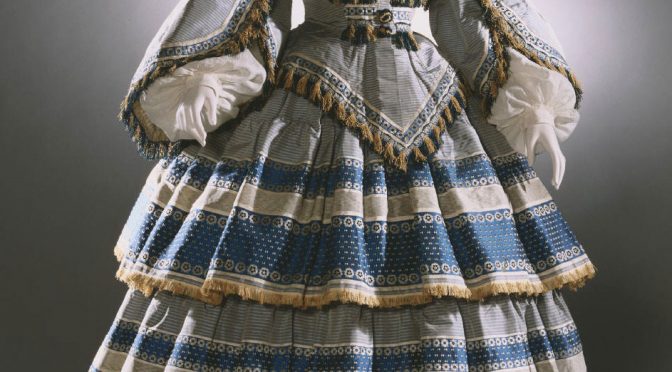
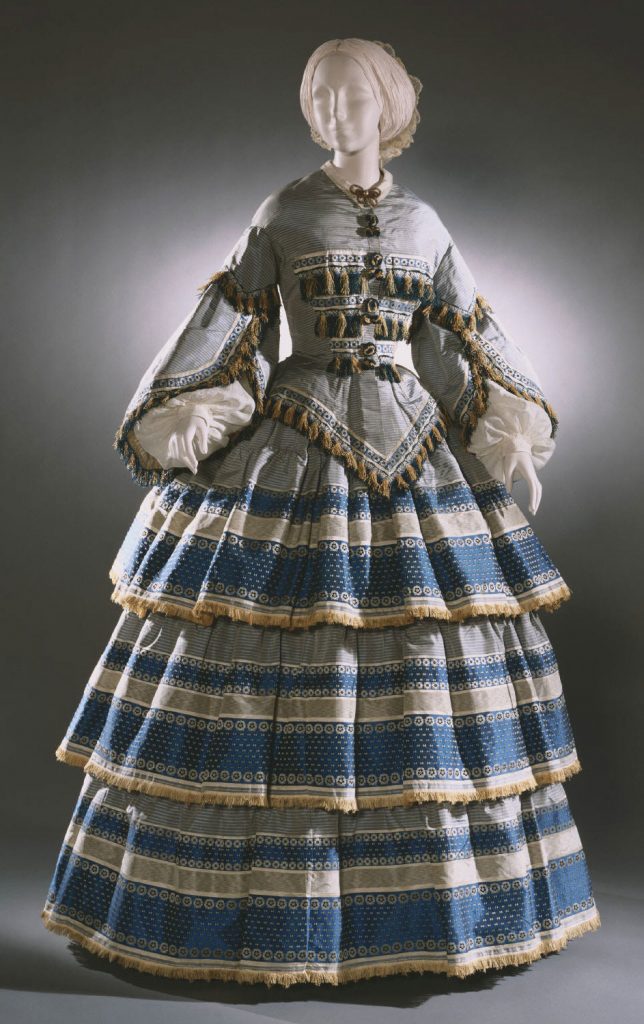
A basque bodice made in the United States in 1858. From the Philadelphia Museum of Art.
  • The first use of the word ‘basque‘ for an article of clothing comes from the mid 1800s. At the time, it was common for dresses to be made in two pieces, a skirt and a bodice. Taken from French, the term ‘basque’ originally referred to a bodice that extended past the waist and around the hips.
  • This fashion was inspired by the traditional dress of women in the Basque Country. Exactly how it made its way in to French fashion isn’t clear, at least to me. I couldn’t really find anything about this transition beyond “it happened.”
  • The unique silhouette of the traditional basque has also inspired the ‘basque waist,’ usually seen in formal wear or wedding dresses. This style of dress has the waist extend below the actual waist of the body, forming a ‘V’ or ‘U’ shape.
  • A ‘coat-basque‘ took the concept a bit farther, with longer tails, almost like a men’s frock. These were particularly popular in the late 1800s.
  • Today, at least in the English-speaking world, the term basque refers more specifically to a type of lingerie, one in which the brasserie extends across the stomach and to the waist or even the hips. In many cases, a basque is tight-fitting, meant to accentuate the curves of the body like a corset, but typically without the rigid boning. In France, basque still refers to the original bodice or jacket inspired by the Basques.
  • The traditional basque is essentially a type of overskirt and it can, at least in some contexts, also be called a peplum. I have to admit, trying to learn the difference between various items of clothing, it is amazing to me all of the terminology and distinctions that are associated with clothing. I never realized how complex the topic was. I’m sure I’ve messed up something here…

Primary source: Wikipedia; Philadelphia Museum of Art.

A Snippet of History: Basque sheepherders protested for their rights

A blurb from the Arizona Daily Sun from 100 years ago, in 1920:

The Basque sheepherders whose rights to graze their herds of sheep have been recently denied are protesting that they are not “aliens” but that some of them are already citizens of the United States and others have taken out their “First Papers.”