Gnarled and Twisted

I visited my dad a few weekends ago. On the way home after taking him to a doctor’s appointment, we decided to stop to visit a couple of friends. Old friends, friends that had come over, like my dad, from the old country, who, like him, had made their life off the land of the western US.

Our first stop was one I knew well. An old buddy of my dad’s, one that he still gets together with to make chorizo and play mus, as a dairy between Boise and Homedale. We pulled into his drive way and he came trudging out of the barn. He doesn’t have so many cows any more, but he still plugs away. He and dad chatted about lots of things — various people they knew, the changes in the dairy business since they were younger — while we all sipped on beer, wine, or diet coke.

We then moved on to our second stop. This friend had just harvested his grapes and was in his garage, getting things ready to make wine. He had big bags of walnuts too, collected from his trees. If I recall correctly, this old Basque had made his living in the mills near Boise. He and dad had grown up together in the Basque Country and their talk drifted towards the girls they knew back then (how different would life have been if my dad had settled with a girl in the old country).

While talking to these guys, or better said listening, as they would drift between English and Basque, with some Spanish cuss words thrown in for good measure (to break up the English cuss words), I couldn’t help but notice their hands. These are men who had used their hands as tools, just like I might use a hammer, it seemed. Their hands were massive, with large knots for knuckles. Finger nails were deformed, having been smashed multiple times during a life of hard manual labor. They reminded me of some old tree, a tree that has been hit by the multiple forces of nature and man, and while damaged and scarred, still stands tall. Hands with fingers that bend in ways that they didn’t when these men were children, like some twisted branches off of the trunk of a tree.

JoeHands140602_5155_2

Tio Joe. Photo credit: Lisa Van De Graaff.

I couldn’t help but think of my Tio Joe, who simply has these massive hands. Hands that seem primal in form, the result of a lifetime of use. Not abuse, as they have been extremely productive, but they show the wear and tear of a life of hard work. The fingers don’t have the dexterity they were born with, but rather are almost lumpy appendages that seem to get in the way more than actually help.

Then, I look at my hands, hands that are soft in comparison. Hands that maybe have a scar or two, but are overall in good shape. When I compare my hands with their hands, I feel a twinge of guilt, born of a career spent at a computer, using my hands not to wield axes or buck bales of hay, but of typing and writing. These men have hands that were strong. They may not be now, but they had such strength in their prime.

But, then, I realize that this is the whole point. My dad left the Basque Country to find a better life, a life with opportunity, at least more opportunity than seemed possible at the time in Spain. All of these men did. They worked hard at what they knew best, using their hands, their shoulders, their backs to make the best life they could in a foreign land. They worked hard to make their life and the lives of their offspring the best they knew how. My dad worked so hard so that I wouldn’t, at least not that kind of work. I work hard in my own way, but it isn’t the back-breaking work my dad, or his friends, did.

Those hands, then, are part of the legacy of the ambition that brought these men to the US. Hands that the women who came also have, hands that suffered decades of abuse in the name of a better life. Hands that provided that life for countless sons and daughters.

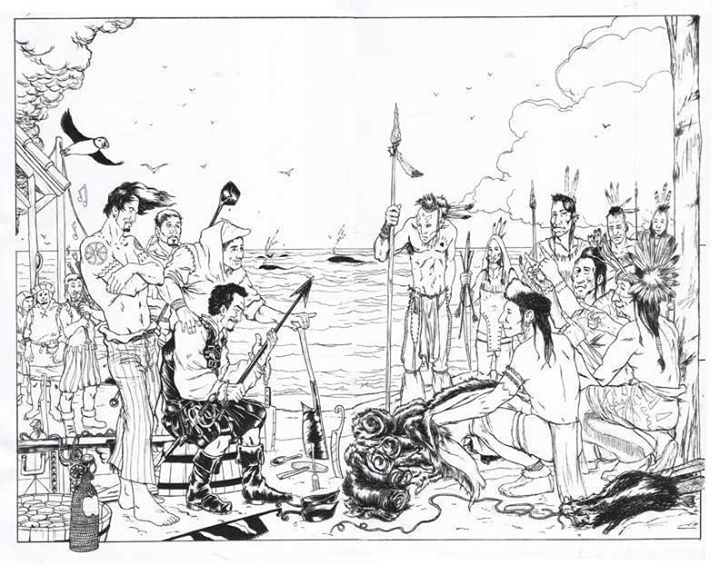
The Basque-Algonquin Language of Canada

This article originally appeared in Spanish and Basque on Kondaira’s Facebook page. It is translated and posted here with permission.

zubiaga-basques-native americans
Meeting between Basques and Native Americans by Guillermo Zubiaga (used with permission).

The Basque-Algonquian language is a pidgin that arose for intercommunication between the members of the Mi’kmaq tribe, Innu and other Amerindians with the Basque whalers, cod fishermen, and merchants in Newfoundland, Quebec, the Labrador Peninsula, Nova Scotia and New Brunswick. Most of its vocabulary consisted of the Micmac, Innu and Basque languages, but also had words from Gascon, since it was the lingua franca of southwest France at the time.

While the Basques were in those waters whaling and fishing cod in the late fourteenth century, it was not until about 1530 that this pidgin was spoken. The Basques established a minimum of nine fishing settlements in Newfoundland and Labrador; the largest could hold 900 people and was in found in what the Basques called Balea Badia (“Whale Bay”), now known as Red Bay (Labrador Peninsula). The French and British sent expeditions to North America, following the routes of the Basque whalers, to explore routes to the Indies shorter than those of the Spanish, as well as to map fishing grounds. The French settled in the Gulf of St. Lawrence and began the conquest of North America.

The golden age of Basque-Algonquian would occur between 1580 and 1635. In 1612, Marc Lescarbot, writing in his “Histoire de la Nouvelle France” (History of New France), indicates that the local population spoke a language to communicate with the Europeans which had Basque words. In 1710 there was still evidence of the use of Basque-Algonquian.

Regarding this pidgin, Esteban de Garibay, chronicler of King Philip II of Spain, in 1571 published a book in Antwerp where he showed that the Basque language was not a difficult language to learn. Garibai cites the case of the Canadian Indians who had learned it:

“… Since the sailors of the province of Gipuzkoa and the lordship of Biscay and the Basque Country go each year to the newly discovered land [Newfoundland] to fish and hunt, the savages of that region learned their Cantabrian language [Basque] despite the brief communication, of such short duration, that they have with the people from here just once a year, for a period of less than three months. And if that people deprived of reason and organization is able to learn it, how much easier it would be for the people of respectable life of our old world. “

Lope Martínez de Isasti wrote in 1625:

“… in a region so remote like Newfoundland the mountain-dwelling savages have learned to communicate with the Basque sailors, who go annually for the cod fish, which among other things they are asked in Basque: nola zaude (how are you): they respond gracefully: Apaizac Obeto (the priests are better): without knowing what is a priest, but by hearing about them. They speak and deal with us, and they help with the fishing on the riverbank for the barter of some cake and cider which they do not have there. “

Basque sailors also brought Christianity to those lands. This is indicated by a person from the Micmac tribe to a European missionary in his language:

“Noukhimami Jesus, ïagoua Khistinohimaonitou Khik hitouina CaiE Khiteritamouïn. Ca cataouachichien ouccaonia Jesu Maria, Joseph cacataouachichien aïamihitouinan.” [My Lord Jesus, teach me your words and your will! Oh, good Mary, Mother of God! Oh, good Jose! Pray for me!]

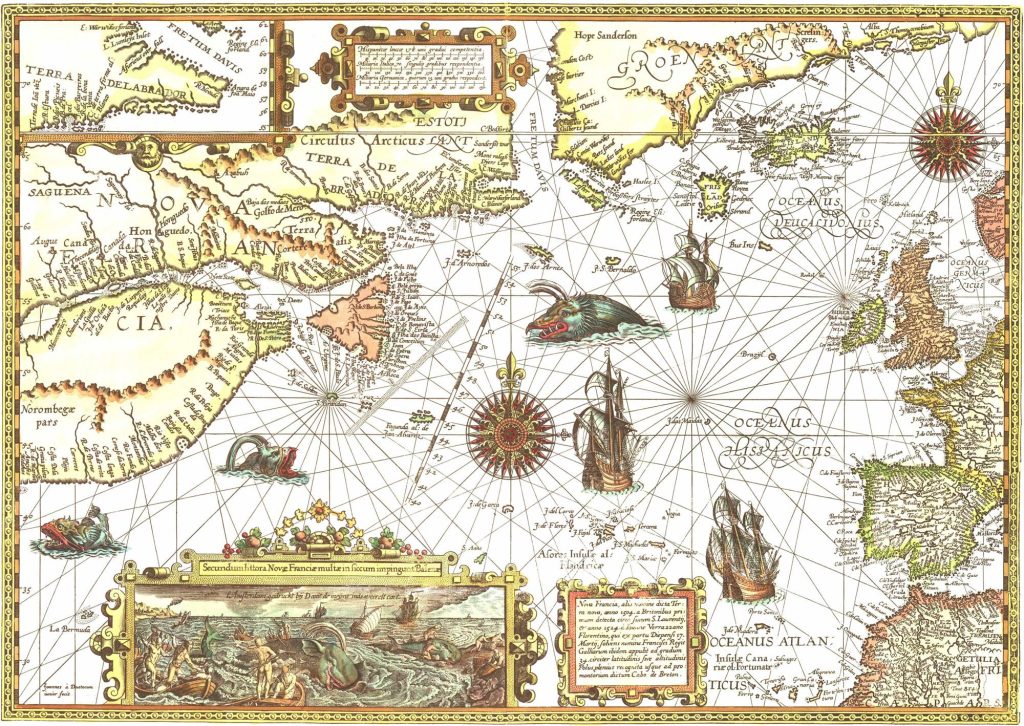
Map from 1592 listing areas for whale hunting.

In 1616 a Jesuit missionary noted that Amerindians of Port-Royal (Nova Scotia) used the word “adesquidex” (Basque adiskide [friend]) to greet the French. In 1603, another French missionary established in Tadoussac (Quebec) claimed that the Amerindians called the “Montagnais” made use of the word “ania” (Basque anaia [brother]) to greet just the French, while amongst themselves they used the word “nichtais”.

The result of this pidgin is that the Micmac integrated Basque words into their language. From the Basque word atorra (shirt), the Basque-Algonquian word “atouray” derived and from this the actual Micmac word “atlei”; “king” is said in Micmac as “elegewit” (from the Basque-Algonquian “elege” which, in turn, is from the Basque errege) or, for example, France is called “Plansia” (from the colloquial Basque “Prantzia”).

Today, place names of Basque origin in this region where Basque-Algonquian was spoken are abundant, as well as French place names that refer to the Basques.The ancient name for Montreal, Hochelaga, used by the Huron people, is considered by some etymologists to be a place name of Basque origin.

Examples of Basque-Algonquian

Basque-AlgonquianBasqueEnglish
Ania, kir captain?Anaia, kapitaina to zara?Brother, are you Captain?
Nola zaude? Apezak ObetoNola zaude? Apaizak hobetoHow are you? The priests are better.
Gara gara ender-quir gara garaGerra izango duguWe will have war.
Endia chave NormandiaFrantsesek asko dakiteThe French know a lot.
Adesquidex/sAdiskideFriend
EndiaHandiaLarge
AniaAnaiaBrother
KessonaGizonaMan
CanadaquoaKanadakoaFrom Canada
EscorkenMozkorDrunk
ChabayaXabaia, BasatiaWild
BaccalaosBakailoaCod
ElegeErregeKing
OrignakOreinakDeer
MakiaMakilaStick
MariaBaleaWhale
CaraconaGariona, ogiaGood Wheat, Bread

More articles on the history of the Basque Country and the Basque language are at the Facebook page of Kondaira.net: www.facebook.com/kondaira.net

Two New Basque Novels: The Hammer of Witches and The Invisible Guardian

The Basque Country is central to two new Basque novels that

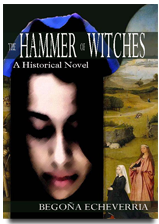
Hammer-of-WitchesThe Hammer of Witches, by Begoña Echeverria, takes place during the Spanish Inquisition, a time when Basques accused other Basques of being witches, when witches were burned for presumed heresy against the Church, and when a few brave souls fought back against such maleficent forces. Echeverria’s novel, though fictional, takes place during the peak of the Inquisition, as a cast of characters including a priest, a mysterious woman, and a young lady all navigate this dangerous time. Echeverria did extensive research to make the setting of her novel as historically accurate as possible. Here is an interview both about her motivation and her approach to writing this novel. The book can be purchased form the Center for Basque Studies.

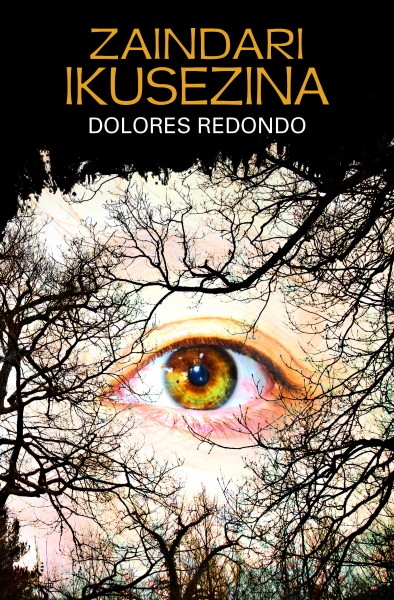
Zaindari-IkusezinaThe Invisible Guardian (El guardián invisible in Spanish and Zaindari Ikusezina in Basque) by Dolores Redondo, isn’t exactly new. Published in 2013, Redondo’s novel takes place in the modern Basque Country, in the valley of Baztan. It follows a young detective, Amaia, who’s job is to uncover the mystery behind some recent murders. However, there are elements of the supernatural, of Basque legend, that creep into the story, and that confuse Amaia’s investigation. Could those stories her grandmother told her as a little girl be true? Could the fantastic creatures of legend be responsible for the murders?

Unfortunately, The Invisible Guardian isn’t available in English, yet, though an English translation is expected in 2015. There is, however, a comic book in the works and possible movie plans. Further, The Invisible Guardian is the first in a series of three novels following Amaia’s adventures in the Basque Country. Redondo has been labeled the rising Basque star of crime fiction, combining the standard tropes of that genre with a strong heroine and fantastical elements from Basque mythology to create something new.

Both of these novels sound intriguing and I’m looking forward to reading both.

Indispensable Man by Saxon Uberuaga

Found this during some random searching. Not Basque, exactly, but written by a Uberuaga (by marriage) and I thought it worth sharing.

Indispensable Man

Sometime when you’re feeling important;
Sometime when your ego’s in bloom
Sometime when you take it for granted
You’re the best qualified in the room,

Sometime when you feel that your going
Would leave an unfillable hole,
Just follow these simple instructions
And see how they humble your soul;

Take a bucket and fill it with water,
Put your hand in it up to the wrist,
Pull it out and the hole that’s remaining
Is a measure of how you’ll be missed.

You can splash all you wish when you enter,
You may stir up the water galore,
But stop and you’ll find that in no time
It looks quite the same as before.

The moral of this quaint example
Is do just the best that you can,
Be proud of yourself but remember,
There’s no indispensable man.

saxon-uberuaga“Indispensable Man” was originally published in “The Nutmegger Poetry Club” under the name Saxon Uberuaga. It has also been published in “Boots” in Spring 1993, in “The Country Courier” 1996, “Rhyme Time” in Winter 2000, and in “Golden Times” in August 2003.

Saxon White Kessinger was a member (and past president) of Gem State Writers’ League and a member of Idaho Writers’ League. She was an award winning writer, receiving Idaho Writers’ League “2003 Lifetime Achievement Award,” “Writer of the Year” in 1992, 1995, and 2002 and “Poet of the Year” in 1999 and 2000 from her Idaho State Leagues. She published various poetry offerings and many articles in various newspapers and magazines. She died in 2010 in Idaho.

A Basque Joke

This appeared in the January 20, 1972 issue of the Idaho State Journal, of Pocatello, Idaho. It was submitted by Saxon White Uberuaga.

A Basque settlement in Idaho’s pioneer times was typical of the small towns of wood structures in those days. The people took pride in their theater, which had only one rear exit. The theater was filled to capacity with Basque people one night, when the old building caught on fire. The Basques panicked and fled toward the rear exit. Many were injured by trampling, some perished in the fire. Moral: don’t put all your Basques in one exit.

Inside the kitchen of Elena Arzak

In 2012, Elena Arzak was named the Best Female Chef in the world. Arzak, the restaurant she runs with her father, was named the 8th best restaurant in the world in 2014 by Restaurant Magazine. The New York Times took a brief look into her world and this video provides a glimpse inside the kitchen of renowned chef, Elena Arzak.

http://nyti.ms/Qc8OSi

A Basque Costume Party: A Traditional Fiesta of Demons, Chain Wielding Tigers, and Bell Carriers

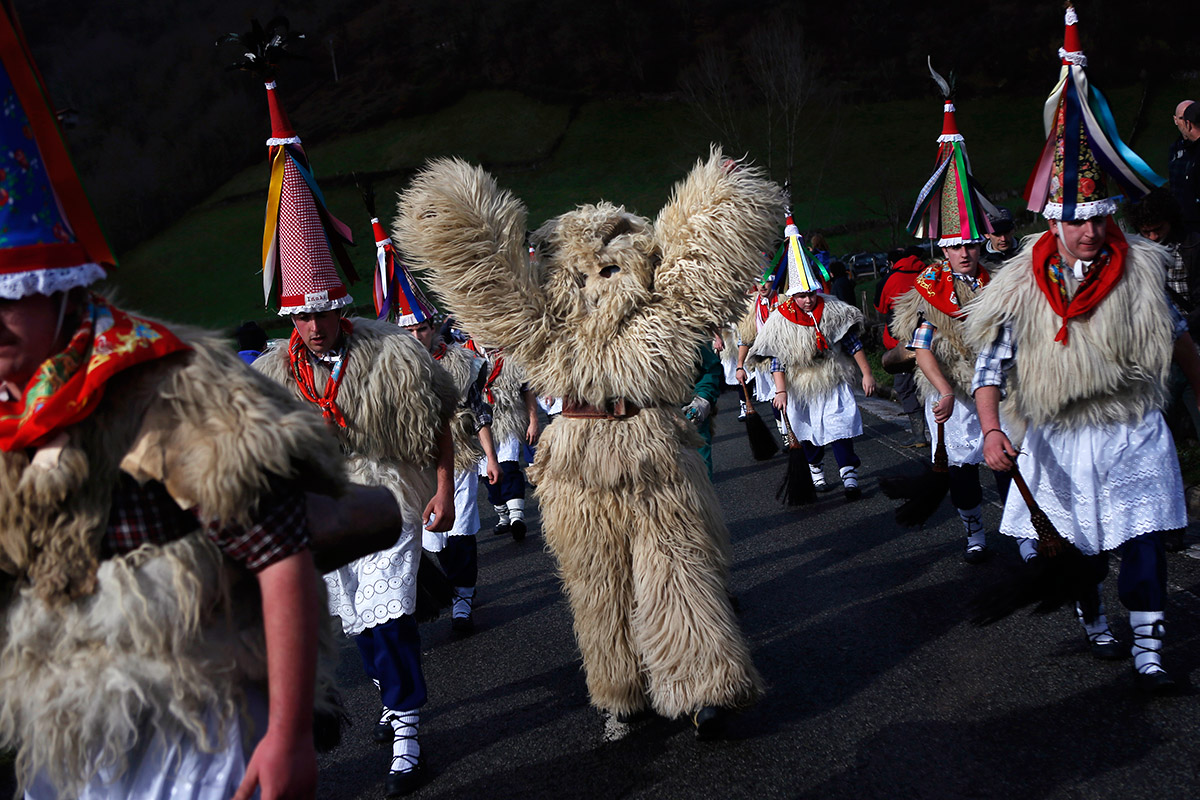
The International Business Times has some fascinating photos of costumed revelers at fiestas in Zubieta and Ituren. Some of them wear bells to make noise and scare away evil spirits. The noise also wakes up the land, getting it ready to produce for the next farming/harvesting cycle. See the link for more photos.

fiestas-sheepskin

Gure Esku Dago — It’s in Our Hands

Back in June, right after I visited the Basque Country, citizens across the region held a peaceful demonstration in support of greater autonomy for the Basque people. The demonstration, called Gure Esku Dago, or It’s in Our Hands, consisted of around 150,000 people holding hands in a chain that extended from Durango to Pamplona, roughly 76 miles long. The goal is to demonstrate the desire of the Basque people for greater autonomy and more control over their own destiny. In particular, the participants support the right of the Basque region to decide their future, a referendum on self-determination.

It was inspired by a similar event that drew over 1 million people in Catalunya in September as well as even older events. These human chains have been a peaceful way of demonstrating since at least the 1980s. In 1986, possibly the longest chain, with 5 million people, was formed in the United States to raise awareness for hunger.

In Munitibar, where my dad is from, the local residents created a short video to promote the event. It features various people in Munitibar (my cousin appears around the 2:20 mark) waving and showing their hand to the camera.

A Visual Tour of Euskal Herria

Here is a nice little video highlighting some of the visual splendor of the Basque Country.

Keeping Euskara Alive and My Own Adventure in Learning Euskara

In 1991, I traveled, for the first time, to the Basque Country. Though my dad was born there, and my mom’s grandparents as well, we’d never made a family trek as it simply was beyond our resources. My dad himself only went back a handful of times during the first 30 years he was in the United States. However, I was determined to learn Euskara, the language of my ancestors, the language of my dad. Because my mom doesn’t speak Euskara, and the fact that my dad was on the road a lot, we didn’t learn any at home. My dad would speak it when he was with friends. He didn’t have to choose to be Basque, he simply was and that showed itself whenever he was with his friends, bullshitting in Basque with the very frequent Spanish tacos thrown in. For me, though, it was a conscious choice to try to learn a bit of this language, to make my own connection to my heritage.

I did this even though my mom’s dad, who, though born in the US, was fluent in Euskara, having been raised by two native Basques, and even my own dad suggested that concentrating on Spanish would be of greater value as more people in the world spoke Spanish. Basque was only useful in a very remote corner of the world and, even there, not always. For me, though, it wasn’t about practicality. It was about connection, about immersing myself into their world, into the way that they thought. Language shapes how we view the world, and I wanted at least a glimpse into theirs.

don_bay_b.jpgI went to Donostia as part of the University Studies Abroad Consortium, which had an intensive Basque language course for students with no knowledge of Basque. There were three of us — myself, a woman from Idaho who was trying to make the same connections to her heritage that I was, and a woman from England, who had no connection to anything Basque beyond an interest in the people and culture. Our teacher, Nekane, was an Euskaldun Berri, a new Basque speaker, who had learned Basque as an adult and decided to become part of the effort to ensure Euskara’s survival. She was an extremely pleasant and patient teacher, especially to a student of science like myself who questioned the why of everything, in particular the logic of the language (why this construct as opposed to this one). Little did I recognize, at the time, that my own language of English has so little logic behind it!
During the weekends, I would travel to visit my dad’s family in Bizkaia. This proved somewhat frustrating in that they all spoke a different dialect of Euskara. I was learning Batua in Donostia, but in Bizkaia they spoke the Bizkaian dialect, which was different enough that I struggled to communicate. Even my rudimentary Spanish, learned in high school, was a better communication tool. Compounded by the fact that I spent many evenings not with locals but with fellow Americans, playing foosball, drinking beer and cider, and, critically, speaking English, my Euskara never got very good.

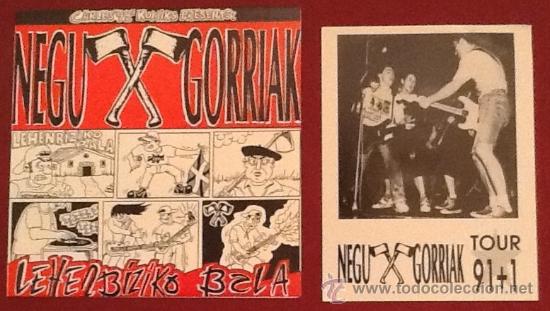
negu-gorriak-lehenbiziko-balaI have some basic understanding of the grammar, but a relatively horrible vocabulary. I can’t carry on any real conversation and have a hard time even with pleasantries. That said, I certainly take some pride in understanding the opening of Negu Gorriak’s song Lehenbiziko Bala:

BASERRIAN JAIO NINTZEN
ARBASO ZAHARREN ETXEAN.
UDABERRIA AURREAN.
NEGU GORRIA ATZEAN.

I do wish I had better command of the language. However, beyond that intensive year in Donostia, I have not really devoted significant time to learning Euskara any further. Other priorities have taken precedent. I still have dreams, but I’m not sure when or if I will make the time to realize them.

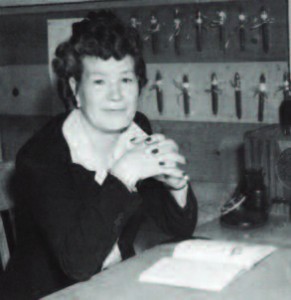
espe-alegria-291x300Of course, I’m not alone in this desire, this drive, to learn the language of my ancestors. Many people have done the same, and those in the diaspora have had a particularly important role in ensuring the health of the language. Especially during Franco’s time, when speaking the language was forbidden, efforts in places like Idaho helped in promoting the language. In particular, she describes a radio program in Idaho by Espy Alegria that was famous because she was speaking a language, Euskara, that was outlawed in Spain. Now, modern technology, which at the same time threatens to homogenize our world, plays its own part in keeping the language alive. In a very interesting article on the Blue Review, Kattalina Berriochoa describes the role that both the diaspora and technology have had in contributing to the survival of Euskara.