The Adventures of Maite and Kepa: Part 100


100 episodes?!? Who would have thought! I have no idea who might still be reading this, but if you are and you enjoy it at all, I’d love to hear from you!

“In this time,” began Olatz/Marina as they walked toward a large monitor screen that was manned by a young woman, “he has called himself Zalazar, a bit ironic as Salazar was one of the few who resisted the persecution of the Basque witches.” 

The Adventures of Maite and Kepa is a weekly serial. While it is a work of fiction, it has elements from both my own experiences and stories I’ve heard from various people. The characters, while in some cases inspired by real people, aren’t directly modeled on anyone in particular. I expect there will be inconsistencies and factual errors. I don’t know where it is going, and I’ll probably forget where it’s been. Why am I doing this? To give me an excuse and a deadline for some creative writing and because I thought people might enjoy it. Gozatu!

Turning to the young woman, Marina continued. “This is Argia. She is our primary eyes out there, watching the government’s movements, looking for any glimpse of Zalazar.” 

The young woman, who was dressed in the same robe as everyone else but had her hood pulled down to reveal her bright blond curls and her dark eyes, looked up at them. “I haven’t seen any hint of him for quite some time,” she said. “Though there has been some extra activity at his home.” Argia pointed at one of the video feeds on her large monitor, which was covered by hundreds of different windows that flickered back and forth with images. The one Argia pointed to showed the top of a tall tower. On the roof, there were a number of the spherical drones flying back and forth, landing and taking off continuously. “There are more drones than normal,” continued Argia, “though I haven’t seen more people.”

“I’m sure they are huddled in their tower,” said Olatz/Marina. “Keeping their hands clean, so to speak.”

Maite looked over the huddled robed figures spread out through the hall and then at Kepa with her eyebrow raised. Kepa simply shrugged.

“How are you able to watch de Lancre, I mean, Zalazar’s place, so closely?” asked Maite. “Don’t they see you watching them?”

“Argia is hacking into their video systems, so we are watching them through their own drones. We have our own drone nearby, though not so close as to be in visual distance, that receives the feeds from Zalazar’s drones and sends them to us.”

“That’s pretty clever,” said Kepa.

Argia smiled at him. “Thanks! It wasn’t that hard, really. Sometimes, those in power get a little too overconfident in their own abilities.”

“You are too modest,” said Marina. “Argia is one of the premier computer scientists of the country. She is a literal genius when it comes to computer systems.”

Kepa noticed Argia blush as she turned away and back toward her monitors. 

“Anyways,” continued Argia, “beyond the extra drone activity, I haven’t seen anything else of note.”

“I suspect that activity is due to our new friends here,” said Marina. “Can you tell where they are going?”

“Not from this,” said Argia. “Our drone only receives feeds from the drones in the area. But,” she continued as she pointed to another video feed, “there is more activity in the plaza where we found these two.”

One of the video windows centered on the monitor and grew. Maite recognized the plaza where they had encountered the woman on the hoverboard. The plaza was filled with drones and several other uniformed people who were scouring the area. 

“They are looking for a way in,” said Marina with a sigh. She turned to the hall, her voice filling it as she spoke. “Everyone, we are in code Gorria. Be prepared to leave at a moment’s notice.”

Murmurs filled the hall as all of the robed figures began to scuttle from one station to the next.

If you get this post via email, the return-to address goes no where, so please write blas@buber.net if you want to get in touch with me.

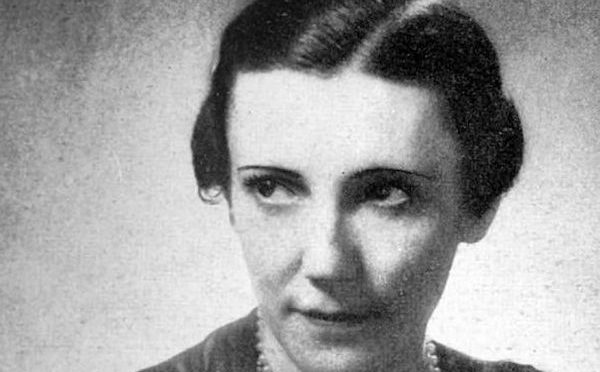
Basque Fact of the Week: Basque Adventurer Marga d’Andurain

Adventurer. A spy, maybe for the British, maybe for the Nazis. Smuggler, black marketeer. Concubine? Marga d’Andurain was many things, though the details of her life have become too blurred between fact and fiction to know the whole truth. Men, including two husbands, died in her wake. She certainly was an adventurous soul that couldn’t stay in one place, writing in her memoir: “The worst boredom in life is monotony. This stubborn monotony that I always want to escape.”

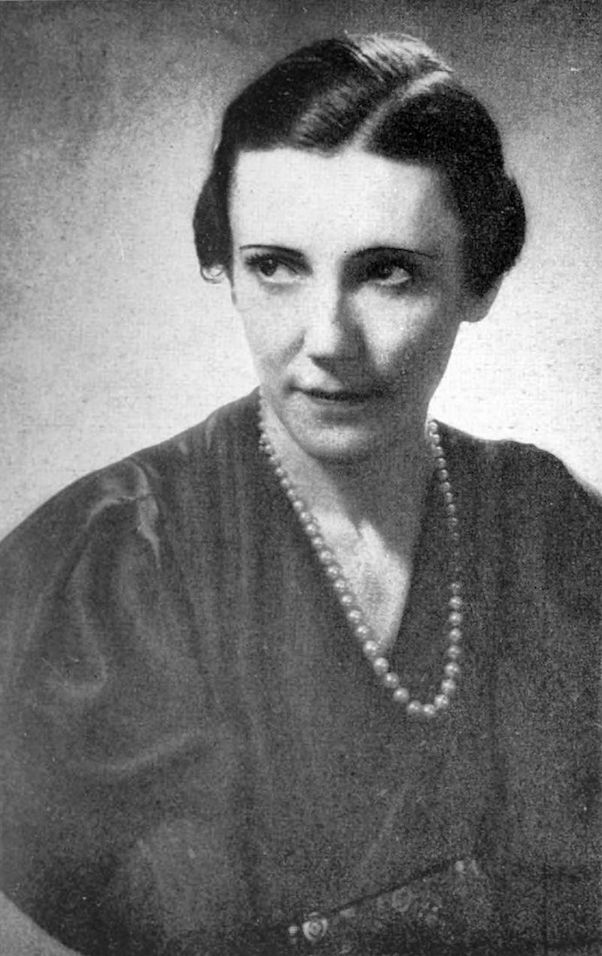
Photograph of d’Andurain from her memoir, found on Wikipedia.
  • Marga was born Jeanne Amélie Marguerite Clérisse on May 29, 1893 in Baiona. Her father, Maxime Ernest Clérisse, was a judge while her mother, Marie Jeanne Diriart, was a housewife. In 1911, she married her cousin, Pierre d’Andurain, taking the surname with which she would become infamous.
  • She grew up studying at various religious schools, including the Ursuline school of Hondarribia. Even from a young age, she rebelled against the system that confined her, and other young women, to specific roles in society. She was so rebellious and wild that, according to her own account, her family attempted to have her exorcised. She later claimed to be heir of the famous adventurous spirit of the Basques.
  • She and Pierre shared a love for exotic countries, and they traveled extensively together, first to places like Portugal, Morocco, and Algeria and later to Argentina and the Middle East. Their stay in Argentina, where they had thought of starting up a ranch, was cut short by World War I and Pierre’s desire to fight for his homeland.
  • After the war, the family was broke and destitute. Marga, despite resistance from her family, started two businesses that proved successful, one decorating apartments which she bought and resold (maybe one of the first flippers) and another where she created artificial pearls. However, in 1925, after she inherited her father’s estate, the family, now with two sons, moved to the Middle East, starting in Algeria and stopping in Egypt before settling in Syria.
  • In Syria, Marga bought a hotel, the Zénobie, where the family lived for about a decode. She began an affair with a British intelligence officer, which raised suspicions that Marga was a spy.
  • In 1933, Marga decided she wanted to visit Mecca, which would make her the first western woman to visit the city. To make her visit happen, she arranged a marriage to a Bedouin, Soleiman Abdelaziz Dikmari. Marga took on the name Zeinab bent Maksime. As soon as they arrived in what is now Saudi Arabia, Soleiman died. Suspicion immediately fell on Marga and she was arrested, first held in the Governor’s seraglio, and later in the police dungeons. Prosecutors requested that she be stoned, but she was ultimately acquitted and released, thanks to the efforts of the French consulate, though some reports indicate she was pardoned by the king.
  • However, this episode led to a certain amount of fame and Marga recounted the events to counter the versions that appeared in the press. She claimed that the king of Nedj, Ibn Saud, convinced she was a spy, had Soleiman killed to frame her.
  • Upon her release, she remarried Pierre. However, Pierre was murdered not long after (either by poisoning or multiple stabbings), in December of 1936. As suspicion again fell on Marga, she fled Syria and returned to Europe.
  • Life in Europe, ravaged by two world wars, was difficult and Marga turned to dealing goods, especially paintings, on the black market. She also traded in opium. She was again put on trial, this time for the suspected poisoning of her cousin (or nephew) Raymond Clerisse. He had scrawled on a subway ticket “Candy which Marga gave me had a strange taste.” Marga was eventually acquitted.
  • Marga died on November 5, 1948 at the age of 55 while onboard her yacht off of the coast of Morocco, murdered by Hans Abele, a former Gestapo agent. Her body, thrown off the side of the yacht and into the sea, was never recovered.

Primary sources: Estornés Zubizarreta, Idoia. ANDURAIN, Marga de. Auñamendi Encyclopedia. Available at: https://aunamendi.eusko-ikaskuntza.eus/en/andurain-marga-de/ar-53/; Marga d’Andurain, Wikipedia

Basque Fact of the Week: The Agotes, Outcasts of the Western Pyrenees

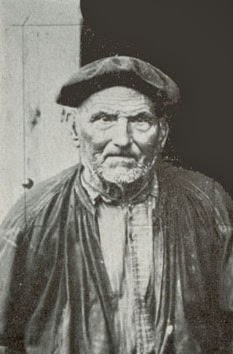
All over the world, people have a tendency to demonize others, to view others as different, as inferior, as outcasts. In Japan, there are the Burakumin; in India, the Dalit. Sometimes there is an ethnic or religious component to this marginalization, but not always. In Europe, there is a group of people who have been viewed as tainted, as inferior. In some parts of France, they were called Cagots, Ladres, or Colliberts. In the Basque Country, they were called Agotes.

An Agote man, photo from Sos del Rey Católico.
  • Little is known about the origins of the Agotes. That they were outcasts is certain, though exactly why is less clear. They aren’t a distinct ethnicity, so that isn’t the reason. There is some thought that their status was linked with leprosy. In any case, their status was hereditary: once a family was identified as Agote, their descendants also carried the stigma. They were forced to live away from others, to identify themselves with some badge, and to not touch food or water that was not separated from everyone else’s.
  • However, as opposed to those with leprosy, Agotes were not completely shunned physically, even though they were not afforded economic or political rights. Some believed that they had been punished by God for some moral failing (including being descendants of the carpenters who built the cross Jesus was crucified on), and thus their banishment was just. Some thought they were descended from Arians or primitive Christians who had been isolated in the mountains. They were always the other: on the south side of the Pyrenees, they were from the north, and vice versa.
  • In early descriptions, Agotes had attributes that varied wildly from author to author, ranging from the very negative – clumsy, unintelligent, miserable, sickly, lascivious – to the extremely positive – intelligent, docile, hard-working, haughty, brave. Sometimes, they were described as having magical powers, fabulous wealth, or colossal strength.
  • Even though they practiced the same religion as their neighbors, they were forced to use a separate door, often short so they were forced to bow; they had separate fonts for holy water; and they received the eucharist on the end of a stick or spoon.
  • They often took on manual jobs and careers, from ironworkers and blacksmiths to weavers and seamstresses, and, in particular, all jobs related to wood. On the coasts, they took the most dangerous jobs in the ports. They were limited in the types of jobs they could take, being forced into these types of manual labor trades.
  • They were excluded from public office and the use of community lands. If they tried to marry into non-Agote houses, they were often forbidden from taking on the house name. And, in the Roncal valley, they were not allowed to use the common red trim on their cloaks, being forced to wear yellow to distinguish them from their neighbors.
  • Basque Moonshiners have named their single malt whiskey Agot after these marginalized peoples.

Kerexeta Erro, Xabier. Agote: etnología e historia. Auñamendi Encyclopedia. Available at: https://aunamendi.eusko-ikaskuntza.eus/en/agote-etnologia-e-historia/ar-10045/; Cagot, Wikipedia.

The Adventures of Maite and Kepa: Part 99


“Olatz…?” began Maite.

The woman smiled at her. “Marina. I’m in here.”

The Adventures of Maite and Kepa is a weekly serial. While it is a work of fiction, it has elements from both my own experiences and stories I’ve heard from various people. The characters, while in some cases inspired by real people, aren’t directly modeled on anyone in particular. I expect there will be inconsistencies and factual errors. I don’t know where it is going, and I’ll probably forget where it’s been. Why am I doing this? To give me an excuse and a deadline for some creative writing and because I thought people might enjoy it. Gozatu!

“Marina, then. What is this place?”

Marina/Olatz looked out beyond where Maite and Kepa were sitting at the array of people working at their various desks and stations. She sighed. “It’s the resistance.”

“Resistance?” asked Kepa. “Against what? It seems so perfect out there. So clean. So lush. All of the technology is wonderful.”

Marina nodded. “On the surface, it certainly is. And, admittedly, almost everyone lives a health, productive life. But there is an element of control to make all of this happen. The cost of all of this is a loss of autonomy, of privacy.”

“So, you’d all rather throw all of this away to be able to do… what, exactly?” asked Maite.

Marina shrugged. “That’s the thing. It doesn’t matter. We just want the freedom to live our lives without oversight. You saw those drones at the airport. The second anyone steps out of line, there they are. We are always being watched.”

“What do you mean, we, anyways?” asked Kepa. “You aren’t even from this time.”

“No, that’s right,” continued Marina, “but I’ve spent a lot of time here. And de Lancre has been here for a while too.”

“You said that,” said Maite. “Where?”

“He’s part of the government. In fact, all of this surveillance grew when he appeared in the timeline. I believe it’s all because of him and his search for the zatia.”

“Ah,” said Maite, a smile crossing her face. She turned to the group of people behind her. “I think I understand. You don’t care about any resistance. They are your way of finding the zatia, of fighting de Lancre.”

Marina scowled. “Of course I care. This body, Olatz’s body… it is my flesh and blood. I want a future that is better for her.”

“But, you would sacrifice them all in a heartbeat if it meant getting that zatia.”

Marina’s scowl deepened as her face turned red. “What would you have me do? Sacrifice all of reality for them, when the moment we find the zatia it will all reset and they’ll never even know?”

“No, I understand,” said Maite. “Just don’t try to dress your motivations in this noble cause. It’s unbecoming.”

Marina stood, her face scrunched in anger. Some of the resistance fighters closer to where they sat noticed and began murmuring, pointing at Marina, Maite, and Kepa. Marina let out a long breath and sunk back into her chair.

“I’ve been doing this too long,” she said. 

“Look,” interrupted Kepa. “We know how it is. Well, at least a little. It’s hard not to view all of the people in these bubbles as something expendable, when we know the bubble will pop when we find the zatia. But they are still real lives. We have to treat them like real people.”

“De Lancre doesn’t,” replied Marina. “And if he wins…” She left her thoughts unsaid.

Maite nodded. “It will suck. But we can’t allow ourselves to sink to his level. We can’t dehumanize ourselves. Or any victory will be for nought.”

“I used to share your optimism, so many lifetimes ago.” Marina stood again, this time her face calm. “I’m glad you are here. I needed to reconnect with reality.”

Maite nodded as she stood. “So, where is de Lancre exactly?”

If you get this post via email, the return-to address goes no where, so please write blas@buber.net if you want to get in touch with me.
Basque Fact of the Week: Kattalin Agirre, Member of the French Resistance

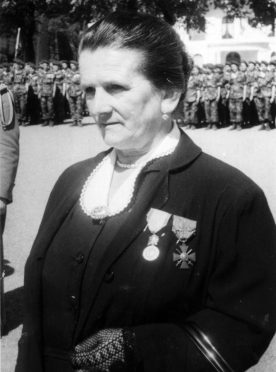
Not long ago, we learned about Florentino Goikoetxea, a mugalari – a smuggler – who helped fugitives cross the French-Spanish border during World War II. Of course, he didn’t act alone. Those fugitives needed a place to stay, and sometimes heal, before they could make the crossing. That was the role of people like Kattalin Agirre. She gave the fugitives a temporary home before they made the trek across the Pyrenees with Florentino. Despite numerous accolades for her efforts, it is surprisingly hard to find much about Kattalin’s life.

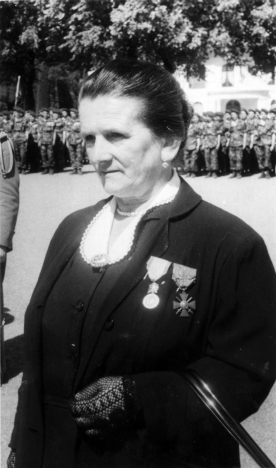
Kattalin Aguirre, at the award ceremony for her work with the Comet Line. Photo from Auñamendi Eusko Entziklopedia.
  • Kattalin was born in Sara on August 28, 1897. Her parents were Martin Lamothe and Joséphine Légasse. At a young age — thirteen — Kattalin began working at the Euskalduna Hotel in Ziburu then moved to Paris to work as a maid. In April of 1927, she married Pierre Aguirre and took his surname. Pierre died not long after from the lingering effects of a gas attack in World War I. She moved back to Ziburu and the Euskalduna Hotel, which was run by her cousin Catherine Muruaga. From 1936, she began helping refugees escaping the Spanish Civil War.
  • As World War II broke out, Kattalin used her connections amongst the smugglers in the Pyrenees mountains to help people flee the other direction. As part of the Margot network, she sheltered “children” – a code word for fugitives – in her home, beginning with a request by Marguerite Corysande de Grammont to shelter three such “children.” As part of the Comet line, she sheltered downed airmen, nursing them to health until she could get them to Florentino and across the border. She had a small farmhouse in the foothills of the Pyrenees where she would harbor these fugitives.
  • At some point, she was caught and sent to a concentration camp. She survived and was freed when the Allies liberated the camp.
  • Eventually, her role in the resistance grew beyond sheltering fugitives. She began passing intel to the Nana network, run by the US Office of Strategic Services. Aided by her daughter, 14-year-old Joséphine “Fifine,” she also helped smuggle money and radio equipment across the border.
  • For her efforts, she was recognized multiple times by the French government, receiving the Médaille militaire, the Croix de Guerre, and the Legion of Honour.
  • Kattalin died in Ziburu on July 22, 1992. On her deathbed she said “I didn’t do any more than I had to do.”

Primary sources: Kattalin Aguirre, Wikipedia; Auñamendi Eusko Entziklopedia. Aguirre, Kattalin. Available at: https://aunamendi.eusko-ikaskuntza.eus/en/aguirre-kattalin/ar-154382/; Freedom Trails: Great Escapes from World War I to the Korean War by Terry C Treadwell

The Adventures of Maite and Kepa: Part 98


The ladder led down into a subterranean room that, while seemingly ancient, was filled with technology that Maite could never have imagined. The walls were brick, their edges work with age. Bits of mortar flaked off. Maite wondered if the walls could actually support all of the massive infrastructure she had seen above them. The ceiling was high and curved, with arches sweeping across. Maite couldn’t tell if they were decorative or functional.

The Adventures of Maite and Kepa is a weekly serial. While it is a work of fiction, it has elements from both my own experiences and stories I’ve heard from various people. The characters, while in some cases inspired by real people, aren’t directly modeled on anyone in particular. I expect there will be inconsistencies and factual errors. I don’t know where it is going, and I’ll probably forget where it’s been. Why am I doing this? To give me an excuse and a deadline for some creative writing and because I thought people might enjoy it. Gozatu!

Lights hung down from the ceiling, illuminating desks and chairs that were filled with people. If Maite hadn’t known better, it almost looked like an office cubicle. Most desks contained someone madly typing away on empty air, or gesticulating on invisible screens in front of them. Others were huddled around what seemed to be some kind of coffee maker. At the far end there was a larger desk with chairs arranged around it. Maite could see someone stand up from behind the desk as she descended the ladder. In fact, all eyes were turned to her.

Her feet hit the ground and she stepped aside as her guide came down next to her. “Over there,” it whispered, pointing to the large desk. The man who had taken Kepa was already leading him in that direction. Maite nodded and followed, keenly aware of all of the people watching her. She noticed that most didn’t wear the flamboyant costumes she had seen on the surface. In fact, most were covered in non-descript robes that hid most of their features. She couldn’t even tell which were male and which were female.

The man half carried, half drug Kepa to the large desk and laid him more gently than Maite expected in one of the large chairs encircling the desk. The figure Maite had noticed before moved around to greet them. “Kaixo!” she said, a smile spread across her puffy face.

In contrast to all of the others in the room, this woman did not wear a cloak, though she was not dressed in any spectacular garb. She was overweight, her clothes, a relatively simple ensemble of a white button-down shirt and black pants, were a little tight against her large frame. Her hair had gone grey with age, though there was a twinkle in her eye that Maite instantly recognized.

“Marina?” she gasped. Kepa, still distracted by his non-functioning leg, looked up, smiling in recognition.

“Marina?” repeated the shadowy figure that had ushered Maite through the tunnels and now stood by her side, shaking its head. “This is Olatz, our leader. Show some respect.”

The woman called Olatz winked at Maite before turning to the figure next to her. “No need to be rude. I’m sure they are a bit disoriented, after all of the commotion. Give us a moment, would you please?”

The figure turned seemingly to look at Kepa and then Maite, though Maite couldn’t see into the hood to actually discern any features. With a huff, the figure and the man that had helped Kepa gave a nod to Olatz before leaving.

If you get this post via email, the return-to address goes no where, so please write blas@buber.net if you want to get in touch with me.

Basque Fact of the Week: Mutiloa

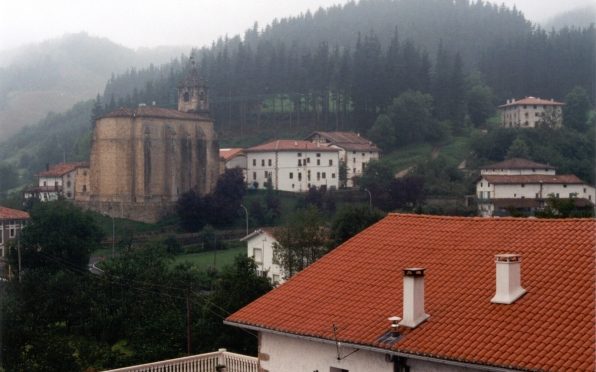
Blas Antonio Telleria Goya, my great-grandfather and my namesake, was from Mutiloa, Gipuzkoa. His story is a bit shrouded in mystery – family lore says he was a merchant marine that jumped ship in Argentina and made his way north, but he also appears in the manifests on Ellis Island. In any case, we really have no connection to his past. I’ve been through Mutiloa a few times, trying to get some sense of the place that he came from. It is even smaller than my dad’s home town of Munitibar.

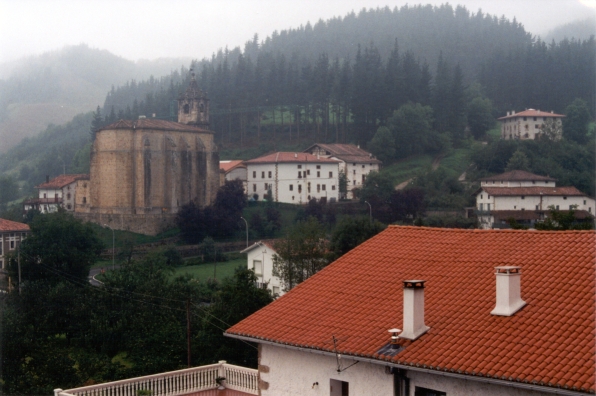
The heart of Mutiloa, photo by Blas Uberuaga.
  • The most widespread theory about the origin of the name of Mutiloa indicates it comes from mutil-ola, meaning “boy’s cabin.” While the Gipuzkoan village is never referred to as Mutilola historically, there is a town Mutiloa in Nafarroa that was in its past.
  • The history of Mutiloa dates back to 1144 when Pedro, the abbot of the monastery of Iratxe in Nafarroa, essentially swapped the estate that the monastery had in Mutiloa with what Pedro Semenones de Góngora had in Azagra. In 1384, Mutiloa became part of Segura, though it separated again in 1615 when the town obtained the title of villa from King Felipe III.
  • Like Munitibar, and maybe a lot of small towns not only in the Basque Country but perhaps around the world, the population of Mutiloa has declined over the last century. In 1900, the town had 517 inhabitants; in 2000, that had dropped to 165 people. In 1970, there were some 290 people living in Mutiloa, all but 2 families of which spoke Euskara.
  • The local economy is primarily agrarian, though the region is also rich in iron and copper. In the 17th and 18th centuries, there was significant mining activity to tap these veins and, in 1986, La Troya mine received a large loan to extract iron and zinc ores, though the mine is now flooded and closed.
  • That said, the area is recognizing and transforming its mining past by creating the Mutiloa Mining Preserve. While trying to recognize the importance of mining to the history of Mutiloa, they are transforming it into a flora and fauna preserve, with wetlands. They are restoring some of the key mining sites, with multiple routes for hiking through the preserve to explore both that history and nature.
  • Mutiloa has two primary local festivals: they celebrate San Pedro on June 29 and the pilgrimage to the hermitage of Liernia on September 8. The Virgin of Lierni is considered a patron of fertility, prompting many to make the pilgrimage, asking for her intercession.
  • In addition to the hermitage, another local attraction is the Errotatxo mill. Designated a Qualified Cultural Heritage Site, the mill dates back to at least 1890, when it was owned by Jose Blas Telleria of Mujika. The last owner was Jose Antonio Alustiza.

Primary sources: Arozamena Ayala, Ainhoa; Cendoya Echániz, Ignacio. MUTILOA. Auñamendi Encyclopedia. Available at: https://aunamendi.eusko-ikaskuntza.eus/en/mutiloa/ar-83595/

Basque Fact of the Week: Sugaar, the Serpent-God Consort of Mari

Much of what the ancient Basques believed about the world around them has been lost to time. Without a written record, we don’t know what beings or deities they worshipped, certainly not to the same extent as the Greek or Norse pantheons. While it seems the Basques believed in a Mother-Earth goddess – Mari – there was a time when she had a companion, an equal, who accompanied her: Sugaar. With the advent of Christianity, he became ever more associated with evil, a being that parents would invoke to scare their misbehaving children.

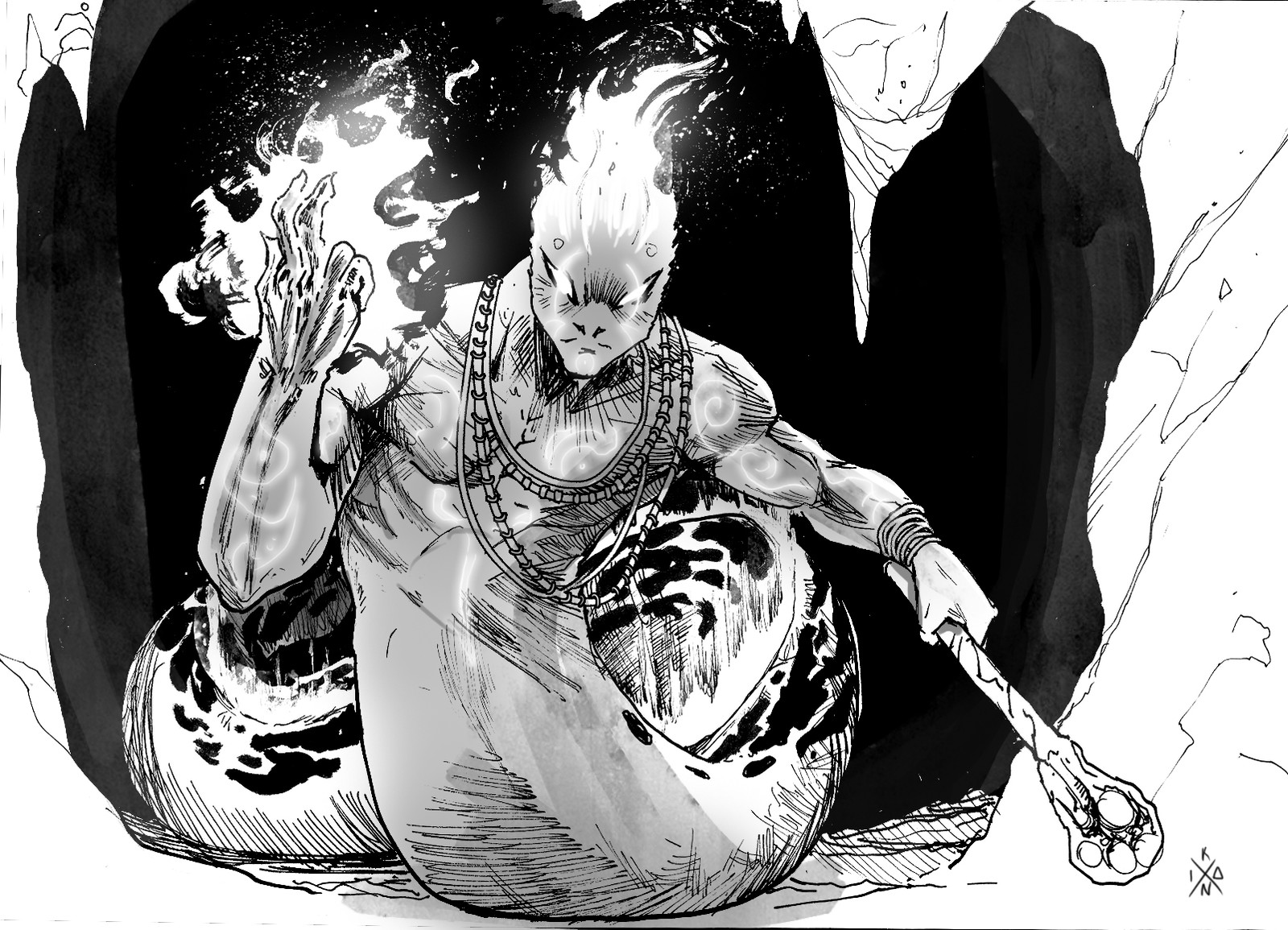
Iñaki Sendino‘s interpretation of Sugaar.
  • Sugaar, sometimes called Maju, flies across the sky in the shape of a sickle or a crescent of fire and is usually the harbinger of storms. In some places, he is said to be made of pure fire, with no head or tail. In others, he takes the form of lightning. He lives underground, and comes to the surface through the myriad caverns and chasms that are sprinkled across the Basque landscape.
  • However, his name — Sugaar — means male snake. Thus, though he often takes the form of fire or lightning, his true form is of a serpent or dragon. At least one of his homes is the Aralar mountains, the same place where Teodosio de Goñi fought a dragon, possibly suggesting a common origin to the myths.
  • He is considered the consort of Mari. In some places, they say that Sugaar/Maju and Mari meet every Friday, in some places so he can do her hair. In others, they say that, when the two meet, they erupt into a storm.
  • Basque isn’t the only culture with a Mother-Earth like goddess and a Serpent god paired up. In Italy, on Monte Vettore, there is a cave dedicated to the goddess Sibyl that is guarded by a half-man, half-serpent named Macco. The Pelasgians worshipped a godly couple, the Serpent God Ophion and the Earth Mother figure Eurynome. In Near East cultures, there are the Sumerian couples Enki and Damkina and the Hurrian-Hittite Hedammu and Ishtar. This doesn’t prove any connection between the Basque gods and these other deities, but it does highlight the frequency that snake-gods and earth-goddesses have been coupled in the human imagination. It also suggests how old this pairing might be.
  • Sugaar’s visits with Mari typically have a sexual backdrop, suggesting that he is fertilizing Mother Earth. He is the water — the rain or the rivers — that fertilize the ground. Similarly, the union of Ofion and Eurynome gave rise to creation.
  • Today, Mari is seen as the head of the Basque pantheon, but Sugaar may have been her equal in ancient times. Mari’s association with the Virgin Mary and the connection of snakes with evil could have simultaneously elevated Mari and demoted Sugaar. Sugaar’s past importance is also evident in the story of Jaun Zuria, the first lord of Bizkaia, whose lineage reached back to the serpent-god.

Primary sources: Hartsuaga Uranga, Juan Inazio. Sugaar. Auñamendi Encyclopedia. Available at: https://aunamendi.eusko-ikaskuntza.eus/en/sugaar/ar-108780/

The Adventures of Maite and Kepa: Part 97

Maite gave a panicked glance at Kepa. “What now?”

Kepa shrugged, as he looked back up at the woman floating above them. “Ez dakit! I don’t know!”

“Hemen!” They heard a voice whisper from one of the buildings next to them. A door had opened seemingly from nowhere. “Here! Hurry!”

The Adventures of Maite and Kepa is a weekly serial. While it is a work of fiction, it has elements from both my own experiences and stories I’ve heard from various people. The characters, while in some cases inspired by real people, aren’t directly modeled on anyone in particular. I expect there will be inconsistencies and factual errors. I don’t know where it is going, and I’ll probably forget where it’s been. Why am I doing this? To give me an excuse and a deadline for some creative writing and because I thought people might enjoy it. Gozatu!

Kepa nodded as he and Maite rushed toward the opening. The woman above them fired her weapon, a bolt of energy roaring forth. Kepa smelled the ionized air around him as the blast flew over his head. He and Maite stopped in their tracks.

“That was a warning,” bellowed the woman above them. “The next one won’t be.”

Before Kepa and Maite could respond, another blast of energy came from behind the woman. Cursing, she turned her head to see where it had come from. Maite and Kepa seized the moment and took off for the open door.

“Arraioa!” cried the woman. “Damnit!” She fired again, hitting Kepa in the leg as he stumbled through the doorway. It closed behind them with a small click. They could hear another blast hit the wall where the door should have been.

Kepa and Maite found themselves in a dark room, with barely enough light to see their own shadowy forms. 

“She isn’t going to give up,” said a voice in the corner, the one that had called out to them in the street. It was nondescript. Kepa couldn’t tell if it belonged to a man or woman.  “And she’ll already be calling for backup. Come, before they find a way in.”

The shadowy figure belonging to the voice started scurrying down a long corridor. Kepa tried to stand, but collapsed to the floor.

“My leg…” he began in a panic. “It won’t move.”

The figure came to his side and picked him up, placing its arm around his side. “Don’t worry, it’s just stunned. Your leg will be back to normal shortly. But we have to get out of here.”

The figure half dragged Kepa down the corridor, Maite following right behind. They turned left and then right, passing other forks of the corridor until Maite was completely confused. She knew she wouldn’t be able to find her way back.

They came to a hole in the floor with a ladder leading down.

“He’s hurt, his leg is stunned,” said the figure into the darkness.

“We have him,” replied a gruff male voice. Rough hands grabbed Kepa’s hips as he made his way down the ladder, his left leg dangling uselessly from its socket.

The figure, one hand holding the top of the ladder and the other resting in the small of Maite’s back, gently nudged her forward. “Your turn.”

Maite paused, turning to the figure. “Eskerrik asko,” she said. 

The figure stiffened. “Just doing my job,” it replied as she pushed Maite with a little more force down the ladder.

If you get this post via email, the return-to address goes no where, so please write blas@buber.net if you want to get in touch with me.
Basque Fact of the Week: Pelota Vasca

While the Basques aren’t the first and only people to play ball games, they have made their own unique imprint on this versatile sport. Pelota a mano, or handball, is the most popular version played today in the Basque Country – when my aunt and uncle ran the Herriko Taberna in Munitibar, it was always on the TV in the bar. On the other hand (no pun intended), Jai alai is probably the most famous version played outside of the Basque Country. However, there are a lot of other variants, using other types of baskets, wooden bats or rackets, and even lacrosse-like nets, that are played across the Basque Country and the world.

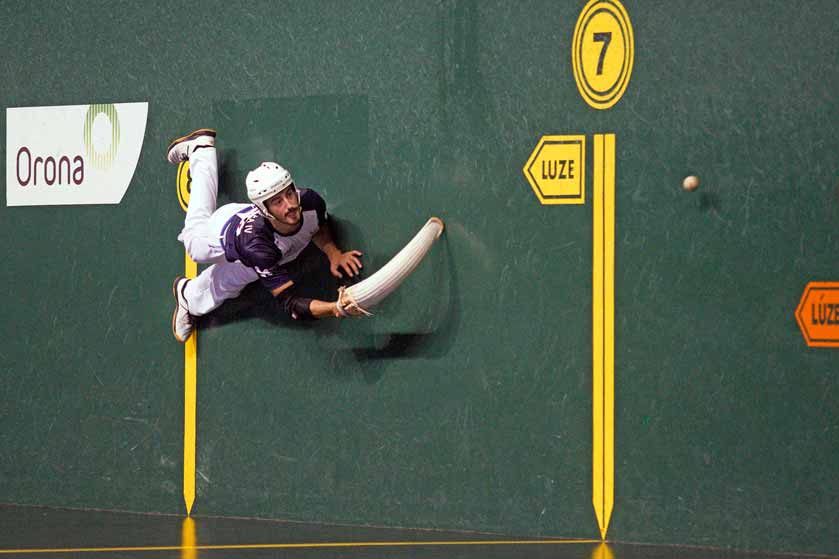
A remonte player climbs the wall for the ball. Photo from Sisters and the City.
  • Pelota is typically played in a fronton, usually either with one (primarily in Iparralde) or two walls. However, more formal games are played in one of three types of courts. A trinquet essentially has four walls, though the right wall is made of glass and the left wall has a dugout. The “mur a gauche” is open on the right and is 36 meters (118 feet) long. A jai alai court is the same, but is instead 54 meters (177 feet) long.
  • There are multiple “modalities” of pelota. The most popular, at least today, is pelota a mano or handball. However, the most famous outside of the Basque Country is zesta punta, or jai alai. Characterized by its long woven basket – 110 centimeters (43 inches) along the curve – it was first introduced in the 1860s by Gantchiqui Dithurbide from Saint-Pée, Lapurdi. In zesta punta, the ball is caught and thrown with the basket. Sometimes called the fastest sport in the world, José Ramón Areitio once threw the ball at 302 km/h (188 mph), a world record for any ball sport at the time (a record that has been since broken by a golfer). When played in an open court in Iparralde, this game is called Grand Chistera.
  • There are other versions of pelota that also use a basket. Joko garbi, or the “clean game,” uses a flatter and shorter basket than jai alai, to help eliminate the ability to catch and hold the ball. Remonte is very similar, though with a slightly larger basket than joko garbi. That is, while the jai alai basket has a well, where the ball can be caught, these baskets do not, preventing the player from holding the ball.
  • Pasaka is one of the oldest versions, and is closer to tennis, where the teams face each other, passing the ball over a net. It can be played with bare hands or with a glove that has a short basket attached to it, an earlier version of the baskets used in jai alai, joko garbi, and remonte.
  • More common is pala or paleta, in which a wooden bat is used to hit the ball. There are a number of variants of this version of pelota, from paleta goma, first played in Argentina, to pala corta and larga. These variants of pelota differ in the nature of both the bat (how long and wide it is) and the ball (whether it is made of rubber or another material). You can always find kids playing some type of pala in the frontons of the Basque Country.
  • Sare uses a type of racket in which the threads are not as tight as, for example, a tennis racket, and so the ball can be caught, similar in spirit to lacrosse (the Basque word sare means net). Of those variants of pelota played at an international level, sare is the least played. This version arose amongst the Basque communities of Argentina and Uruguay before finding its way back to the Basque Country.

Primary sources: Basque pelota from the ground up, Euskal Etxea 74; Basque pelota, Wikipedia; Pelota vasca, Wikipedia; Jai alai, Wikipedia; Letamendia Loinaz, Ander. Pelota vasca. Auñamendi Encyclopedia. Available at: https://aunamendi.eusko-ikaskuntza.eus/en/pelota-vasca/ar-102458/; Bilbao Jai Alai