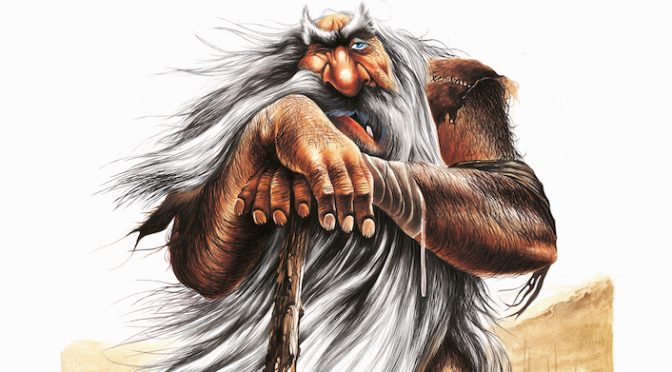
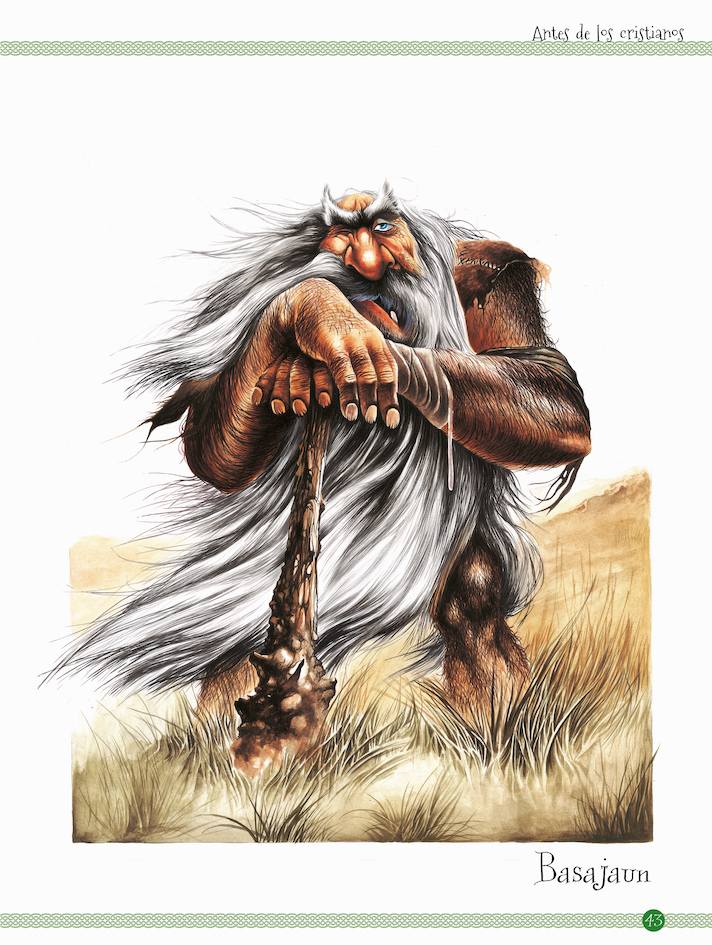
Basque mythology is full of colorful characters and beings. With the dense forests that cover the imposing mountains rising from the sea, it should come as no surprise that the mythology features beings that dwell in those forest and are closely connected to nature. However, the Basajaunak — the wild lords of the forest — are a paradox wrapped in an enigma. While they are wild beings that almost embody the primal nature of the forest, they are also protectors of humans, especially shepherds. They are also repositories of knowledge, that humans have tricked to learn new technologies.
In one story, a group of four cowherds were watching their flock in Esterenzubi, on the border between France and Spain. When they slept, they would leave a ration of their food for Antxo, the local Basajaun, who would come and warm himself by their fire as they slept. One day, only the youngest left any food out for him and so Antxo, after eating his share and warming his body, took the clothes of the other cowherds. It snowed heavily that night and, upon waking, the three cowherds were dismayed to find their clothes missing. They begged the young boy to go find them, finally offering him a lame heifer as a reward. He found Antxo, who after some coaxing returned the clothes, but also gave the young man a hazelnut wand, telling the boy to hit the heifer one hundred and one times. The boy did, and the heifer eventually produced for him a herd of one hundred and one beautiful animals.
The Basajaun is covered in hair that falls to his knees, covering his chest and belly. He protects flocks from wolves and oncoming storms, announcing their imminence by shouting in the mountains. The character of the Basajaun sits on the border between nature and civilization. He is of nature, living in the forests, but he protects the shepherd from the worst that nature has to offer.
The Basajaun is a complex character, an amalgamation of many stories that have combined to create the being we know today. At least three main motifs coexist in the Basajaun:
The wild Basajaun, covered with hair, agile and vigorous, capable of running faster than wild beasts, wandering naked in winter or summer, never getting sick and feeding on forest animals and plants.
The shepherd, who helps human shepherds and collects their offerings (bread, milk, and warmth) in exchange for his help.
The victim of robberies perpetrated by malicious heroes such as San Martín Txiki or Haxerihargaitz; this last version is the owner of valuable riches or secrets.
Because of this synthesis of many stories over centuries, the character of the Basajaun is often contradictory. In some stories, he is a protector, defending the shepherds and flock from wolves and storms, in exchange for a small offering. In others, he steals from the shepherds and scares the sheep. In some, he is impervious to the elements, his hairy body protected from the cold, but in others he warms himself by the shepherds’ fire.
There are of course similarities and maybe even common origins with other beings in European mythology. There are beings that roam the Alps and the Apennines that teach humans important knowledge. And the Greek and Romans had deities such as Silvanus and Pan protected herds and promotes their fertility. However, any direct associations are, of course, lost to time.
If you have comments or questions, or have simply been enjoying the story and want to say hello, please drop me a note!
Getting to the hotel had been relatively painless. Their bags were on time — Maite was nervous that her suitcase would get lost and then she’d have nothing to wear for her interview — and the Uber they hired picked them up and took them straight to the hotel without incident.
“What do you want to do for dinner?” asked Maite as she unpacked her suitcase and made sure her clothes for tomorrow hadn’t gotten too wrinkled in transit.
“Something mellow?” replied Kepa. “How about a burger and a beer?”
Buber’s Basque Story is a weekly serial. While it is a work of fiction, it has elements from both my own experiences and stories I’ve heard from various people. The characters, while in some cases inspired by real people, aren’t directly modeled on anyone in particular. I expect there will be inconsistencies and factual errors. I don’t know where it is going, and I’ll probably forget where it’s been. Why am I doing this? To give me an excuse and a deadline for some creative writing and because I thought people might enjoy it. Gozatu!
“That sounds fine to me. Can you find something nearby?”
Kepa nodded as he pulled out his phone and searched for nearby pubs. “There’s one just around the corner,” he said. “It has four and a half stars.”
“Sounds good,” replied Maite. “I want to get back early and go through my talk one more time.”
“Don’t you have that thing memorized yet?” asked Kepa. “You’ve gone over it so many times.”
Maite replied with a sheepish smile. “I just want to do well. It’s a big deal.”
Kepa stood and walked over to Maite, putting his hands on the small of her back and pulling her close. “You are the smartest person I know. You’ll do fine.”
“But, what if I don’t get in? What then?”
“You’ll get in. But, even if you don’t, there are many opportunities for someone like you. You’ll be fine.”
Maite shrugged. “I guess. But, this is Berkeley.”
Kepa smiled. “You’ll do great things, with or without Berkeley.”
“Eskerrik asko, Kepa.”
“Ez horregatik,” replied Kepa as he pulled her closer and kissed her.
The pub was filled with people of all ages, from undergraduate students who were releasing some steam after some big test, to a group of graduate students who were huddled with their advisor, talking about their latest research, to a few older professors who had grabbed a corner table and were amongst the loudest in the pub as they discussed the day’s news.
Maite took a sip of her beer and, then, looking at Kepa, said “Isn’t this awesome? There is so much energy here!”
“I guess it has its own flavor of marcha,” replied Kepa with a smile. “Not quite the discotech, but still pretty lively in its own way.”
Maite gave him a playful punch in the arm. “You’re just disappointed there are no ladies dancing.”
“To this?” Kepa replied, absently waving his hands to indicate the alternative music that was playing over the speakers. “Nah. And, besides, you are the only one I want to watch dance.”
Maite blushed as she finished her beer. “Ready to go?”
Kepa downed his beer as well. “Yep, let’s get you some rest before the big day.”
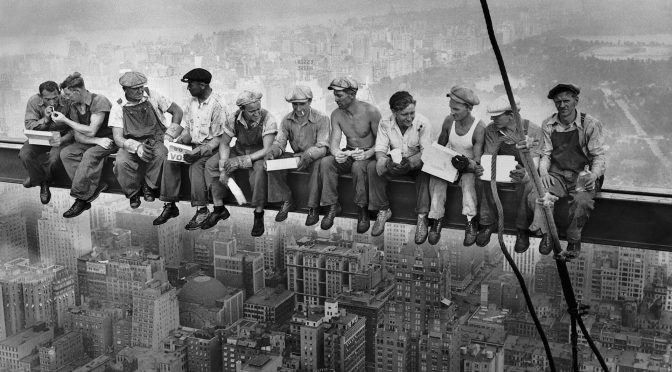
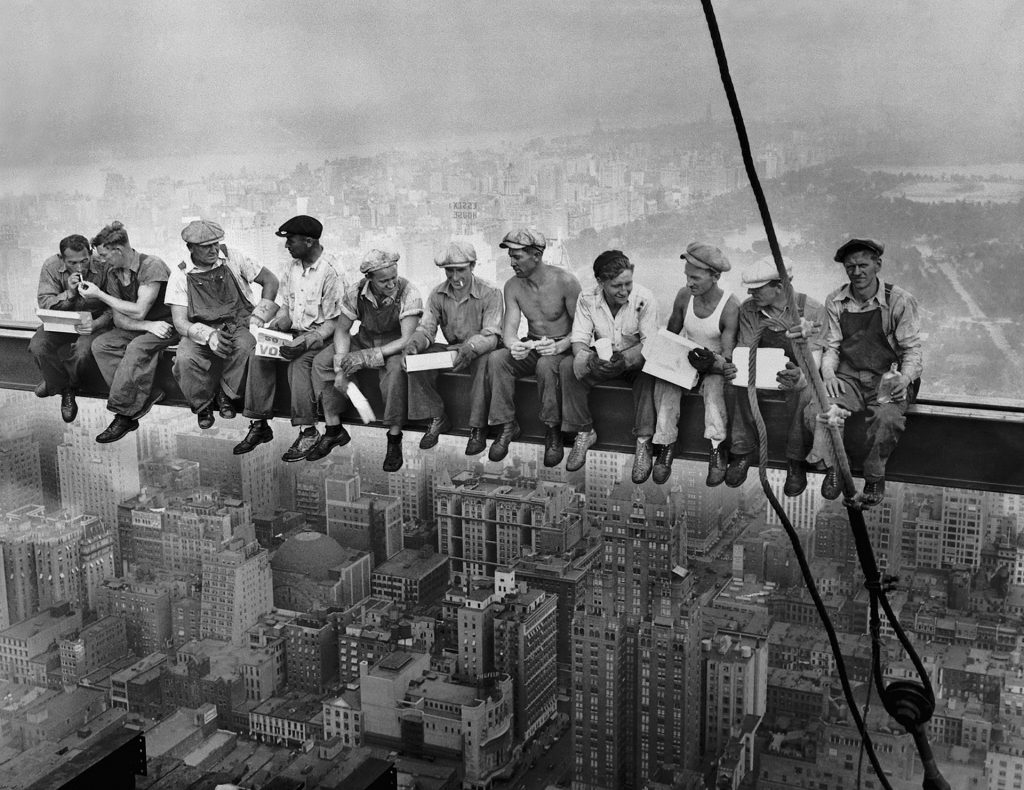
Lunch atop a Skyscraper is one of the most iconic photographs ever taken. Taken in 1932, it features 11 men casually eating their lunch while sitting upon a crossbeam dangling above New York City. The photo was a publicity stunt, taken to promote the construction of Rockefeller Center. Even so, much about the photo remains a mystery: Who was the photographer? Who were those 11 men? This last question has spurred a lot of speculation. There is now enough evidence that the second man on the left, the one lighting the cigarette of his coworker, was a Basque from Bizkaia — Ignacio Ibargüen.
Lunch atop a Skyscraper, 1932; photo from Wikipedia.
Ignacio “Natxo” Ibargüen was born in Balmaseda on November 4, 1899, the sixth child of Ignacio Ibargüen Urrutia and Micaela Moneta Luzuriaga. He left home in 1919, heading for Argentina, possibly to avoid fighting in the Rif War. However, Argentina wasn’t to his liking, so he made his way to England, serving on an English ship. This took him not only to Bristol, where he made his new home, but to other ports around Europe, including in Russia.
In the early 1920s, Natxo made his way to the United States, where he met Esperanza Ojinaga. They married in the mid 1920s and had four children: Tomás, Shirley, Daniel, and Louise. The family made their home in New York City, in Brooklyn to be exact. Natxo died in 1957.
While it is now near-impossible to definitively prove who the men in the photo were, there is abundant circumstantial evidence that the second man from the left was Natxo. Other pictures were taken that day — one showing the group considering an American football and another where the guys are listening to a radio — that more clearly show a man who has been identified as Natxo. Natxo’s connection to the iconic photo was only realized when his son, during a trip to visit family in the Basque Country, saw a copy of the photo and told his Basque family that the second man was his father.
Of the 11 men, only a few have been identified with any certainty. The men on each end are thought to be immigrants from Ireland, though the last man has also been said to hail from Slovakia. At least one other is thought to be from Newfoundland while another is a thought to be a Native American from the Mohawk tribe. There is even doubt about who took the photograph — it was only in 2003 that Charles Ebbets was finally given credit. And, while it does seem reasonable to conclude that the second man is Natxo, there are other claims as to the man’s identity.
The photo itself has its own story. It was taken to advertise the new building. While the girder the men are sitting on hangs some 800 feet above the city, it was suspended directly above a finished floor, so any fall, while still dangerous, wouldn’t have taken anyone to the street. It was one of several photos taken that day but became famous when it was published in the New York Herald Tribune on October 2, 1932.
Primary sources: Harresi Kulturala Elkartea, who have a series of articles detailing what is known about Natxo and the photograph; Lunch atop a Skyscraper, Wikipedia. A special thanks to Koldo San Sebastian and Eneko Sagarbide whose postings on Facebook alerted me to this story.
If you have comments or questions, or have simply been enjoying the story and want to say hello, please drop me a note!
The next morning, earlier than any of them cared for, Edurne took Maite and Kepa to the airport. Before they left, Maite slipped a note under Amaia’s pillow, saying goodbye and hoping to see her soon in the Basque Country. It was still dark out when Edurne pulled up to the airport.
“Are you sure I can’t help you carry your bags in?” she asked for the fifteenth time. “I can park in the garage.”
“Ez, ez, lasai!” responded Maite. “We got it! We don’t have that many bags.”
“Ok,” said Edurne, still unsure. She followed the sign pointing to departures and parked the car. As Kepa grabbed their bags out of the trunk, Edurne gave Maite a big bear hug.
Buber’s Basque Story is a weekly serial. While it is a work of fiction, it has elements from both my own experiences and stories I’ve heard from various people. The characters, while in some cases inspired by real people, aren’t directly modeled on anyone in particular. I expect there will be inconsistencies and factual errors. I don’t know where it is going, and I’ll probably forget where it’s been. Why am I doing this? To give me an excuse and a deadline for some creative writing and because I thought people might enjoy it. Gozatu!
“It was so good to see you!” she said. “We can’t let it be so long until the next time.”
“Ados,” replied Maite. “You have to come visit soon!”
“Well, if you go to Berkeley, you won’t be there for me to visit,” said Edurne with a smile.
A look of doubt flashed in Maite’s eyes. “That’s still a big if,” she finally said. “They may not accept me.”
Edurne let out a good natured laugh. “They would be fools not to. You’ll be the best thing they’ve seen in a while, I’m sure.”
She then turned to Kepa. “You take good care of her out there.”
Kepa smiled. “Oh, I will. I’ll make sure she doesn’t get into any trouble, at least not until after her interview.”
Edurne gave Kepa a squeeze. “It was good to meet you.”
“Berdin,” replied Kepa.
Edurne gave Maite one last hug. “He’s a keeper, you know,” she whispered into her cousin’s ear.
Maite smiled as she whispered back. “I know.”
“Ikusi arte!” called Edurne as she climbed back into her car and drove away.
The flight to California was relatively uneventful. Maite claimed the window seat and put on her headphones, putting some final touches on the talk she was going to give as part of her interview. Kepa sat next to her in the middle seat. To his left, in the aisle seat, sat an older gentleman. Kepa had pulled out a book and had begun reading when the man interrupted him.
“Where are you from?”
“The Basque Country,” replied Kepa.
“Where?” asked the man.
“The Basque Country,” repeated Kepa. “In Spain. Why do you ask?”
“I just noticed that your book wasn’t in English, so I was curious. So, you are Basque?” he said excitedly.
Kepa nodded.
“I’ve heard about you guys! Aren’t you the long-lost descendants of Atlantis?”
Kepa sighed as he tried to explain the history of the Basques and the Basque Country, but every time he debunked one theory, the man brought up another.
“What about Adam and Eve? Isn’t Basque the language that was spoken in the Garden of Eden?”
“Aren’t you all really aliens?”
“What about being Neandertals? That one has to be true, doesn’t it?”
By the end of the flight, Kepa was wishing he had pretended not to understand English at all.
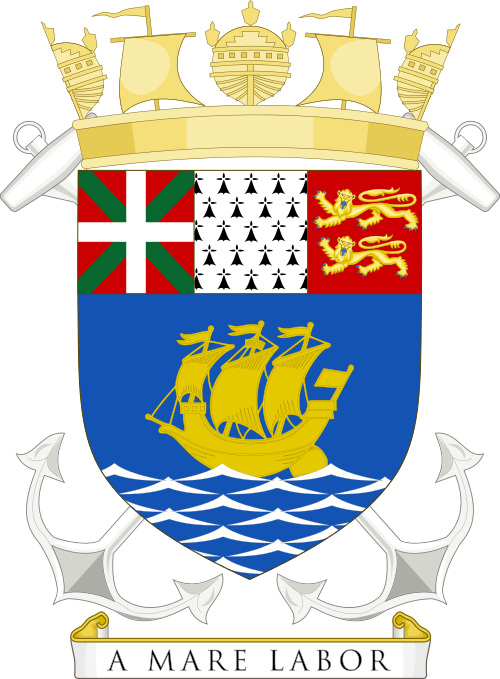
On the furthest reaches of Canada’s eastern coast lies Saint Pierre and Miquelon, a small group of islands just south of Newfoundland. A French Territorial Collectivity, the islands are the last remaining vestige of New France, at least in North America – the people are guaranteed French citizenship. However, perhaps more interestingly, if you look at their coat-of-arms, you’ll notice that the ikurriña is displayed prominently, a monument to the Basque history of the islands.
Humans have visited these islands for at least 8000 years, with the Beothuk and Paleo-Eskimo or Pre-Inuit peoples at least stepping foot on the islands, though it seems that, if they ever settled the islands, by the time Europeans arrived, there were no inhabitants. By at least 1517, Basque whalers, primarily from Donibane Lohizune (Saint Jean de Luz) and Ziburu, had found the islands and, alongside Normans and Bretons, began to settle the islands in the 17th century. Captain Juanes de Liçaurdi, commissioned by shipowner Adam de Chibau from Donibane Lohizune, established a fishing station in the south of the islands between 1602 and 1611.
The fishing industry, in decline throughout the nineteenth century, was revitalized by an influx of new Basques, who hailed primarily from Getaria (Ghétary-Bidart), Donibane Lohizune/Ziburu (Ciboure), Urruña (Urrugne), Hendaia (Hendaye) and Senpere (Saint-Pée).
The name Miquelon is thought to be of Basque origin, likely related to the name Mikel. Though, the true origin seems lost to time.
Even today, there are vestiges of the Basque history of the islands. Pelota is a popular sport, and the Basque cultural group on the islands – Zazpiak-bat – takes its name from the fronton on the island of Saint Pierre. Every year, the islands hold a Basque festival, featuring traditional dance and sporting events. There were even traces of the Basque language into the twentieth century.
As a final testament to that long Basque history, there are numerous Basque surnames associated with the inhabitants of the islands, names such as Amestoy, Bildosteguy, Doyharcabal, Errecart, Gastambide, Hiraburu, Iturbide, Jaureguiberry, Larranaga, Mendizabal, Oyarzabal, Puchulutéguy, Sabarotz, Telletchia, Uzandizaga, and Zagaramurdy.
During World War II, there was a bit of an international dust up when Free France, the French government-in-exile, under the orders of General Charles de Gaulle, took the islands from the Nazi-sympathizing Vichy government. The United States decried this use of military power in the Americas by a European force, contrary to the Monroe Doctrine, but the incident seems to have been just as suddenly forgotten.
If you have comments or questions, or have simply been enjoying the story and want to say hello, please drop me a note!
The next couple of days were a blur as Edurne and Unai led Kepa and Maite through the sites and sounds of New York City. Edurne made sure they spent some time in Central Park — “It’s like an oasis of peace in the middle of the chaos” — while Unai dragged them all to a baseball game.
“Why are they all just standing around?” asked Kepa.
“They are waiting for the batter to hit the ball, then they can run,” replied Unai.
“They sure don’t run very often,” interjected Maite as Edurne just smiled. Maite suspected she’d heard this argument play out many times before.
Buber’s Basque Story is a weekly serial. While it is a work of fiction, it has elements from both my own experiences and stories I’ve heard from various people. The characters, while in some cases inspired by real people, aren’t directly modeled on anyone in particular. I expect there will be inconsistencies and factual errors. I don’t know where it is going, and I’ll probably forget where it’s been. Why am I doing this? To give me an excuse and a deadline for some creative writing and because I thought people might enjoy it. Gozatu!
“It’s all about the strategy,” replied Unai with an exasperated sigh. “The duel between the pitcher and the batter, about who will out-think the other. It’s like a chess match, with each side trying to out maneuver the other.”
Edurne shrugged. “To me, it’s an excuse to indulge in overpriced beer and hotdogs.”
That evening, they all gathered again at Anton and Feliciana’s house for one last dinner before Maite and Kepa left for California. The spread was at least as abundant as last time, but this time, the food reminded Maite of home: platters of chorizo for appetizers, porrusalda, thick chunks of cod cooked in red peppers, and, to top it all off, rice pudding for dessert.
“I thought you might like a taste of home before heading off for the big interview,” said Feliciana as Maite marveled at the feast laid out in front of them.
“Mil esker, Feliciana! This is so wonderful!” replied Maite as she engulfed Feliciana in a huge bear hug.
“Bah!” said Feliciana with a beaming smile. “Ez horregatik.”
As they all sat down to eat, Anton passed the carafe of wine around the table. “Are you ready for the interview?” he asked Maite.
Maite shrugged. “I guess?” she replied tepidly.
“She’s going to do great!” replied Kepa with enthusiasm. “She’s by far the smartest person I know.”
“Well,” interjected Feliciana, “if you do get the position, maybe it will be an excuse for your parents to come out and visit. They can stop by here on the way.”
“I think they would love that,” replied Maite as she scooped a ladleful of porrusalda into her bowl. “They’ve never really left the Basque Country, it would be nice for them to see something new.”
“As hard as they worked, I doubt they’ve seen any of the Basque Country either,” added Anton.
Maite smiled. “Egia da. Just the beach every once in a while.”
The night continued with lively conversation about all manner of topics. After dessert, Maite began helping clear the table.
“Put those down!” exclaimed Feliciana, her voice stern. Then she smiled. “I’ll take care of those later. You have an early flight in the morning, you better get back and get some sleep.”
Maite smiled as she gave Feliciana another hug. “Mil esker, for everything. It was so good to see you.”
“Berdin,” replied Feliciana.
They all said their goodbyes, which took another thirty minutes, before Edurne literally dragged them out of the door. “Seriously ama and aita! They have to get some sleep!”
A chorus of “Gabon!” filled the air as Edurne led them all to the car, Amaia fast asleep in George’s arms.
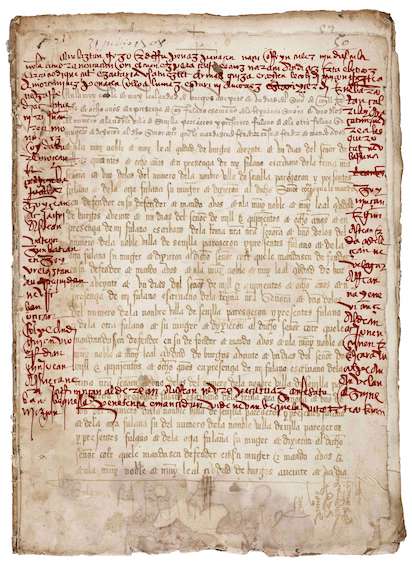
One of the challenges with studying and understanding the origins and evolution of the Basque language is simply that it is only until relatively recently that it has been written down. Thus, whenever a new fragment of Euskara is discovered, it is a big deal. While the oldest known phrases in Euskara data back to 950 or so, the oldest text is a letter written in 1537 by the then-bishop of Mexico. Or, it was the oldest, until now.
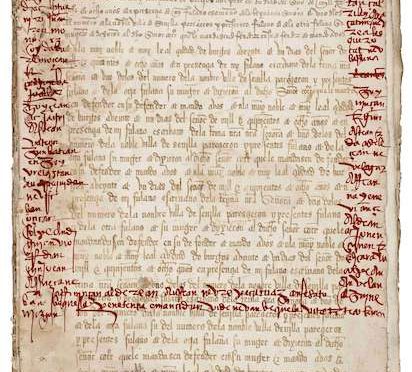
Dr. Rosa Ayerbe discovered a new poem in Euskara while doing research on notary records in Gipuzkoa at the Provincial Historical Archive of Gipuzkoa. She found one document, in the records of one Miguel Ibañez de Insausti from Azkoitia, in which a poem written in the Gipuzkoan dialect of Basque is inscribed in the margins of the otherwise unremarkable legal document.
With the help of other researchers, including Ramon Martin, Iago Irijoa and Ander Ros, they were able to transcribe and translate the ancient text. It isn’t clear that this Miguel wrote the poem. More likely, it seems, one of his scribes wrote the Basque text, sometime around 1515. It’s a love poem, not particularly remarkable in and of itself, but now being the oldest poem we have written in Euskara, it becomes one of the most fascinating items written in the language.
Here is the poem, translated to English with the help of Google translate and thinkSpain.
My sweet beautiful beloved you pity me
Having me so “zulez”, How did you make me fall in love with that sword in hand?
You take me with your hands from here to there
I will forgive you, squire, I have not used it to kill a person save the young man
Hurting me with love pains the feathered hen me sweating of love in my tears the horses appear to the fight
My love left me I usually have the first one inside my heart.
Going one day
PartII
I got up early in the morning, one day a week one day a week, and Monday morning my dear “belagai,” broke in front of me in the “bia” that I did not want, next to where you were the great blow shook me, in the middle of the heart.
I was going to church when I was hit I got down on my knees, in front of the altar [to] confess my sin, as I did she gave me penance, as I should.
Meanwhile, here I am (you got me)
It is particularly amazing that Dr. Ayerbe discovered this document as it has been scanned and digitally available for some time, just waiting for someone to find it. How many other such treasures are buried in the archives?
If you have comments or questions, or have simply been enjoying the story and want to say hello, please drop me a note!
The show, a musical reenactment of Sherlock Holmes’ last adventure in which he fell from the waterfall, was remarkably well done. Maite was taken with the costumes and the stage sets and was thoroughly engaged by the dramatic story. Kepa, who struggled to follow the dialog and who had had his fill of adventure for the day, as predicted, fell asleep. Maite nudged him more than once as his snores threatened to drown out the actors.
“Would you be quiet?” she hissed in his ear, clearly exasperated, as she poked him in the ribs for the fourth time.
Kepa shrugged apologetically. “Barkatu, I can’t help it.”
Buber’s Basque Story is a weekly serial. While it is a work of fiction, it has elements from both my own experiences and stories I’ve heard from various people. The characters, while in some cases inspired by real people, aren’t directly modeled on anyone in particular. I expect there will be inconsistencies and factual errors. I don’t know where it is going, and I’ll probably forget where it’s been. Why am I doing this? To give me an excuse and a deadline for some creative writing and because I thought people might enjoy it. Gozatu!
Just then the first act ended. The curtains fell and the lights came on for intermission.
Kepa stood and stretched. “I may hang out in the lobby for the rest of it, so I don’t disturb the play,” he said.
“I’d hate for you to miss it,” said Edurne as she also stood.
“Lasai, Edurne,” replied Maite with a glare at Kepa. “He’s already missed the first act.”
Kepa gave her a sheepish look as he made his way down the row of seats and into the aisle. As they all headed to the restrooms, Kepa headed to the lobby. “See you when it’s done,” he said.
Maite pulled him close and gave him a quick kiss on the lips. “Try not to snore too loud out there either,” she said and then queued for the restroom.
Kepa made his way to the lobby. Fortunately, the theater had a bar. He found a seat. The bartender eventually found his way to Kepa. “What will you have?” he asked.
“Gin kas, please,” replied Kepa in his heavily accented English.
“Gin and what?” asked the bartender.
Kepa shook his head, exasperated. He was too tired to figure this out.
“Could he get a gin and tonic with an extra splash of lemon juice?” a voice next to him asked. “Make that two.”
The bartender nodded as Kepa turned to see Unai settling in on the stool next to him.
“Eskerrik asko,” said Kepa.
“Ez da ezer,” replied Unai.
“What are you doing out here?” asked Kepa.
“Truth be told, I really don’t go for these plays. It’s not really my thing.”
“Isn’t Eric going to be upset?”
“Nah, he knows that I only tolerate these things at best. And this time, I have an excuse for ducking out.” The bartender brought the two drinks, placing them down in front of Kepa and Unai. Unai held his glass up. “Mil esker,” he said with a smile.
“Ez da ezer,” replied Kepa, returning Unai’s smile as he took a sip of his drink.
This article originally appeared in its Spanish form in El Diario.
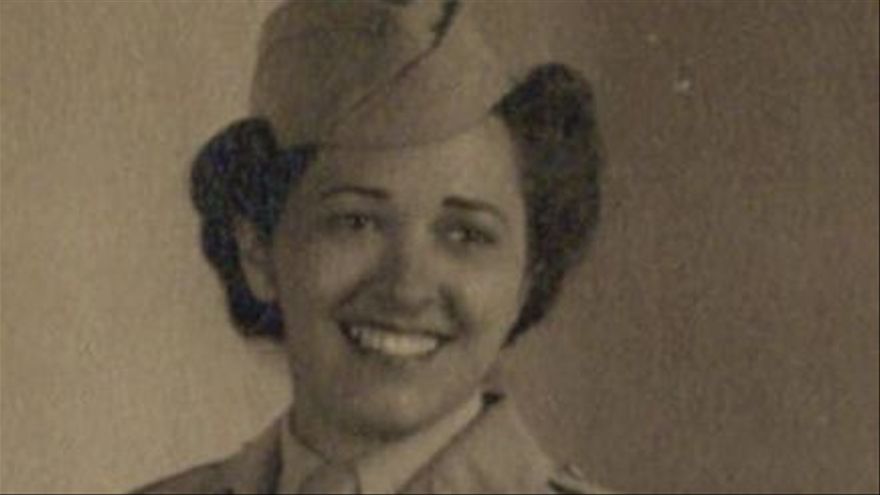
Cecilia Joyce Corcuera Berasategui poses with the uniform of the Ports of Embarkation service. She is one of the first two women from Spain identified as serving in the US Army, in which they enlisted during World War II. Courtesy of Polly Ann Corcuera-Clark and family.
In “Spaniards against Hitler. At the service of the United States Army,” we presented the results of a preliminary analysis on the weight of Spanish emigration in the United States Army (USA) in World War II (WWII). In that work, we identified 1,194 men and two women from Spain who were enlisted in the US Army during the aforementioned war. They were part of a contingent of more than 300,000 foreigners (US citizens and non-citizens) who fought under the American flag.
Since the publication of that research (which continues to this day), more than a few people, public institutions and associations from the so-called field of historical memory have turned to the Asociación Sancho de Beurko Elkartea to get to know firsthand the objectives of the project “Fighting Basques: Memory of World War II,” and of course to find out and disseminate the identity of the two women (so far) who are part of the group of almost 1,200 veterans born in Spain. To all of them, our sincere thanks for their interest. This article is dedicated to the memory of these two women, trusting that the future will reveal the names of many other comrades in arms who participated in WWII. They are the Basque Cecilia Corcuera Berasategui and the Catalan Carmen Arabia i Gironés.
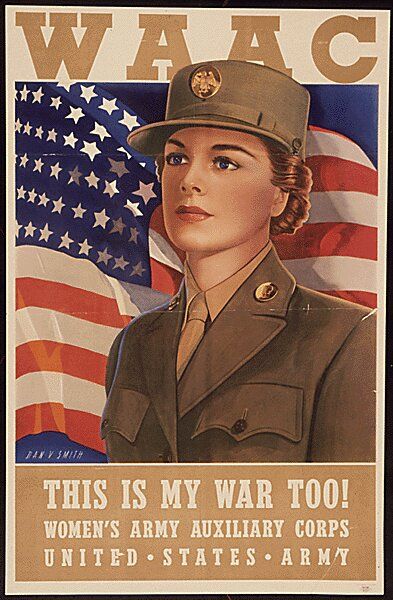
“This is my war too!” exclaimed the recruitment poster for the Women’s Army Auxiliary Corps. The inclusion of women in the American war machine, both civil and military, was exceptional but decisive in the future of the war.
Corcuera and Arabia were two of the nearly 350,000 women who served in the various US military branches during WWII. With the aim of freeing soldiers from all work not related to combat itself, several military bodies (auxiliaries) were created at the beginning of the war, joining the already classic Navy and Army nursing units. Corcuera and Arabia voluntarily enlisted in the Women’s Army (Auxiliary) Corps (WAAC/WAC), created in May 1942. The WAC grew to 150,000 women, many of whom were destined for the different theaters of military operations. Never before had women, with the exception of nurses, served in the ranks of the US Army, becoming in turn the only auxiliary corps to serve overseas.
“Echoes of two wars, 1936-1945” aims to disseminate the stories of those Basques and Navarrese who participated in two of the warfare events that defined the future of much of the 20th century. With this blog, the intention of the Sancho de Beurko Association is to rescue from anonymity the thousands of people who constitute the backbone of the historical memory of the Basque and Navarre communities, on both sides of the Pyrenees, and their diasporas of emigrants and descendants, with a primary emphasis on the United States, during the period from 1936 to 1945.
THE AUTHORS Guillermo Tabernilla is a researcher and founder of the Sancho de Beurko Association, a non-profit organization that studies the history of the Basques and Navarrese from both sides of the Pyrenees in the Spanish Civil War and in World War II. He is currently their secretary and community manager. He is also editor of the digital magazine Saibigain. Between 2008 and 2016 he directed the catalog of the “Iron Belt” for the Heritage Directorate of the Basque Government and is, together with Pedro J. Oiarzabal, principal investigator of the Fighting Basques Project, a memory project on the Basques and Navarrese in the Second World War in collaboration with the federation of Basque Organizations of North America.
Pedro J. Oiarzabal is a Doctor in Political Science-Basque Studies, granted by the University of Nevada, Reno (USA). For two decades, his work has focused on research and consulting on public policies (citizenship abroad and return), diasporas and new technologies, and social and historical memory (oral history, migration and exile), with special emphasis on the Basque case. He is the author of more than twenty publications. He has authored the blog “Basque Identity 2.0” by EITB and “Diaspora Bizia” by EuskalKultura.eus. On Twitter @Oiarzabal.
Josu M. Aguirregabiria is a researcher and founder of the Sancho de Beurko Association and is currently its president. A specialist in the Civil War in Álava, he is the author of several publications related to this topic, among which “La batalla de Villarreal de Álava” (2015) y “Seis días de guerra en el frente de Álava. Comienza la ofensiva de Mola” (2018) stand out.
Cecilia Joyce Corcuera Berasategui
Of the 117 Basques born in the current Autonomous Community of Euskadi (10% of the total enlisted from Spain), 108 were from Bizkaia. Five came from Gipuzkoa and only four from Araba. Among the latter we find Cecilia Joyce Corcuera Berasategui. Although most of them made the American West their second home, 38% stayed in New York, as was the case with Cecilia’s family.
Cecilia was born in 1916 in the Alava town of Arraia (today Arraia-Maeztu). Her father, Pedro “Peter” Corcuera Beltrán — born in 1887 in Subijana de Álava/Subillana-Gasteiz — and her mother, Serapia “Sophia” Berasategui Ormazabal — born in Arraia (other sources indicate Zalduendo) in 1886 — emigrated to Vancouver, in British Columbia, Canada, in 1910. He was a sailor. The first of their children, Felipe Tomás or “Philip Thomas” (1914-1998), was born in Vancouver. After five years in Canada, they returned to Europe. Pedro emigrated again in 1916, this time going to the United States. He settled in the city of Amsterdam in New York State, where he found a job as a night watchman in one of the many local carpet factories, work that he would carry out for the rest of his life. Cecilia along with her mother and her brother Felipe joined her father in 1920 after four long years of absence. She was barely four years old and it was the first time she had seen her father. The rest of the siblings would be born in Amsterdam: Margaret Julia (1922-1996), Joseph Martin (1924-2006), Elizabeth (1927-2015) and Richard (1931-2016).
In the 1930s, both her father and Cecilia achieved American citizenship. After studying at the Wilbur H. Lynch Institute in Amsterdam, Cecilia was working as a weaver in a carpet factory when she enlisted in the Women’s Army Corps on March 8, 1943, in Albany, the capital of New York State, only a month after her brother Joseph had enlisted. Cecilia was 26 years old. Two months later her father passed away. (Her mother would follow him in 1968.) Although we do not know many details of Cecilia’s military service, we believe that she performed her duties in the United States. On her uniform, she wore a patch of the Ports of Embarkation, a branch of the Army Transportation Corps with jurisdiction over the shipment of troops, weapons and supplies to port facilities, normally within US territory. To give us an idea of the enormity of this task, at the end of the war the Transportation Corps had moved more than 30 million soldiers within the continental United States and seven million soldiers plus 126 million tons of supplies abroad. She was honorably discharged with the rank of Private First Class at the end of the war. (Joseph was discharged with the rank of Sergeant.)
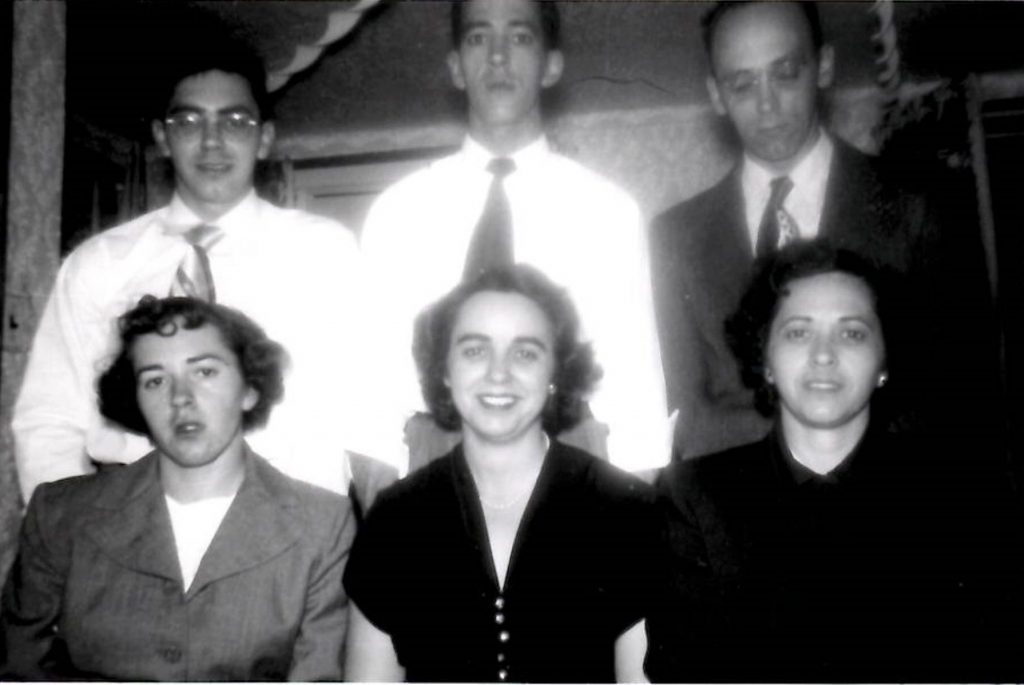
Photograph of the children of the Corcuera Berasategui marriage. Seated, from left to right: Elizabeth, Margaret and Cecilia. Standing from left to right: Richard, Joseph and Philip
After the war, in 1950, Cecilia married a WWII veteran, James Louis Murphy. Cecilia passed away in 1984, at the age of 67, in the city where she grew up. Cecilia’s little brother Richard was a veteran of the 1st Marine Division in the Korean War. He passed away at the age of 85, being the last generation of his family born in the USA.
Carmen Arabia i Gironés
Of the 57 Catalans identified in our study (4% of all those enlisted who were from Spain), 45 were from the province of Barcelona. Only five came from Girona, the province of birth of Carmen Arabia i Gironés, another five from Tarragona, and two from Lleida. About 50% of them chose New York as the final destination of their migratory journey. This was also the destination chosen by Carmen’s family.
Carmen was born in 1905 in Sant Feliu de Guixols. Her parents were José Emilio Camilo Arabia i Bruguera — born in 1862 in Arenys de Mar, in the province of Barcelona — and Magdalena Ramona María Gironés i Comas — born in 1872 in Sant Feliu de Guixols. Carmen and her family emigrated to the United States in 1914, a month after the start of the Great War. She was 8 years old. She was accompanied by her sisters: Teresa “Theresa” (1894-1987), María (1908-1995), and Concepción “Conchita” (1912). The family settled in Brooklyn, New York City, where her father worked as an accountant for the International Cork Company, one of the largest cork factories in the country. After the death of her father in 1928, the family moved to Forest Hills, in the New York borough of Queens.
By then, Carmen’s older sister, Teresa, had married Joan “John” Agell Castells [1], born in Barcelona in 1891, who after a period in Cuba — in 1913 he was appointed secretary of the Catalan Center of Santiago — arrived at the Port of New York in 1916. At the beginning of the 1930s, Joan was elected secretary of the Catalan Nationalist Center of New York, founded in 1920. This group adopted the “Estelada” and proposed to adopt American nationality and renounce Spanish nationality during the dictatorship of Primo de Rivera, similar to what Jon Bilbao (subdelegate of the Basque Government in exile) would propose years later in the context of WWII. Carmen and her sisters resided with Teresa and her husband for a time in the early 1940s.
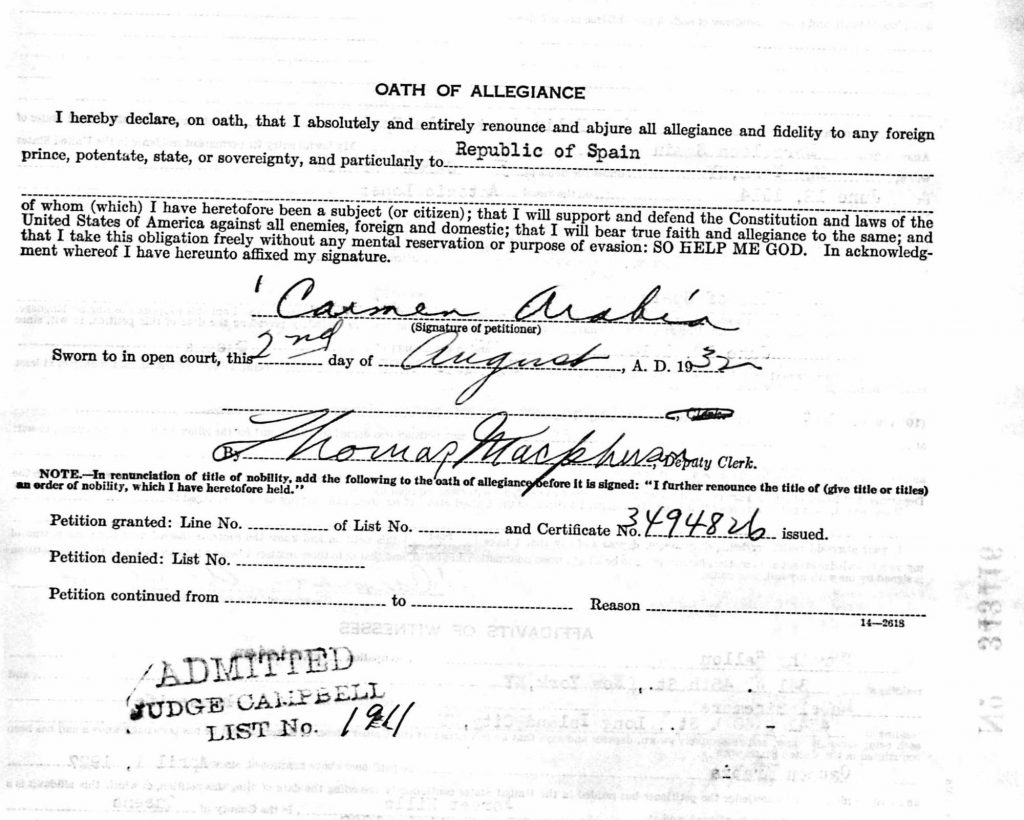
Carmen studied at Hunter College in New York (an academic institution dedicated exclusively to women) and at Columbia University. In 1932 she obtained American citizenship. “I will support and defend the Constitution and laws of the United States of America against all enemies, foreign and domestic,” so she recited as part of her oath of allegiance to the country of her adoption. Little would would have imagined, back then, that those words would become reality a few years later.
American nationalization document of Carmen Arabia i Gironés which includes her “loyalty oath,” signed in 1932 in New York.
Carmen was working as a secretary and office clerk when she enlisted in the Women’s Army Corps in New York City three weeks after Cecilia Corcuera joined in March 1943. She was 37 years old. In June 1944, she was sent to the Pacific Theater of Operations. It is estimated that a total of 5,500 WAC women were sent to this military front in mid-1944, serving in both Papua New Guinea and the Philippines (since November 1944). Without appropriate uniforms to combat the tropical climate (they were equipped with winter clothing), they were haunted by the diseases typical of the region (for example, malaria) as well as the physical and social isolation they suffered to avoid harassment from their male colleagues (they were locked in their own facilities protected by barbed wire after finishing their work shifts). Such factors greatly hindered the execution of their duties and led to increasing sick leave [2]. Even so, their work was essential to ensure success on the various military fronts.
Given the prison-like conditions of women in New Guinea, it is not surprising that Carmen might have become acquainted with the woman that would become Colonel María Rementería Llona, born in 1917 in Hagerman, Idaho, to Bizkaian parents. Rementería enlisted in the Army Nurse Corps in 1943, serving as a lieutenant in the New Guinea campaign until the end of the war. As of today, she is the woman of Basque origin with the highest military rank that we have identified in our work.
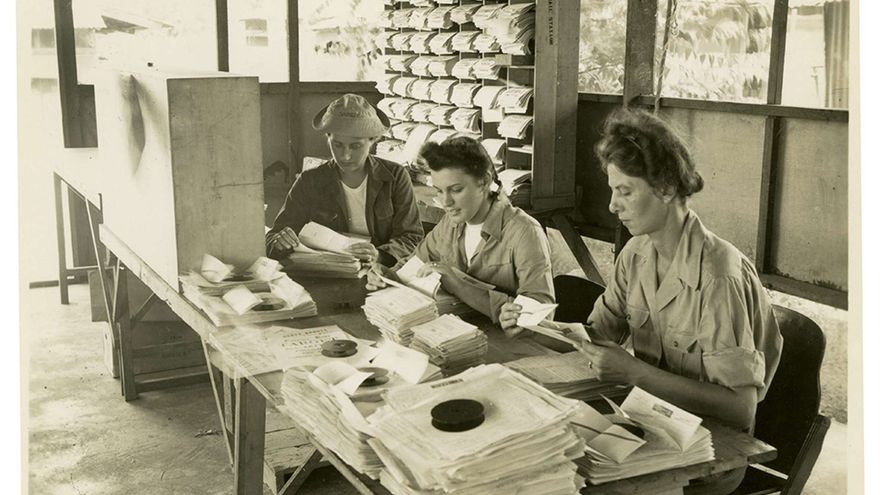
Three soldiers from the US Women’s Army Corps check military mail in Port Moresby, Papua New Guinea, in 1944. This was the work that Carmen Arabia will carry out during her military service.
Carmen was in charge of the foreign languages section of the Censorship Detachment in New Guinea and the Philippines, where she remained until the end of the war. A large number of the officers like Carmen were employed as censors of the troops’ mail. The objective was to review and, where appropriate, censor the epistolary communications between the soldiers and their families and friends, to protect confidential information related to the war. Carmen achieved the rank of First Lieutenant in December 1944. She was married twice in her lifetime. She passed away in 1996, at the age of 90, in the city of Rising Sun, in the State of Maryland.
The biographies of Corcuera and Arabia and their journey during WWII have been made with the tools of family history and following the methodology of our “Fighting Basques” project. Both constitute an excellent example of the commitment that many women voluntarily assumed in the defense of their country — in this case, adopted — and even more, their vital journeys allow the prosopography of part of the Spanish emigration to the United States. But all this would not be more than an anecdotal footnote in the immense activities of the US Army if it were not for what really gives this study value: that their achievements — and those of all of those who fought in the Great War — went beyond those of their parents, since in their own right they became part of the so-called “generation of sacrifice,” which emerged victorious from WWII after defeating totalitarianism. It is this special juncture that takes us from the studies of emigration or diaspora to memory, a memory that was until now unknown to us.
[2] Treadwell, Mattie E. (1954). The Women’s Army Corps. Washington D.C.: Office of the Chief of Military History, Department of the Army.
Collaborate with ‘Echoes of two wars, 1936-1945’ If you want to collaborate with “Echoes of two wars,” send us an original article on any aspect of WWII or the Civil War and Basque or Navarre participation to the following email: sanchobeurko@gmail.com. Articles selected for publication will receive a signed copy of Combatientes Vascos en la Segunda Guerra Mundial.
When you think of the Basque Country and sports, images of pelota, rowing, or stone lifting come to mind. And of course soccer, no matter who you root for. However, while the Basque Country certainly gets snow, it isn’t known for winter sports. However, that might start changing with the incredible performances of Lucas “Luki” Eguibar.
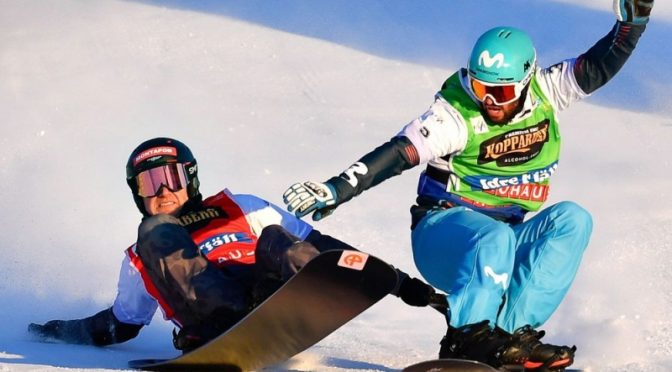
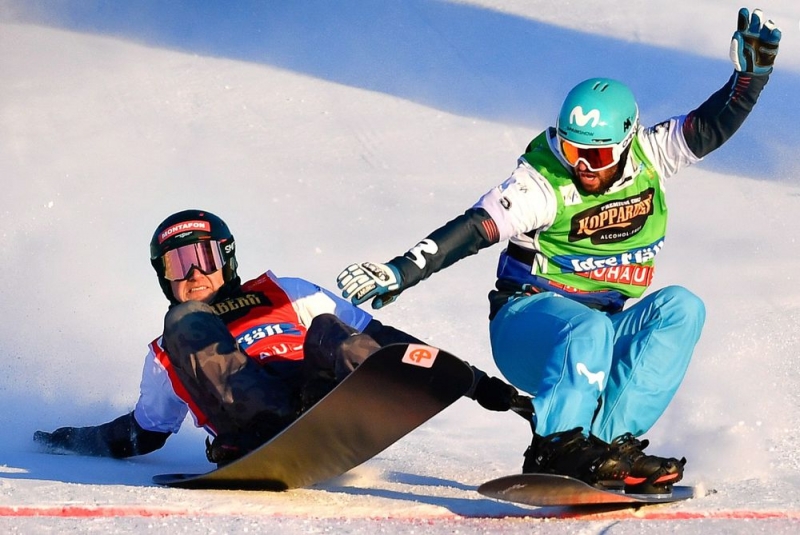
Lucas “Luki” Eguibar (right) in his photo finish win. Photo from The Times Hub.
Eguibar, known as Luki, is the reigning snowboard cross champion, beating the Austrian Alessandro Haemmerle in a photo finish at the world championships held on February 11 in Idre Fjäll, Sweden. While Haemmerle had the better start, Eguibar caught him on the lower part of the mountain. In an interview afterwards, though elated, he said that in the semifinals he could barely feel his legs due to the punishment of the landings.
Luki was born on February 9, 1994 in Donostia, Gipuzkoa. He took to the snow early, at the age of 2 and first competing as a skier at the age of 5. However, when he turned 16, he decided that skiing wasn’t for him and turned to snowboarding. Soon, he competed in the Spanish Championship of snowboard cross and finished third.
Since then, Luki has competed in the 2014 and 2018 Winter Olympic Games, finishing 7th and 33rd, respectively. In the 2014 games, he had won all of his races until the semi-final, where he fell and was later disqualified. In 2017, he won silver in both the individual and team snowboard cross World Championship held in Sierra Nevada, Spain. He won gold in the Junior World Championship in 2013. He also has four World Cup victories.
Because of the lack of appropriate training facilities within the Basque Country and Spain more broadly, he travels to countries like Austria and Switzerland to train.
Luki also has a passion for tattoos. He estimates he has more than 30, including ones dedicated to his grandparents, who died shortly after the 2018 Olympic Games in Korea. He has even tattooed himself. He go-to place is Tattoo Chaman in Irun.
Luki has two siblings. His brother, Nico, was in a car accident just months before the 2014 Olympic Games. Doctors said he wouldn’t live through the day, but after 45 days in a coma, he survived. Now they inspire each other to do their best as one competes and the other rebuilds his life. Sara, Luki’s sister, was also a competitive skier and snowboarder.