It is seemingly part of human nature that we most vehemently attack that which is somehow a part of us. Pierre de Lancre was no different. One of the most infamous persecutors of Basque witches, he himself had Basque ancestry, an ancestry that his family seemed to deny. De Lancre felt that all aspects of the Basque culture reflected the inherent tendency of Basques toward evil.
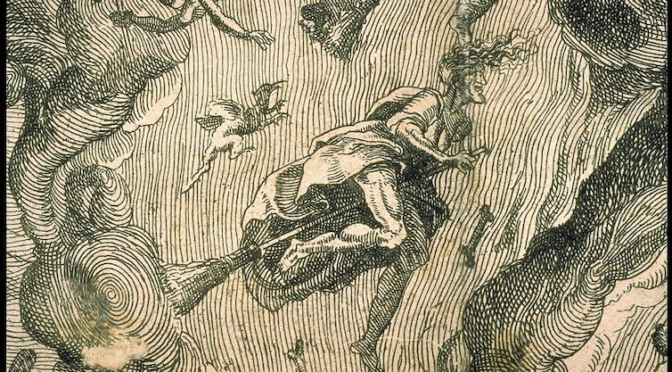
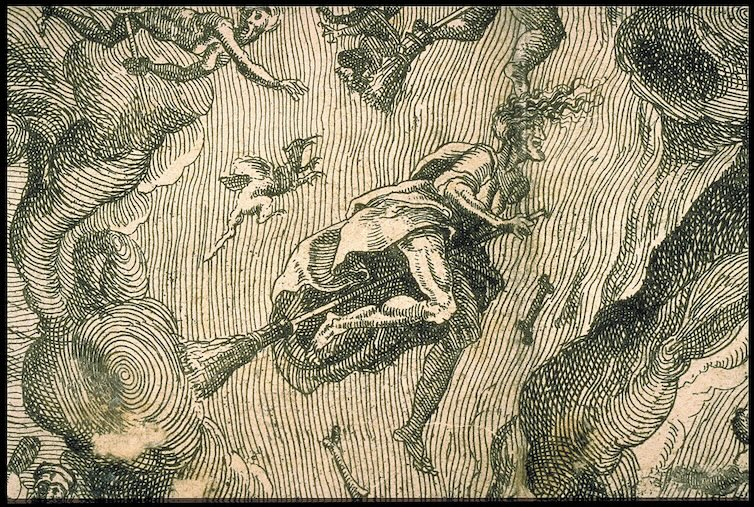
An image from one of de Lancre’s books depicting witches flying on brooms, as drawn by Jan Ziarnko. Image from Cornell University Library.
Pierre de Lancre was born in 1553. His grandfather, Bernard de Rosteguy, was a wealthy wine grower and was from Joxue, a town in Nafarroa Beherea in Iparralde. Thus, de Lancre had Basque ancestry – Rosteguy is a respelling of Aroztegi, which means ‘home of the smith.’ His father became Lord of Lancre by purchasing a position under the king. This led to a new name for the family, foregoing their Basque name.
de Lancre attended the Jesuit college, receiving a law degree in 1576. In 1582 he was named a councillor or judge of the parliament of Bordeaux. It was in this roll that he oversaw the witch-hunt of Lapurdi, for which he became infamous.
In 1609, the King of France, Henry IV, sent him to investigate allegations of local witchcraft. His investigations uncovered rampant witchcraft – he ultimately suspected 10% of the population – nearly 3000 people – of being witches. As a result of his trials, he executed some 70 people, maybe even as many as 300. Many were women who were accused of adultery and debauchery with the devil, though many children and a few priests were also executed.
During the trials, many of the local men were away fishing in the waters of Newfoundland. When they returned, they were incensed by what had happened to their families and threatened rebellion. To quell their anger, the authorities in Bordeaux recalled de Lancre, ending the hunt.
After the trials were concluded and de Lancre was recalled, he published his Tableau de l’inconstance des mauvais anges et démons où il est ample traité des sorciers et de la sorcellerie, describing his investigations. In it, he railed against the evil inclinations of the people of Lapurdi, the intrinsic perversity of women, the preparation of the Sabbath, poisons, the crowing of the cock, demonological pacts, marks and feasts, dances, intercourse with the devil, lycanthropy, healing practices, apparitions, witch-priests, and the black mass, amongst other topics.
His most famous work was republished in 1982. In it, Nicole Jacques Chaquin writes in her forward that “Lancre stresses the disorders caused by a love of freedom detrimental to the proper functioning of central power” and that “Lancre will show evidence of a lack of understanding of the social and economic habits of the rural Laburdi, which will be presented to him with an effect of foreignness that he will ‘naturally’ attribute to the diabolical.”
There is speculation that this denial of his Basque heritage led de Lancre to hate all things Basque. He considered “Basques to be ignorant, superstitious, proud and irreligious. Basque women were in his eyes libertines and Basque priests were for him just womanizers with no religious zeal. He believed that the root of the natural Basque tendency towards evil was love of dance.”
A full list of all of Buber’s Basque Facts of the Week can be found in the Archive.
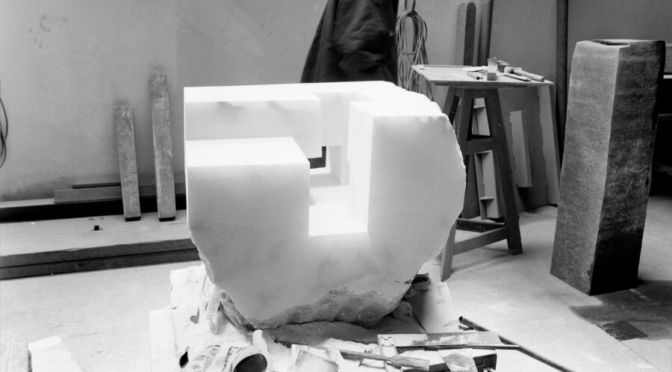
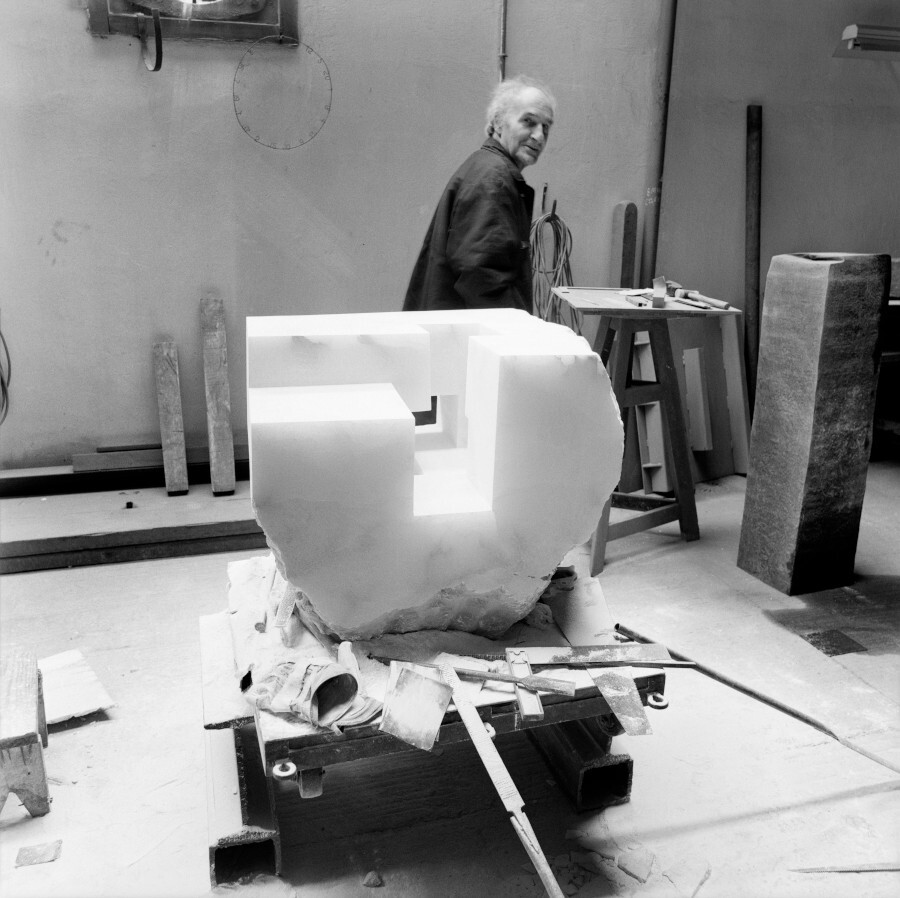
One of the aspects of Basque culture that has always fascinated me is the mix of tradition with the most cutting edge ideas. Growing up in the Basque communities of the American West, I was exposed more to the traditional aspects of the culture – the dancing, the singing – and less to the avant garde that seems to define much of modern Basque culture, such as the radical rock. Basque art is no different, with some of the most important artists working in abstract spaces that, while feeling counter to the ancient traditions, are still rooted in them. Perhaps the most famous Basque sculptor, Eduardo Chillida epitomized this dichotomy.
Eduardo Chillida Juantegui was born in Donostia on January 10, 1924. His parents were Pedro Chillida and Carmen Juantegui, who was a soprano. Chillida was a goalkeeper for Real Sociedad until a devastating knee injury ended his career, after which he studied architecture in Madrid before switching to art and studying in Paris.
From a young age, his parents encouraged a sensitivity for art in him and his siblings. They would lock them in a room and ask them to observe the objects, to hone an awareness of everything around them, and then ask them to describe those objects after.
It was only after returning from Paris in 1951, a bit despondent, that he both truly connected with his Basque identity and began working in iron. In Hernani, he created his first abstract sculpture, called Ilarik, that was inspired by Basque funerary steles. By 1954, he was being commissioned to create the doors to the Sanctuary of Arantzazu. In 1961, he began sculpting in wood and, in 1963, after a trip to Greece, in alabaster. Later, he also worked in concrete and clay.
In 1975, he created the logo for the University of the Basque Country, which is still used today along with the motto Eman ta zabalzazu – give and spread – taken from Jose Mari Iparragirre‘s Gernikako Arbola. A few years later, he began work on one of his most famous pieces, the Haizeen orrazia in La Concha Bay of Donostia.
Chillida has been highly recognized for his work across the globe. Accolades include the Grand International Prize for Sculpture at the 29th Venice Biennale in 1958, the Kandinsky Prize, the Wilhelm Lehmbruck Prize, the German Kaissering Prize, the Prince of Asturias Prize, and the Imperial Japanese Prize. In 1993, he was named a member of the American Academy of Arts and Sciences. Correspondingly, his work appears all over the world.
In 2000, the Chillida-Leku museum opened in Hernani on the grounds of a sixteenth century baserri he and his wife purchased in the 1980s. It showcases many of Chillida’s works in a natural setting, harmonizing his art with nature. He died a couple of years later in 2002 in Donostia.
Chillida is quoted describing his work: “My whole Work is a journey of discovery in Space. Space is the liveliest of all, the one that surrounds us. …I do not believe so much in experience. I think it is conservative. I believe in perception, which is something else. It is riskier and more progressive. There is something that still wants to progress and grow. Also, this is what I think makes you perceive, and perceiving directly acts upon the present, but with one foot firmly planted in the future. Experience, on the other hand, does the contrary: you are in the present, but with one foot in the past. In other words, I prefer the position of perception. All of my work is the progeny of the question. I am a specialist in asking questions, some without answers.”
A full list of all of Buber’s Basque Facts of the Week can be found in the Archive.
Basques have long been associated with whaling. Records as far back as 670 highlight the importance that whale hunting was to the Basque economy and their way of life. However, the people that inhabited the region we now know as the Basque Country used resources from whales even earlier, many millennia earlier. New research has revealed that people on the coast of Bizkaia and the surrounding regions made tools from whale bones some 20,000 years ago.
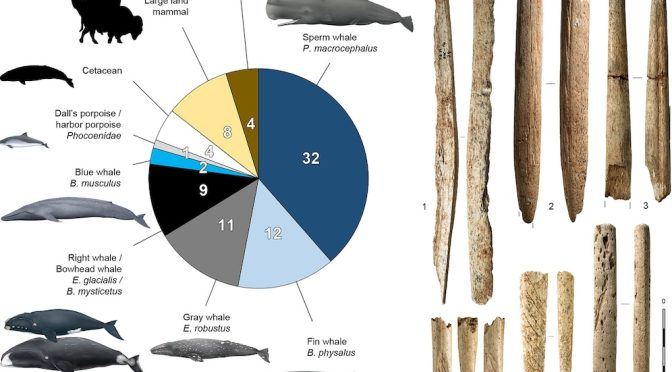
Summary of the types of artifacts analyzed in this study and the animals of their origin.
A large collection of researchers spanning universities and research centers in Barcelona, Paris, Austria, Santander, Salamanca, Toulouse, Donostia, Switzerland, Oviedo, Denmark, and Canada, amongst others, examined a collection of whale bones found along the Bay of Biscay (Bizkaiko Golkoa in Basque). Using a number of techniques, they dated these bones to 16,000 to 22,000 years ago.
The most remarkable thing about this find is that some of these bones, a majority even, had been made into tools. That humans made various tools out of whale bone is nothing new, but this is now the oldest evidence of humans doing this, pushing back our understanding of when humans used whale bones in this way by at least 1,000 years.
Most of these objects are related to weapons, often being projectile points or foreshafts, similar to points made from antlers from a similar time period. Some of them are fragmented, suggesting they were crushed, and leading the researchers to speculate that maybe these bones were brought back to habitats for their fat and oil, which was extracted by crushing the bones.
In addition, the researchers were able to determine what kinds of whales these were – they use carbon versus nitrogen isotope ratios to identify the different species (you’ll have to dig into the paper for more details). Five different species were identified. Some are expected – sperm, blue, fin whales are still found in the Bay of Biscay today. However, gray and bowhead/right whales are only found in the Arctic, which means that the Bay of Biscay of some 20,000 years ago hosted an even richer biodiversity than it does now. This makes some sense as the waters were colder back then, more akin to today’s Arctic waters. Of course, some of these whales, particularly right whales, were extensively hunted off of the shores of the Basque Country, also contributing to their current absence. However, these whales were likely not hunted, but acquired “opportunistically” as they washed ashore, for example. The humans of the time simply didn’t have the capabilities to actually hunt whales.
Several of these fragments were found in the modern Basque Country, including in Iruroin, Ermittia, Urtiaga, and Isturitz. However, the generality of these discoveries along the Bay of Biscay suggest that the same types of peoples were responsible for all of these artifacts.
These types of studies not only shed light on human prehistory, but they provide a broader view of the past world. The researchers were able to also examine the diet of these whales via isotope analysis, finding that their diet and habitat was similar, for the most part, to what whales exhibit today. That said, there are differences that may be partially attributed to changing climate over the last 20+ millennia.
A full list of all of Buber’s Basque Facts of the Week can be found in the Archive.
The motto Zazpiak Bat – or the equation 4+3=1 – is a common way to express the unity of the seven historical Basque provinces. The Basque coat-of-arms is called zazpiak bat, but the phrase means more than just the coat-of-arms. It expresses the common cultural and historical legacy of Bizkaia, Gipuzkoa, Araba, Nafarroa, Zuberoa, Lapurdi, and Nafarroa Beherea. It has become a unifying motto that can be seen and heard across the globe.
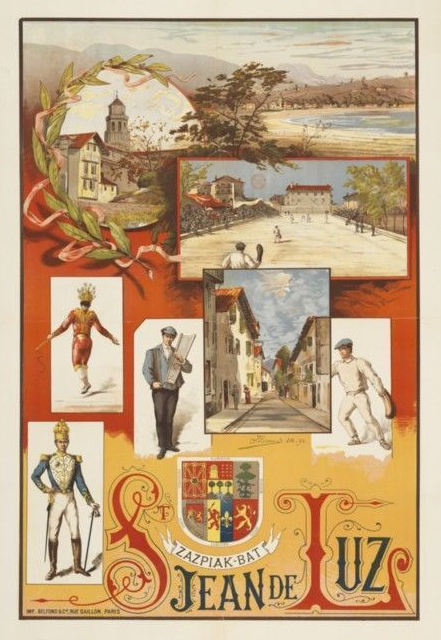
The poster designed by Jean Jaurgain that features the phrase Zazpiak Bat and the Basque coat of arms. Image from Wikipedia.
The phrase “Zazpiak Bat” as a way to describe the seven Basque provinces and their unity was first coined in the 1700s but became popular in the 1900s. In 1891, Felipe Casal wrote the poem Ama Euskarari in which he had the line “Zazpiak beti bat” – the seven are always one/united – that first wrote it in the modern form. However, the phrase goes back even further. In 1836, the Zuberoan Agosti Xaho dedicated his Basque grammar to “Zazpi Uskal Herrietako Uskalduner.”
The phrase started getting attention when Anton Abadia, an explorer, used it to close a banquet in his honor at the Lore Jokoak in 1892, a cultural festival he helped foster. The motto had adorned the streets of Donibane Lohitzune where the banquet was held. In fact, Jean Jaurgain had designed a poster for the festival that first combined the phrase “Zazpiak Bat” with a coat-of-arms featuring the seven provinces.
After that, it quickly spread, even reaching the Americas. By 1900, a songbook published by Jean Mendiague in Buenos Aires was entitled Zazpiak bat, Eskualdun kantuak. Even before that, in California, a Basque newspaper was using the phrase. Later on, several Euskal Etxeak of the Americas, with Rosario, Argentina perhaps being the first, used the phrase Zazpiak Bat as their name.
The phrase took hold in Hegoalde as well, particularly after the Second Carlist War. Poems expressing a desire for unity used images such as a mother with seven children or an oak with seven branches to represent the unity of the seven provinces – the zazpiak bat.
However, the sentiment behind this motto goes back even further. In 1765, the Real Sociedad Bascongada de Amigos del País coined the phrase “Irurac bat,” meaning the three are one, to refer to Bizkaia, Gipuzkoa, and Araba. Later, the phrase “Laurak bat” was created to include Nafarroa, or all of the Basque provinces in Hegoalde.
A full list of all of Buber’s Basque Facts of the Week can be found in the Archive.
The Basque Country is full of colorful festivals and each city and town has their own special fiesta. Even towns as small as Munitibar – less than 500 people – have a big fiesta on their saint’s day, with the plaza full of people dancing to live music. Vitoria-Gasteiz, the political capital of the Basque Autonomous Community, is no exception. Their main fiesta, in honor of the White Virgin and celebrated around her feast day of August 5, draws thousands upon thousands of people and features an oddly unique character that ushers in the main festivities.
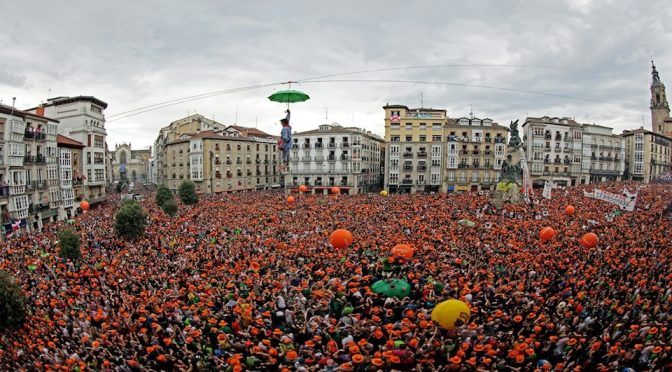
Celedón descending over the crowd at the Fiestas de la Virgen Blanca. Photo from rove.me.
The Fiestas of the Virgen Blanca, or White Virgin, (Andre Maria Zuriaren Jaiak in Euskara) started in Vitoria-Gasteiz, Araba, in 1884. For many years, the city celebrated its fiestas in September, but in 1883 it was decided to move them to August to honor the Virgen Blanca, as her feast day is on August 5. In 1921, she was declared the patron saint of the city. In 1954, she was named queen of the city. She is also known as Saint Mary of the Snows.
The Virgen Blanca is a statue from the 14th century that sits in the Church of San Miguel in Vitoria-Gasteiz. Her veneration dates to the time that Araba was part of the Kingdom of Nafarroa and is attributed to Sancho the Wise, who named his daughter the same. He founded the city in 1181 and the cult of the White Virgin has existed ever since.
Since 1957, the festivities begin with the descent of Celedón. Celedón is a rag doll that represents an old Araban villager. He is attached to a pulley system and lowered across the main plaza holding his umbrella which hangs from the wires. After, a real-life version of Celedón makes his way through the crowd and a traditional dance (the aurresku) is performed on the balcony of the church. The crowd chants “Gora Gasteiz! Gora Celedón!” Celedón is meant to represent the rural peasants that come to the city to celebrate the fiestas. Tradition holds that he was from the village of Zalduondo.
The “cuadrillas de blusas” are the heart of the festival. Dressed in traditional costumes, they lead various activities throughout the city during the fiesta. The fiestas are characterized by free open-air concerts, various sporting competitions, bertsolariak, and lots of singing, dancing, and drinking.
A full list of all of Buber’s Basque Facts of the Week can be found in the Archive.
Wandering the streets, friends in tow, hopping from bar to bar, getting a bit of a drink and a pintxo – the tradition of the txikiteo. One of my favorite things to do in the Basque Country, txikiteo is the epitome of Basque social life. It’s a perfect way to spend time with your koadrila and to bump into other friends. It’s also a great way to see a Basque town, to get to know its heart. If you haven’t had the chance, I highly recommend an evening (or three) exploring your favorite city in a new way.
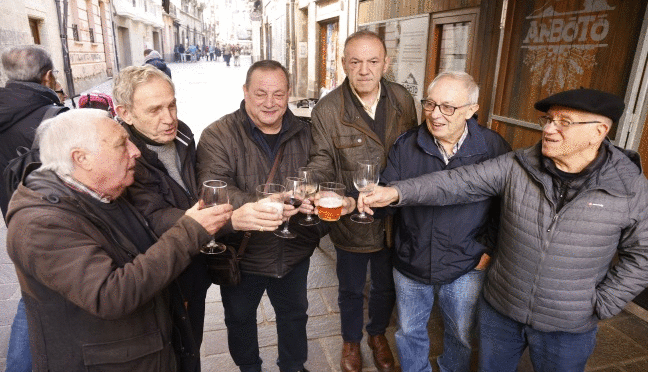
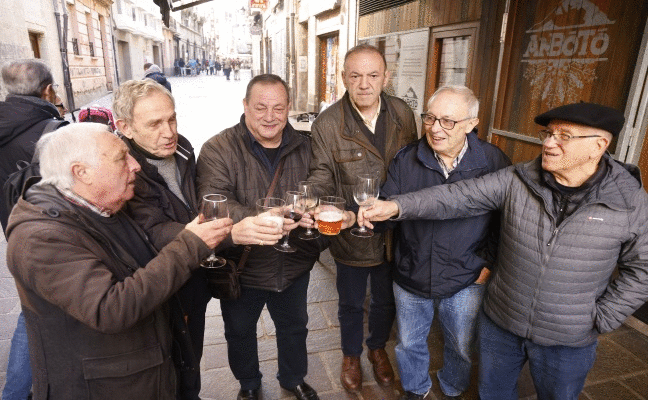
A group of txikiteros in Vitoria-Gasteiz. Photo from El Correo.
No one really knows when the tradition of txikiteo began, but it’s a natural consequence of a region that has so many bars. In fact, the Basque Country has one of the highest number of bars in Europe, surpassing many countries. People would wander the bars, maybe initially to get news from the sailors visiting the ports. It grew into a social phenomenon, one of the primary ways Basques enjoy their cities and towns.
The word txikiteo comes from the Basque word txikito, meaning small or little. People wander the bars, having a little bit to drink (a zurito or txikito) or a small bite to eat (a pintxo). While having some similarities to a pub crawl, drinking isn’t the goal. Rather, it is to socialize, to get out of the home and to see other people. People who are out on a txikiteo are called txikiteros.
For a long time, txikiteo was an activity exclusive to men, but in recent years women have also participated, often with women-only groups wandering the streets. Txikiteo is the time when koadrilas go out and spend time together. It used to be an almost daily custom, but modern life has made it rarer, often a weekend activity at best. The recession and the pandemic didn’t help matters.
Another driver changing the custom of txikiteo is tourism. Tourists aren’t used to how a txikiteo works. Instead, many are accustomed to sitting in one place and eating and drinking. So bars are adapting to this new reality and offering multi-pintxo deals, encouraging patrons to stay longer. This is in conflict with the very idea of txikiteo.
The glass used for the wine has its own interesting history. The story goes that, in 1929, Queen Victoria Eugenia visited Bilbo (other stories say it was the Prince of Asturias in 1865). The city went all out for her visit, including lighting the streets with candles in glasses. After her visit, the city had an abundance of glasses they had no use for, so they gave them to the local bars. These proved perfect for txikito – they had a heavy base so that they didn’t slosh so much in the hands of somewhat inebriated patrons. While these traditional glasses have become rare, there is a bit of an initiative to bring them back.
Txikiteo is such a part of Basque culture, Bilbo celebrates Txiketero Day on October 11.
A full list of all of Buber’s Basque Facts of the Week can be found in the Archive.
Gizotso – gizon (man) + otsoa (wolf) – is the Basque wolf man, the Basque werewolf. Though there aren’t many wolves left in the Basque Country, Basques have a long history with wolves, which often terrorized livestock and even people. So, it is no surprise that the Basques, as so many cultures, had stories of men who became wolves, who were more vicious than any wolf ever was. While stories of werewolves are common throughout the world, the Basque version has a few interesting twists. No silver bullets here, but if you hit his shadow an odd number of times, you can hurt him.
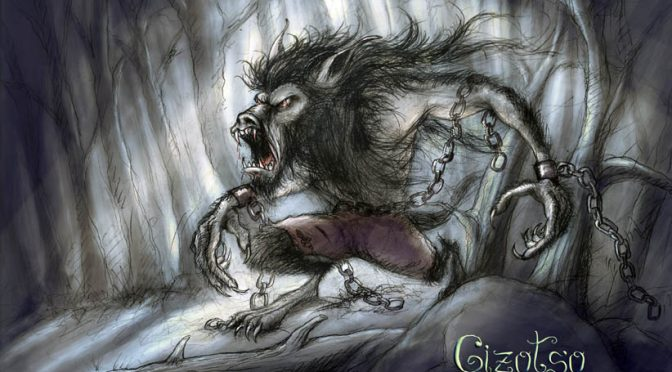
One representation of a gizotso, by artist Argote.
Wolves have been part of the Basque landscape since time immemorial. As elsewhere, wolves posed a problem for the local human populations, primarily by killing both people and livestock. Ultimately, in the Basque Country, wolves were hunted to near extinction. This complex relationship between people and wolves has sparked many stories, including that of the gizotso, or werewolf.
Half man, half wolf, the gizotso lives in the deepest parts of the forest, sometimes coming out to terrorize people. In some places, the gizotso was said to be extraordinarily strong. In one story, a gizotso chased a woman. Despite her neighbors yelling for her to run home, the gizotso caught her and tore off her breasts. In yet other places, the gizotso is found at nights at crossroads, burdened by chains, and will carry off anyone it can catch.
How did gizotsos come about? In some places, people believed that the gizotso was the product of nefarious dealings between rational and irrational beings, sometimes the result of sexual relations between people and wolves. In others, it was believed that, on the Eve of St John’s fiesta, there were springs that turned to wine at midnight. If one tries to find the spring and doesn’t, they become a gizotso. Sometimes, in the mornings, the gizotso sheds its skin. If someone else finds it and wears it, they will then become a gizotso.
To attack a gizotso, you had to go after its shadow. You couldn’t hit it directly. And you had to hit it with an odd number of blows. If you hit it an even number, the wounds would heal. Similar beliefs applied to wizards and witches – when they were in a trance, you could attack their shadows but not them directly.
Once upon a time, there were apparently werewolves in many places. These werewolves were men who dressed in wolf skins and walked around at night surrounded by old irons. Completely covered, only a little of their foreheads showed. Apparently they went out to the crossroads to scare people.
There must have been one like that in Ustaritz. Once, when a tailor was returning home late at night, the werewolf of Ustaritz appeared to him, intending to scare him. The tailor struck him on the forehead with the tip of a hoe, and blood flowed. The werewolf shouted at him: “Give me another one!” For the enemy has no strength in odd numbers.
But the tailor did not give him another one, did not hit him again. And the werewolf followed him to the door of his house, begging him: “Give me another one, give me another one.”
The tailor paid no attention to him, until the werewolf gave up and left.
The next day an acquaintance of the tailor, from Ustaritz, came to his house with a ten-pound note, saying: “I have long wanted to get rid of this burden. By making me bleed, you cured me. Take ten pounds in payment.”
“And why did you ask me to give you another blow?” asked the tailor.
“It was not me, it was my companions who made me say it.”
Of course, werewolves are by no means a singularly Basque phenomenon – they are common to the folklore of many places in Europe, going back to Ancient Greece.
A full list of all of Buber’s Basque Facts of the Week can be found in the Archive.
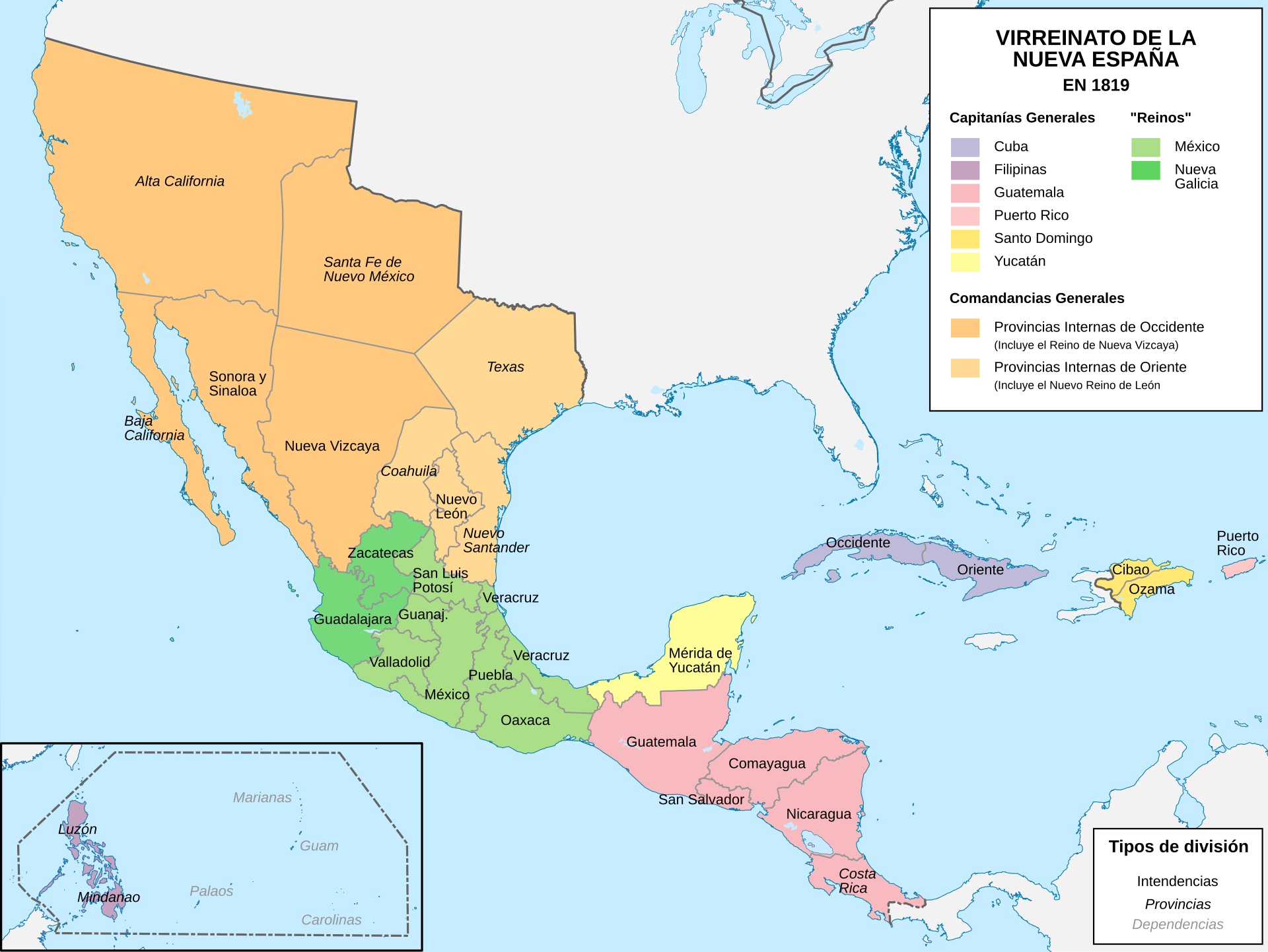
When I wrote about the various cities of Durango a while back, that opened a thread of the Basque history of Mexico and the southwest United States that is ripe for further exploration. That history is reflected in so many place names of the region. Not only are cities like Durango named after their Basque counterparts, but just like we have states like New York and New Jersey that are named after “older” regions in the United Kingdom, there were provinces such as New Vizcaya and New Navarra in the Americas named after places in the Basque Country. I guess those explorers and conquistadors were not so creative…
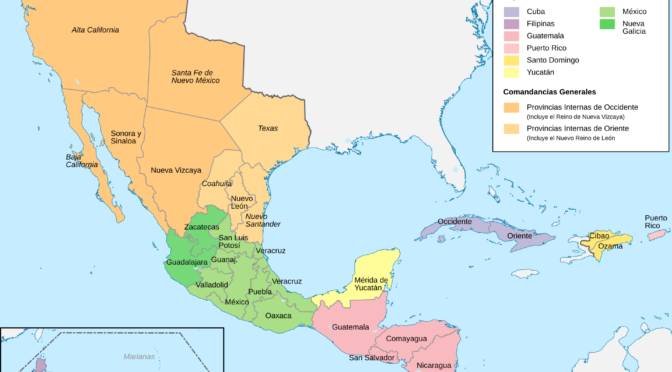
Map of Mexico in 1819 featuring the province of Nueva Vizcaya. Image from Wikipedia.
Nueva Vizcaya was originally founded by Francisco de Ibarra when he conquered that part of what would later become Mexico and the United States. It was the first province in the northern part of New Spain. What was once Nueva Vizcaya is now the Mexican states of Durango and Chihuahua, part of the Mexican state of Coahuila, and part of Texas. Ibarra established silver working and cattle ranches in the region. Residents of Durango had complete access to the local silver mine.
The Spanish first arrived in 1531, under with Nuño Beltrán de Guzmán, but it wasn’t until silver was discovered that Ibarra moved further north and established the territory. In 1562, he was named Captain General of Nueva Vizcaya and undertook conquest of the region, founding the city of Durango amongst others.
The city of Durango played a part in the Mexican War of Independence and the subsequent forming of the Mexican Empire, led by Augustín de Iturbide. In particular, Durango was subjected to a 3-weeks-long siege as Iturbide’s forces tried to take the city, which finally surrendered on September 3, 1821.
Nueva Vizcaya lasted as a political entity until 1823, when the Supreme Congress of Mexico split it into the two modern provinces of Chihuahua and Durango. Yet a new state, comprising Chihuahua, Durango, and what eventually became New Mexico, was briefly considered, but the residents of Durango objected as the proposed capital of this new state would have been in Chihuahua. In the end, they were kept separate.
Native Americans continuously attacked the city and the region since its founding until the 19th century, trying to reclaim the land. The area is home to numerous native groups, including the Nahuatl, Zacatecos and Tepehuán.
There is also a province called Nueva Vizcaya in the Philippines. There was a province called Nueva Navarra in Mexico as well, to the west of Nueva Vizcaya.
A full list of all of Buber’s Basque Facts of the Week can be found in the Archive.
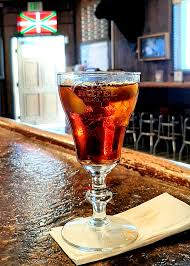
Maybe you’ve heard that some politicians in Nevada are trying again to make Picon Punch the official state cocktail. It’s not the first time, but that Ferino, a distillery in Reno, is making their own version of Amer Picon, the central ingredient that gives the Punch its distinct flavor, is perhaps going to help the bill get past the finish line this time. One of several distinct Basque beverages, Picon Punch is also uniquely American.
There is no single recipe for Picon Punch, as different places have adapted it to their own tastes. What they all have in common is a base of Amaro, a bitter often drank straight as an aperitif. Club soda, grenadine, and brandy are typically added, with a lemon peel as garnish. Often there is no brandy, or the brandy is replaced with gin. Some version skip the club soda.
Picon Punch originated in the United States, the creation of Basque immigrants. Sometime in the late 1800s, Basques in the North Beach part of San Francisco, California. At least by 1899 it was mentioned in a local newspaper, but it could have been created before. Maybe it was at the Noriega Hotel, maybe another boardinghouse. But Basques took it from there with them to Nevada and other parts of the US West. By 1906, it had even made its way to Honolulu. It has been seen in the Basque Country, though it is not overly popular there.
Amer Picon has its own interesting history (Amer means bitter in French). It was created by an Italian, Gaétan Picon, who had visited Algeria in 1837 while serving in the French Army. He caught malaria there and needed a way to stomach the quinine he had to take as treatment. He discovered local herbs and made a liquor from them to help the quinine go down.
The French Amer Picon became popular as a substitute for absinthe, but has been hard or impossible to get in the United States. After prohibition, during which alcohol was outlawed, Torani began marketing their own Amer and it eventually replaced Amer Picon, partially because Amer Picon became weaker with time to the point that it is now only 18 proof while Torani Amer is still near the original 80 proof.
To make matters worse, Amer Picon stopped shipping to the US in 2000. Torani Amer is the only alcoholic beverage Torani makes, and they had supply issues during and after COVID. So to ensure that the supply doesn’t end, more than one distillery in the United States has taken on making the stuff.
A full list of all of Buber’s Basque Facts of the Week can be found in the Archive.
One of the less appreciated aspects of Basque history is their strong democratic tradition. So central has democracy been to the Basque Country that John Adams was impressed, noting how the Basque Country was “a republic; and one of the privileges they have most insisted on, is not to have a king.” Central to the Basque concept of democracy, at least in Bizkaia, is the elizate, where local heads of households would gather after church to discuss business that affected them and their neighborhood.
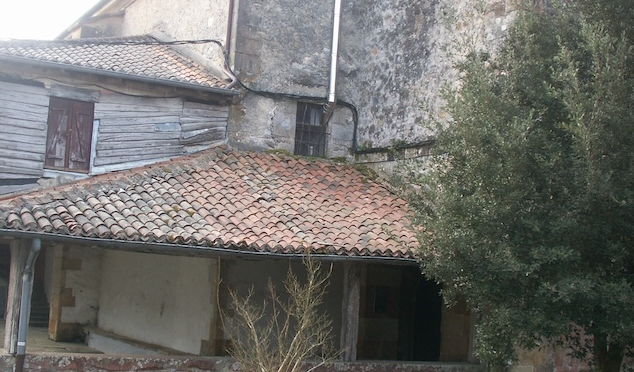
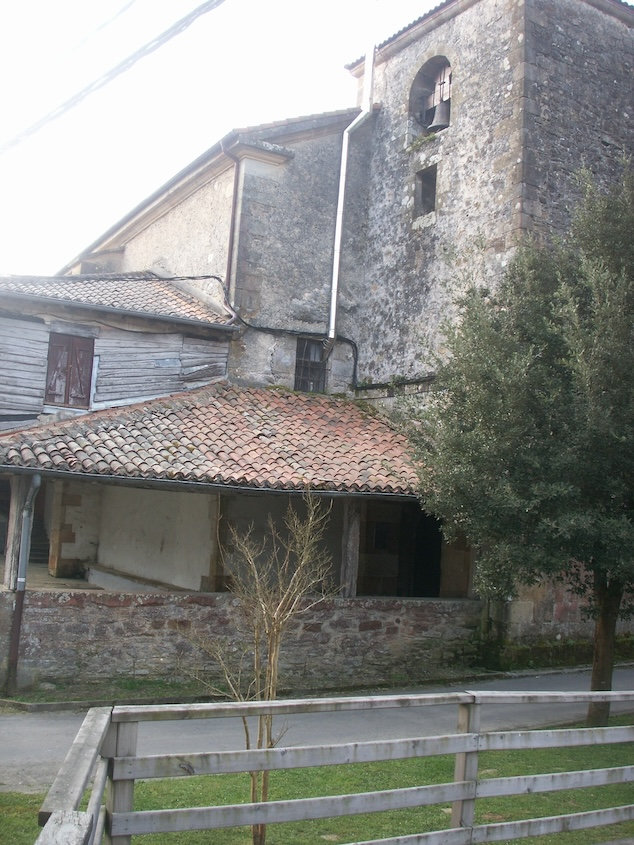
The Basque term elizate – anteiglesia in Spanish – literally means “church door” (the Spanish anteiglesia means “in front of the church”). It was used to refer to local gatherings of the local heads of families – these could be either men or women – to discuss business affecting the area. They would gather after mass in the front of the church, in the atrium or near the main door. This put the local parish as the center of communal organization and naturally lead to towns being created around those churches. Indeed, the church atrium was the first town hall.
Most common in Bizkaia (where the word elexate was used), the elizate also existed in other parts of the Basque Country. In Bizkaia, they primarily referred to the areas called Lur laua, or the Flat Lands. This was the part of Bizkaia that was comprised mostly of fields and baserria and consisted of some 105 villages. All of the people in the Lur Iaua were governed by the same laws. The Encartaciones and the Merindad de Durango were distinct political entities within Bizkaia, having their own fueros.
Similarly, in Lapurdi, the people organized into parrokiak which were led by the auz-apezak, or neighborhood priests.
Each elizate was led by the so-called fiel sindiko, a person who was chosen to lead for one year. Depending on the place, the fiel sindiko either rotated through all families or was nominated by the previous fiel sindiko or, in others, was the most recently married baserritarra.
Each elizate would select representatives to attend the meeting of the merindades or even the Batzar Nagusiak or Great Meetings that covered the whole province.
The elizate were further divided into cofradías that corresponded to neighborhoods within the elizate. At the same time, a group of elizates was a merindad.
The elizate have their origin in medieval times. As cities were established by royal decree or by the Juntas, elizate were often absorbed into those cities. As one example, in the 14th century Tolosa, in Gipuzkoa, absorbed 23 neighboring elizate.
With time, most elizate have disappeared, but this tradition is still practiced in the towns of Iurreta and Derio. In 1962, most of them were incorporated into existing cities as subdivisions or auzoak and thus lost a lot of their unique identity.
A full list of all of Buber’s Basque Facts of the Week can be found in the Archive.


.svg)